


More news on this day
Canada has tightened several of its travel advisories in late June 2026, moving in step with recent mid-year updates from the United States and Australia that urge citizens to exercise a high degree of caution abroad as governments respond to a more volatile security landscape and expanding airport security measures.
Get the latest news straight to your inbox!
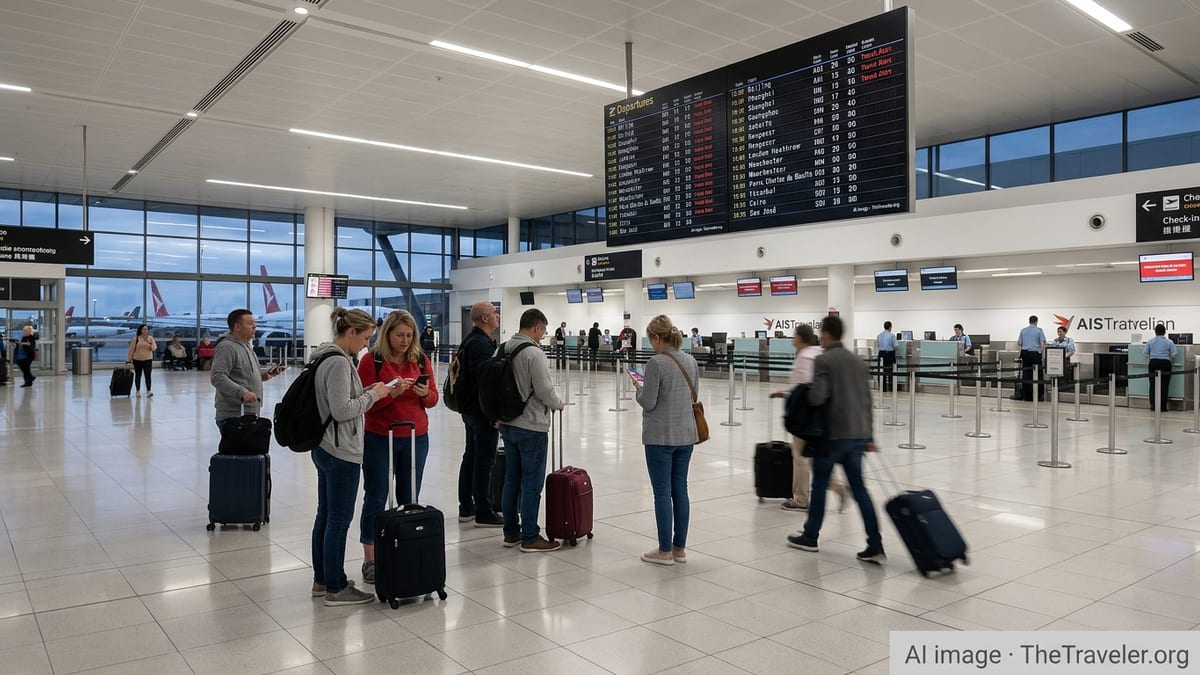
Aligned Mid‑Year Warnings Across Three Major Travel Markets
Publicly available advisories show that Canada, the United States and Australia are entering the peak Northern Hemisphere travel season with a similar message: international trips now demand closer attention to security conditions and official guidance than in recent years. Each government has issued new or revised notices during May and June 2026, covering regions affected by conflict, terrorism risks, civil unrest and crime, and explicitly encouraging travelers to reassess nonessential travel plans.
Canada’s travel website has carried a series of late June updates that flag a “high degree of caution” for a growing list of destinations, including renewed security language for parts of Latin America and other regions where conditions can change quickly. The advisory system emphasizes that higher tiers are reserved for situations where the safety of Canadians may be at risk, and stresses that even Level 2 or equivalent ratings signal meaningful security concerns, not routine travel information.
In parallel, the United States has refreshed several country-specific advisories and extended a worldwide caution notice, advising Americans to exercise increased vigilance when traveling overseas due to persistent terrorism threats, regional conflicts and the potential for demonstrations to escalate rapidly. The four-tier U.S. system, which ranges from “Exercise Normal Precautions” to “Do Not Travel,” continues to place multiple Middle Eastern and African destinations at the upper end of the risk scale as of June 2026.
Australia’s Smartraveller platform has also updated its destination pages in recent weeks, maintaining “Do Not Travel” or “Reconsider your need to travel” guidance for a number of conflict-affected states while adjusting levels for some Middle Eastern countries following fresh risk assessments. The tenor of these advisories mirrors the North American approach, underlining heightened regional volatility and encouraging Australians to have robust contingency plans if they proceed with travel.
Regional Flashpoints Driving Heightened Caution
The tighter mid-year guidance from all three governments is closely linked to evolving security flashpoints, especially in the Middle East and neighboring regions. U.S. advisories for Bahrain, Israel, Jordan, Kuwait, Oman, Qatar, Saudi Arabia, the United Arab Emirates and the West Bank remain at “Level 3 – Reconsider Travel,” according to recent public summaries, while Iran, Iraq, Lebanon, Syria, Yemen and Gaza are categorized as “Do Not Travel.” These assessments reflect ongoing conflict dynamics, the risk of missile or drone attacks and a complex terrorism environment.
Canada and Australia use different rating terminology, but their destination pages draw similar conclusions for many of the same countries, citing volatile security conditions, potential disruptions to air travel, and constrained consular support in the event of a major incident. Travel advice for Afghanistan, for example, remains at the highest warning level on Australian Smartraveller due to what it describes as an extremely dangerous and unpredictable landscape.
The wider knock-on effects of conflicts in the Middle East and parts of Eastern Europe have also seeped into advisories for neighboring states. Governments highlight the possibility of spillover incidents, cyber-related disruptions and targeted attacks on locations associated with Western interests, including embassies, hotels, transport hubs and large public gatherings. These risks are often reflected not only in headline country ratings but also in the detailed security sections that urge travelers to stay away from demonstrations, monitor local media and have backup departure plans.
Security analysts note that the clustered timing of the latest advisories is not coincidental. Mid-year reviews frequently coincide with updated intelligence assessments, the release of new risk maps from private security firms and the approach of major international events that can alter threat calculations for both host countries and outbound travelers.
Canada’s Advisory Shifts and Domestic Sensitivities
Canada’s recent moves underscore how travel warnings are increasingly calibrated to both overseas conditions and domestic concerns. On June 19, 2026, Ottawa updated its advisory for travel to the United States, drawing renewed attention at home as Canadians prepare for cross-border trips tied to summer tourism and upcoming sports tournaments. The advisory highlights safety and security considerations that range from crime patterns in specific urban areas to the potential impact of polarized political demonstrations.
For destinations farther afield, Canadian updates in late June underscore a higher degree of caution in parts of Latin America and the Caribbean, where issues such as kidnapping, organized crime and sporadic unrest continue to affect travelers. While the overall ratings for many countries remain in the mid-range, the explanatory notes emphasize that conditions can deteriorate rapidly, and that Canadians should not interpret moderate advisory levels as an all-clear signal.
These adjustments come as Canadian insurers and tour operators increasingly reference government advisories in their own risk and cancellation policies. Industry notices indicate that some travel insurance products now explicitly link coverage for trip cancellation or evacuation to official changes in advisory levels, putting extra weight on Ottawa’s decisions for both leisure and corporate travelers.
Consumer advocates in Canada point out that heightened advisories do not automatically prohibit travel, but they can influence everything from airline change-fee waivers to employer duty-of-care obligations. The mid-2026 tightening therefore has practical consequences for how Canadians plan summer trips, particularly to destinations sitting at or near the thresholds for “Avoid nonessential travel” or higher.
U.S. Worldwide Caution and Australia’s Updated Risk Messaging
In Washington, the U.S. Department of State’s worldwide caution, most recently updated in March 2026, remains a central reference point for American travelers. The notice highlights ongoing risks of terrorism, kidnapping and targeted attacks against U.S. citizens and interests abroad, emphasizing that threats can emerge with little or no warning and may coincide with religious holidays, political anniversaries or major sporting events.
Country-specific advisories continue to evolve alongside the global notice. Recent updates for parts of Africa and the Middle East stress that local law enforcement capacity may be limited in high-risk areas and that large protests or security incidents can trigger sudden curfews or border closures. These elements are designed to complement guidance provided by airlines, tour companies and corporate security teams, reinforcing the message that travelers must take greater responsibility for real-time situational awareness.
Australian authorities have similarly refreshed their outward-facing communication, with Smartraveller publishing updated alerts in June 2026 that address the security implications of ongoing conflicts, extreme weather and infrastructure strain in parts of Asia and the Pacific. Destinations such as Niger and sections of the Sahel region remain under “Do Not Travel” guidance, while some Gulf states have seen a modest easing from the most severe levels as conditions stabilize, although the advice still urges caution and contingency planning.
These converging messages from Canberra and Washington highlight the degree to which like-minded governments are interpreting the current security cycle as structurally more volatile than that of the late 2010s. Analysts suggest that the shared emphasis on flexibility, insurance and communication is intended to help citizens adapt to a world in which border regimes, airspace restrictions and protest movements can reshape itineraries with little warning.
Expanding TSA Screening and the New Airport Experience
The security backdrop is also reshaping the airport experience, particularly in the United States, where the Transportation Security Administration has been rolling out a series of modernization initiatives. Recent industry coverage describes an expansion of biometric eGates at major U.S. airports, allowing some travelers enrolled in programs such as TSA PreCheck or CLEAR to verify identity through facial recognition instead of presenting physical identification documents to an officer.
In June 2026, new biometric gates debuted at San Diego International Airport, after similar technology appeared in dozens of terminals nationwide over the past year. Travelers in participating lanes step into a designated gate that matches their facial image against airline and government databases before proceeding directly to bag screening. The system is designed to reduce bottlenecks at identity checkpoints and free up personnel to concentrate on higher-risk screening tasks.
Alongside biometrics, TSA has continued deploying computed tomography scanners and other advanced imaging systems at checkpoints, part of a longer-running plan to automate more of the threat detection process. Publicly available technical documents indicate that these technologies are intended to enhance detection of explosives and prohibited items while allowing passengers to keep certain electronics and liquids inside bags, potentially balancing stricter security expectations with a smoother checkpoint flow.
Consumer groups and privacy advocates, however, have questioned aspects of the expansion, focusing on data protection, algorithmic bias and the level of transparency around how facial images are stored or shared. While participation in many biometric programs remains optional, some travelers report feeling pressure to enroll in order to maintain pre-pandemic wait times at congested hubs. This tension between efficiency and privacy is likely to become more prominent as the technology spreads.
What High‑Caution Advisories Mean for Summer Travelers
The combined effect of stricter advisories and expanded screening is a more complex environment for travelers planning mid-2026 trips. Governments in Canada, the United States and Australia are not broadly discouraging international travel, but they are resetting expectations by stressing that personal risk assessments, flexible bookings and close monitoring of official channels are now essential parts of any itinerary.
For travelers, a “high degree of caution” or “exercise increased caution” label often translates into practical steps such as registering with consular services, providing family or employers with detailed itineraries, and building extra time into airport connections to account for enhanced security checks or unexpected disruptions. In higher-risk destinations, government guidance places additional emphasis on professional security advice, robust insurance and contingency plans for evacuation or sheltering in place.
As the peak summer season unfolds, the alignment between Canadian, U.S. and Australian messages suggests that elevated caution is likely to remain the norm rather than the exception. For now, the mid-year updates point toward a travel landscape where flexibility, real-time information and familiarity with advisory systems are as important as passports and boarding passes.