


Sultanahmet is where most first-time visitors fall in love with Istanbul, yet they often leave knowing only its postcard monuments. Between Hagia Sophia and the Blue Mosque, in the shadows of Topkapi Palace and along the tram line, there are back streets, tiny mosques, courtyards and old wooden houses that remain strangely quiet while the main square heaves with tour groups. Spend a day slowing down, dipping into side alleys and following the sound of a distant call to prayer rather than a flag-waving guide, and you discover an older, softer Sultanahmet that locals still recognize as their neighborhood.
Get the latest updates straight to your inbox!
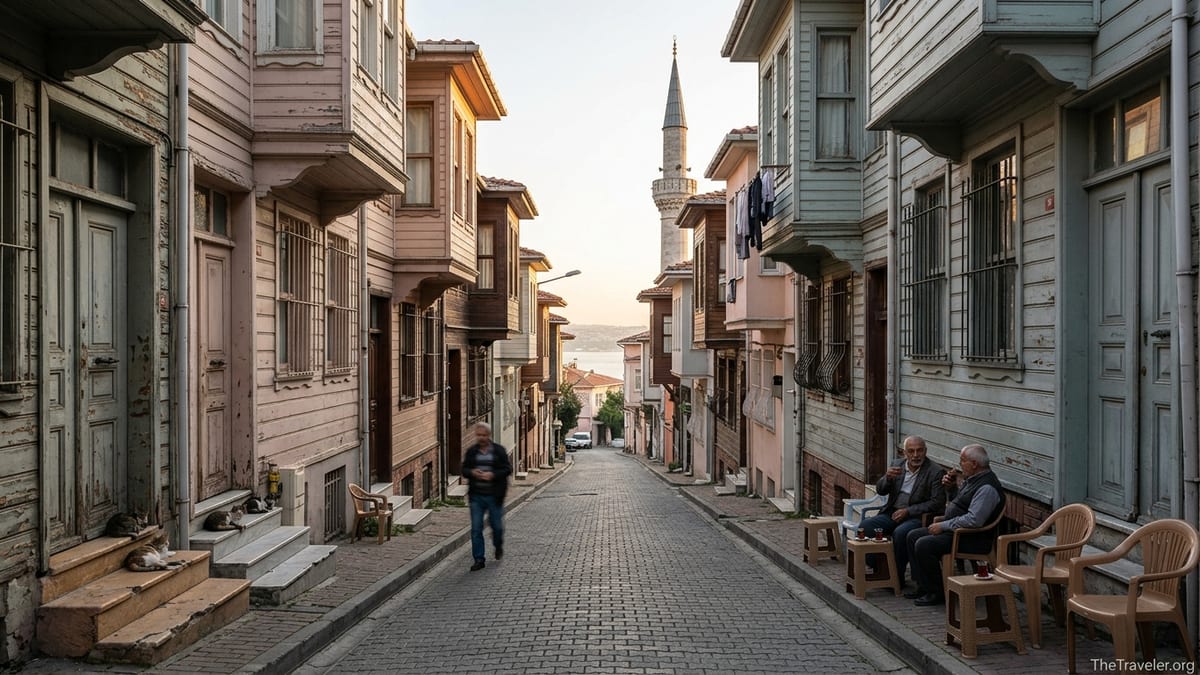
Following the Tram Tracks to Quieter Streets
Most visitors arrive in Sultanahmet on the T1 tram, step off at Sultanahmet station, look up at Hagia Sophia and rarely glance behind them. Yet the tram line itself is a useful compass for finding quiet corners. Walk just one stop in either direction and the crowds thin dramatically. Head west toward Beyazit and you pass Divanyolu Caddesi, a boulevard layered with Ottoman history, old cemeteries, tiny mosques and faded hans. Step away from the tracks by even a block and you enter a mesh of narrow lanes where laundry hangs between buildings and tea trays clink in ground-floor workshops.
For a gentle first detour, leave Sultanahmet Square by the tram stop and stroll along Divanyolu toward the Beyazit direction. Within five minutes you reach the modest Firuz Agha Mosque, a 15th century structure tucked into the streetscape. Built of stone with a small courtyard and simple interior, it rarely sees tour groups, yet offers a quiet place to sit on the steps, listen to traffic hum on the tram line and watch locals drop in for midday prayers. Across the road, small cafes selling simit and tea cater more to office workers and students than to groups on a schedule, which keeps prices roughly comparable to what you would pay in less touristy districts.
If you continue further along toward Cemberlitas and Beyazit, side alleys peel off into residential pockets where children play football and elderly men nurse tulip-shaped glasses of tea. These lanes run parallel to some of the busiest tourist streets in the city but feel like a different Istanbul. Street cats sleep on car hoods, grocers display crates of seasonal fruit, and the scent of detergents from basement laundries mingles with grilled köfte from a family-run lokanta. It is in these humbler slices of everyday life that many travelers say Sultanahmet finally starts to feel like a neighborhood instead of an open-air museum.
Soğukçeşme Sokağı and the Shadow of the Palace Walls
Few corners of Sultanahmet feel as improbably quiet as Soğukçeşme Sokağı, the “Street of the Cold Fountain.” Sandwiched between Topkapi Palace’s outer walls and Hagia Sophia’s gardens, this short cobbled lane lies just minutes from some of the most crowded security queues in Turkey, yet tour groups rarely detour here. Lined with restored Ottoman houses, now operating as part of a boutique hotel complex, the street has overhanging wooden bay windows, painted facades and vine-draped balconies that make it easy to picture 19th century Istanbul.
Arrive early in the morning, around 8 or 9 am, before day-trip buses discharge their passengers at Sultanahmet Square. The street is often empty except for hotel staff placing potted geraniums on stoops and a few guests carrying coffee back to their rooms. Even at midday, when the nearby square is packed, Soğukçeşme remains subdued. There are no aggressive souvenir stalls here, only a few discreet signs for guest rooms and a small café where you can sit under a fig tree with Turkish coffee or tea at prices similar to those in residential neighborhoods of Fatih or Uskudar.
Architecturally, Soğukçeşme offers one of the easiest introductions to traditional Istanbul wooden houses. The facades are rebuilt rather than entirely original, yet the projecting upper floors, wooden shutters and low doorways give a good sense of the domestic scale that once dominated the historic peninsula. Details such as carved door lintels, lace curtains and brightly painted stair rails reward slow looking. It is worth walking the length of the lane in both directions, glancing into courtyards and listening for the echo of footsteps from the Topkapi walls above. From here, small stairways lead back down to the main tourist flows, but many visitors never realize that a parallel, much quieter world exists just a stone’s throw away.
The Arasta Bazaar and the Great Palace Mosaic Museum
Most visitors to the Blue Mosque spill out through the main courtyard gate and head straight back to the tram or to Hagia Sophia, unaware that if they walked behind the mosque they would find a much calmer bazaar and one of Istanbul’s most atmospheric small museums. The Arasta Bazaar sits immediately south of the Blue Mosque, a linear market built over old Ottoman stables and restored in the 20th century so that rents could help fund mosque maintenance. Today it runs in a gentle curve behind the complex, with a shaded central lane and a mix of carpet shops, ceramic studios and textile boutiques that feel quieter and more curated than the tourist crush of the Grand Bazaar.
Prices at Arasta can still be high, but the pace is slower and conversations tend to be more relaxed. You might find a ceramic workshop where the owner explains the difference between hand-painted Iznik-style tiles and mass-produced pieces, or a textile shop that allows you to handle kilim cushions without pressure to buy. Because coaches rarely unload directly here, most customers wander in on their own, which lowers the sense of urgency. Many travelers report being able to browse for half an hour with a single cup of tea and leave without any hard sell, something harder to guarantee in more famous markets.
Tucked into the northern edge of the bazaar is the entrance to the Great Palace Mosaic Museum. This compact museum occupies part of the former Byzantine imperial palace and preserves floor mosaics dating to around the 5th and 6th centuries. Inside, raised walkways allow you to stand just above intricate scenes of hunting, mythological beasts and daily life. Because it lacks the name recognition of Istanbul’s blockbuster sites, visitor numbers are modest, especially outside peak midday hours. You might share the space with just a handful of people, able to linger in front of a single mosaic panel without anyone brushing past. Entry prices have fluctuated in recent years, so it is wise to check the current ticket cost upon arrival, but they remain modest relative to the major museums.
Even if you decide not to go inside the museum, the stretch of Arasta Bazaar just outside its doors is a pleasant place to pause. A few small cafes serve strong Turkish coffee, fresh orange juice and simple sandwiches at prices more reasonable than the restaurants facing the Blue Mosque square. In the late afternoon, when the call to prayer rolls across the rooftops and shopkeepers begin to tidy their displays, the bazaar takes on a village-like atmosphere that feels worlds away from the tour buses idling only a few hundred meters away.
Down the Hill to Kadırga and Sokollu Mehmed Pasha Mosque
South of the Blue Mosque, the land slopes down toward the Marmara Sea into the Kadırga neighborhood, a working-class area of narrow streets, small workshops and aging apartment blocks. Many tourists never walk this way, partly because the hill looks steep and partly because their maps do not show any famous monuments there. That is a shame, because tucked among the houses is one of the most beautiful small mosques in Istanbul, the Sokollu Mehmed Pasha Mosque, designed in the 16th century by the imperial architect Mimar Sinan.
From Sultanahmet Square, it takes roughly 10 to 15 minutes to reach the mosque on foot. You wind down past small grocery shops, tailors and local bakeries, sharing the pavement with residents going about their day. Unlike the monumental approach to the Blue Mosque, there are no souvenir peddlers or ticket touts here, only the occasional corner cafe where men play backgammon and watch football on small televisions. When you reach the mosque complex, its stone walls and modest courtyard feel almost monastic compared to the grand imperial mosques on the hilltop.
Inside, however, the interior is breathtaking. Delicate Iznik tiles in shades of blue, turquoise and white frame the mihrab and windows, while geometric patterns draw the eye upward to the central dome. On many weekdays you may find only a few worshippers and perhaps one or two curious visitors. As with all mosques open to the public, you will need to remove your shoes and dress modestly, and women are expected to cover their hair. Scarves and wrap skirts are usually available at the entrance, often for a small donation rather than a fixed fee, though policies can vary. There is no official ticket price, but a contribution to the donation box helps with upkeep.
Leaving the mosque, consider looping back to Sultanahmet via different streets, perhaps stopping at a family-run lokanta serving trays of home-style dishes behind steamed-up windows. In Kadırga, you are more likely to find lentil soup, stuffed vegetables and rice pilaf at prices closer to what local workers pay. English menus may be scarce, but pointing at the dishes on display and asking for “az” or “çok” (a little or a lot) is usually enough to build a satisfying plate. This combination of world-class architecture and everyday neighborhood life is what makes the walk down from Sultanahmet so memorable.
Wooden Houses and Garden Courtyards in Backstreet Sultanahmet
Step just a few hundred meters away from Sultanahmet’s main square and the skyline softens. Instead of stone domes and minarets you find sloping roofs, wooden balconies and tiny garden courtyards half hidden behind metal gates. Many of these lanes run along the slope between the Blue Mosque and the Marmara shore, where 19th and early 20th century houses survive in varying states of restoration. The streets around Küçük Ayasofya (the “Little Hagia Sophia”) are a particularly rewarding area to wander without a fixed plan.
Küçük Ayasofya itself, built in the 6th century as a church and later converted into a mosque, sits at the center of a small square lined with teahouses and modest hotels. While day tours occasionally stop here, visitor numbers are far lower than at the major monuments. Inside, you can admire ancient marble columns and brickwork in relative quiet. Outside, a ring of backstreets radiates from the mosque. Some houses have been restored as boutique guesthouses with polished wood facades and flower boxes, while others lean at slight angles, their paint flaking and vines creeping up from tiny gardens. Children ride bicycles across the cobbles, and neighbors call to each other from windows.
One pleasure of these backstreets is accidental discovery. You might turn a corner and find a hidden tea garden under fig trees, its plastic chairs filled with neighborhood residents smoking and playing cards. Such places usually charge far less than cafes on the main square for basic items like Turkish tea or a plate of menemen, and menus are rarely translated. Yet visitors who are willing to sit quietly and watch the flow of daily life often find themselves drawn into short conversations with curious locals, especially if they show interest in the football match on television or the pastries on the counter.
As you walk, pay attention to details. Many wooden houses display hand-carved brackets under their bay windows, or tiny tiles with house numbers in traditional fonts. Small mosque courtyards, such as those of lesser-known neighborhood mosques behind Küçük Ayasofya, often contain historic gravestones with calligraphy worth a closer look. These are not headline sights, but they anchor the feeling that Sultanahmet is still lived in, not simply curated for visitors.
From Grand Bazaar Crowds to the Quiet of Sahaflar Book Bazaar
Northwest of Sultanahmet Square, the Grand Bazaar absorbs most of the area’s shopping energy, drawing visitors into a maze of jewelry stalls, carpet dealers and souvenir stands. Yet just a short walk further, tucked in a courtyard between Beyazit Mosque and the outer walls of the Grand Bazaar, lies a very different kind of market: Sahaflar Çarşısı, the Old Book Bazaar. While technically slightly outside the strictest definition of Sultanahmet, it sits within easy walking distance and offers a calm complement to the main tourist routes.
Sahaflar Çarşısı has been a center for secondhand books and antiquarian volumes since at least the Ottoman era. Today, around several dozen small shops line the sides of a rectangular courtyard, shaded by plane trees. Here you find shelves of Turkish literature, religious texts, old schoolbooks, maps and prints. Some stalls have boxes of foreign-language paperbacks, often in English, French or German, mixed in with dusty encyclopedias and out-of-print local histories. Prices vary widely depending on the rarity and condition of an item, but casual browsers can expect to pick up used novels at costs comparable to other European cities’ flea markets.
The atmosphere is what makes Sahaflar special. Compared to the bright lights and loud bargaining of the Grand Bazaar, conversations here are hushed. Students from nearby Istanbul University leaf through exam prep books, while older men in flat caps sift through stacks of Ottoman-script newspapers. Shopkeepers are often lifelong book lovers who enjoy helping visitors track down a particular title or simply recommending a favorite Turkish author. You are unlikely to encounter the kind of hard sell common elsewhere; instead, staff may invite you to linger over a chess board or share a cup of tea while you flip through old prints.
Reaching Sahaflar from Sultanahmet is simple enough: follow the tram line one or two stops to Beyazit or walk uphill along Divanyolu, then slip into the book bazaar through one of its discreet entrances between the mosque and the Grand Bazaar’s outer streets. Because it is not usually on package tour itineraries, crowd levels fluctuate more with the academic calendar than with cruise ship schedules. On exam season afternoons it can be lively with students; on summer weekends it often feels half empty, the perfect time for travelers to browse at leisure and perhaps carry back a slim, well-thumbed souvenir that weighs less than a carpet.
Practical Tips for Exploring Sultanahmet’s Hidden Corners
Unlike scheduled museum visits, wandering Sultanahmet’s lesser-known corners requires a little flexibility. The most pleasant times to explore are generally early morning, before large groups have finished breakfast, and late afternoon leading into early evening, when day trippers begin returning to their hotels elsewhere in the city. In summer, midday heat on the exposed stones of Sultanahmet Square can be intense, but side streets often benefit from shade cast by taller buildings, making them more comfortable for walking.
Dressing modestly is important, especially if you intend to enter mosques such as Sokollu Mehmed Pasha or Küçük Ayasofya. Shoulders and knees should be covered, and women are expected to cover their hair. Carrying a light scarf and wearing clothing you can easily adjust will save time and avoid the need to borrow communal wraps, which are not always available. At smaller neighborhood mosques, there may be no staffed visitor desk, so it is courteous to enter quietly, avoid prayer times on Friday midday in particular and ask a local worshipper with a simple gesture if you are unsure where visitors may stand.
For food and drink, step away from the main square whenever possible. A coffee or simple lunch on Divanyolu or in the backstreets of Kadırga and around Küçük Ayasofya is usually priced closer to what local residents pay. Look for places with Turkish-only signs and menus posted in the window, and observe whether customers appear to be office workers and families rather than tour groups. It is common to linger over tea or coffee without being rushed, especially in smaller establishments, but always check whether there is a cover charge or minimum spend in rooftop cafes overlooking the Bosphorus, which can be higher.
Finally, give yourself permission to get a little lost, while still staying generally oriented by major landmarks. In Sultanahmet, it is difficult to stray too far from familiar territory: at nearly every turn you can catch sight of the Blue Mosque domes, the minarets of Hagia Sophia or the bulk of Beyazit Mosque. Offline maps or simple screenshots of the area can help if your phone signal falters in the narrow lanes. Many of the most rewarding encounters in these hidden corners come unplanned, from a bookshop owner at Sahaflar recommending a neighborhood bakery to a mosque caretaker at Sokollu Mehmed Pasha pointing out a detail in the tiles that most visitors never notice.
The Takeaway
Sultanahmet’s big monuments more than earn their fame, but they tell only part of the neighborhood’s story. By venturing a few blocks away from the main square, travelers discover quieter streets like Soğukçeşme Sokağı, understated mosques such as Sokollu Mehmed Pasha, the village atmosphere around Küçük Ayasofya and the book-lined calm of Sahaflar Çarşısı. These places reveal a living district where people still shop, pray, study and linger over tea amid centuries of history.
On a practical level, exploring these hidden corners can also make a visit more comfortable and affordable. Cafes and eateries off the main routes tend to be less crowded and more fairly priced, while smaller mosques and museums offer respite from queues and security checks. Perhaps most importantly, taking time to notice wooden eaves, worn doorsteps and quiet courtyards helps balance the spectacle of imperial Istanbul with a sense of everyday life.
For many travelers, the memories that last are not only of domes and minarets silhouetted at sunset, but of a nearly empty mosaic hall behind a bazaar, a backstreet tea garden under fig trees or a bookseller carefully wrapping a worn paperback. In a district that millions pass through each year, the greatest luxury may be this feeling of stumbling upon a corner of Sultanahmet that seems, for a brief moment, entirely your own.
FAQ
Q1. Are these quieter corners of Sultanahmet safe to explore on my own?
Yes, the backstreets around Sultanahmet, Kadırga and Küçük Ayasofya are generally safe to walk during daylight and early evening. Normal city precautions apply: keep valuables secure, avoid very poorly lit alleys late at night and trust your instincts if a situation feels uncomfortable.
Q2. How much time should I allow to explore these hidden spots?
A relaxed half day is enough to visit Soğukçeşme Sokağı, the Arasta Bazaar, the Great Palace Mosaic Museum and some backstreets. Adding the walk down to Sokollu Mehmed Pasha Mosque and a detour to Sahaflar Book Bazaar turns it into a rewarding full-day exploration.
Q3. Do I need to pay to enter the smaller mosques like Sokollu Mehmed Pasha or Küçük Ayasofya?
There is no fixed ticket price to enter these mosques, but visitors are encouraged to dress modestly and leave a small donation in the box inside to help with maintenance. Policies can change, so carry some local currency in small notes.
Q4. What is the best time of day to visit the Arasta Bazaar and Mosaic Museum?
Late morning or midafternoon usually works well. The museum is rarely as crowded as major attractions, and the bazaar feels most atmospheric when shops are fully open but not yet closing, often between 10 am and 5 pm, though exact hours can vary.
Q5. Can I find English books at Sahaflar Book Bazaar?
Yes, several stalls at Sahaflar Çarşısı stock secondhand English-language books, though selection changes frequently. You are more likely to find classic novels, travel guides and popular titles than very recent bestsellers.
Q6. How steep is the walk from Sultanahmet down to Kadırga and back up again?
The streets south of the Blue Mosque slope noticeably, but most travelers with average fitness manage them without trouble. Wear comfortable shoes, allow time for breaks and consider taking the downhill route toward Kadırga, then looping back via a slightly longer but gentler path.
Q7. Are there good budget food options away from the main square?
Yes, streets in Kadırga, around Küçük Ayasofya and along Divanyolu host small lokantas, bakeries and cafes that serve filling plates of home-style dishes and snacks at prices lower than the restaurants overlooking Sultanahmet Square.
Q8. Do I need to cover my hair in all mosques in Sultanahmet?
Women are expected to cover their hair in mosques, including smaller ones like Sokollu Mehmed Pasha and Küçük Ayasofya. Carrying a light scarf is the easiest solution. Men should remove hats and avoid sleeveless tops.
Q9. Is photography allowed in these quieter sites?
Photography is generally allowed in mosques and in the Mosaic Museum, but always be respectful. Avoid using flash during prayers, do not photograph people at worship without permission, and follow any posted signs restricting photography in specific areas.
Q10. How can I avoid getting lost in the backstreets?
Use major landmarks as reference points, such as the Blue Mosque, Hagia Sophia and the tram line. Offline maps on your phone or a simple paper map help, but in Sultanahmet you are rarely more than a ten to fifteen minute walk from a recognizable main street or tram stop.