


More news on this day
Passengers across Germany faced hours of disruption as 369 flight delays and nine cancellations were recorded at major airports including Munich, Hamburg and Berlin, with services operated by Lufthansa, Eurowings, KLM and other carriers particularly affected, according to real-time tracking data and local media reports on recent operational turmoil.
Get the latest news straight to your inbox!
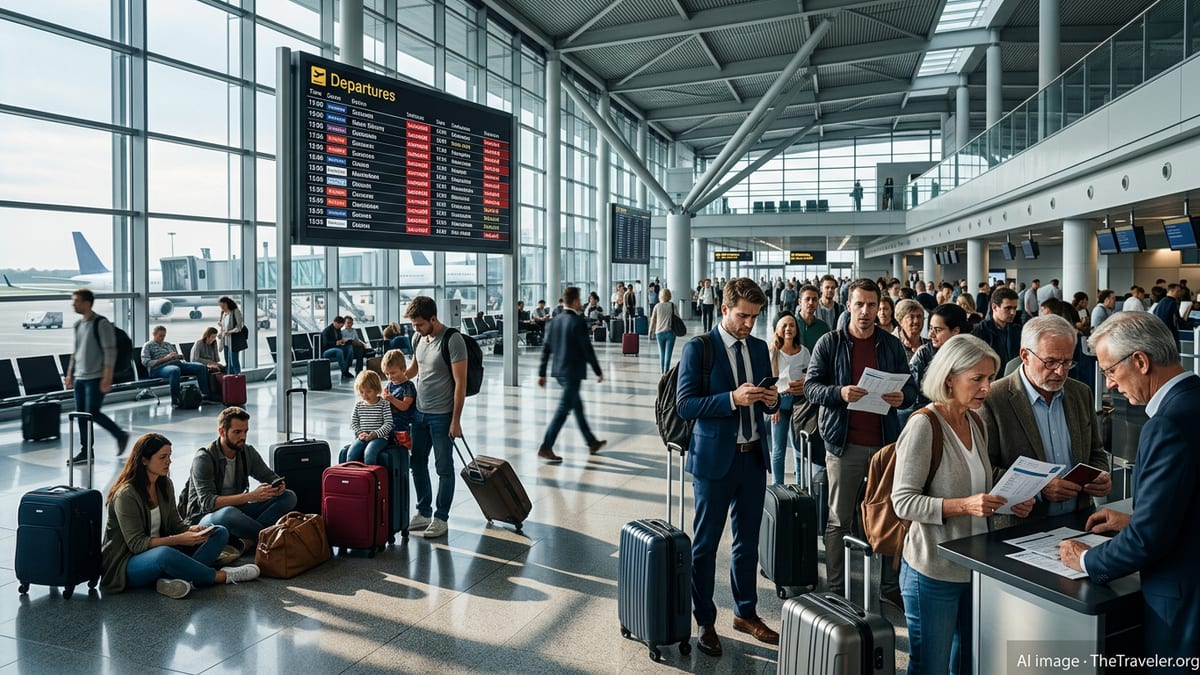
Major Hubs Struggle With Wave of Disruptions
Operational data from tracking platforms and airport dashboards on recent travel days in early July indicate a sharp spike in delays and cancellations across Germany’s largest aviation hubs. Munich, Hamburg and Berlin Brandenburg saw dense clusters of late departures and arrivals, with some domestic routes repeatedly running behind schedule and a handful of flights scrubbed entirely.
Lufthansa services bore a significant share of the disruption, particularly on busy domestic corridors such as Hamburg to Munich and Frankfurt to Berlin, where aircraft have recently recorded elevated average delays and occasional cancellations. Eurowings, a key low cost operator within the Lufthansa Group, also experienced irregular operations on intra German and short haul European routes as the network attempted to absorb schedule changes.
Other European carriers, including KLM, were drawn into the turbulence as code share services and rebooked itineraries funneled additional passengers into already strained German hubs. Publicly available information from flight status portals shows that some travelers trying to connect through Germany on itineraries involving both Lufthansa and KLM have faced missed connections or unplanned overnight stays after upstream delays cascaded through the system.
While the total of 369 delays and nine cancellations represents a snapshot across participating airlines on a single disrupted operating window, it underscores how quickly conditions at Europe’s congested hubs can deteriorate when multiple pressures hit at once.
Weather, Staffing and Industrial Action Combine
Reports from aviation focused publications and passenger forums point to a mix of severe summer weather, ongoing staffing challenges and recent labor disputes as key drivers of the latest disruption pattern. Strong storm systems moving across central Europe have periodically shut down departure queues, forced inbound diversions and triggered extended ground stops at German airports, leaving aircraft and crews out of position for subsequent rotations.
Industry analyses published in early 2026 highlight that airlines such as Lufthansa continue to operate with tight crew and aircraft utilization, leaving limited slack in the schedule when weather or technical issues occur. Internal and external assessments of the carrier’s performance note that a single technical fault or crew sickness report can push duty time limits over safety thresholds, forcing last minute cancellations and complex rebooking efforts for large numbers of passengers.
The disruption has also been amplified by a series of strikes affecting Germany’s aviation sector this year. Coverage from national broadcasters and newspapers in April and earlier in 2026 described coordinated walkouts by pilots and cabin crew at Lufthansa, as well as targeted action at Eurowings in Germany. Even on non strike days, airlines are still working through backlogs, repositioning aircraft and adjusting schedules, which can leave operations vulnerable when new weather or technical problems arise.
For travelers on KLM and other partner airlines, the knock on effects of German labor unrest and staffing shortages can appear in the form of reduced contingency options. With fewer spare seats across the wider European network on peak days, rebooking after a missed connection through Munich or Berlin can require routing through secondary hubs or even delaying travel by one or more days.
Passengers Report Long Queues and Complex Rebookings
Accounts shared on public forums and social media over recent weeks describe crowded departure halls, long queues at customer service counters and difficulty accessing timely information during disruption periods at German airports. Travelers connecting through Munich after long haul flights from North America have reported missing onward domestic legs because of arrival delays, then facing limited same day alternatives on Lufthansa or its partners.
Others describe cancellations of overnight flights into Munich, including wide body services, with passengers informed of crew shortages and then offered hotel accommodation and rebookings on later departures. Some travelers recount being rebooked via alternative hubs such as Amsterdam on KLM or through other Star Alliance partners, only to encounter further delays due to the overall strain on European air traffic.
In Berlin and Hamburg, domestic passengers on Eurowings and Lufthansa have documented multiple hour waits following short notice cancellations or aircraft changes. Several reports indicate that digital communication channels, including airline apps and chatbots, have struggled to keep pace with rapidly changing schedules, leaving passengers relying on airport display boards and in terminal announcements for confirmation of new travel plans.
These experiences illustrate how even a relatively modest number of outright cancellations can have an outsized impact on travelers when combined with hundreds of delayed departures and arrivals across a tightly interconnected European network.
Legal Rights Under EU261 and What Travelers Can Do
Consumer advocates and travel law specialists note that passengers affected by delays and cancellations in Germany continue to be covered by European Regulation EC 261, which sets out rights to assistance, rerouting, refunds and in some cases financial compensation. The regulation applies to flights departing any European Union airport, including Munich, Hamburg and Berlin, as well as to flights into the bloc operated by EU based carriers.
Under EU261, travelers whose flights are cancelled at short notice or arrive at their final destination with a long delay may be entitled to fixed sum compensation, depending on distance and specific circumstances. However, compensation is not owed when airlines can demonstrate that disruption was caused by extraordinary circumstances, such as severe weather or certain air traffic control restrictions, rather than by operational or staffing decisions within the carrier’s control.
Travel specialists advise that passengers carefully document their experience by retaining boarding passes, booking confirmations and any written notifications from airlines about the reasons for disruption. They also recommend submitting claims directly through airline feedback or customer relations channels in the first instance and being prepared for processing times that can stretch over several weeks during peak disruption periods.
For those currently facing delays or cancellations in Germany, practical steps include checking flight status repeatedly on official airline platforms, arriving early at the airport to allow time for rebooking if needed and considering alternative routings via less congested hubs when available. Purchasing flexible tickets or travel insurance with clear coverage for delays and missed connections can also provide an additional safety net during what has become a volatile summer travel season for German and European aviation.
Outlook for Summer Travel Through German Hubs
Forward looking schedules and airline financial disclosures suggest that demand for travel through Germany’s major airports will remain strong throughout the summer, even as carriers work to stabilize operations. Lufthansa Group has signaled ongoing efforts to optimize crew planning, adjust timetables and invest in resilience, but public documents acknowledge that the wider industry continues to face tight labor markets and supply chain constraints.
Analysts following the European aviation sector caution that sporadic episodes of mass delays and isolated cancellations, similar to the recent tally of 369 delayed flights and nine scrapped services in Germany, are likely to recur on days when storms, strikes or technical issues converge. Travelers using Munich, Hamburg, Berlin and other busy hubs may therefore continue to experience an elevated risk of disruption compared with pre pandemic norms.
Industry observers point out that cooperation among alliance partners such as Lufthansa and KLM will remain crucial to managing irregular operations. The ability to rebook passengers swiftly across multiple carriers and hubs can help reduce the number of travelers stranded overnight when schedules unravel.
As Europe moves deeper into the peak holiday period, the situation at German airports will serve as a bellwether for the broader resilience of the continent’s air travel system. The recent wave of delays and cancellations highlights both the fragility of current operations and the importance for passengers of planning for contingencies whenever possible.