


Sultanahmet is the Istanbul you have seen in postcards: the domes of Hagia Sophia and the Blue Mosque facing each other across a leafy square, trams rattling past Byzantine ruins, and the call to prayer echoing over the old city’s rooftops. For first-time visitors, staying here puts the city’s most famous monuments within a short walk. This guide focuses on practical, current details so you know exactly what to expect on the ground in 2026, from visiting hours and approximate prices to how to move around, avoid common tourist traps and structure your days.
Get the latest updates straight to your inbox!
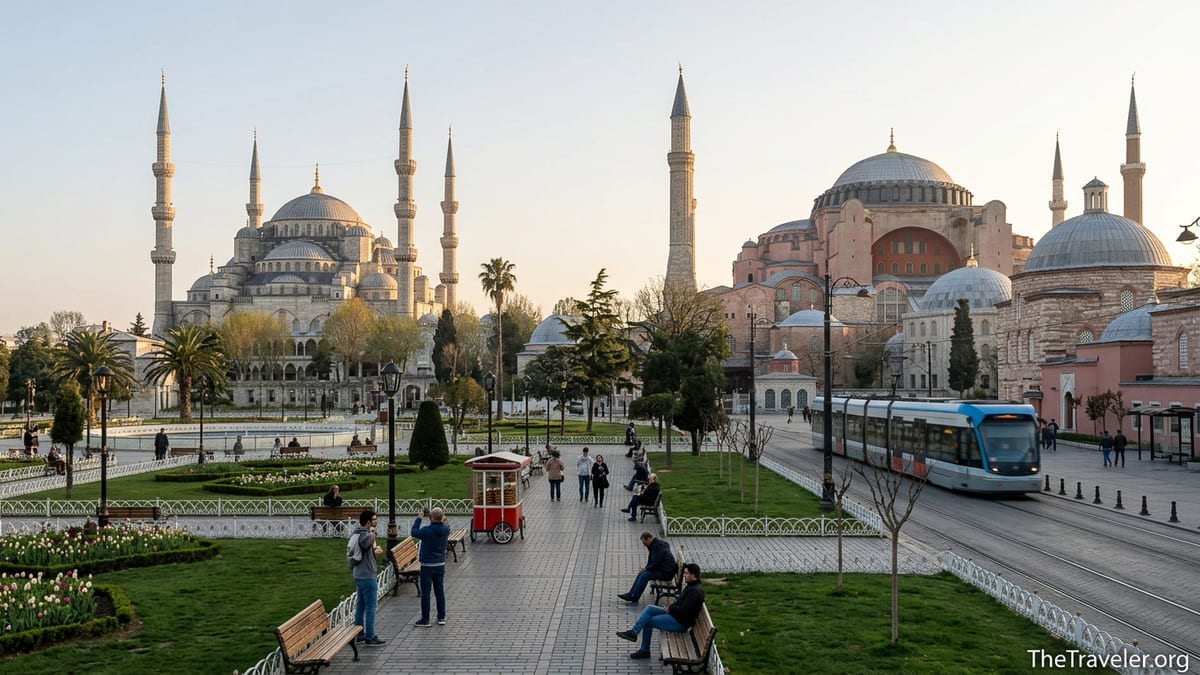
Orientation: What Exactly Is Sultanahmet?
Sultanahmet is the historic core of Istanbul, perched on a small hill on the city’s Old Peninsula in the Fatih district. In practical terms, the area runs roughly from the Marmara Sea walls in the south up to the busy Eminönü waterfront and Spice Bazaar, and from the old hippodrome (today’s Sultanahmet Square) west toward the Grand Bazaar. It is compact enough that you can walk from Hagia Sophia to the Grand Bazaar in about 15 to 20 minutes at a relaxed pace.
The neighborhood’s heart is Sultanahmet Square, once the Hippodrome of Constantinople. Today it is a long park lined with benches, food carts selling simit bread rings, and views of two of the city’s defining silhouettes: the 6-minaret Blue Mosque on one end and the massive dome of Hagia Sophia on the other. First-time visitors usually spend most of their time within a 1 kilometer radius of this square, where you will also find Topkapı Palace, the Basilica Cistern, and several smaller museums and mosques.
Sultanahmet’s streets are a mix of narrow, cobbled lanes lined with small hotels and family-run restaurants, plus a few wide avenues where the modern T1 tram glides past. It feels noticeably more traditional and conservative than neighborhoods across the Golden Horn such as Karaköy or Beyoğlu. Alcohol is available in many restaurants but not all, and prayer times shape the rhythm of the day, especially around large mosques.
For a first visit, think of Sultanahmet as your open-air museum district. You can absolutely base yourself here for three or four nights and explore most major sights on foot. Later, you can cross the Galata Bridge, ferry to Kadıköy on the Asian side, or ride the tram to livelier dining and nightlife areas once you have seen the essentials.
Getting In and Around: Trams, Istanbulkart and Walking
Most first-timers reach Sultanahmet either from Istanbul Airport on the European side or from Sabiha Gökçen Airport on the Asian side. From Istanbul Airport, a typical route in 2026 is to take the airport metro line toward the city, change to the M2 metro, then connect to the T1 tram that stops at Sultanahmet. This is slower than a taxi but far cheaper, often under the equivalent of a few euros per person. Licensed yellow taxis from the airport to Sultanahmet usually cost the rough equivalent of 25 to 35 euros depending on traffic and any nighttime surcharges; always insist the meter is turned on.
The T1 tram is your backbone for getting around once you are in the neighborhood. It runs from Bağcılar in the west all the way to Kabataş on the Bosphorus, stopping at key tourist areas including Sultanahmet, Gülhane, Eminönü for the Spice Bazaar and ferries, Karaköy under Galata Tower, and Kabataş for funicular access to Taksim. Trams typically run every 3 to 5 minutes during the day, and journeys within the central section of the line rarely take more than 15 to 20 minutes end to end.
To ride the tram and most city transport, you will use the Istanbulkart, a contactless stored-value card that works on trams, metros, buses, and ferries. As of early to mid 2026, the plastic card itself involves a one-time, nonrefundable fee of around 150 to 170 Turkish lira at official vending machines or kiosks, though this amount is subject to change with inflation. A single tram or metro ride paid with Istanbulkart typically costs the equivalent of around 1 to 1.5 euros, making public transit very good value compared with taxis. You can also buy limited-use paper cards or “City Cards” loaded with a fixed number of rides, which can work well if you are staying only a couple of days.
Look for yellow and blue vending machines at major tram and metro stops such as Sultanahmet, Eminönü, and the main interchanges. You can change the language on the screen to English. Always handle the machine yourself and politely decline unsolicited “help” from strangers offering to buy or load your card, as there have been reports of visitors paying far more than the official price this way. Instead, pay with cash or a card directly into the machine and keep your Istanbulkart topped up with enough balance for a full day of tram and ferry trips.
Essential Sights: Hagia Sophia, Blue Mosque and Beyond
For most visitors, the two absolute must-see places in Sultanahmet are Hagia Sophia and the Blue Mosque, which face each other across Sultanahmet Square. Hagia Sophia began life as a Byzantine cathedral in the 6th century, was converted into an Ottoman mosque in 1453, then served as a museum for much of the 20th century before becoming a mosque again in 2020. In recent years, access for tourists has been reorganized: non-Muslim visitors generally enter through specific doors, follow a guided circuit, and in many cases need to purchase a ticket for particular areas such as the upper gallery, while prayer spaces remain free for worshippers. Procedures and ticket prices have changed frequently, so once in Istanbul it is wise to confirm the current conditions at your hotel or from the official on-site information signs.
The Blue Mosque, officially Sultanahmet Camii, remains a functioning mosque and is free to enter outside prayer times. Restoration work that covered parts of the interior for years has largely been completed, and visitors can once again appreciate its cascade of domes and the famous blue İznik tiles that give the mosque its popular name. Plan to visit between prayer times, avoiding the roughly 30 to 45 minutes before and after each call to prayer when the mosque is closed to tourists. Early morning just after opening and late evening often feel calmer, especially in high season.
A short walk from the square brings you to the Basilica Cistern, an underground reservoir supported by hundreds of marble columns rising from shallow water. It is one of the most atmospheric sites in the district, with carefully lit walkways and occasional art installations. Entry requires a paid ticket, and queues can build in the middle of the day. If you are prone to crowds, visiting around opening time or late afternoon usually means shorter lines.
Topkapı Palace lies just northeast of Hagia Sophia in a large park overlooking the Bosphorus. Once home to Ottoman sultans, it is now a sprawling museum complex of courtyards, pavilions, treasury rooms, and the famous harem section, which requires a separate ticket or combined pass. Plan at least half a day here if you are interested in Ottoman history: the palace grounds alone involve considerable walking, and some of the smaller exhibits, such as the weapon collections and porcelain rooms, can be surprisingly absorbing.
Planning Your Days: Timing, Queues and Sample Itineraries
Sultanahmet’s main challenge is not deciding what to see but how to structure your time to avoid spending it in lines. During peak periods such as late spring and early autumn, queues for Hagia Sophia, the Basilica Cistern and Topkapı Palace can stretch across the square by mid-morning. A simple rule of thumb is to prioritize your top sight for first thing in the morning, arrive 15 to 30 minutes before opening time, and use early evening for a second major site, leaving the busiest midday hours for wandering, meals and breaks.
For example, on your first full day you could visit Hagia Sophia around opening time, then walk directly across to the Blue Mosque once it is open between prayer times. After lunch at a nearby lokanta serving dishes such as lentil soup, stuffed eggplant and grilled meat, you might spend the afternoon at the Basilica Cistern and a slower stroll through Sultanahmet Square and the hippodrome area, where you can view the ancient Egyptian obelisk and the remains of the Serpent Column in the open air without tickets.
On a second day, devote your morning to Topkapı Palace, taking advantage of the cooler hours and smaller crowds. Start with the main courtyards and treasury rooms, then continue to the harem if you have energy. Many visitors are surprised by how long they spend here, especially if they enjoy lingering in the gardens and terraces overlooking the Bosphorus. After a relaxed lunch, you could walk or take the tram to Eminönü and join an afternoon Bosphorus cruise, which gives a different perspective on the Old City’s skyline.
If your time is shorter, it is better to choose two or three key sights and enjoy them properly than try to cram everything into a single day. A common mistake in 2026 is people booking multiple guided tours back-to-back, such as Hagia Sophia, Topkapı, and a night cruise all on the same day, leaving them overheated and rushed. Allow gaps in your schedule for coffee in a shaded courtyard, a rest at your hotel, or an unplanned detour into a side street lined with old Ottoman houses.
Staying in Sultanahmet: Where to Sleep and What It Costs
Sultanahmet offers a wide range of places to stay, from small guesthouses on steep cobbled lanes to historic luxury hotels converted from former Ottoman buildings. Prices fluctuate with the season and the exchange rate, but by mid 2026 you can broadly expect simple guesthouse doubles to start around the equivalent of 50 to 80 euros per night, mid-range boutique hotels to fall in the 100 to 180 euro range, and top-end properties to cost 250 euros per night and up.
Many first-time visitors choose a mid-range hotel a short walk from Sultanahmet Square to enjoy both convenience and relative quiet at night. Streets such as Küçük Ayasofya Caddesi or the lanes behind the Blue Mosque are lined with small hotels that offer breakfast terraces with views of the Marmara Sea or the mosque domes. Look for places that mention double-glazed windows and air conditioning in summer, since call to prayer loudspeakers and busy tram routes can make some rooms noisy if you are a light sleeper.
Higher-end options cluster closer to the main square and around converted historic properties. The best of these combine traditional details like stone courtyards, wooden shutters and tile work with modern amenities such as soundproofing, spa facilities and reliable high-speed internet. If budget allows, staying in one of these hotels can transform your experience, letting you step out of a tranquil courtyard directly into the historic streets each morning.
If you are especially noise-sensitive or staying longer than three or four nights, it can be worth staying just outside the most touristy core, near Çemberlitaş or Beyazıt, which are still within walking distance of Sultanahmet but slightly less hectic. You will still be near tram stops and major sights, but you may find more local bakeries, supermarkets and everyday restaurants mixed in with tourist-oriented venues.
Eating, Shopping and Everyday Practicalities
Eating in Sultanahmet ranges from quick street snacks to rooftop restaurants with panoramic views. For simple, budget-friendly meals, seek out small lokanta-style places that display trays of cooked dishes behind glass: you can point to stews, rice, grilled chicken and vegetable dishes, and pay modest prices, often under the equivalent of 10 to 12 euros for a filling plate and drink. Simit carts around the square sell sesame-covered bread rings for just a few lira, a cheap and classic Istanbul snack that pairs well with tea.
Tourist-heavy streets right beside Sultanahmet Square tend to be significantly more expensive for average-quality food. Restaurant staff may stand outside with menus and try to persuade you inside, which is normal here, but you are under no obligation to stop. A good strategy is to walk two or three blocks away from the main square toward quieter side streets or up toward Çemberlitaş, where menus often have more local customers and more reasonable prices. Check whether prices are written clearly and whether there is any service charge listed at the bottom of the menu.
For shopping, the Grand Bazaar and the nearby Spice Bazaar are still the main draws. Both are easily reached from Sultanahmet on foot or by one or two tram stops. Inside the Grand Bazaar’s covered lanes, you will find everything from gold jewelry and carpets to leather jackets and souvenirs. Haggling is expected for most items, but it does not need to be aggressive: offer around 30 to 40 percent below the first price, stay friendly, and do not feel pressured to buy. If you are not interested, a simple “No, thank you” and continuing to walk is accepted.
Everyday practicalities are straightforward in Sultanahmet. ATMs from major Turkish banks line the main streets, and most hotels, restaurants and museum ticket offices accept international credit and debit cards. However, it is still useful to carry some cash in Turkish lira for small purchases such as simit, bottled water, tram top-ups and tips. Tap water in Istanbul is generally treated but many locals and visitors prefer bottled water for drinking, which is inexpensive and sold at every corner shop.
Safety, Scams and Respectful Behavior
Sultanahmet is one of Istanbul’s most heavily policed and monitored areas, and violent crime against tourists is rare. Petty theft such as pickpocketing can occur in crowded trams, busy queues and bazaars, so follow basic big-city precautions: keep your phone and wallet in front pockets or zipped bags, avoid leaving bags on chair backs in outdoor cafés, and be aware of your surroundings when someone bumps or distracts you.
More common than theft are soft scams and overpriced services. Typical examples include unofficial guides who approach you outside Hagia Sophia or the Blue Mosque, offering “free” tours that end in carpet shops, or individuals trying to sell you Bosphorus cruises at double the rate of official ticket windows near Eminönü. You will also find people who claim to be friendly locals inviting you for drinks that result in unexpectedly large bills. A simple rule is to only accept services you have actively chosen: book tours through your hotel or reputable agencies, buy tickets from marked kiosks, and be cautious about overly insistent strangers who appear out of nowhere to “practice English.”
Dress and behavior matter around Sultanahmet’s religious sites. While Istanbul is a major international city, the area immediately surrounding major mosques is more conservative than some other districts. Shoulders and knees should be covered when entering mosques, and women are usually asked to cover their hair with a scarf; if you forget, many major mosques lend or rent coverings at the entrance. Inside, keep your voice low, avoid walking in front of people who are praying, and do not take flash photos or point your camera directly at worshippers without permission.
Finally, be aware that smoking is restricted in many indoor public areas, though you will still see people smoking on café terraces and in some outdoor spaces. Alcohol is legal and widely available, but drinking in the street outside bars or in parks is generally frowned upon, especially near mosques and religious schools.
FAQ
Q1. Is Sultanahmet a good base for first-time visitors to Istanbul?
Sultanahmet is an excellent base if your priority is seeing the classic sights on foot. You can walk to Hagia Sophia, the Blue Mosque, Topkapı Palace and the Grand Bazaar in minutes. The main trade-off is that evenings are quieter and more touristy than areas like Beyoğlu or Kadıköy, which have livelier nightlife and more contemporary restaurants.
Q2. How many days should I spend in Sultanahmet?
Most first-time visitors are well served by spending at least two full days focused on Sultanahmet and the nearby bazaars. This gives you time to visit Hagia Sophia, the Blue Mosque, Topkapı Palace and the Basilica Cistern without rushing, plus wander through the Grand Bazaar or take a short Bosphorus cruise. With three or four days, you can add side trips across the Golden Horn or to the Asian side.
Q3. Do I need to book tickets in advance for Hagia Sophia and other sights?
It is wise to check current ticket arrangements for Hagia Sophia shortly before your trip, because systems have changed often in recent years. In general, you cannot reserve a specific time slot for the free prayer area, but you may be able to pre-purchase tickets for certain gallery or museum sections via official channels or reputable tour providers. For places like Topkapı Palace and the Basilica Cistern, many visitors buy tickets on the day, though skip-the-line tours can save time in high season.
Q4. What should I wear when visiting mosques in Sultanahmet?
Dress modestly: both men and women should cover shoulders and knees, and avoid tight or transparent clothing. Women are usually expected to cover their hair with a scarf inside mosques. You will be asked to remove your shoes at the entrance and carry them in a plastic bag or leave them on shelves. Bringing your own light scarf and wearing socks makes the process more comfortable.
Q5. Is the Istanbulkart worth it if I am staying only in Sultanahmet?
Yes, in most cases it is. Even if your hotel is in Sultanahmet, you will likely use the tram several times for short hops to Eminönü, Karaköy, the Spice Bazaar or ferry terminals, and possibly an airport or intercity bus connection. The Istanbulkart keeps each ride inexpensive and also works on ferries, which many visitors use at least once for a Bosphorus trip.
Q6. Are taxis reliable around Sultanahmet?
Official yellow taxis are generally safe and metered, but misunderstandings can happen, especially about fixed prices versus the meter. Always confirm “meter, please” before you start, and keep a rough idea of your route on a map app. For short hops within the Old City, you may find the tram faster and more predictable due to heavy traffic and one-way streets.
Q7. Is Sultanahmet safe to walk at night?
Sultanahmet is usually calm and feels safe in the evening, with families and tour groups still strolling around the main square and lit monuments. Side streets become quieter once restaurants close, so as in any city, stick to well-lit routes, avoid very dark alleys and be cautious if anyone tries to lead you to an unfamiliar bar or venue. Violent crime is rare, but petty scams and overcharging can still occur late at night.
Q8. Can I visit Hagia Sophia or the Blue Mosque during prayer times?
Non-Muslim visitors are not allowed to enter or remain in the main prayer halls during congregational prayers. For the Blue Mosque, tourist access is paused around each prayer time, especially the midday and Friday prayers. For Hagia Sophia, arrangements are more complex because of its dual role as mosque and major monument, so it is best to plan your visit outside busy prayer times such as Friday midday and religious holidays.
Q9. How much cash should I carry in Sultanahmet?
Most hotels, museum ticket offices and many restaurants accept cards, so you do not need to carry large amounts of cash. However, it is practical to keep the equivalent of 30 to 50 euros in Turkish lira for smaller expenses such as snacks, bottled water, tram top-ups, public toilets and tips. Use ATMs from well-known banks on main streets rather than isolated machines.
Q10. What is the best time of year to visit Sultanahmet for comfortable sightseeing?
Late April to early June and late September to October are often ideal, with mild temperatures and long daylight hours. July and August can be hot and crowded, while winter is quieter and cheaper but brings colder, rainy weather and shorter days. Regardless of season, try to visit major indoor sights early in the morning or later in the afternoon to avoid the heaviest lines.