


I went to Urho Kekkonen National Park looking for a quiet Lapland escape and a few scenic day hikes. Instead, that swath of Arctic wilderness in northern Finland tested nearly every part of me: my planning, my fitness, my tolerance for loneliness and, occasionally, my sense of humor. What looks on the map like a civilized network of trails and huts turned out to be a demanding backcountry classroom where small mistakes quickly grow teeth. If you are dreaming of hiking here, it is worth knowing how this park can surprise you, and what it feels like to learn the hard way.
Get the latest updates straight to your inbox!
Expectations vs. Reality at the Edge of Lapland
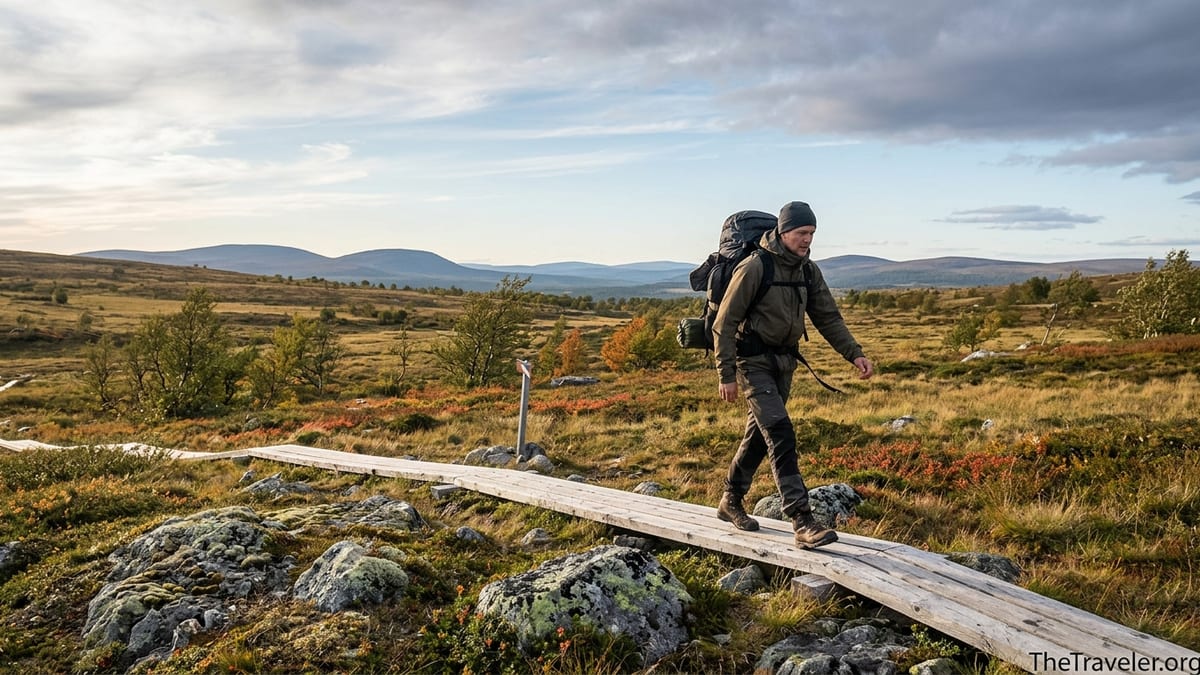
My mental image of Urho Kekkonen National Park was heavily influenced by tourism photos from Saariselkä and Kiilopää: rolling fells under pastel skies, well built duckboards over bogs, and couples in clean jackets posing beside trail signs. All of that does exist, particularly near the main gateways where most visitors stay on marked day routes. What I did not understand before stepping out from the Kiilopää trailhead was the scale. Urho Kekkonen covers roughly 2,550 square kilometers across northern Lapland, and once you walk a few hours beyond the day hiking loops the landscape swallows you whole. The distance between huts looks modest on the map; on the ground, those kilometers feel much longer when the wind is in your face and the path is only a faint line in the tundra.
My plan was modest: a four night circuit starting from Kiilopää, dipping into the wilder interior, then curving back via Luirojärvi, the lake that many Finns mention as the heart of the park. Guidebooks and recent trip reports made it sound straightforward for anyone comfortable carrying a pack and navigating marked trails. There were warnings, of course, about rapidly changing weather, river levels in late summer, and how crowded popular huts can get in peak season. I read them, but in that slightly detached way we all have before a trip, assuming they applied mostly to someone else. Within 48 hours of leaving Saariselkä’s supermarket with my food bag straining at the seams, I realized they applied directly to me.
The First Test: Logistics in a Place With Few Safety Nets
The testing started before I even took a step on the trail. Getting to Urho Kekkonen is not complicated on paper: fly to Ivalo, take a bus or transfer to Saariselkä or Kiilopää, buy last minute supplies, and start walking. In practice, it meant fitting my plans around limited bus timetables, early closing hours at small shops, and the reality that “I will just pick that up when I get there” is risky in a village where outdoor stores may have seasonal stock and groceries come at Lapland prices. A simple canister of gas for my stove cost more than I pay for a meal at home, and a bag of dried trekking meals was priced accordingly. Food here is not astronomically expensive, but over several days those small differences add up, especially for budget travelers.
Hut reservations and rules also required more attention than I expected. Urho Kekkonen is famous for its network of open wilderness huts, lean to shelters and reservable cabins scattered across the park. Many are free to use on a first come, first served basis, but camping rules vary between zones, and some of the more comfortable turf huts and rental cabins need advance booking. I had assumed that in early autumn, outside school holidays, I could rely on the open huts for sleeping. Reading the latest park guidance made it clear that this was poor practice. Regulations encourage hikers to carry a tent as backup, and even in quieter seasons you are expected to make room for whoever arrives after you. That meant adding a tent and warmer sleeping bag to my already heavy pack, a decision that would affect every uphill hour.
Into the Fells: When “Easy” Trails Feel Long
Leaving Kiilopää, the trail climbed quickly above the birch line and onto the open fells. Wooden duckboards crossed the worst of the bogs, and the path up to Ahopää and onward felt reassuringly well maintained. On a clear day, that ridge is one of the most rewarding introductions to the park: rounded tops stretching east toward the Russian border, shallow valleys brushed with heather and dwarf birch, and the sense that you can walk for days without repeating the same view twice. But even on this “easy” section I was surprised by how exposed I felt. There are few trees to hide behind, so the wind ran unhindered across the plateau, catching my wide brim hat and pushing against my loaded pack.
What the map marked as a medium day, roughly 15 kilometers to my first night’s campsite, turned into a stubborn grind. The trail itself was rarely technical, but the constant undulation and soft, sometimes spongy ground underfoot made my progress slower than expected. Unlike many Alpine routes where you climb once to a col and then descend, here the path often rolls up and down over minor rises. By mid afternoon I began to realize that distances in Urho Kekkonen are honest kilometers, not the optimistic trailhead signs you sometimes see elsewhere. When I finally reached a small river valley with a designated campfire site, the relief of dropping my pack reminded me how badly I had underestimated the cumulative effect of weight, wind and terrain.
Weather Mood Swings: From Golden Light to Cold Reality
My hike took place in early September, when the first real hints of autumn color touch Lapland. I had read that this is one of the most beautiful times to visit: cool but not yet winter, mosquitoes mostly gone, and hillsides turning red and gold. All of that is true, and my second evening at camp was bathed in that almost unreal Arctic twilight where the sky keeps glowing long after sunset. Yet it is also a time when weather can change brutally fast. Overnight, a warm, calm evening shifted into a raw, damp morning with low cloud hiding the ridgelines. Temperatures dropped close to freezing, a steady drizzle set in, and the wind funneled up the valley with enough force to make cooking outside a test of patience.
Water in Urho Kekkonen is generally abundant and clean, with streams running through most valleys. That sounds ideal until you realize that continuous rain can turn some crossings into serious obstacles. On my third day, a normally shallow brook between two low fells had risen just enough that stepping stones disappeared under opaque brown water. It was not dangerous, but it was just high enough to require wading, boots off, trousers rolled, pack straps loosened in case of a slip. On a cold, wet morning, standing barefoot in snow melt colored water was the moment that stripped away any lingering romanticism. The park does have bridges over larger rivers and even a cable device at certain crossings, but smaller streams demand real attention, especially after several days of rain.
Huts, Saunas and the Social Test of Sharing Space
Like many hikers, I had been intrigued by the idea of Finnish wilderness huts long before visiting. The reality of arriving at one after a long, wet day is even better than the stories suggest. My first hut night was at a small open cabin near a lake, a low timber building with bunks, a stove, stacks of cut firewood and a guestbook full of names from all over Europe. Outside, a designated fire ring and a rough bench faced the water. A notice on the wall summarized the etiquette: clean up after yourself, share the space fairly, do not occupy the hut for more nights than necessary, and always leave enough dry firewood and kindling for the next visitors. There was no warden to enforce this, only the shared culture of everyone who walks through that door.
That culture, however, also tested me. By mid evening our small hut was full: a Finnish couple on a week long circuit, two German friends on their first Lapland trek, and myself. Space is tight in these cabins, and there is an unspoken choreography in who cooks when, where wet clothes hang, and how loudly people talk after the stove is banked down. I am used to the privacy of my own tent, and adjusting to this communal rhythm took effort. There is also the subtle pressure of knowing that someone might arrive late, cold and tired, needing a corner of the floor. Even with my tent as backup, I found myself calculating which items I could move outside if more hikers appeared after dark. It is a small test compared with the wilderness itself, but for independent travelers who value solitude, the social demands of hut life are part of the learning curve.
The park is also dotted with wilderness saunas at certain huts, often simple log structures where you can pay a modest fee via mobile payment or in advance to enjoy a hot steam session after a day on the trail. At Luirojärvi, one of the most beloved hut clusters, soaking in the heat while watching the evening settle over the lake is almost a rite of passage. For me, it was another humbling experience: after days of hiking, I had to admit how much stiffness and fatigue I had been carrying. Every muscle that met the hot bench seemed to complain at once. It drove home the point that Urho Kekkonen’s apparent softness of landscape hides a physical challenge that accumulates quietly each day.
Navigating Vastness: When the Trail Fades Away
Near the main gateways, waymarking in Urho Kekkonen is excellent. Color coded posts, signboards with distances, and planked sections make navigation straightforward even in poor visibility. Once you push deeper into the park on longer routes, that certainty fades. Trails can become faint where they cross open tundra; reindeer paths intersect and confuse the line; in some boggy stretches the old boards have broken or sunk into the moss. My paper map and compass were constant companions, even though I carried a GPS device as a backup. On at least two occasions I realized, after only a few minutes, that I had followed an animal track away from the main route and needed to reorient.
This is where the park tested my judgment more than my fitness. On one gray afternoon, high on a featureless fell in light mist, visibility dropped enough that distant cairns became hard to spot. I could have pressed on at full speed, trusting the general direction, but a nagging voice reminded me how easy it would be to drift slowly off course and spend the evening hunting for a hut hidden in a valley. Instead, I slowed down, checked my bearings more often, and accepted that I might arrive after dark. It was a subtle but important shift in mindset. Urho Kekkonen rewards those who treat it like true wilderness, not an extended trail center. Even with reliable phone coverage in many areas, there are long stretches where you may not see another hiker all day. Losing the trail here is not a dramatic mountaineering emergency, but it is serious enough to warrant respect.
Costs, Comfort and What This Park Demands of You
No description of hiking in Urho Kekkonen would be honest without addressing cost. The park itself has no entrance fee, and open wilderness huts are free, which feels incredibly generous in a European context. Yet everything around that generosity carries a price. Reaching Lapland typically involves a domestic flight or long train journey to Rovaniemi or Ivalo, then buses north. Accommodation in Saariselkä, Kiilopää or nearby lodges is not cheap, even for dorm beds. Groceries cost more than in southern Finland, and a simple restaurant meal can quickly eat into a traveler’s budget. For many visitors, this means a trade off: spend more on comfort before and after the hike, or allocate that money toward better gear, extra food, and an extra night on the trail instead of rushing.
Comfort on the hike itself is another area where the park tests you. Trails are not technically extreme, but their cumulative strain favors those who have dialed in their pack weight and clothing. Waterproof boots that truly fit, a shell jacket that can handle hours of sideways rain, and small things like proper gloves and a warm hat matter more here than almost anywhere I have hiked in Europe. I watched one group of hikers, clearly strong and experienced in other mountains, struggle with soaked trail runners and inadequate insulation on a cold day above the treeline. The park does not punish under preparation immediately; it simply erodes your energy until decisions become sloppy. For solo travelers, that erosion can be the most dangerous aspect of all.
The Takeaway
Looking back, Urho Kekkonen National Park gave me exactly what I did not know I needed. It stripped away illusions of control built from more manicured hiking experiences and replaced them with a deeper respect for scale, weather and community in the far north. I left with blistered heels, sore shoulders and a renewed appreciation for the simple luxury of a grocery store that stays open late. I also left with the memory of standing alone on a quiet fell, clouds breaking just enough to show a line of distant hills glowing in late evening light, and the realization that there were no roads, no ski lifts, no cabins in sight for as far as I could see.
If you come to Urho Kekkonen expecting an easy extension of a ski resort, it will likely test you more than you expect. If you arrive ready to carry your own shelter, to adapt plans to weather and hut capacity, and to accept that some days will feel long and lonely, the park will reward you with something rare in modern Europe: the sensation of genuine wildness. For me, that mixture of challenge and quiet beauty has lodged itself firmly in memory, and I suspect I will be back, better prepared, to let it test me again.
FAQ
Q1. How many days do I need for a meaningful hike in Urho Kekkonen National Park?
Most hikers find that three to five days is enough for a rewarding hut or tent based circuit from Saariselkä or Kiilopää, though the park is large enough to support week long routes. Shorter day hikes are possible from the main gateways, but spending at least a couple of nights in the interior gives a far better feel for the scale and solitude of the area.
Q2. Do I need to reserve huts in advance or can I just show up?
The park offers both free open wilderness huts, where space is first come, first served, and reservable huts or turf cabins that require advance booking. Because open huts can fill up during busy periods, especially near popular lakes and along main routes, it is strongly recommended to carry a tent as backup even if you plan to sleep indoors most nights.
Q3. When is the best season for hiking rather than skiing?
Summer and early autumn, typically from June to early October depending on snow melt and the onset of winter, are the main hiking months. July and August offer the warmest conditions but also more mosquitoes, while early September usually brings cooler temperatures, fewer insects and striking autumn colors, along with a higher chance of cold rain and early frost.
Q4. How difficult are the trails for someone used to Alpine hiking?
Technically, most marked routes are moderate, with few steep or exposed sections compared with high Alpine passes. The difficulty comes from long distances between huts, soft or boggy ground that slows progress, and the exposure of open fells where wind and weather can be harsh. Hikers comfortable with back to back 15 to 20 kilometer days carrying a full pack usually adapt well.
Q5. Is navigation straightforward or do I need advanced skills?
Near the main gateways, waymarking is clear and trails are easy to follow, but deeper in the park paths can be faint, especially on open tundra or in bad weather. At a minimum you should be confident using a paper map and compass, with a GPS device or phone map as backup, and be prepared to slow down or adjust plans if visibility drops on the fells.
Q6. Can I rely on mobile phone coverage in the park?
Mobile reception exists on many higher ridges and near popular areas, but it is patchy and cannot be relied on everywhere. You should plan your route, carry physical maps and essential safety gear, and treat connectivity as a bonus rather than a guarantee, particularly if hiking solo or planning to cross more remote parts of the park.
Q7. How expensive is it to hike in Urho Kekkonen compared with other European parks?
The park itself is free to enter and open huts do not charge overnight fees, which helps keep direct costs low. However, reaching Finnish Lapland, buying supplies in small northern towns and staying in accommodation before or after your hike can be significantly more expensive than in many central European regions, so budgeting carefully for transport, food and gear is important.
Q8. What kind of gear is essential for a multi day trek here?
Sturdy, well broken in waterproof boots, a reliable rain shell, warm layers suitable for temperatures near freezing even in late summer, and a tent or lightweight shelter are all crucial. You will also want a good sleeping bag, stove and fuel, navigation tools, and dry bags or pack liners to keep clothing and sleeping gear protected from persistent rain and wet ground.
Q9. Are there many other hikers on the trails or will I be alone?
On routes close to Saariselkä and Kiilopää you will likely meet other hikers each day, especially in peak season, and popular huts can be busy in the evenings. Once you move deeper into the park on longer circuits, encounters become less frequent, and it is common to spend large parts of a day walking without seeing anyone, particularly outside school holidays.
Q10. Is Urho Kekkonen suitable for first time multi day hikers?
It can be, but only for beginners who are reasonably fit, willing to prepare carefully and comfortable carrying full camping gear in case huts are full or weather delays progress. Those completely new to multi day trekking might prefer to start with shorter overnight routes near the gateways before committing to longer crossings of the park’s more remote interior.