


In the remote northeast of Finnish Lapland, Urho Kekkonen National Park combines a true Arctic wilderness feel with one of Europe’s best hut networks. Here, treeless fells roll to the horizon, rivers twist through birch forest and a web of simple open and reservable cabins lets you hike for days without ever pitching a tent. Planning a trip can feel daunting at first, especially if you have never used Finnish wilderness huts before, but with a bit of preparation this park is surprisingly accessible even for international visitors.
Get the latest updates straight to your inbox!
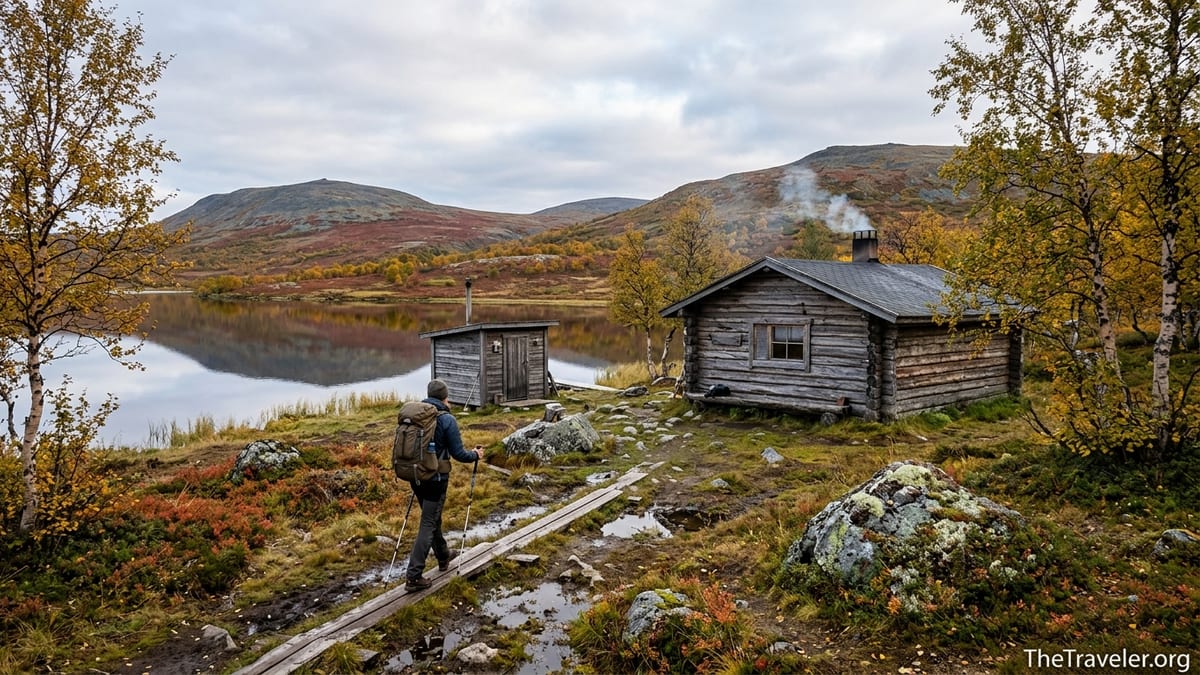
Understanding Urho Kekkonen National Park and Its Hut Culture
Urho Kekkonen National Park spreads across more than 2,500 square kilometres of fells, mires and forest in eastern Lapland, touching the municipalities of Savukoski, Sodankylä and Inari. Managed by the state forestry agency Metsähallitus, it is Finland’s second-largest national park and was named after former president Urho Kekkonen, an enthusiastic hiker who knew these landscapes well. The western side near Saariselkä and Kiilopää is more accessible and partially above the treeline, while the eastern half runs towards the Russian border and feels increasingly wild and pathless.
The park is famous among Finnish hikers for its open wilderness huts and reservable cabins. Open huts are free, shared shelters that you cannot pre-book; you simply arrive and accept that you may be sharing the space or, in popular spots, looking for a tent pitch nearby if beds are full. Reservable huts and reservable bunks inside larger buildings are bookable in advance for a modest fee, typically around 10 to 15 euros per person per night for a bed, paid via the official Eräluvat and Nationalparks.fi services. In practical terms, this means you can customise your trip: travel light and rely mainly on huts, or mix cabins with tent nights depending on weather and availability.
Spending the night in these huts is a central part of the Urho Kekkonen experience. On a typical evening in a place like Suomunruoktu or Tuiskukuru, you might find a few Finnish families boiling coffee on the gas stove, a couple of long-distance trekkers drying socks by the wood heater and a solo hiker arriving late out of the sleet. The etiquette is simple but strict: keep your gear compact, offer a greeting, make room for latecomers, and always leave the hut cleaner than you found it, with some firewood chopped for the next group.
This hut culture means that even in very remote valleys you are rarely completely isolated. For many international hikers this provides a reassuring safety net. You still need full self-sufficiency in clothing, food and navigation, but knowing there is a solid roof, a stove and human company at day’s end often makes multi-day Arctic hiking feel more approachable.
Planning Your Trip: When to Go and How to Get There
Most visitors who come for hut-to-hut hiking and Arctic scenery aim for either the snow-free season from roughly late June to late September, or the ski-touring season from March into April when there is good snow and long daylight. Early summer brings long days and fresh green birch leaves but also mosquitoes in lower, boggier areas. By late August and early September, mosquitoes fade and the famous ruska autumn colours explode across the fells, with groundcover turning deep red and birch forests glowing yellow. Winter and spring ski expeditions add the drama of snow and Northern Lights, but require much more experience, especially with navigation and cold management.
Reaching the park is relatively straightforward by Lapland standards. Most international travellers fly into Helsinki, then continue to Ivalo Airport, which is the closest airport to the main western trailheads. From Ivalo, regular buses and airport shuttles run to Saariselkä, Kiilopää and nearby resorts such as Kakslauttanen. The journey from Ivalo airport to Kiilopää, one of the classic starting points, typically takes under an hour and costs roughly the same as a regional bus ticket elsewhere in Finland, so you can realistically land in Ivalo in the morning and start walking the same afternoon.
If you prefer public transport all the way, long-distance trains run from southern Finland to Rovaniemi, often overnight, and connect with buses that continue north on the E75 road to Saariselkä, Kiilopää and Tankavaara. The Finnish Parks and Wildlife service publishes up-to-date directions and transport options for Urho Kekkonen National Park, and timetables are easily checked on national journey planners before you travel. Because bus schedules can shift seasonally, especially around spring and autumn shoulder periods, it is worth cross-checking dates and having a backup plan such as a slightly longer road walk from a different stop.
For maximum flexibility, some visitors rent a car in Rovaniemi or Ivalo and drive themselves to a trailhead car park, then use a hut-to-hut route that forms a loop back to the vehicle. This can work well if you want to store clean clothes or extra food in the car for your return. However, winter driving in Lapland can be demanding, with icy roads and snow, so if you are not confident with those conditions, buses and shuttles are a safer choice.
How the Hut System Works: Open, Reservable and Rental Cabins
Understanding the different hut types is essential for planning a realistic itinerary. Open wilderness huts are simple log or timber cabins, generally positioned one long day’s hike apart. They are unheated when you arrive, so the first task is usually to light the wood stove and fetch water from a nearby stream or lake. Facilities are intentionally basic: wooden bunks without mattresses or pillows, a table and benches, a stove, a few tools such as an axe and saw, and sometimes a gas cooktop. You bring your own sleeping bag, mat if needed, food, cookware and headlamp. Many huts sleep between eight and a dozen people; Luirojärvi’s main hut is among the larger ones with capacity in the low double digits.
Reservable huts and shared rental huts offer similar shelter but with guaranteed space for those who booked. In Luirojärvi, for instance, the main hut building combines an open section and a shared rental section, so you can either try your luck with the free area or pre-book a bed if you are travelling in peak season. Separate fully private rental cabins, such as some turf-roofed huts in the Muorravaarakka area, can also be booked for exclusive use by a small group. Prices for these private cabins are higher but still modest compared to commercial lodges in Lapland, and they give you a quiet base for day hikes.
Reservations are handled through official online services operated in cooperation with Metsähallitus. When you book, you receive a confirmation that you should carry with you, either printed or on a charged phone. There is no reception desk in the wilderness, so you simply show up and occupy your assigned bed space. In popular weeks around Easter in ski season and during September foliage, beds in classic huts like Luirojärvi, Tuiskukuru or Rautulampi can sell out. If you prefer more spontaneity, consider aiming for lesser-known huts or travelling slightly off-peak.
Regardless of hut type, the code of conduct is consistent: open huts are primarily for those on foot or skis who genuinely need a roof, and commercial groups are not supposed to occupy them. Overnight stays are normally limited to one or two nights to keep space circulating. You are expected to carry out all trash, use dry toilets correctly, conserve firewood and leave some split logs and kindling ready. These expectations are not just politeness but a practical safety layer in a far-north environment where arriving wet and cold to a trashed hut with no fuel can quickly become dangerous.
Classic Hut-to-Hut Routes for Hiking and Skiing
One of the best introductions to both the hut system and the park’s Arctic landscapes is the classic loop from Kiilopää to Luirojärvi and back via different huts. In summer, a typical five or six day itinerary might run Kiilopää to Suomunruoktu, on to Tuiskukuru, then Luirojärvi for a rest day or summit of Sokosti fell, before returning via Kotaköngäs and Rautulampi to Kiilopää. Each leg is on the order of 15 to 20 kilometres, long enough to feel like a journey but manageable for moderately fit hikers carrying reasonable packs. The route starts in dwarf birch and low forest, climbs onto open fells with big skies, dips into boggy valleys and finishes with panoramic views over the Saariselkä area.
Luirojärvi itself is a highlight for many visitors. The lake sits in a wide, open basin ringed by smooth, tundra-like fells. On clear evenings the low Arctic sun rakes across the slopes, turning lichen and heather golden. A simple public sauna stands near the shore and is heated by hikers in rotation, often with informal agreements posted in the hut so that a few people share the work of chopping extra wood and heating the stove. After a long day in wind and sleet, sitting on a wooden bench in that sauna and then plunging into the cold lake is one of the quintessential Lapland experiences.
For a shorter trip, Rautulampi makes a very achievable overnight destination from either Kiilopää or Saariselkä. The Rautulampi hut sits in a scenic hollow with a small lake and surrounding rounded fells, giving a strong feeling of being “out there” despite being perhaps a day’s walk from road access. Many visitors use it as a first experience of staying in an open hut. In winter, marked ski trails and snowmobile-maintained tracks connect Kiilopää, Rautulampi and nearby huts, allowing multiday ski tours that link several cabins without demanding advanced off-trail navigation.
More experienced hikers and skiers often plan custom loops into the park’s eastern sectors, heading beyond Luirojärvi towards Anterinmukka, Muorravaarakka and the remote border regions. Here, path markings decrease and you may go a full day without seeing another person, even in high season. These routes reward strong map and compass skills and full self-reliance, with huts used more as intermittent safe havens than daily stops. The appeal lies in the sheer space: long valleys where reindeer trails braid the heather, rivers that must be forded or followed for kilometres, and ridgelines where the fells roll away towards Russia.
Reading the Arctic Landscape: Fells, Rivers and Weather
Urho Kekkonen’s scenery is not dramatic in the Alpine sense; there are no jagged rock walls or glaciers. Instead, its power is subtle and wide. Rounded fells like Kiilopää and Sokosti rise to modest elevations by world standards, but because the treeline is low, you are above it quickly and the sense of openness is immense. From a summit ridge near Luirojärvi you can easily see tens of kilometres in every direction, with the low sun casting long shadows that emphasise every ridge and hollow in the tundra.
Valleys and river corridors add variety and shelter. The Suomujoki and Lutto rivers, among others, thread through forested sections where you may hike in the shade of birch and some pine, with boggy flats and boardwalks in places. In summer, these lower areas can feel more humid and buggy than the windswept felltops, so many hikers time their days to move through river valleys earlier or later when temperatures drop and mosquitoes are less active. In autumn, these same birch stands turn vivid yellow and orange, reflecting in still pools and making even an overcast day feel colourful.
Weather is a decisive factor in how you read and move through this landscape. Even in July, a front can bring temperatures close to freezing on the fells, with sleet or wet snow possible. In April ski season, a warm spell can soften snow into exhausting slush by afternoon, while a cold clear night can freeze surface layers into fast, hard crust that makes morning travel easy but increases the risk of frostbite for unprotected fingers and toes. On days of poor visibility, the rounded, treeless fells can become disorienting, and compass bearings or GPS tracks are essential to avoid wandering off-course into steep-sided stream gullies or mires.
The huts themselves become navigational and psychological anchors in this environment. Many are placed in slight depressions or at treeline transitions where they are sheltered from the worst winds, often near good water sources. Approaching a hut like Tuiskukuru in a snowstorm involves more than just following a line on the map; you learn to read how valleys funnel wind, how snow accumulates around stream beds and how trail markers may drift partly buried by snow. Building these skills over a few days in the western, better-trodden part of the park is wise before committing to longer off-track routes deeper east.
Practicalities: Food, Gear and Daily Life in the Huts
Because there are no shops or staffed lodges inside the national park itself, you need to bring all of your food for the days you plan to be out. Most hikers stock up in a supermarket in Ivalo or Saariselkä before heading to the trailhead, choosing dense, straightforward items: rye bread, cheese, nuts, pasta, instant potatoes, dried soups and packaged hiking meals. With huts offering stoves but no cookware or plates, an efficient setup might include a single lightweight pot, a mug, a spoon and a small cutting board. Fuel for your own stove is a useful backup if gas at huts is temporarily out of order.
In summer, standard Lapland hiking gear applies: waterproof boots that can handle occasional boggy sections, a good rain jacket and trousers, warm layers including a lightweight down or synthetic jacket, and a mosquito head net for valley sections. A three-season sleeping bag comfortable to at least freezing is appropriate, as hut interiors can be chilly until the stove has been running for some time. In shoulder seasons, adding a sleeping bag liner and warmer base layers increases comfort without much weight.
In winter and early spring, equipment requirements rise sharply. Many visitors use backcountry skis with half-length skins and sleds (pulkkas) to tow food and gear. Clothing systems rely on vapour barrier principles and multiple insulating layers, with particular attention to mittens, spare gloves and face protection against windburn. Inside huts, routines change: instead of hanging damp socks outside, you might spread them on lines above the stove or tuck them into your sleeping bag overnight. Because darkness comes early in midwinter, a powerful headlamp with spare batteries becomes as crucial as your map.
Daily life in the huts revolves around simple tasks. When you arrive, you fetch water, light the stove, check the guest book for notes about trail or weather conditions and choose a bunk that does not block others. Later you cook, chat quietly, perhaps play cards by lantern light and plan the next day’s leg, studying contour lines to understand whether you will be following a valley floor, crossing a broad fell plateau or fording streams. Before you leave in the morning, you sweep the floor, carry out all trash, restock kindling and note any important observations in the guest book for the next party.
Safety, Regulations and Respecting a Fragile Environment
Finland’s Everyman’s Rights allow broad access to nature, but inside national parks like Urho Kekkonen there are specific regulations designed to protect sensitive habitats and ensure safety. Hiking is generally permitted throughout the park, but some zones may restrict camping or open fires to designated sites. Fishing in flowing waters such as rivers usually requires both a national fisheries management fee and a local angling permit, which you can purchase online before your trip. Drones may be restricted near bird nesting areas, and hunting is limited or prohibited in designated park sections.
Because the park has no entry fee and huts are inexpensive or free, it can be easy to overlook just how much infrastructure and habitat management is required to keep the system functioning. Simple habits make a large difference: using marked fire pits instead of improvising new ones, carrying a small rubbish bag to pack out food waste and avoiding shortcutting switchbacks that accelerate erosion in fragile tundra soils. Even something as basic as closing hut doors and windows properly helps conserve firewood stocks and reduces the risk of snow or rain damage.
From a personal safety perspective, navigation and communication deserve special attention. Phone coverage is patchy away from the western fringe, and even in areas with signal, cold can drain batteries quickly. Many experienced hikers carry a power bank and a secondary navigation method such as a map and compass or a GPS device with spare batteries. In winter and on longer routes, a satellite communicator or personal locator beacon adds another layer of security. Local visitor centres in Saariselkä and Tankavaara can provide current information on river levels, snow conditions, bridge closures and temporary hut repairs or closures, which may require re-routing.
Finally, respecting local culture is part of responsible travel here. Large parts of the broader region are used by Sámi reindeer herders, and while much of Urho Kekkonen National Park itself focuses on recreation and conservation, reindeer commonly graze across the fells. When you encounter herds, give them space and avoid chasing them for photos. Dogs should be leashed where required. By treating both the human and non-human inhabitants of this landscape with care, you help keep the park wild and welcoming for the next generation of hikers.
The Takeaway
Exploring Urho Kekkonen National Park through its network of open huts and reservable cabins is one of the most rewarding ways to experience Arctic Europe. The combination of accessible trailheads, a dense but low-key hut system and truly expansive wilderness makes it unique: you can step off a bus from Ivalo in the morning and be warming yourself by a wood stove in a remote valley by evening. Over a few days, routines in the huts become familiar, the fells start to make sense as you learn to read their lines, and the distance from everyday life feels vast.
Success in this environment comes from thoughtful planning rather than mere toughness. Choosing the right season for your skills, understanding how hut reservations work, carrying appropriate gear for quick-changing weather and respecting both rules and hut etiquette all convert what might seem like a forbidding Arctic wilderness into a welcoming, if still serious, playground. With each valley crossed and each night spent sharing stories around a cabin table, the park’s scale shifts from intimidating to intimate.
Whether you opt for a gentle overnight to Rautulampi, a classic five-day loop to Luirojärvi or a full expedition to the park’s remote eastern reaches, Urho Kekkonen rewards those who move slowly, pay attention and leave light footprints. The cabins are more than just roofs; they are tiny outposts of human warmth in a vast northern landscape. Step between them with care, and you will come away with a deep, lasting sense of what Arctic wilderness can be.
FAQ
Q1. Do I need to pay an entrance fee to Urho Kekkonen National Park?
There is no entrance fee to the park or its visitor centres. Costs arise mainly from transport, hut reservations, food and gear.
Q2. How much does it cost to stay in the huts?
Open wilderness huts are free but cannot be reserved. Beds in shared reservable huts and paid rental cabins typically cost a modest per person nightly fee booked in advance.
Q3. Can beginners use the hut system, or is it only for experts?
The western part of the park, around Kiilopää, Saariselkä and Rautulampi, suits fit beginners who have basic hiking skills and good preparation. Deeper eastern routes are better for experienced hikers and skiers.
Q4. Do I need to bring a tent if I plan to sleep in huts?
Many visitors carry a lightweight tent or bivy as a backup in case huts are full or conditions change. In peak seasons this is strongly recommended, even on popular routes.
Q5. What is the best season for hut-to-hut hiking?
For snow-free hiking, late August to mid September combines cooler temperatures, fewer insects and autumn colours. For ski touring, many people choose March and early April when snow is stable and days are long.
Q6. Are there saunas in the wilderness huts?
Some huts, notably at Luirojärvi and a few other locations, have simple wood-fired saunas that hikers can use. They are unstaffed, so users heat the stove and fetch water themselves.
Q7. Is it possible to travel in the park using only public transport?
Yes. You can fly or train to northern Finland, then use regional buses or airport shuttles to reach trailheads such as Kiilopää, Saariselkä or Tankavaara without renting a car.
Q8. What maps and navigation tools should I carry?
A detailed topographic map covering your route, a reliable compass and a GPS-enabled device are recommended. Do not rely solely on a smartphone, especially in winter or remote eastern areas.
Q9. Are campfires allowed anywhere in the park?
Open fires are generally allowed only at designated fireplaces and lean-tos, and may be temporarily restricted during dry periods. Always follow local fire warnings and use existing fire rings.
Q10. Can I visit Urho Kekkonen National Park in winter without ski experience?
The park is a serious winter environment. If you lack ski or deep-snow experience, it is safer to start with short day trips from road-accessible areas or join a guided tour rather than committing to a multi-day hut-to-hut ski.