


For many visitors, the smartest way to experience New York City is not by sleeping in Manhattan at all, but just across the Hudson River in New Jersey. Hoboken and Jersey City sit directly opposite Midtown and Lower Manhattan, offering fast PATH train and ferry connections, skyline views, and generally better value on hotels and rentals. Yet the two cities feel very different on the ground. Choosing the right base can shape everything from your nightly budget to how late you stay out, whether you stroll quiet waterfront parks or bar-hop until 2 a.m. This guide compares Hoboken and Jersey City with real-world examples so you can decide which is better for your style of trip.
Get the latest updates straight to your inbox!
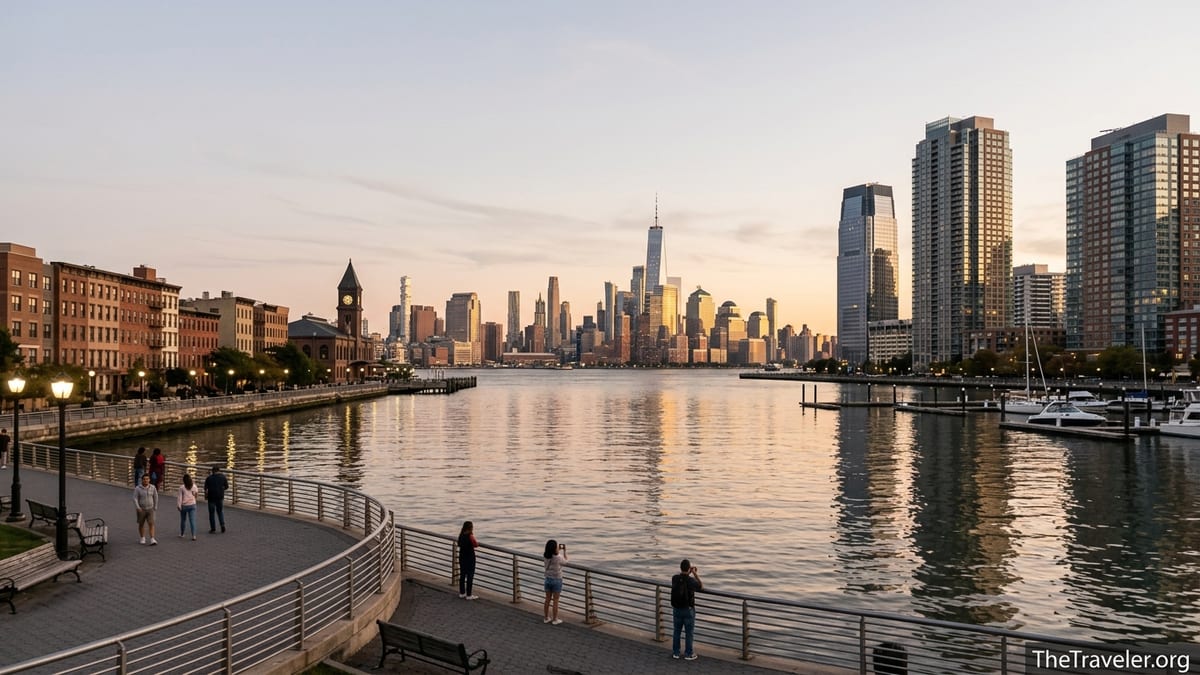
Overall Vibe: Compact Town vs Emerging Mini‑City
Hoboken is often described by locals as a dense small town grafted onto the edge of New York. Washington Street, its main commercial strip, runs for about a mile with a tight run of bars, pizza joints, independent boutiques, and corner delis. Visitor discussion boards frequently call it walkable and “small town” in feel, where you can cross most of the city on foot in 20 to 25 minutes and quickly recognize the same cafes and bakeries on your morning coffee run. That makes it especially appealing if you like to base yourself in a single neighborhood and explore mostly on foot rather than hop between districts.
Jersey City, by contrast, feels more like a true city in its own right. Downtown neighborhoods such as Grove Street, the Waterfront, and Paulus Hook have grown into high-rise clusters with financial offices, residential towers, malls, and restaurants that some real estate guides now call “New York’s sixth borough” because of their skyline and commuter-heavy feel. Other districts like Journal Square and the Heights have their own main drags, murals, and local food scenes, so exploring Jersey City can feel more like exploring parts of Brooklyn or Queens than a single compact town. For visitors, that means more variety but also more reliance on light rail, ride-hails, or bikes to jump between areas.
Online community conversations tend to paint Hoboken as skewing younger and more social, with a strong post-college crowd and nightlife centered on Washington Street and the waterfront. Jersey City is often portrayed as more mixed: families pushing strollers along the Hudson River Waterfront Walkway, professionals commuting into the World Trade Center, and long-time residents heading to Latin American, Filipino, or Indian restaurants that reflect the city’s well-known diversity. If you want a nightlife-focused long weekend, Hoboken may feel more like a ready-made bar district. If you want a base that feels like an actual city neighborhood ecosystem, Jersey City typically wins.
Both destinations feel noticeably calmer than Midtown Manhattan. Visitors who move over from Times Square often remark on how quickly the noise drops once they exit the PATH. You still get city energy, but sidewalks are less clogged with tour groups, and you are more likely to share your morning coffee line with commuters than with other tourists.
Location and Transit: How Fast Can You Reach Manhattan?
For most visitors, the headline question is simple: how long will it take to get from the hotel door to the places you want to see in New York. Hoboken and Jersey City are both wired into the PATH rail network, which connects directly to Manhattan subway stations. From Hoboken Terminal, PATH trains run to the World Trade Center in Lower Manhattan and to 33rd Street in Midtown via stops under Sixth Avenue. Actual travel time on the train is often around 10 to 15 minutes to these terminals, not counting the walk from your lodging to the station and any security or crowding delays.
Jersey City has multiple PATH stops, which changes the equation. Downtown visitors often stay near Grove Street or Exchange Place stations, where trains to the World Trade Center can take roughly 5 to 7 minutes across the river, one of the shortest cross-Hudson commutes available. Real estate and neighborhood guides highlight that staying near these stations effectively puts you a quick ride from Wall Street, Brookfield Place, and the 9/11 Memorial, while also offering a one-train hop up to Midtown via the Newport and Hoboken connections. If your New York plans focus heavily on Lower Manhattan, these Jersey City stations are particularly convenient.
Ferry options add another layer. NY Waterway ferries operate from Hoboken’s waterfront and from Jersey City terminals such as Paulus Hook and Liberty Harbor, crossing to Lower Manhattan and Midtown. Timetables and prices change, but as an example, a one-way weekday ferry from Hoboken to Brookfield Place in Lower Manhattan is typically a bit more expensive than a PATH ride yet gives you a scenic 10-minute trip past the skyline. Visitors sometimes choose ferries in one direction, especially at sunset, then return by PATH after dark when service is frequent and weather is less pleasant. Jersey City also benefits from the Liberty Landing Ferry that links Liberty State Park and Liberty Harbor to Battery Park City, particularly useful if you are heading to the Statue of Liberty or Ellis Island.
If late-night transit is a concern, both cities are viable. PATH service generally runs 24 hours, though with lower frequency overnight. In practice, many visitors attending Broadway shows or dinners in Midtown plan to be back on a PATH train before 1 to 2 a.m., when waits can grow longer. Jersey City’s advantage is having several PATH stations, so you may be a shorter walk home after that last train. Hoboken’s single station at the southern end of town can mean a 15 to 20-minute walk for those staying near popular uptown spots like Pier 13, though taxis and rideshares are common.
Hotels, Airbnbs, and What You Might Actually Pay
Both Hoboken and Jersey City tend to offer better value than Manhattan, but prices can still be high by broader US standards. As of mid 2026, a typical chain hotel near the Jersey City waterfront might advertise nightly rates that fluctuate between roughly 220 and 350 dollars plus taxes for a standard room, depending on season and events. Hoboken has fewer traditional hotels, so visitors often turn to short-term rentals in brownstone apartments or newer condo buildings. These can range widely, but it is common to see one-bedroom rentals in central Hoboken listing for the equivalent of 250 to 400 dollars per night for peak weekends.
Jersey City simply has more inventory. Downtown and Waterfront neighborhoods contain multiple mid-range hotels and serviced apartment buildings aimed at business travelers working at local banks and tech firms. Some of these apartment hotels offer conveniences like in-room kitchens and on-site laundries, which can be attractive if you are staying a week or traveling with young children. Because there are more competing properties, visitors often find better deals there than in Hoboken, particularly if they book several months ahead or target Sunday through Thursday stays instead of busy Friday and Saturday nights.
Hoboken’s compact size means that almost anywhere you stay will be walkable to Washington Street and the waterfront, but that can come at a premium. A two-bedroom apartment on tree-lined streets a short walk from the PATH might command a noticeably higher nightly rate than a similar-size unit in Jersey City’s Journal Square, which is farther from the waterfront but still on the PATH line. If budget is your primary concern and you are flexible about neighborhood feel, Jersey City offers more room to trade a slightly longer ride or walk for lower nightly costs.
Booking patterns matter too. If you are visiting during large regional events, such as big concerts at MetLife Stadium or major sports events, both Hoboken and Jersey City can see prices spike as demand pushes across the river from Manhattan. In those cases, travelers who lock in refundable rates several months out often do best, and combing both cities for deals can be worthwhile rather than tying yourself to one by name alone.
Food, Nightlife, and Neighborhood Character
Hoboken’s social life is one of its main draws. Along Washington Street and the adjacent side streets you will find a tight run of bars, from sports bars with game-day crowds to cocktail lounges and long-running Irish pubs. Many of these places do brisk business with the city’s large population of twenty- and thirty-something professionals. On a typical Friday night, you might hop between a pizza slice joint, a crowded bar playing 90s music, and a waterfront spot overlooking the Empire State Building, all within a short walk. Seasonal venues like the outdoor Pier 13 beer garden and food truck pier add to the party-like summer atmosphere.
Jersey City’s dining and nightlife scene is more spread out and eclectic. Downtown around Grove Street you will find craft cocktail bars, breweries, and wine bars, many lining pedestrian plazas where live music and open-air markets are common on warm evenings. Paulus Hook and the Waterfront offer higher-end restaurants and rooftop bars with direct skyline views. Farther afield, the Heights neighborhood is known for its observation points over Manhattan as well as a growing cluster of small restaurants, while other districts host everything from Filipino bakeries to Indian sweet shops and taquerias. You will not cover all of this on a single night out, but that variety can make Jersey City feel less like a single “strip” and more like a patchwork of local scenes.
If you are traveling with kids or prefer relaxed evenings, both cities still work. In Hoboken, many families frequent waterfront parks like Pier A and Maxwell Place Park for playgrounds and picnics, then grab casual dinners at family-friendly Italian or burger spots along Washington. In Jersey City, family itineraries often pair an afternoon at Liberty State Park or the Liberty Science Center with early dinners along the marina or in downtown, where many restaurants have kids’ menus and outdoor seating. Visitors who want a quieter base may prefer to stay a block or two off the main nightlife streets in either city.
It is also worth factoring in Sunday through Thursday nights, when both destinations are calmer. Business travelers in Jersey City often fill hotel lounges and steakhouses early in the week, while Hoboken’s social energy tends to peak Thursday through Saturday as local residents and visitors meet after work. If your trip revolves around Broadway shows and Manhattan restaurants and you only expect one or two nights out locally, your choice may hinge less on nightlife and more on transit convenience and price.
Waterfront Parks, Views, and Things To Do Locally
One area where Jersey City clearly stands out is parkland. Liberty State Park, a more than 1,000-acre waterfront green space, spreads along the harbor with sweeping views of the Statue of Liberty, Ellis Island, and the Lower Manhattan skyline. Visiting from a Jersey City base, you can bike or take a short rideshare to the park, walk the long promenade, and board ferries directly to Liberty Island and Ellis Island without first going into Manhattan. Local tourism materials point out that both landmarks technically sit in New Jersey waters, so beginning the trip here simply makes logistical sense for many travelers.
Jersey City’s Hudson River Waterfront Walkway extends for miles along the river, connecting neighborhoods like Newport, Exchange Place, and Paulus Hook with continuous views of Manhattan. This path is popular for joggers, cyclists, and families with strollers. You will find small pocket parks, seating areas, and piers where residents fish or sit with takeout food in the evenings. Downtown, the Colgate Clock and various public art installations create recognizable landmarks, and Citi Bike stations and light rail stops dot the route, making it easy to cover longer distances without a car.
Hoboken’s waterfront is shorter in length but equally beloved by locals. Pier A Park, right next to Hoboken Terminal, offers lawns where people lay out blankets, read, and play informal soccer games with One World Trade Center towering across the water. Farther north, parks like Maxwell Place Park blend small sandy edges, playgrounds, and dog runs, while Sinatra Drive provides a continuous esplanade popular for strolling and jogging. Seasonal spots such as Pier 13 add food trucks and outdoor seating, turning the waterfront into a social hub on warm evenings.
For indoor attractions, Hoboken’s draw is more about atmosphere and small-scale experiences: a visit to Carlo’s Bakery made famous on reality television, browsing independent shops and galleries, and perhaps touring Stevens Institute of Technology’s hilltop campus for another angle on the skyline. Jersey City offers larger institutions like Liberty Science Center, which is packed with hands-on exhibits, a large planetarium, and traveling blockbuster exhibitions that are especially appealing for families spending several days in the area.
Safety, Walkability, and Getting Around Without a Car
Both Hoboken and the main visitor sections of Jersey City are heavily used by commuters and families, which adds to a baseline sense of safety for most visitors who practice normal urban awareness. Hoboken is almost entirely walkable, with grid-like streets and frequent crosswalks. You can land at the PATH station or ferry slip and walk to most restaurants, bars, and parks within 5 to 15 minutes. This simplicity is a large part of its appeal, especially if you are visiting for a short weekend and do not want to puzzle over bus routes or ride-hail logistics.
Jersey City is more varied. Waterfront and downtown neighborhoods such as Newport, Exchange Place, Grove Street, and Paulus Hook have become dense, walkable districts filled with office workers by day and restaurant crowds by night. You can comfortably explore these areas on foot, using the Hudson-Bergen Light Rail or Citi Bike to extend your range along the river. The Heights, Journal Square, and other up-the-hill neighborhoods feel more residential and are connected by PATH, buses, and occasional jitneys. Many visitors choose lodging within a five-minute walk of a PATH station and then use ride-hails sparingly at night or when returning from Liberty State Park.
For travelers unfamiliar with the region, an important detail is that parking is limited and often expensive in both Hoboken and downtown Jersey City, with some garages approaching Manhattan-like rates. Many locals emphasize that you do not need a car if your goal is exploring New York, Hoboken, and the Jersey City waterfront. Arriving by train via Newark or directly from Newark Liberty International Airport, then relying on PATH, ferries, light rail, and walking, is usually simpler and often cheaper once tolls and parking are considered.
Late-night walking is a common concern. In both destinations, staying near the busiest stretches of Washington Street in Hoboken or near Grove Street and Exchange Place in Jersey City means you will typically share sidewalks with other people until late, particularly on weekends. If you expect to return after midnight regularly, choosing accommodation close to a PATH station and sticking to main, well-lit routes is a practical and commonly recommended approach.
Which Visitors Hoboken Fits Best vs Jersey City
Hoboken tends to suit visitors who value compactness, a defined nightlife strip, and a clearly legible layout. A long-weekend trip might involve brunch at a Washington Street cafe, an afternoon along the waterfront, a quick PATH ride into Manhattan for museums or a show, then dinner and drinks back in Hoboken. Couples or groups in their twenties and early thirties often appreciate that they can bar-hop without using transit, and families with strollers like that playgrounds, coffee, and casual dining sit within a few blocks of one another. If your mental image of the trip is “a lively but manageable town right across from New York,” Hoboken is likely to match that picture well.
Jersey City is better suited to travelers who want a bigger canvas. If you plan to stay five to seven nights, mix Manhattan sightseeing with days focused on Liberty State Park, Ellis Island access, and neighborhood wandering, the city’s size becomes an advantage rather than a drawback. Food-focused travelers may enjoy exploring the varied dining scenes in downtown, the Heights, and other districts, tasting everything from high-end waterfront sushi to hole-in-the-wall curry houses. Visitors curious about relocating to the region also tend to favor Jersey City, as it offers a more representative sense of day-to-day life in the New York metro area beyond the most polished bar strips.
Budget also nudges the decision. While neither city is cheap, travelers who need to keep nightly costs under tight control will usually find more options in Jersey City, especially slightly inland from the waterfront but still close to PATH. Larger groups who want multi-bedroom apartments are more likely to find them in converted warehouses or new towers in Jersey City than in Hoboken’s denser brownstone inventory. On the other hand, if your budget can comfortably stretch to a high-end rental near the Hoboken waterfront, the combination of views and walkability is hard to beat.
In practice, many visitors split the difference. For a first trip centered heavily on Manhattan, they may pick whichever city offers the best deal near a PATH station on their dates, then spend one evening deliberately exploring the other by hopping a short PATH or light rail ride up and down the river. Both Hoboken and Jersey City reward that kind of curiosity, and your impressions from a night on the ground can help guide where you stay on a future visit.
The Takeaway
Hoboken and Jersey City both deliver what many New York visitors quietly want: fast transit into Manhattan, skyline views, and a chance to sleep in a neighborhood that feels lived-in rather than purely touristic. Hoboken offers a compact, easy-to-navigate town with a strong social scene, especially appealing for short breaks and nightlife-oriented trips. Jersey City provides a broader spectrum of neighborhoods, more parkland and direct access to landmarks like Liberty State Park, and a wider range of accommodations that can make longer stays or tighter budgets more workable.
There is no single right answer to whether Hoboken is “better” than Jersey City. The better choice is the one that matches how you actually travel, how late you expect to be out, how often you want to cook or do laundry, and how much you want to pay per night. For many travelers, the best approach is to treat the Hudson River waterfront as one connected urban strip, choose the hotel or rental that looks best in either city, and plan on exploring both sides during the trip. That way you get the small-town charm of Hoboken and the urban depth of Jersey City while still returning to Manhattan whenever the mood strikes.
FAQ
Q1. Is Hoboken or Jersey City closer to Manhattan for sightseeing?
Jersey City’s downtown PATH stations at Exchange Place and Grove Street are marginally closer by train to Lower Manhattan, while Hoboken offers very fast connections to both downtown and Midtown. In day-to-day use, the difference is usually only a few minutes, so being near any PATH station in either city matters more than the city name itself.
Q2. Which is cheaper for hotels and rentals, Hoboken or Jersey City?
Prices vary by date, but Jersey City usually has more mid-range hotels and serviced apartments, especially along the waterfront and near Grove Street, which can create more competition and better deals. Hoboken has fewer hotels and relies more on short-term rentals, so centrally located, high-demand apartments there can sometimes cost more per night than similar places in Jersey City.
Q3. Is it safe to stay in Hoboken or Jersey City as a visitor?
Most visitors find central Hoboken and the main Jersey City visitor areas, such as downtown, the Waterfront, and Paulus Hook, to feel safe with normal urban precautions. These neighborhoods are heavily used by commuters and families. As in any city, it is wise to stay on well-lit streets at night, keep valuables secure, and be aware of your surroundings, especially if walking late after the last PATH trains thin out.
Q4. Do I need a car if I stay in Hoboken or Jersey City?
No, a car is usually more hassle than help. Both Hoboken and Jersey City connect to Manhattan via PATH and ferries, and local movement is easy on foot, by light rail, or with occasional ride-hails. Parking garages can be expensive and street parking difficult, so most visitors arrive by train, rideshare, or taxi from the airport and then rely on public transit and walking.
Q5. Which is better for nightlife, Hoboken or Jersey City?
Hoboken packs a dense strip of bars and restaurants into a small area around Washington Street and the waterfront, which many visitors perceive as a livelier, more concentrated nightlife scene. Jersey City has excellent bars and restaurants too, especially around Grove Street and the Waterfront, but they are more spread out across several neighborhoods and feel less like a single bar crawl strip.
Q6. Which is better for families with children?
Both can work well, but Jersey City often edges ahead for families because of Liberty State Park, Liberty Science Center, and easy ferry access to the Statue of Liberty and Ellis Island. Hoboken is very family-friendly on a neighborhood level, with playgrounds and a walkable main street, but does not have large-scale family attractions of the same scale as Jersey City’s park and science center.
Q7. How late does transit run back from Manhattan?
PATH trains between Manhattan, Hoboken, and Jersey City generally run 24 hours, with more frequent service during the day and evening and longer gaps overnight. Many visitors comfortably return after dinners, Broadway shows, or late drinks, but if you plan to be out very late it is sensible to check the latest PATH schedule for your specific line and allow extra time for waits after midnight.
Q8. Are the views of the New York skyline better from Hoboken or Jersey City?
Both cities offer outstanding skyline views along the Hudson. Hoboken’s waterfront parks provide classic straight-on vistas of Midtown and Lower Manhattan in one sweep, while Jersey City’s longer Hudson River Waterfront Walkway and Liberty State Park offer more varied angles, including direct sightlines to the Statue of Liberty and Ellis Island. If views are a priority, you will be happy in either.
Q9. Which is better if I plan to cook and stay a week or more?
For longer stays, Jersey City typically offers more serviced apartments and larger rentals with full kitchens and laundry, especially in high-rise buildings near the Waterfront and Grove Street. Hoboken has apartment-style rentals too, but in smaller numbers. If you plan to shop at supermarkets, cook, and settle in for a week, the extra inventory and building amenities in Jersey City can be a practical advantage.
Q10. I have never been to New York. Which should I choose for a first visit?
If your trip is short and you like the idea of a compact, lively town right across from Manhattan, Hoboken is an easy first choice. If you are staying longer, want more varied neighborhoods, or are especially interested in visiting the Statue of Liberty, Ellis Island, and Liberty State Park, then Jersey City may be the better base. In either case, you can easily visit the other city for an evening to compare.