


Staying across the Hudson in New Jersey can be a smart way to experience New York City with more space, better views, and often better value. The real dilemma for many visitors is not whether to cross the river, but where to land: in compact, picture‑perfect Hoboken or in fast‑growing, urban Jersey City. Both put you minutes from Manhattan, but they feel very different on the ground. Choosing the right base can shape everything from your daily commute into the city to your nighttime dining and how safe you feel walking home.
Get the latest updates straight to your inbox!
Hoboken vs Jersey City at a Glance
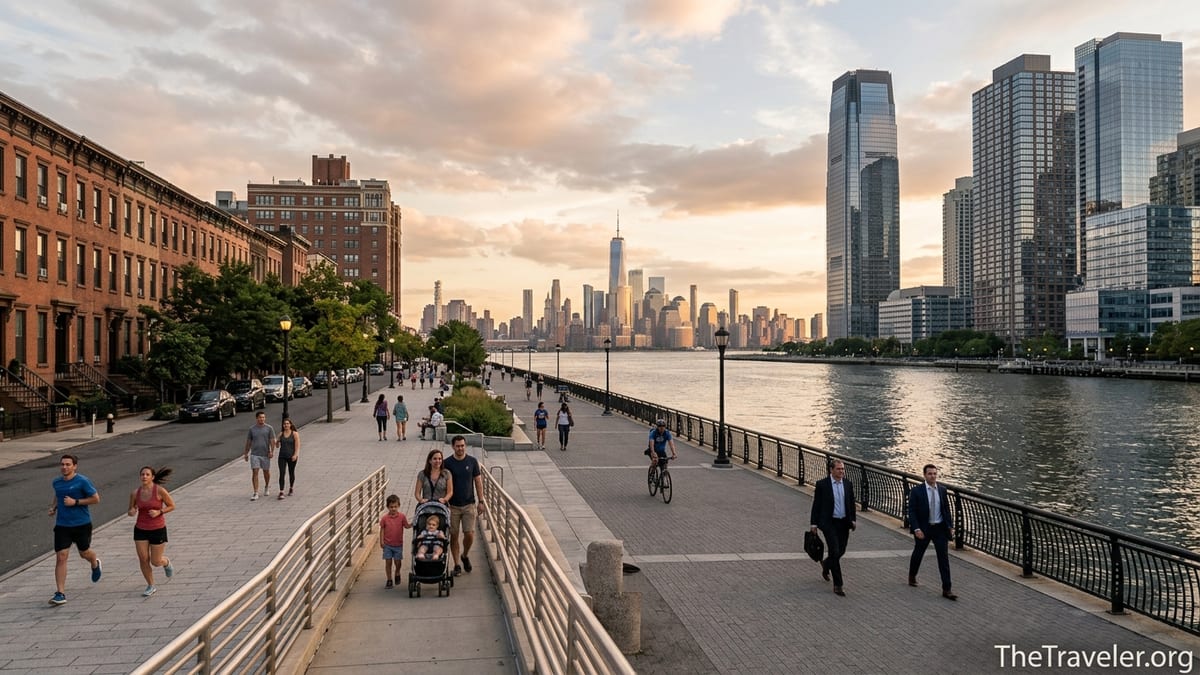
Hoboken and Jersey City sit side by side on New Jersey’s Hudson River waterfront, but they offer contrasting personalities. Hoboken is a dense, one‑square‑mile city with a village feel, brownstone blocks, and a lively bar and restaurant scene that leans young and social. It is easy to walk end to end in under 25 minutes, and most visitors quickly learn a few main streets like Washington Street for shopping and the riverfront promenade for skyline views.
Jersey City, by contrast, is a full‑scale small city with multiple neighborhoods and more than 60 parks spread across several miles from the Hudson waterfront to the Hackensack River. Downtown areas such as Exchange Place, Newport, and Grove Street function as mini‑hubs, each with their own cluster of high‑rise hotels, cafes, and PATH train stations that connect directly to Manhattan. Recent city data describes Jersey City as one of the most walkable and transit‑friendly mid‑size cities in the United States, with high walk and transit scores focused around these districts.
From a tourist’s point of view, Hoboken feels more like staying in a single, cohesive neighborhood, while Jersey City offers a patchwork of districts that range from polished waterfront towers to residential brownstone streets and creative up‑and‑coming pockets farther inland. Your choice often comes down to whether you want a self‑contained, easy‑to‑navigate base or a more urban, varied environment with more options and longer internal travel times.
Both cities share one huge advantage: front‑row views of the Manhattan skyline and quick transit into New York. On a clear evening, the sight of the World Trade Center and Midtown towers across the Hudson can be as memorable as any Manhattan rooftop. In practice, travelers who choose wisely between Hoboken and Jersey City can enjoy those views for morning coffee, after‑dinner strolls, and even from their hotel room.
Access to Manhattan and Getting Around
If you are choosing a base mainly for fast access to New York City, the PATH train is your backbone. As of May 2026, a single PATH ride costs around 3.25 dollars, with trains linking Hoboken and several Jersey City stations to the World Trade Center and Midtown Manhattan in roughly 10 to 25 minutes depending on the line and time of day. During weekday peaks, PATH trains on key routes can run every few minutes, creating subway‑like frequency for cross‑river commutes.
In Hoboken, most visitors gravitate to Hoboken Terminal at the southern end of town. From there, PATH trains run to the World Trade Center and Midtown, and you also have a major NJ Transit rail hub, buses, and NY Waterway ferries to several Manhattan piers. For example, a weekday morning ferry to Brookfield Place or Midtown can take 10 to 15 minutes and typically costs in the range of 8 to 10 dollars each way. Many business travelers staying at the waterfront W hotel or nearby apartments choose the ferry for its reliability and iconic skyline ride, even if it is pricier than PATH.
Jersey City has more PATH options. Downtown alone has Exchange Place, Newport, and Grove Street stations, with Journal Square farther inland. Exchange Place offers one‑stop service to the World Trade Center in about 5 minutes and easy connections north to Hoboken or west to Newark. Grove Street and Newport station areas are roughly 10 to 20 minutes from Midtown PATH terminals depending on the time of day. On top of that, the Hudson‑Bergen Light Rail runs along the waterfront and into local neighborhoods, making it convenient to move between, say, Exchange Place, Liberty State Park, and Hoboken without touching Manhattan at all.
In daily life, this plays out very differently. From a Hoboken Airbnb on the waterfront, you might walk five minutes to Hoboken Terminal, tap into PATH, and emerge under the Oculus at the World Trade Center in roughly 15 minutes door to door. From a Jersey City hotel near Exchange Place or Newport, you will likely be on the PATH platform within a few minutes’ walk and in Lower Manhattan within a similar timeframe, but your choices of lines and stations are greater. If you stay deeper in Jersey City, such as in Journal Square or Bergen‑Lafayette, you may add a 10 to 20 minute light‑rail or bus ride just to reach the PATH.
Cost of Staying: Hotels and Rentals
Hoboken’s compact size, desirable waterfront, and limited number of large hotels usually translate into higher nightly rates, especially for traditional hotels. On peak weekends in late spring and early fall, rooms at well‑known waterfront properties can climb well above 300 dollars per night, particularly when major events are happening in Manhattan or at MetLife Stadium. Short‑term rentals in central Hoboken, from one‑bedroom apartments steps off Washington Street to two‑bedroom condos near the river, commonly list anywhere from around 180 to 300 dollars per night, with prices pushing higher for balcony views of Midtown or on busy holiday weekends.
Jersey City generally offers a wider spread of price points. In the polished high‑rise district around Exchange Place and Newport, full‑service hotels and luxury extended‑stay properties are often comparable in price to Hoboken’s upper tier, especially if you want a direct view of One World Trade Center or the Statue of Liberty. However, move a few blocks inland toward Grove Street, Hamilton Park, or up‑and‑coming neighborhoods like Bergen‑Lafayette and you begin to see more mid‑range hotels, serviced apartments, and entire‑home rentals in the 150 to 250 dollar range on typical non‑holiday weekends.
For budget‑conscious groups or families, Jersey City can be more forgiving simply because it has more housing stock and more variation. Two couples splitting a three‑bedroom apartment a short walk from a PATH station may pay not much more than a single standard hotel room in Hoboken, while gaining a full kitchen and laundry. By contrast, finding a large, reasonably priced multi‑bedroom rental right in central Hoboken is possible but can be competitive, especially during graduation season, summer, and December holidays.
A good rule of thumb: if you want a classic hotel with a bar, gym, and front‑desk staff, Hoboken’s limited supply means you should book early and accept higher rates. If you are willing to consider modern short‑term rentals or apartment‑style stays, especially beyond the waterfront, Jersey City opens up more options in more budgets, while still keeping you on a direct transit line into Manhattan.
Neighborhood Vibe, Dining, and Nightlife
Hoboken’s personality is immediately visible when you walk along Washington Street on a Friday evening. The main avenue is lined with independent cafes, Italian delis, bakeries, cozy brunch spots, and a string of sports bars and cocktail lounges that fill with a mix of local residents, nearby university students, and young professionals commuting to New York. Side streets are mostly low‑rise brownstones with tree‑lined sidewalks, playgrounds, and small parks. It feels energetic but still neighborhood‑scale: even the busiest nightlife corners are just a few blocks from quiet residential streets.
For food, Hoboken leans heavily into casual but high‑quality options. You can grab thin‑crust pizza, old‑school Italian sandwiches, or modern American small plates without needing a reservation days in advance. Brunch culture is strong on weekends, and many visitors staying in short‑term rentals fall into a pleasant routine of morning coffee at a local cafe, an afternoon walk on the waterfront, and a late dinner back in town after a day in Manhattan. If you are traveling with friends and want a social base with plenty of walkable nightlife but do not need huge clubs, Hoboken is often a good fit.
Jersey City’s downtown, especially around Grove Street, has a more urban, diverse energy. Here you will find everything from sleek cocktail bars near the Grove Street PATH station to family‑run Indian, Filipino, and Latin American restaurants tucked into side streets. Food culture is a major draw: an evening might start with tacos and mezcal near Grove Street, continue with a walk to a dessert bar by the waterfront, and end at a rooftop lounge in Exchange Place overlooking the skyline. Regular street festivals and outdoor markets, particularly in warmer months, add to the sense that this is a living city rather than simply a bedroom community for New York.
Farther afield in Jersey City, neighborhoods like the Heights and Bergen‑Lafayette are increasingly popular with renters and creative professionals, and that is showing up in the mix of cafes, galleries, and micro‑breweries. For visitors, these areas are best if you are comfortable using the light rail or buses and do not mind a slightly longer ride home at night. The payoff can be lower prices and a more “local” feel than the polished waterfront towers. Overall, if you enjoy exploring varied neighborhoods, global cuisine, and a slightly more urban environment, Jersey City tends to offer more depth than Hoboken.
Safety, Walkability, and Family Friendliness
Both Hoboken and the main tourist parts of Jersey City are considered generally safe for visitors who use typical city common sense. Hoboken’s small footprint, strong residential base, and heavy use of public transportation contribute to a feeling of security, particularly along the waterfront promenade, Washington Street, and the northeast residential sections. Most visitors report feeling comfortable walking back to their hotel or apartment from dinner late in the evening, especially on busy weekends when streets remain active.
Jersey City’s picture is more nuanced simply because the city is larger and more varied. Downtown areas such as Exchange Place, Newport, and Grove Street have benefitted from intensive investment, including better lighting, streetscape improvements, and frequent police and security presence around transit hubs. Recent travel safety assessments frequently rate these waterfront downtown sections as the safest parts of the city for visitors, particularly during the day and early evening. Busy pedestrian areas around the PATH stations and riverfront parks tend to feel lively rather than isolated.
Families often weigh not just crime statistics, but day‑to‑day practicality. Hoboken excels in this regard: playgrounds and small parks are frequent, the waterfront walkway is perfect for strollers and scooters, and crossing the street with children is relatively straightforward thanks to short blocks and traffic‑calming measures. Many parents choose Hoboken precisely because they can let older kids walk a short distance to a playground or gelato shop while still keeping a sense of control over their surroundings.
In Jersey City, families who choose to stay typically gravitate to modern apartment buildings around Newport, Hamilton Park, or Exchange Place, where there are on‑site playrooms, private courtyards, and well‑maintained public parks nearby. Liberty State Park, with its huge lawns, playgrounds, and bike paths, is one of the region’s best green spaces for children and is a major point in Jersey City’s favor. The trade‑off is that if you book in a more residential inland neighborhood without doing research, you may find yourself walking through quieter blocks at night with fewer people around, which some visitors find less comfortable.
Sightseeing and Things to Do Close to Home
If your plan is to spend most of your time in Manhattan, you might think your New Jersey base does not matter for sightseeing, but both Hoboken and Jersey City offer worthwhile attractions that can fill half‑days close to your accommodation. Hoboken’s signature experience is its riverfront. On a sunny evening, the walkway from the southern end near the train terminal up to the northern piers offers sweeping views of Lower and Midtown Manhattan, with benches, playgrounds, and small green lawns along the way. Sunset or blue hour here can rival more famous viewpoints, and it is a major reason many visitors remember Hoboken fondly.
Hoboken’s compact grid also makes casual exploration easy. You can spend a morning wandering local bakeries and coffee shops, browsing small boutiques on Washington Street, or visiting parks like Church Square Park and Pier A Park. Seasonal events such as outdoor concerts on the pier or street fairs add a layer of local life that you would rarely encounter if you stayed in Midtown hotels.
Jersey City has more headline attractions. Liberty State Park is the big one: a vast waterfront park with direct ferry connections to the Statue of Liberty and Ellis Island. Visitors staying near Exchange Place or in Bergen‑Lafayette can reach the park in a short Uber ride or via the light rail, then spend several hours biking, picnicking, or taking in postcard views of the Lower Manhattan skyline and the Statue of Liberty. The park is also one of the easiest launching points for official Statue of Liberty tours, which can save time compared with navigating lower Manhattan’s crowds.
Within downtown Jersey City, you will find art galleries, murals, and community events centered around Grove Street and surrounding blocks. Cafes spill onto sidewalks in warm weather, and regular markets bring local makers and food vendors to the pedestrian plaza. For a simple local day, you might start with brunch near Grove Street, stroll through Hamilton Park’s brownstone‑lined streets, head to the waterfront at Newport for skyline photos, then finish with dinner back in the Grove Street district.
Who Should Choose Hoboken, and Who Should Choose Jersey City?
Hoboken tends to suit travelers who want an easy, low‑stress base that still feels lively and social. If you imagine mornings in a local cafe, quick PATH hops into Manhattan, and evenings that naturally end with a stroll on a quiet waterfront, Hoboken fits the bill. It is especially appealing for couples on a short city break, small groups of friends who plan to go out in both Hoboken and Manhattan, and families who prefer compact, walkable surroundings where everything is within a 15 to 20 minute walk.
The trade‑off in Hoboken is cost and choice. You are likely to pay more per night for central accommodation, and there are simply fewer hotels and larger rentals to choose from. For visitors who demand a big‑brand luxury experience or last‑minute deals during peak season, this can be limiting. If you are traveling in a larger group or on a tighter budget, Hoboken can feel squeezed, and you may end up looking at nearby towns or shifting your search to Jersey City.
Jersey City, on the other hand, is ideal for travelers who want a more urban, varied base and are comfortable navigating a few different neighborhoods. Business travelers may appreciate the direct World Trade Center access from Exchange Place, while food‑focused visitors might prefer the restaurant density and global cuisine around Grove Street. Families and groups often find that a two‑ or three‑bedroom apartment near a PATH station gives them more space and flexibility at a better cost than they would find in Hoboken or Manhattan.
There is also a personality factor. Some travelers love Hoboken’s tidy, almost campus‑like feel and strong sense of identity. Others find it a bit too homogenous and prefer Jersey City’s mix of old warehouses converted to lofts, modern glass towers, and side streets where you can discover a new cafe or bar every time you visit. If you enjoy exploring, Jersey City will keep surprising you across multiple days. If you want to settle quickly into a familiar, easy‑to‑grasp neighborhood, Hoboken may be the better fit.
The Takeaway
Choosing between Hoboken and Jersey City as your New Jersey base for a New York City trip is less about right or wrong and more about matching each city’s strengths to your travel style. Hoboken offers a compact, highly walkable environment with a strong local bar and restaurant scene, postcard‑ready waterfront views, and simple logistics that appeal to many first‑time visitors and families. The cost of that simplicity tends to be higher nightly rates and fewer accommodation choices, especially in peak seasons.
Jersey City offers more of everything: more neighborhoods, more types of accommodation, more food scenes, and more internal transit options. Downtown districts such as Exchange Place, Newport, and Grove Street put you as close to Lower Manhattan as many Brooklyn neighborhoods, while Liberty State Park and the Statue of Liberty ferries add unique sightseeing right on your doorstep. The flipside is that you need to pay closer attention to exactly where you book, since walkability and atmosphere can change from block to block.
For a first or second visit focused on Manhattan, a simple way to decide is this: if you value ease, a village feel, and do not mind spending a bit extra, choose Hoboken. If you value variety, more budget flexibility, and a more urban, local experience, choose Jersey City, ideally within a short walk of a PATH station. In both cases, you trade a Midtown address for better space and skyline views, and you will still be just a short train or ferry ride from Times Square, downtown museums, and Broadway.
FAQ
Q1. Is Hoboken or Jersey City closer to Manhattan?
Jersey City’s Exchange Place and Newport stations are geographically closest to Lower Manhattan, with PATH rides to the World Trade Center in around five minutes, but Hoboken Terminal is only a few minutes farther and still offers fast connections to both downtown and Midtown.
Q2. Which is cheaper to stay in, Hoboken or Jersey City?
On average, Jersey City offers a wider range of price points and more mid‑range and larger apartment options, while Hoboken’s limited hotel stock and strong demand tend to keep prices higher, especially near the waterfront.
Q3. Is Hoboken safer than Jersey City for tourists?
Both are generally safe in their main visitor areas. Hoboken’s compact size and residential feel can make it feel especially comfortable, while in Jersey City, areas like Exchange Place, Newport, and Grove Street are the most commonly recommended for visitors seeking good lighting, foot traffic, and easy transit.
Q4. Which has better nightlife, Hoboken or Jersey City?
Hoboken has a dense strip of bars and casual restaurants that creates a lively, social nightlife in a small area. Jersey City’s downtown offers a more varied scene, from neighborhood bars and live‑music venues to upscale cocktail lounges and rooftops, but it is spread across multiple districts.
Q5. Where should families with kids stay, Hoboken or Jersey City?
Families who want short walks, simple navigation, and playgrounds on almost every other block often prefer Hoboken. Families who prioritize large parks and apartment‑style stays may lean toward Jersey City, especially near Liberty State Park, Hamilton Park, or Newport.
Q6. Which is better if I plan to visit the Statue of Liberty?
Jersey City has the edge because Liberty State Park, one of the main departure points for Statue of Liberty and Ellis Island ferries, is within the city limits and easily reached from many local accommodations.
Q7. Do I need a car in Hoboken or Jersey City?
No, a car is usually more trouble than it is worth. Both cities are well served by PATH, ferries, light rail, buses, and rideshares, and parking can be expensive and limited, especially in Hoboken and downtown Jersey City.
Q8. Which city has better views of the Manhattan skyline?
Both have outstanding views. Hoboken offers an almost continuous promenade with direct sightlines to Midtown, while Jersey City’s Exchange Place and Liberty State Park provide dramatic vistas of Lower Manhattan and the Statue of Liberty.
Q9. If I arrive at Newark Airport, is it easier to reach Hoboken or Jersey City?
Both are fairly straightforward from Newark Airport using AirTrain plus NJ Transit or PATH, or by rideshare. In practice, downtown Jersey City is slightly closer by car, while Hoboken may require one extra train or rideshare connection depending on your route.
Q10. For a first‑time New York visitor, which base is better?
For travelers who value simplicity, Hoboken is often the better first choice because it is small, easy to understand, and lively. For visitors comfortable with city navigation who want more neighborhood variety and potentially better value, Jersey City can be the more rewarding base.