


More news on this day
US security alerts are urging American citizens across the Middle East to be “prepared” for sudden travel disruption as President Donald Trump signals that new military action against Iran remains on the table despite talk of a possible deal to end the conflict.
Get the latest news straight to your inbox!
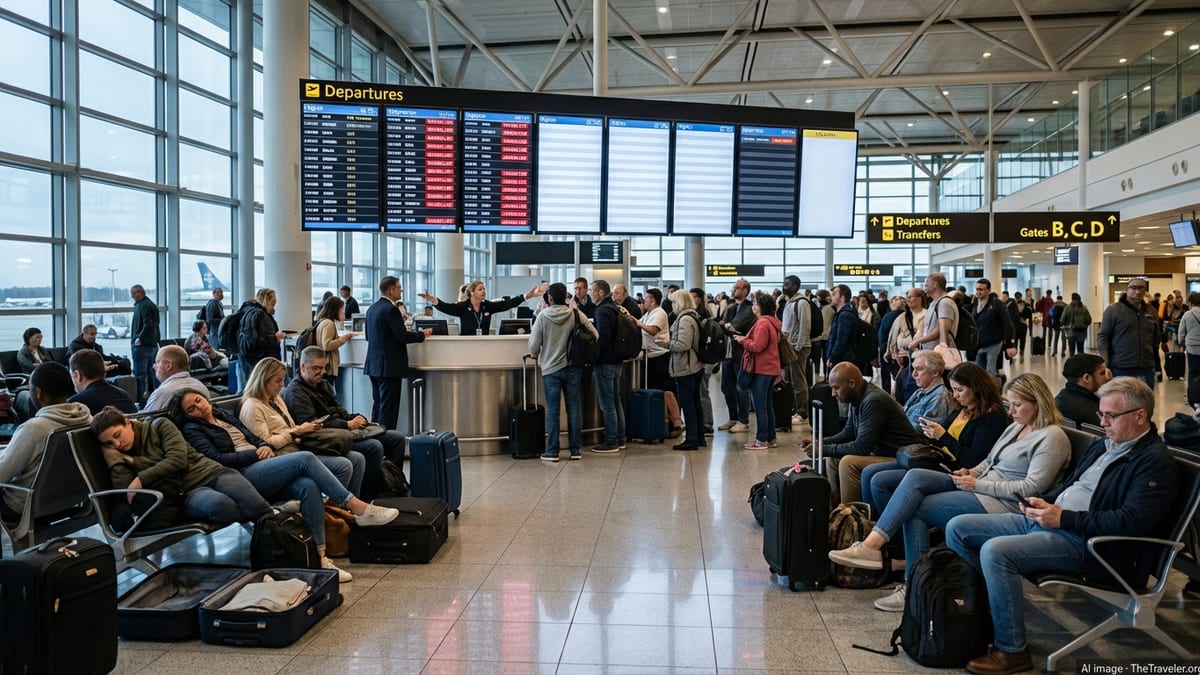
Heightened security alerts span key Middle East hubs
Recent security alerts from US diplomatic posts in the region advise citizens in Bahrain, Israel, Iraq, Jordan, Kuwait, Lebanon, Oman, Qatar, Saudi Arabia and the United Arab Emirates to be ready for rapid changes to air travel and local security conditions. The notices emphasize that Americans should anticipate possible flight cancellations, temporary airspace closures and wider disruption to commercial routes in the event of a sudden escalation.
The travel messaging follows months of tightened advisories for parts of the Middle East, where some countries remain under “do not travel” or “reconsider travel” guidance because of conflict and the risk of missile and drone attacks. The latest language goes further by urging Americans already in the region to think through contingency plans rather than assuming that routine commercial flights will remain available.
Publicly available information indicates that embassies and consulates have been amplifying the alert through their own channels, underlining concerns about how quickly air corridors around the Gulf and eastern Mediterranean could close if tensions with Iran spike again.
For US travelers, the message marks a shift from general caution to a more specific call to be logistically prepared, including reviewing onward travel options and ensuring documents, funds and communication plans are in order.
Trump rhetoric keeps focus on risk of rapid escalation
The sharpened tone of US travel messaging comes as Donald Trump continues to speak in stark terms about potential military action against Iran. In recent days he has touted American forces as “locked and loaded” and highlighted the prospect of massive strikes on Iranian targets, even as he simultaneously points to an emerging framework for a regional deal.
Reports indicate that Trump has publicly described possible operations against Iranian energy and infrastructure sites, language that has fueled speculation that any breakdown in talks could quickly be followed by a new round of airstrikes. Coverage from US and international outlets notes that regional leaders, including in the Gulf, have privately expressed concern that such attacks could trigger retaliation across multiple countries.
For travelers and residents, the combination of combative rhetoric and intermittent diplomatic overtures adds to uncertainty. The prospect of a last-minute decision to resume strikes, or of an Iranian response to earlier attacks, is one of the main reasons security alerts are focusing on how abruptly aviation patterns might change rather than on individual tourist sites or city neighborhoods.
Analysts tracking the situation say that, from a travel-risk perspective, the volatility of the political and military timeline is as significant as any single incident, because it makes forward planning difficult for airlines, airports and passengers alike.
What “be prepared” means for Americans on the ground
While the alerts stop short of ordering a general evacuation, the language about being prepared carries practical implications for US citizens who live, work or travel in the Middle East. Public guidance encourages Americans to monitor local media, enroll in embassy notification systems where available and maintain a flexible approach to itineraries.
Travel risk specialists point out that, in previous regional crises, commercial seats out of major hubs have disappeared quickly once governments advised against nonessential presence. That history is driving current recommendations that Americans think ahead about alternative routes, including indirect flights through secondary airports, and consider how they would move if primary gateways temporarily shut down.
Families with dual national members, business travelers with tight schedules and tourists on multi-stop itineraries are considered especially vulnerable to disruptions, because they may rely on specific departure dates. The current alerts suggest that anyone in these categories should be ready to adjust plans at short notice and avoid assuming that a booked ticket guarantees departure if the security picture deteriorates.
In some countries, local authorities have already increased visible security measures at airports and around facilities associated with Western interests. Although day-to-day life continues largely as normal in many cities, the official travel language reflects a view that conditions could change with little warning if the conflict with Iran widens.
Impact on airlines, routes and regional tourism
The warnings are landing at a sensitive moment for Middle East aviation, which relies heavily on long-haul transit traffic between Europe, Asia and North America. Past episodes of missile launches and drone activity have led to temporary rerouting of flights around the Strait of Hormuz and nearby airspace, adding time and cost to journeys that typically pass over or near Iran and neighboring states.
Industry analysts note that the prospect of renewed strikes and counterstrikes raises the risk that carriers could again suspend certain routes or avoid specific flight levels for safety reasons. For hub airports in the Gulf, any prolonged airspace restrictions would likely mean reduced frequencies, schedule reshuffles and, in more severe scenarios, short-notice cancellations that strand passengers.
Tour operators focused on cultural and leisure travel to destinations such as Jordan, Israel and parts of the Gulf are already grappling with fluctuating demand linked to the broader regional conflict. The new US alerts, while not banning travel outright to most of these countries, may further cool bookings from American customers who are wary of finding themselves unable to leave on time.
Hotel and hospitality businesses that depend on US visitors are watching the situation closely. Some have introduced more flexible cancellation policies to reassure hesitant travelers, but they remain exposed to any sudden deterioration that prompts airlines to cut capacity or governments to tighten restrictions.
Travel planning under ongoing geopolitical uncertainty
For Americans considering trips to or through the Middle East, the current environment calls for more detailed preparation than is typical for routine tourism. Travel advisors recommend closely reviewing government advisories, purchasing insurance that explicitly covers war-related disruption where available, and building additional time into itineraries to account for unexpected changes.
Passengers are also encouraged to stay in frequent contact with airlines and to download carrier and airport apps that can provide real-time updates on delays, cancellations and gate changes. In a scenario where security alerts shift quickly, those channels are often the first indication that a route has been paused or an aircraft has been re-routed.
For Americans already in the region, publicly available guidance stresses keeping passports current, maintaining a supply of essential medication and having access to funds in multiple forms in case card networks are affected. Those living long term in Middle Eastern countries are advised to reassess their personal risk tolerance, review workplace contingency plans and ensure that family members know how to respond if communications are disrupted.
As statements from Washington continue to link the possibility of intensified military action with negotiations over Iran’s nuclear program and regional behavior, the travel outlook remains closely tied to events on the ground. For now, the message to US citizens is not to panic, but to accept that in a fast-moving conflict zone, being prepared for abrupt changes has become an essential part of any journey.