


More news on this day
Air travelers across Saudi Arabia are facing persistent disruption as a combination of regional security tensions, route suspensions and operational bottlenecks triggers widespread flight cancellations and delays at major hubs including Jeddah, Riyadh and Dammam.
Get the latest news straight to your inbox!
Regional Tensions Ripple Through Saudi Airspace
Published coverage indicates that renewed conflict and security concerns across the wider Middle East are placing sustained pressure on commercial routes serving Saudi Arabia. Several international carriers have temporarily adjusted or suspended services to major Saudi gateways, particularly Jeddah and Riyadh, citing uncertainty around overflight permissions and routing constraints through neighboring airspace.
Reports on recent schedule changes show that some European and Gulf airlines have reduced frequencies or pushed back planned resumptions of Saudi routes, while others have redirected passengers via alternative hubs. These shifts are compressing demand onto a smaller pool of available flights into the kingdom, heightening the risk of last-minute cancellations when operational or security conditions change.
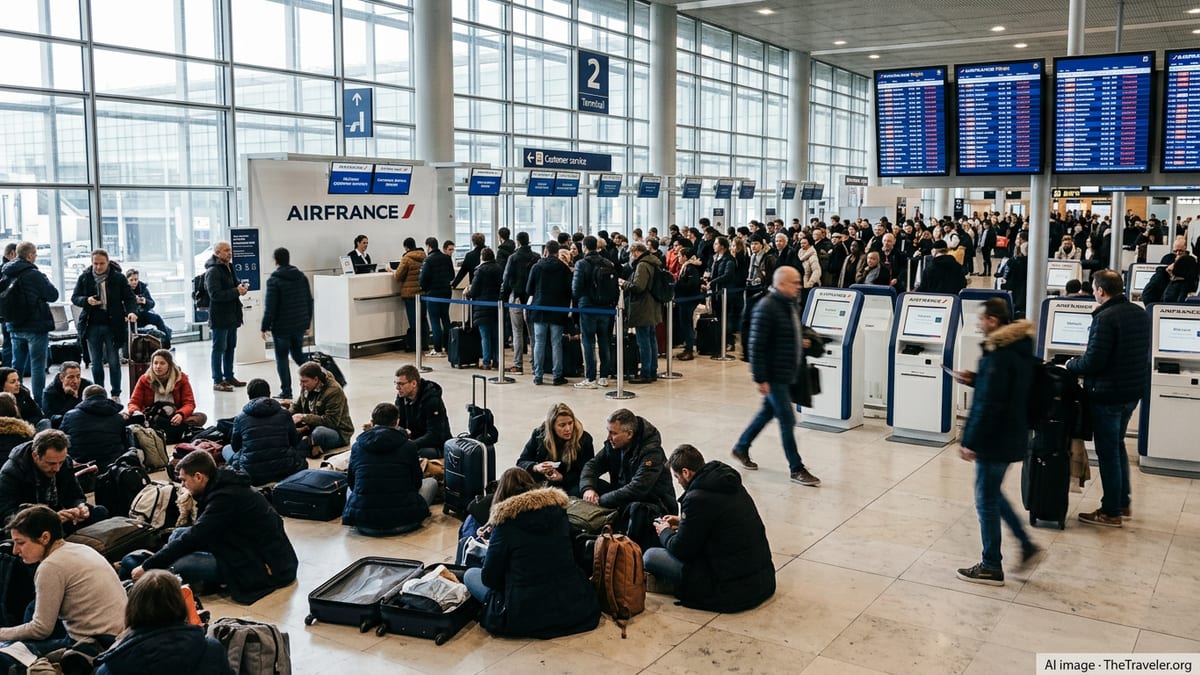
Travel commentary from passengers suggests that disruptions have been most acute for flights linking western Saudi Arabia with key regional and European hubs. Travelers describe missed connections, long rebookings and overnight airport stays when services are canceled at short notice, especially on itineraries that combine Saudi sectors with long-haul segments to North America, Europe or South Asia.
The knock-on effect is extending beyond the directly affected routes. As airlines reconfigure their networks to navigate active conflict zones and evolving airspace advisories, aircraft and crew availability across the region are being stretched, leading to rolling delays even on domestic legs that technically remain open.
Pressure on Domestic Networks Linking Jeddah, Riyadh and Dammam
Inside the kingdom, domestic schedules that connect Jeddah, Riyadh, Medina and Dammam are also under strain. Publicly available timetables show that services continue to operate, yet traveler accounts describe repeated rescheduling and cancellations on some of the busiest corridors, particularly between the western region and the Eastern Province.
Passengers recount flights from Dammam to Jeddah being canceled multiple times in a matter of days, with departure times moved forward or back before eventually disappearing from the board. Others report services between Jeddah and Riyadh entering extended holding patterns before diverting to secondary airports, adding hours to relatively short journeys and complicating onward connections.
Operational challenges appear to be compounding the broader regional pressures. When aircraft are diverted or grounded, carriers must reposition planes and crew, which can disrupt subsequent rotations across the domestic network. Even when weather conditions are described as acceptable, flights have at times been rerouted or delayed due to airspace congestion and sequencing constraints.
For Saudi residents, the impact is being felt in business travel between commercial centers as well as in leisure and family visits, where bookings that were once viewed as routine have become less predictable. Social media posts highlight growing uncertainty around short-notice travel plans and a greater emphasis on contingency options.
Pilgrims and Religious Travelers Face Added Uncertainty
The disruptions are particularly sensitive for religious travelers, including Umrah pilgrims and visitors transiting through Saudi Arabia for Hajj-related journeys. Saudi airports at Jeddah, Medina and Riyadh are key gateways for millions of worshippers each year, and regional instability has coincided with peak pilgrimage demand.
Information from diplomatic missions indicates that some foreign governments have set up helplines and airport support teams to assist their citizens dealing with cancellations in western Saudi Arabia, notably among Umrah pilgrims who often travel on tight schedules and packaged itineraries. These efforts aim to help passengers secure alternative flights, lodging and ground transport when planned departures do not operate.
Travel forums feature accounts of low-cost services into Saudi airports being canceled with limited notice, forcing pilgrims to rebook via full-service carriers and more circuitous routes. Some passengers report being kept at airports for extended periods while airlines attempt to secure approvals for substitute flights or rerouted paths through less congested airspace.
For would-be visitors planning future pilgrimages, the current environment is prompting more caution around connections and transit windows. Travelers are increasingly factoring in longer layovers, flexible tickets and travel insurance coverage that explicitly addresses disruption in volatile regions.
Airlines Adjust Schedules as Travelers Seek Alternatives
Saudi and foreign airlines are in a continuous process of revising timetables to manage the evolving situation. According to published route and flight-tracking data, some carriers have reduced or temporarily suspended services to Saudi cities, while others are maintaining operations but with frequent schedule changes and equipment swaps.
Comments from passengers flying on Saudi-based airlines describe itinerary changes that route them through different domestic hubs than originally booked, sometimes involving substantially longer layovers. In certain cases, travelers report that flights between Jeddah and Riyadh have been rerouted to or from alternative airports in central Saudi Arabia when congestion or restrictions affect the primary corridor.
At the same time, alternative travel modes are gaining attention. Reports from expatriate and local communities note that travelers are considering the high-speed rail link between major Saudi cities or driving between regions and then connecting to international flights from less affected airports. While these options can add time and planning complexity, they offer a hedge against last-minute domestic flight cancellations.
Online discussions also show a shift in booking behavior. Some passengers indicate they are delaying ticket purchases until closer to departure to avoid repeated itinerary changes, while others are spreading risk by reserving travel with larger network carriers perceived as better able to accommodate disruptions.
Guidance for Travelers Navigating Ongoing Disruption
With conditions still fluid, publicly available advisories and traveler experiences point to several practical considerations for those planning to fly to, from or within Saudi Arabia in the coming weeks. Regional volatility means that schedules are subject to sudden change, even after check-in, and that connecting itineraries involving multiple carriers remain particularly vulnerable.
Travelers are increasingly encouraged by airline communications and embassy notices to monitor flight status frequently in the 24 hours before departure and to build generous buffers into any self-arranged connections. For those traveling for Hajj or Umrah, package operators and group leaders are playing a larger role in relaying updates and coordinating rebookings when flights are disrupted.
Observers note that disruption has not been uniform across all routes. Certain domestic sectors continue to operate close to schedule, while others, especially those linking the western region with neighboring Gulf states or conflict-affected areas, remain prone to cancellations or significant delays. Prospective passengers are advised to pay close attention to recent performance on their specific route rather than relying solely on historic norms.
As summer travel and religious tourism continue, the situation underscores how developments beyond Saudi Arabia’s borders are reshaping flight reliability within the kingdom. Until regional tensions ease and airlines can stabilize their networks, air travelers are likely to face an extended period of heightened uncertainty across Saudi skies.