


More news on this day
The United States has issued a fresh security alert urging its citizens across the Middle East to be ready to leave quickly if tensions escalate further, a warning that immediately reshapes risk calculations for tourists, business travelers and long-term residents throughout the region.
Get the latest news straight to your inbox!
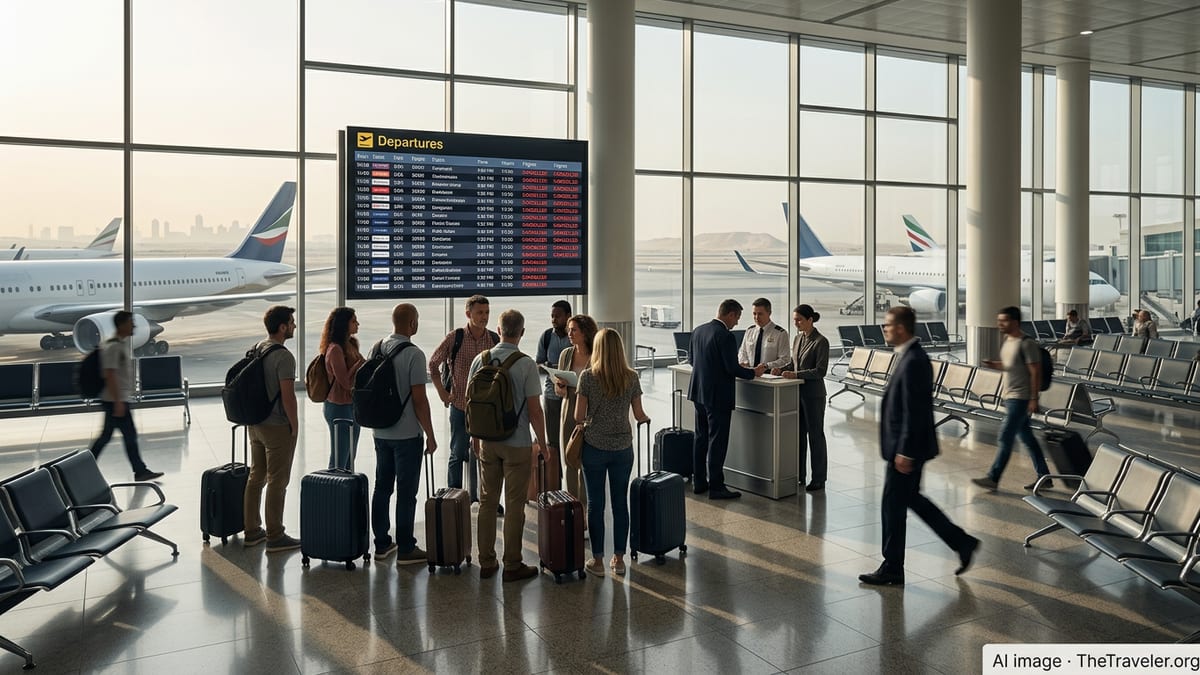
Region-wide alert urges readiness to depart
The latest alert, circulated by the US State Department and reposted by multiple American embassies on August 1, advises US citizens in the Middle East to prepare for the possibility of sudden escalation and related disruptions to air travel and cross-border movement. Publicly available information indicates that the message was shared across missions in Gulf states and key regional hubs, amplifying its impact on tens of thousands of Americans who live, work or travel there.
The alert highlights the potential for flight cancellations, temporary airspace closures and broader travel disruptions if the regional security picture worsens. While it does not mandate departure, the wording signals that Americans should be able to leave at short notice and avoid assuming that normal commercial links will remain open.
This latest notice builds on a series of advisories and worldwide cautions issued over recent months as conflict involving Iran and US forces has intensified. Country-specific travel advisories already place parts of the Middle East at the highest “do not travel” level, and the new language further underscores that security conditions can change with little warning even in destinations that remain open to visitors.
Escalating tensions and military buildup frame the warning
The security message comes against the backdrop of an ongoing war involving Iran and US and allied forces, as well as a substantial US military buildup across the region. Open-source reporting describes the deployment of additional air and naval assets and the repositioning of some personnel away from bases considered vulnerable, signaling concern about the reach of Iranian missiles and proxy groups.
Analysts note that recent phases of the conflict have included long-range strikes, cyberattacks and threats to energy infrastructure, any of which could have rapid consequences for civilian aviation and critical transport corridors. Public reporting on regional mobilizations during the war has already described waves of foreign nationals attempting to leave conflict zones, putting intense strain on commercial capacity.
In this climate, the latest US alert is framed less as a prediction of specific attacks and more as a recognition that further escalation could occur with little notice. For travelers, that means that itineraries relying on tight connections, single-carrier routings or travel through potential flashpoints may carry greater risk than usual, even if day-to-day life in many cities currently appears calm.
What the advisory means for American travelers
For leisure visitors considering upcoming trips, the new guidance effectively signals that nonessential travel to higher-risk hotspots should be reconsidered, and that even trips to relatively stable Middle Eastern destinations require robust contingency planning. Publicly available commentary from travel and security specialists stresses the importance of reviewing insurance coverage, understanding airline change policies and monitoring embassy alerts closely before departure.
Americans already in the region are being urged in publicly posted advisories to maintain a higher level of situational awareness, keep travel documents up to date and ensure they have access to funds and communications if plans change suddenly. The alerts emphasize that travelers should not rely on government-organized evacuation flights, pointing instead to commercial options while they remain available.
Families visiting popular hubs such as Dubai, Doha or Abu Dhabi, as well as business travelers commuting regularly to Gulf financial centers, may find that airlines adjust schedules or reroute flights to avoid certain airspace. Travel industry reports suggest that some carriers have contingency plans to shift operations if the conflict zone widens, which could mean longer flight times, last-minute cancellations or diversions.
Americans living in the region face complex choices
For the substantial number of US citizens who live in the Middle East, the advisory introduces difficult questions about when, or whether, to leave. Public discussions among expatriate communities highlight a divide between those who view the alert as a routine precaution and those who see it as an inflection point signaling that the risk profile has fundamentally changed.
Recent media coverage of Americans stranded in regional hubs after earlier “depart now” messages underscores how swiftly options can narrow once fighting intensifies or sanctions and overflight restrictions expand. In several previous crises, commercial tickets out of affected countries became scarce or prohibitively expensive within days, while consular support remained limited to information and coordination rather than direct evacuation.
Many long-term residents are weighing work commitments, school calendars and family ties against the possibility of disrupted borders or extended instability. Travel planners note that some are adopting a “tiered” approach: sending dependents or vulnerable family members home first, while the primary earner continues to monitor conditions and maintains a rapid exit plan if the situation deteriorates.
Implications for wider Middle East tourism
The advisory also reverberates through the region’s tourism sector, which relies on the perception of relative stability in key transit and leisure markets. Even though many Middle Eastern destinations remain open and continue to promote large-scale events and conferences, a high-profile US warning often prompts other governments and corporate travel departments to revisit their own risk assessments.
Travel analysts suggest that some international visitors may opt to reroute via Europe, Africa or South Asia rather than connecting through Middle Eastern hubs if tensions continue to climb. Others may delay or cancel nonessential travel altogether, particularly to countries already rated at higher risk levels for conflict, terrorism or civil unrest.
For now, hotels, airlines and tour operators across the region are largely operating as normal, but industry observers note that booking patterns are increasingly sensitive to headlines about missile strikes, maritime incidents or new sanctions. The latest US message adds another layer of uncertainty, signaling to travelers that flexibility and preparedness are essential qualities for any itinerary touching the Middle East in the weeks ahead.