


Hol Chan Marine Reserve off Ambergris Caye and Caye Caulker is one of Belize’s signature snorkeling experiences, but it is not a shallow hotel reef. The main attraction, the Hol Chan Channel itself, is a real pass through the barrier reef with 10 to 30 feet of water, occasional current, and boat traffic. With the right expectations, gear and guide, it can be unforgettable. Without them, it can feel intimidating. This guide focuses on what the channel is actually like so you can decide if it fits your swimming ability before you book.
Get the latest updates straight to your inbox!
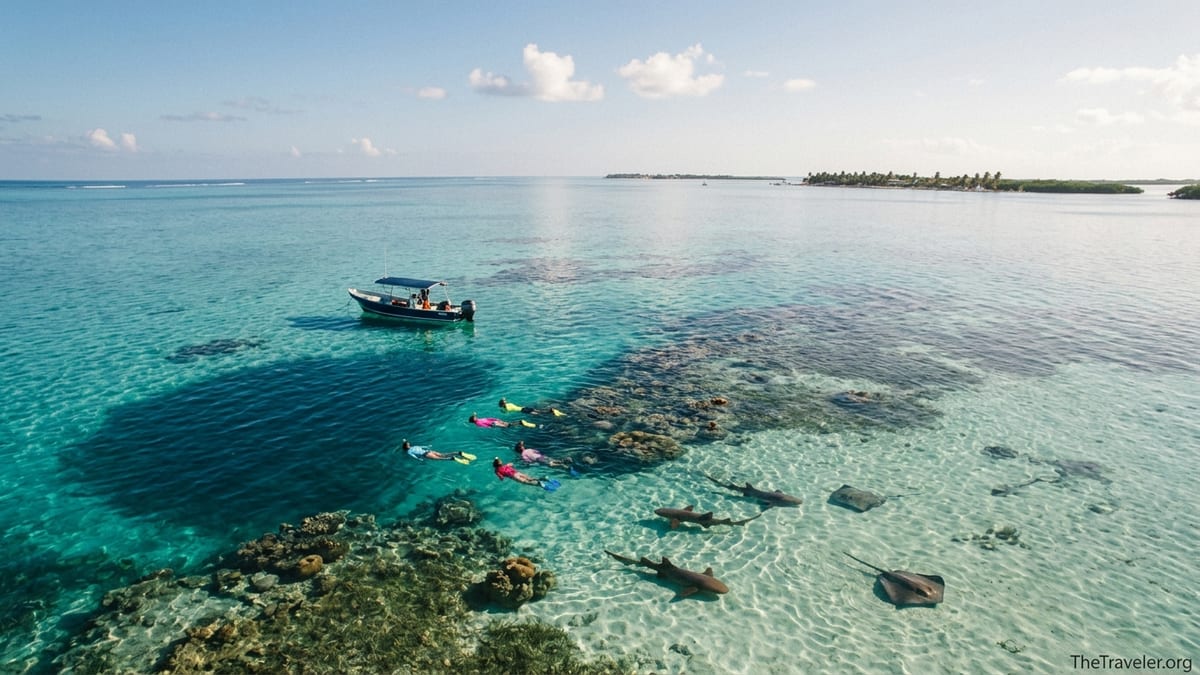
Understanding the Hol Chan Channel Environment
The Hol Chan Channel, whose name comes from the Maya words for “little channel,” is a natural break in Belize’s barrier reef that drops from shallow coral gardens into a deeper cut around 30 feet at its deepest point. Most snorkeling tours keep guests along the sides and upper lip of the channel in 10 to 20 feet of water, but you are still in genuine open sea rather than a lagoon pool. This is not a place where most adults can stand up, and many first timers are surprised when they look down and see blue depth instead of sand under their fins.
Conditions at the channel vary with tide, wind and recent weather. On calm mornings in the dry season, visibility is often reported around 50 to 80 feet, with clear views of the sandy bottom, coral heads and cruising turtles. After a few windy days or a passing storm, the same site can look milky, with visibility closer to 20 to 30 feet and more surface chop. That means two visitors on back to back days can have very different experiences with how easy it feels to relax and breathe through a snorkel here.
Currents are another factor. Hol Chan sits where water funnels through the reef, so there can be a noticeable push either toward or away from shore, especially on spring tides. Local guides describe the current most days as moderate rather than strong, but it is enough that weaker swimmers may need to kick continuously to stay with the group. Unlike a protected bay, you cannot count on simply floating in one calm spot.
Because this is a designated marine reserve, boat traffic is regulated and snorkelers must stay with licensed guides in the core zones. Even so, there are usually several tour boats anchored or moored around the cut by mid morning. You will hear engines starting and see other groups in the water. The environment feels like an organized marine park, not a deserted private reef, and that can be reassuring for some visitors while slightly overwhelming for others.
Water Depth, Visibility and How They Feel in the Water
On paper, depth numbers like 10, 20 or 30 feet can sound abstract. In practice, at Hol Chan the water usually feels deep enough that you are very aware you are swimming in the ocean. When you float over the lip of the channel and look down, coral heads rise from the bottom like small apartment buildings, with sand channels in between and schools of fish forming clouds over the structure. For many people who have only snorkeled in waist deep water, that first glimpse can be both thrilling and a bit vertigo inducing.
Visibility at Hol Chan is part of what makes it so popular. On good days, you may be able to spot a southern stingray resting on the sand 25 feet below or watch a nurse shark glide along the floor of the cut. When clarity drops after wind or swell, you still typically see plenty of marine life at mid depth, but shapes emerge more suddenly from the haze. Travelers who are nervous swimmers often feel more comfortable when they can choose a day with calmer winds, which is one reason many operators schedule their Hol Chan trips in the morning when seas are usually flatter.
The combination of depth and visibility also affects comfort around marine life. Seeing a loggerhead turtle cruising 15 feet away in crystal water feels like watching a slow parade. Seeing the same turtle appear out of the gloom directly below you can be startling if you are not used to it. If you know you are prone to anxiety in open water, it can help to start the tour at the shallower edge of the site, where coral rises to within 8 to 10 feet of the surface and the bottom feels visually closer.
Water temperature is generally comfortable for most travelers. Around Hol Chan it commonly sits in the high 70s to low 80s Fahrenheit for much of the main tourism season. That means most snorkelers do not need a wetsuit for warmth, but many still appreciate a thin rash guard or shorty suit to reduce sun exposure and minor scrapes if they accidentally brush coral while following the group.
Coral Formations and Marine Life You Are Likely to See
Hol Chan Marine Reserve was created in the late 1980s to protect a representative section of reef, seagrass and mangrove, and that protection shows in the density of marine life. Inside the channel and along the reef crest, you will see hard corals like brain, elkhorn and finger formations rising from the bottom, along with patches of sea fans and sponges waving in the current. Guides often point out cleaning stations where small wrasses and gobies pick parasites off larger fish that patiently hover in line.
For many visitors, the highlight is swimming alongside sea turtles. Green turtles are the most frequently spotted at Hol Chan, gliding slowly over the seagrass or surfacing briefly for air. Hawksbill turtles occasionally appear near the coral, their beaklike mouths picking at sponges. It is common for guides to keep the group slightly behind and above a turtle so it does not feel crowded, and you may have a few minutes simply drifting in parallel as it feeds.
Rays are another signature sight here. Southern stingrays often rest on the sand at the bottom of the channel, partially covered, while spotted eagle rays may pass through the cut in small numbers, their long tails trailing behind. Seeing an eagle ray “fly” past in clear water at 20 feet depth is a moment many snorkelers remember long after the trip, and it is a good example of how the channel’s depth enhances the sense of scale.
Moray eels, particularly green morays, tend to tuck themselves into cracks in the coral heads. Guides know the regular spots and may point out an eel’s head and open mouth as it breathes. Schooling reef fish are everywhere: grunts, snappers, surgeonfish and parrotfish move in loose clouds, with the occasional larger grouper lurking around the edges. Nurse sharks sometimes cruise the deeper part of the channel or nap under ledges, especially on tours that combine Hol Chan with Shark Ray Alley, where sharks are more accustomed to boats.
Guides, Group Size and Flotation Equipment
Belizean regulations require licensed guides inside key zones of the Hol Chan Marine Reserve, and tour companies generally keep guide to guest ratios modest compared with big ship excursions in some other countries. A common setup from San Pedro or Caye Caulker is one in water guide for every 6 to 8 snorkelers, plus a boat captain who remains on the vessel. Smaller outfits may run boats with 8 to 12 guests total, while budget operators can carry closer to 15 to 20, often split between two guides in the water.
Before you enter the water, it is normal for guides to give a briefing that covers how deep the channel is, which way the current is running, and how the group will move as a unit. Many operators draw a quick diagram on the boat’s cooler lid or deck to show the shape of the cut, the shallow reef crest, and the planned route back to the mooring line. Paying close attention in this briefing is important, especially if it is your first time in deeper water with a snorkel.
Flotation gear is widely available and should be considered standard for anyone who is not an entirely confident swimmer. Most boats carry inflatable snorkel vests that you can partially inflate so you float more easily without being forced to stay on the surface. Some operators also offer pool noodles or foam floats that guests can hold in front of them, which can be particularly reassuring for children or adults nervous about the depth.
If you know you tend to tire quickly, ask in advance whether your chosen company can provide a life jacket that you can wear while snorkeling rather than just a vest you lie on. Many outfits on Ambergris Caye and Caye Caulker are used to accommodating different comfort levels and will have solutions ready, but it is better to request them when booking instead of on the ride out to the reef.
Time in the Water, Tour Flow and What to Bring
Most half day Hol Chan trips from San Pedro or Caye Caulker include two main snorkeling stops: the Hol Chan Channel itself and nearby Shark Ray Alley. A fairly standard schedule is 30 to 45 minutes of guided snorkeling in the channel, followed by a short boat ride and another 20 to 30 minutes in the shallower Shark Ray Alley site. Including boat rides and briefings, total tour time often runs around three hours for a morning or afternoon departure.
Thirty minutes can feel longer than you expect when you are continuously moving your fins and managing your breathing in open water. Guides typically set an easy pace, stopping frequently to point out turtles, rays or interesting coral features. However, if you fall behind the group, you may find yourself working harder to catch up than you would in a calm bay. It is entirely acceptable to signal the guide or boat that you want to return early if you begin feeling tired or anxious.
As for what to bring, your tour operator will usually provide mask, snorkel and fins, though experienced travelers often prefer to bring their own mask for a more reliable seal. A long sleeve UV rash guard or light wetsuit top is very useful because the combination of bright sun and salt water reflection can produce sunburn in as little as half an hour. Reef safe sunscreen, applied at least 30 minutes before entering the water, helps protect both your skin and the coral.
Many boats carry drinking water and basic snacks, but it is smart to bring your own refillable bottle and a small dry bag with a towel, sunglasses and a change of shirt. If you plan to take photos, a simple waterproof phone pouch or compact action camera is sufficient. The marine life at Hol Chan is close enough that you do not need professional equipment to capture memorable images of turtles or big schools of fish moving through the channel.
Hol Chan vs Shark Ray Alley: Depth and Difficulty
Most visitors first hear about Hol Chan in the same sentence as Shark Ray Alley, and many tours sell them as a bundled experience. The key difference is depth and how it feels to be in the water. At Hol Chan’s channel, you are usually floating over 10 to 20 feet of water with coral rising below and the channel floor dropping away in places. At Shark Ray Alley, typical depths are closer to 5 to 12 feet, with large patches shallow enough that an average height adult could stand in some areas if guides allow it.
That difference means Shark Ray Alley generally feels more approachable to nervous snorkelers. The bottom is mostly sand, and the main attraction is the concentration of nurse sharks and rays that gather near the boat when it arrives. You can often see the animals clearly just by hanging onto a float line at the surface or even watching from the boat’s ladder. Movement is more vertical than horizontal: guests slide in, hover near the boat to observe the activity, and then climb back out when they have had their fill.
At Hol Chan, by contrast, the experience is more like a guided drift through a natural underwater canyon. There are no feeding stations or stationary points to cling to, and the marine life is spread across the channel. You need to be comfortable kicking slowly but steadily for 30 minutes, lifting your head to sight the guide occasionally, and adjusting for the tug of the current as the group crosses open patches.
For travelers deciding which site matches their comfort level, a useful rule of thumb is this: if you are only happy in chest deep water where you can put your feet down, Shark Ray Alley will probably feel fine while the Hol Chan Channel may feel stressful. If you are already comfortable swimming over the deep end of a pool and can tread water without panic, Hol Chan becomes accessible, especially with a vest and attentive guide.
Is Hol Chan Right for Your Swimming Ability
Choosing whether to snorkel Hol Chan is less about being athletic and more about being honest about your relationship with deep water. If you can swim the length of a standard pool without needing to stop and are comfortable floating on your front with a snorkel for several minutes at a time, you likely have the basic capacity needed. Where many people struggle is not with physical effort but with managing anxiety once they see open depth below them.
Think back to other times you have been in the ocean. If you felt uneasy whenever you could not touch the bottom, or if small waves made you swallow water even with a mask on, it is worth starting with a more sheltered Belize site such as the inner parts of Hol Chan’s reef top or alternate stops like Mexico Rocks, which some operators promote as particularly gentle. You can then work up to the main channel cut after you have a feel for snorkeling with a group.
Families should also factor in how children handle new environments. Many local guides are excellent with kids and will let them hold onto a life ring or a small buoy while the group moves through the channel. However, a child who panics easily in swim lessons may not enjoy 20 minutes above 15 feet of water with fish and turtles suddenly appearing underneath. In that case, it may be better to keep them on the boat for the Hol Chan stop and let them join in the shallower Shark Ray Alley section, where you can stay close to the ladder.
If you are an experienced swimmer or a certified diver, Hol Chan will likely feel straightforward and even relaxing. You may be more focused on photography, fish identification or simply enjoying the sensation of floating over the reef structures. For this group, the key preparation is less about safety and more about choosing a tour time with fewer crowds and better visibility so you can appreciate the site at its best.
Practical Safety Tips for a Confident Hol Chan Snorkel
There are several simple habits that make a noticeable difference in comfort at Hol Chan. First, use flotation even if you think you do not need it. A partially inflated snorkel vest lets you relax your legs and focus on breathing and looking around. It also helps guides keep track of the group more easily in choppy water. Many confident swimmers who would never use a vest in a pool are surprised how much more relaxed they feel in the channel when they try one.
Second, stay close enough to the guide that you can hear their voice when they call out a turtle or ray. This naturally keeps you within the main group and away from the edges of the site where current can feel stronger. Guides at Hol Chan are usually in the water with a bright float or marker line; watching that float is more effective than staring at the boat, which may swing on its mooring or be partially hidden by other vessels.
Third, practice your snorkel skills before you step off the boat into the deep. Most tours give guests a minute or two to adjust masks and test their breathing at the surface. Take advantage of this time to put your face in the water near the ladder, blow a few clearing breaths through the snorkel, and check that no water is seeping into your mask. Fixing a small leak here is much easier than trying to adjust your gear while following a moving group in the channel.
Finally, remember that it is okay to sit out a section if the conditions are rougher than you expected. If the wind has picked up and you or a family member is nervous, you can ask to remain on the boat for the channel portion and join for Shark Ray Alley instead. Many travelers report that simply knowing they had the option to skip made them feel more in control and, ironically, more willing to give the deeper site a try.
The Takeaway
Hol Chan Marine Reserve is revered for a reason. In a relatively compact area, you can float above live coral, watch turtles cruise through a genuine reef channel, and see rays, moray eels and dense schools of reef fish without putting on scuba gear. Yet those same qualities mean it is a real open water environment rather than a theme park lagoon, with 10 to 30 feet of depth, occasional current and a need to keep moving with your group.
If you are at ease in deeper water, know how to swim steadily for half an hour and use flotation when offered, Hol Chan can be the highlight of a Belize trip. If you are most comfortable standing in chest deep water, the channel may feel challenging, and you might enjoy starting with the shallower Shark Ray Alley stop or another protected reef site. The key is to match the site to your comfort level rather than assuming a “must do” recommendation means it is automatically effortless for everyone.
By understanding how the channel is shaped, what conditions to expect and how tours are run, you can make a clear, confident decision about whether Hol Chan fits your abilities. That, in turn, lets you either prepare properly or choose an alternative experience, ensuring that your time on Belize’s barrier reef is remembered for the right reasons.
FAQ
Q1. How deep is the water where most people snorkel at Hol Chan Channel
Most snorkelers spend their time in 10 to 20 feet of water along the sides and upper lip of the channel, with the deepest parts of the cut dropping to around 30 feet.
Q2. Are the currents at Hol Chan too strong for beginners
Currents are usually moderate but noticeable, especially on tide changes. Confident swimmers using flotation generally manage well, but nervous beginners can find the push unsettling.
Q3. What marine animals am I most likely to see while snorkeling Hol Chan
Common sightings include green turtles, southern stingrays, nurse sharks, green moray eels and large schools of reef fish such as grunts, snappers and parrotfish.
Q4. How does Hol Chan snorkeling differ from Shark Ray Alley
Hol Chan is deeper and more like a guided swim through a natural channel, while Shark Ray Alley is shallower with a sandy bottom where guests mainly watch nurse sharks and rays near the boat.
Q5. Do I need to be an excellent swimmer to snorkel Hol Chan
You do not need to be an athlete, but you should be comfortable swimming in deep water, able to float and kick steadily for 30 minutes, and relaxed using a snorkel and mask.
Q6. What flotation equipment is typically available on Hol Chan tours
Most boats provide inflatable snorkel vests as standard and often have additional floats or noodles. Many can also offer life jackets for guests who want extra support.
Q7. How long will I actually spend in the water at Hol Chan
Typical tours include about 30 to 45 minutes of guided snorkeling in the channel, followed by another shorter session at Shark Ray Alley or a similar secondary site.
Q8. When is visibility usually best at Hol Chan Marine Reserve
Visibility tends to be best on calmer mornings outside periods of strong wind or recent storms, when you may see 50 feet or more through clear blue water.
Q9. Is Hol Chan suitable for young children
Confident child swimmers often do well with flotation and close guide supervision, but very anxious or non swimming children usually enjoy shallower sites like Shark Ray Alley more.
Q10. What should I bring to be comfortable on a Hol Chan snorkel trip
Bring a well fitting mask if you have one, a long sleeve rash guard, reef safe sunscreen, a refillable water bottle, a small towel, and a waterproof pouch or simple camera for photos.