


More news on this day
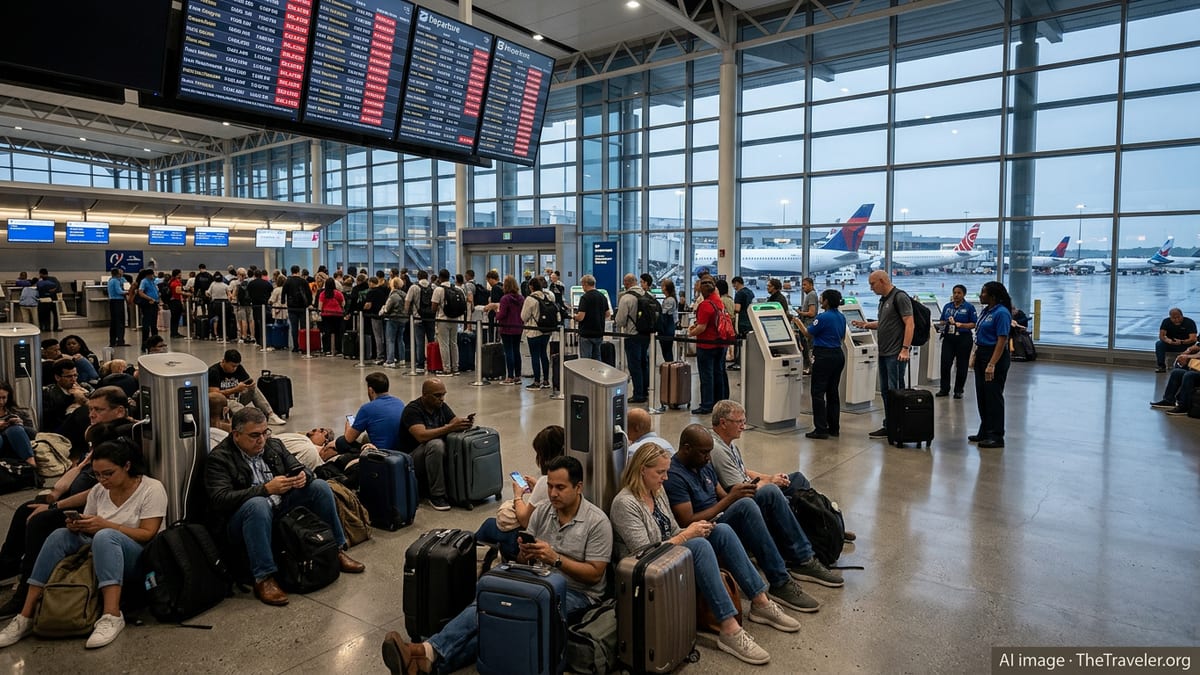
Hundreds of travelers found themselves stranded at Hartsfield-Jackson Atlanta International Airport on July 4 as cascading delays and cancellations across multiple major airlines rippled through networks serving the United States, Canada, Europe and the Caribbean.
Get the latest news straight to your inbox!
Atlanta Ground Delays Trigger Wave of Disruptions
Holiday travel pressures converged with weather and airspace constraints to create severe disruption at the world’s busiest passenger hub. Publicly available tracking data for the Independence Day period indicates that Atlanta’s departures were subject to prolonged ground delays, with some flights held for around an hour or longer before takeoff as airport and air traffic control programs attempted to meter departures into already congested airspace.
Operational summaries compiled from flight-tracking services show that more than 200 departures and arrivals connected to Atlanta were delayed, while at least a dozen flights were cancelled outright over the July 4 window. Delta Air Lines, the airport’s dominant carrier, was heavily affected, alongside Frontier Airlines, United Airlines, American Airlines and JetBlue. The combined impact left hundreds of connecting passengers temporarily isolated in concourses as rolling schedule changes disrupted onward journeys to domestic and international destinations.
Irregular operations plans published by Hartsfield-Jackson earlier this year outline how the airport manages prolonged tarmac delays and large-scale disruptions, including the use of hard time limits for keeping passengers on aircraft and procedures for deplaning into crowded gate areas when connections are at risk. Those contingency measures were put to the test as aircraft missed their assigned departure slots and gate availability tightened during peak afternoon and evening banks.
Historical disruption data compiled for major US hubs shows that even on a typical year, roughly one in four departures from Atlanta leaves late and around 1 percent is cancelled. The Independence Day holiday, with surging passenger volumes and convective storms common across the Southeast, typically amplifies those baseline vulnerabilities and can tip the network into broader instability when multiple carriers face simultaneous challenges.
US Holiday Travel Network Feels the Strain
The turmoil in Atlanta formed part of a wider pattern of disruption across the US aviation system over the July 4 period. Industry-focused coverage of the holiday weekend cites more than 6,000 delays and over 300 cancellations nationwide as thunderstorms, heavy demand and temporary flight restrictions around the Washington region pressured airline and airport operations.
Reports highlight that carriers including Delta, United, American, JetBlue, SkyWest and several regional partners were forced to trim schedules, hold departures on the ground and reposition aircraft and crews. These network adjustments produced rolling delays across major hubs such as Chicago, New York, Washington, Dallas and Miami, affecting a dense web of domestic routes and long haul services to Canada, Europe and Latin America.
At Phoenix Sky Harbor International Airport, for example, a separate cluster of disruptions on July 4 contributed more than 100 delayed flights and several cancellations for American Airlines, United and regional partners. That local turmoil compounded the challenges for travelers attempting to connect through multiple hubs on already tight itineraries, underscoring how localized operational problems can quickly spread across a continental network.
Travel analysts note that the concentration of traffic through a relatively small number of mega-hubs means that weather or staffing issues at one airport can cascade into missed connections and equipment shortages elsewhere. The situation over the holiday weekend illustrated how quickly apparent stability can give way to a system-wide slowdown once delays breach a certain threshold.
International Routes to Europe, Canada and the Caribbean Hit
The ripple effects from Atlanta’s delays were visible far beyond US borders. Flight-status data and airline travel alerts show knock-on disruptions to services linking the United States with Canada, the United Kingdom, Germany, France, Spain and Turkey, as well as leisure routes to Mexico and the Caribbean.
Transatlantic flights departing from or connecting through US hubs experienced schedule changes and extended gate holds as carriers waited for inbound aircraft and crews. Routes linking American and Delta hubs to London, Paris, Frankfurt, Madrid and Istanbul were among those subject to late departures, which in turn forced airlines to adjust arrival times and, in some cases, rebook passengers onto later services.
Canadian routes were also affected, particularly services touching Toronto and Montreal that depend on timely US connections. Some passengers bound for resort destinations in Mexico and the Caribbean faced overnight delays or missed the first day of planned vacations after their initial domestic segments out of Atlanta or other hubs departed behind schedule.
European aviation data published earlier this year highlights the chronic role of weather and air traffic control bottlenecks in creating delays across France, Germany and Spain. When these structural pressures coincide with spikes in transatlantic traffic from North America during peak holiday periods, minor schedule slippages can evolve into more serious congestion on both sides of the Atlantic.
Weather, Airspace Limits and Staffing Challenges Converge
Publicly available reports on the independence holiday disruptions point to a combination of standard summer hazards and more complex structural issues. Strong thunderstorms across parts of the Southeast and Mid-Atlantic created route closures and forced aircraft to fly longer paths, while temporary flight restrictions around the US capital for official events constrained already busy airspace.
At the same time, airlines continued to work within tight staffing margins for flight crews, maintenance personnel and ground handling teams. Any extended ground stop or weather reroute can place crews against contractual duty limits, leaving airlines with limited flexibility to recover schedules once disruptions begin. This dynamic was evident as carriers at Atlanta and other hubs cancelled select flights preemptively while heavily delaying others in an attempt to preserve critical connections.
Travel-alert pages issued by transatlantic partners in recent days have emphasized flexible rebooking policies and advised customers to monitor mobile apps for rolling changes. These advisories reflect a recognition that the combination of summer storms, high passenger volumes and airspace constraints will likely continue to challenge punctuality throughout the peak season.
On the European side, recent analyses from regional air navigation bodies describe how weather-related reroutes and air traffic control staffing shortages have magnified delay minutes across key hubs in France, Germany and Spain. As US carriers feed increasing numbers of passengers into those airports over the summer, both sides of the Atlantic face limited margin for error when disruptions arise.
Stranded Passengers Navigate Crowded Concourses and Limited Options
For travelers caught in the middle of the disruptions at Hartsfield-Jackson and other hubs, the experience was defined by crowded concourses, long customer-service lines and limited same-day alternatives. Holiday load factors left many flights operating near capacity, sharply reducing the availability of empty seats for rebooking when cancellations or missed connections occurred.
Observers at Atlanta reported gate areas filled with passengers on standby or awaiting reassignment, while digital departure boards cycled through successive delay extensions. With hundreds of travelers effectively isolated in the terminal for hours, airport amenities, charging outlets and seating areas quickly reached saturation during peak evening periods.
Consumer advocates note that although airlines are not always required to provide compensation for weather-related disruptions, passengers do retain certain rights when delays are caused by controllable factors such as crew scheduling or maintenance. Guidance from major carriers and international regulators generally directs affected travelers to request meal vouchers, hotel accommodations or refunds depending on the length and cause of a delay or cancellation.
Travel experts advise that during peak disruption periods, passengers should make use of multiple channels simultaneously, including airline apps, self-service kiosks and call centers, while also considering alternative routings through less congested hubs. For those scheduled to travel in the coming days, allowing additional buffer time for connections and monitoring forecasts along the route may help mitigate the risk of being stranded in a repeat of this week’s turmoil.