


More news on this day
Peak holiday travel at Nantucket Memorial Airport on July 4 unraveled into a day of missed connections and rebookings as publicly available tracking data showed 11 delays and 18 cancellations across carriers including Tradewind Aviation, JetBlue and Cape Air, disrupting links to Boston, New York, Providence and other mainland cities.
Get the latest news straight to your inbox!
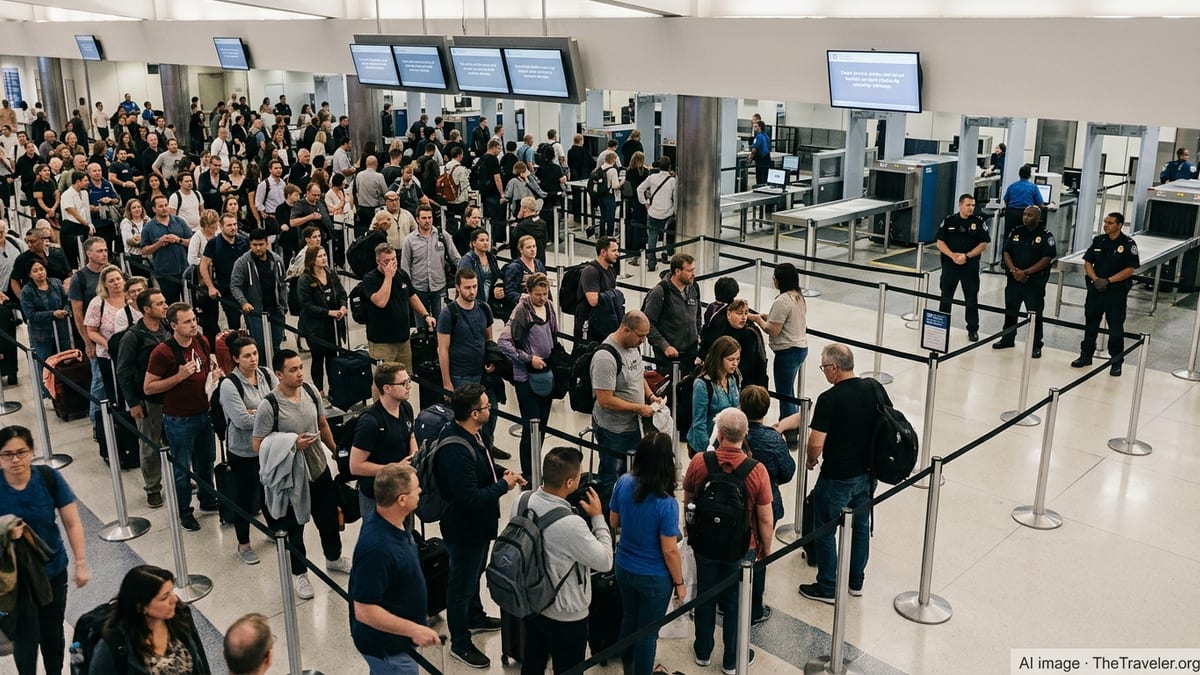
Holiday Disruptions Hit Key Northeast Routes
The latest tracking snapshots and schedule data for Saturday, July 4, 2026 indicate an unusually high number of disrupted departures and arrivals at Nantucket Memorial Airport, concentrated in short-haul links that tie the island to major East Coast gateways. Flights serving Boston, New York-area airports, Providence and other regional hubs saw a wave of late departures and outright cancellations that rippled through the day’s timetable.
Tradewind Aviation, which operates shuttle-style services linking Nantucket with airports such as White Plains and Teterboro, appears to have borne the brunt of the holiday turbulence. Flight-history pages for core routes including TJ1000 between White Plains and Nantucket and TJ2008 between Teterboro and Nantucket list the July 4 sectors as cancelled, contributing to a cluster of scrubbed operations just as demand peaked.
JetBlue and Cape Air, which jointly market a number of code-share flights into and out of Nantucket, also feature among the disrupted operations. Flight logs for services such as Cape Air flight 5351, marketed in some schedules under a JetBlue code, show Nantucket legs embedded in a wider regional network where any delay can cascade into subsequent rotations, magnifying the impact of a single late turn or weather hold.
Although the precise breakdown of causes for each of the 11 delays and 18 cancellations has not been detailed in public summaries, the pattern aligns with a broader day of constrained capacity across portions of the National Airspace System, where federal status boards on July 4 highlighted volume-related holds and other traffic-management initiatives at several East Coast facilities.
Tradewind Aviation Faces Concentrated Cancellations
Tradewind Aviation’s activity at Nantucket has expanded in recent years, with the carrier positioning the island as a prominent seasonal node within a network that stretches from the Northeast to the Caribbean. On July 4, however, that growth narrative collided with operational reality as multiple Tradewind segments touching Nantucket were withdrawn from service.
Published coverage focused on the island’s aviation sector describes at least 15 Tradewind cancellations on or around the Independence Day holiday, a figure that dovetails with individual flight-status pages listing July 4 legs as cancelled on high-profile routes from White Plains and Teterboro. For travelers who rely on these shuttle flights to connect from private terminals or secondary airports into Nantucket, the sudden loss of capacity meant last-minute scrambles for alternatives or unplanned overnight stays on the mainland.
Tradewind flights typically operate within tightly structured daily rotations, where aircraft and crews shuttle repeatedly between a small number of cities. In such a model, a disruption early in the day can leave subsequent sectors without available aircraft, prompting a sequence of cancellations rather than isolated schedule adjustments. The July 4 pattern at Nantucket suggests exactly this kind of knock-on effect, with morning cancellations narrowing options for afternoon and evening travelers.
Travel industry observers note that premium regional carriers like Tradewind tend to attract time-sensitive passengers prepared to pay a higher fare for schedule convenience. Against that backdrop, a cluster of cancellations around a prime holiday weekend carries outsized reputational risk, particularly when competing ferry services offer a slower but often more predictable alternative between the mainland and the island.
JetBlue and Cape Air Disruptions Underscore Network Fragility
JetBlue and Cape Air form another crucial pillar of Nantucket’s air connectivity, combining mainline and regional operations to link the island with Boston and New York. Publicly available route and enplanement summaries from the Town of Nantucket show JetBlue as one of the airport’s largest carriers by passenger volume in recent fiscal years, while Cape Air has maintained a steady presence on shorter commuter hops.
On July 4, delay and cancellation data attached to specific flights illustrate how intertwined the two carriers’ operations can be. Several Cape Air services into and out of Nantucket double as JetBlue-marketed flights, meaning that a disruption attributed to a small regional aircraft can quickly spill over to affect customers booked under a larger carrier’s code, with implications for onward connections at Boston Logan or New York-area airports.
The recorded disruptions on code-share segments highlight the sensitivity of such partnerships to operational stress. If a single turboprop flight is delayed or cancelled because of aircraft rotation issues, crew availability or weather along the route, the impact is effectively multiplied across both carriers’ booking systems. For passengers, this can turn a short hop from Nantucket into a critical weak link in a longer itinerary spanning multiple states.
These events also arrive against a backdrop of strong seasonal demand. Municipal data on enplanements for fiscal year 2026 show overall passenger numbers at Nantucket trending higher than in previous years, even as some carriers have trimmed or concentrated their schedules. The combination of fuller flights and fewer spare seats leaves less room for re-accommodating travelers when irregular operations strike.
System Pressures and Summer Weather Complicate Operations
National airspace status boards for July 4 pointed to a mix of high traffic volume and localized weather challenges across portions of the United States, with several major hubs reporting ground delays and flow-control measures. While Nantucket itself is a relatively small facility in federal tracking systems, its flights depend heavily on conditions at congested mainland airports in the Northeast corridor.
Any slowdown at those larger hubs can have a disproportionate effect on small-island operations. If Boston, New York or Providence experience even modest ground holds, short-haul regional aircraft can quickly fall behind schedule, leaving too little time to complete planned rotations before duty limits for crews are reached. The resulting pressure often forces operators to prioritize certain sectors while cancelling others outright.
For Nantucket, this interplay between local weather, mainland congestion and strict crew-scheduling rules creates a narrow operational margin during peak season. When combined with strong holiday demand, the margin can evaporate quickly, turning what might have been routine delays into a wider pattern of cancellations such as those recorded on July 4.
Observers of regional aviation trends note that the industry is still adjusting to staffing and fleet shifts that accelerated during the pandemic years. Smaller carriers, in particular, must balance limited spare aircraft and crew resources against schedules that are heavily concentrated into summer months, leaving little cushion when irregular operations strike during holiday peaks.
Island Dependence on Air Links Heightens Impact
Nantucket’s geographic isolation means that air travel plays a central role in the island’s economic and social life, especially during the busy summer visitor season. The airport has no road or rail alternatives; instead, travelers must choose between limited ferry capacity and a finite number of daily flights operated by a small group of carriers.
Town aviation statistics for recent fiscal years show steady to rising enplanements across key airlines, underscoring how reliant the island has become on dependable air links. Even modest disruptions can strain local accommodation, rental car inventories and service-sector staffing, as visitors arrive late, leave early or are forced to stay longer than planned because of cancelled flights.
The July 4 disruptions therefore resonate beyond the terminal’s departure boards. Hoteliers, short-term rental hosts and local businesses often plan staffing and inventory months in advance based on expected visitor flows. When a cluster of flights is cancelled or delayed, those carefully tuned plans can be thrown off balance, affecting everything from restaurant reservations to medical appointments that depend on timely travel.
While ferries offer an important safety valve, crossing times, weather sensitivity and capacity constraints limit their ability to absorb a sudden surge in displaced airline passengers. The events at Nantucket Memorial Airport on July 4 highlight how easily a handful of delayed or cancelled flights by carriers such as Tradewind Aviation, JetBlue and Cape Air can reverberate across the island at one of the most critical points in the summer calendar.