


More news on this day
Hong Kong is emerging from its pandemic slump with a new kind of visitor: long-haul travelers who once dashed through on a whistle-stop layover and are now treating the city as a multi-night destination in its own right.
Get the latest news straight to your inbox!
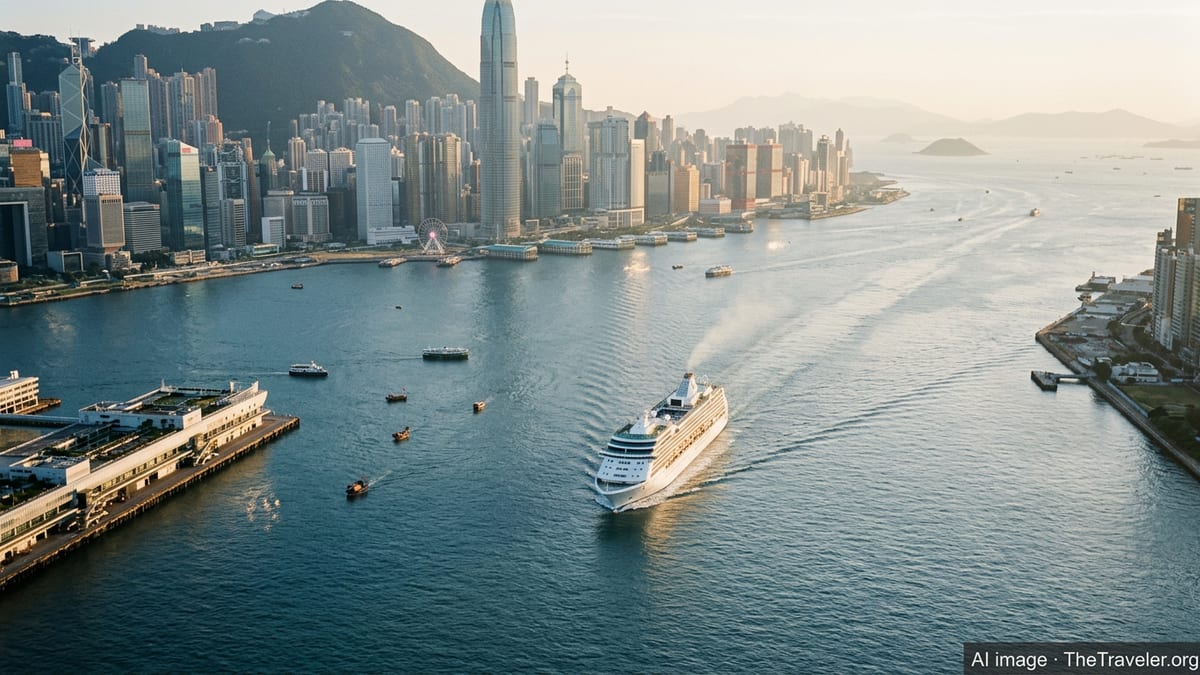
Visitor Numbers Climb As Long-Haul Markets Rebound
Hong Kong’s tourism recovery has accelerated, with nearly 50 million visitor arrivals recorded in 2025, according to figures released by the Hong Kong Tourism Board. Publicly available data indicates that overall arrivals grew in double digits year on year, reflecting the continued restoration of flight capacity and a renewed appetite for international travel.
Long-haul markets are a bright spot within that rebound. Tourism board statistics show that visitors from regions such as Europe, North America and Australia grew by around 50 percent in 2024 compared with the previous year, followed by a further increase of about 20 percent in 2025. Although these travelers still account for a minority of total arrivals compared with mainland China, they represent a valuable segment that typically spends more and stays longer.
Government economic reports for 2024 describe tourism as a key engine in the city’s post-pandemic recovery, highlighting especially strong growth from non-mainland markets as airlines rebuild long-haul capacity. New and reinstated routes connecting Hong Kong with cities in the Middle East, Europe and North America have widened options for travelers looking to break up long flights with a stop in the city.
At the same time, Hong Kong’s role as a gateway to mainland China remains central. Official data covering June 2024 to May 2025 shows millions of non-mainland visitors using Hong Kong as an entry point to cross into the mainland, signaling that many long-haul trips now combine an extended Hong Kong visit with onward journeys into the Greater Bay Area and beyond.
From Transit Hub To Multi-Night City Break
For years, Hong Kong International Airport has been known as a convenient transit hub, and quick layovers were built into many long-haul itineraries between Europe, North America and Australasia. Recent patterns suggest that a growing share of those transits are turning into multi-night stays, effectively transforming Hong Kong from a refueling stop into a standalone city break.
Hong Kong Tourism Board materials now actively market “stopover” experiences that align more with one to three-night city visits than with a few spare hours in the terminal. These guides emphasize that travelers with long connections can easily clear immigration, ride the Airport Express into Central in under half an hour, and base themselves in districts such as Central, Sheung Wan or Tsim Sha Tsui for several nights while waiting for onward flights.
Independent travel guides and industry coverage underscore that shift, presenting Hong Kong not only as a place to grab dim sum between flights but as a compact introduction to Asia for long-haul wanderers. Writers frame 24 to 72 hours in the city as a “mini city break,” recommending hotel stays, evening harbor views and neighborhood explorations instead of airport-adjacent naps.
Online travel communities also reflect the trend. Itineraries that once squeezed in a single night are increasingly being reworked into two or three nights, with travelers citing the density of attractions, evening skyline views and efficient public transport as reasons to linger. The consensus in many recent discussions is that a rushed overnight transit rarely does the city justice.
Overnight Stays Lengthen As Travelers Slow Down
Official statistics indicate that visitors are staying longer in Hong Kong than during the immediate pandemic rebound. Data from the tourism board covering mid-2024 to mid-2025 shows that more than 7.6 million non-mainland visitors during that period were overnight guests, with an average stay of just over three days. While short visits remain common, there is clear evidence that long-haul travelers are increasingly opting for multi-night stays instead of a single night between flights.
Academic research on stopovers in hubs such as Hong Kong and Singapore has highlighted a structural shift in the way travelers perceive transit cities. Studies describe stopovers of one to three nights as value-based experiences, with visitors motivated by culture, food and urban exploration rather than simply rest. That framing mirrors a wider “slow travel” and digital nomad movement in which long-haul trips are broken into longer segments instead of rapid multi-city sprints.
Global accommodation data has also pointed to a post-pandemic tilt toward longer bookings, as remote workers and “slomads” use the flexibility of hybrid work to spend more time in each destination. Within that environment, Hong Kong’s compact scale, reliable transport and high concentration of urban experiences make it appealing for travelers planning three to five-night stays on either side of a transpacific or Europe–Australasia itinerary.
Travel agencies and airline schedule data show that many long-haul tickets can now be structured to include stopovers in hub cities at little additional cost, further encouraging the shift from a short layover to a longer stay. For Hong Kong, that flexibility is aligning with a new traveler mindset that prioritizes deeper immersion in fewer places.
New Routes, Easing Rules And Neighborhood Discovery
Policy initiatives and aviation developments are helping to sustain the trend toward extended visits. Government briefings over the past two years describe a steady expansion of international air services to and from Hong Kong, including new links to the Middle East and resumed connections with key European and North American cities. As airlines rebuild networks, many itineraries once again offer Hong Kong as a convenient connection point, now with more generous scheduling options.
At the same time, visa-free entry arrangements for many passport holders keep barriers low for short, spontaneous stays. Travel advisories note that visitors from several long-haul markets can enter Hong Kong without a visa for periods ranging up to 90 days, allowing ample time for a multi-night stopover without additional paperwork. Recent enhancements to cross-border schemes within the Greater Bay Area are also being promoted as a way to draw more high value-added overnight visitors.
Within the city, the pattern of where visitors stay is evolving as trips lengthen. While Tsim Sha Tsui and Central remain classic bases due to their transport links and harbor views, online trip reports show growing interest in neighborhoods such as Sheung Wan, Wan Chai and emerging arts and dining clusters. Travelers who choose three or more nights often report structuring stays around distinct districts rather than racing through a checklist of landmarks.
That shift is encouraging spending beyond traditional tourist zones. As more long-haul travelers book boutique hotels, serviced apartments and longer-stay options in local neighborhoods, small businesses in dining, nightlife and culture stand to benefit from a steadier flow of visitors who explore at a slower pace.
Competitive Landscape Among Regional Stopover Cities
Hong Kong’s push to convert transit passengers into multi-night guests is unfolding amid fierce competition from other regional hubs. Research on stopover destinations notes that cities such as Singapore and Dubai have long positioned themselves as natural breaks on ultra-long-haul routes, tailoring infrastructure, marketing and visa policies to attract stopover tourism.
In that context, Hong Kong is leaning on its combination of dense urban scenery, natural landscapes and cultural heritage to differentiate itself. Industry publications point out that the city offers a rare blend of skyscraper skylines, island hikes and traditional neighborhoods within a compact radius, allowing visitors on three or four-night stays to sample contrasting experiences without long transfers.
Travel discussion forums reveal that potential visitors often weigh Hong Kong directly against Singapore, Dubai or other regional hubs when planning a break between continents. Factors such as airline choice, ticket pricing, perceived political climate and personal interest in food or nightlife frequently shape the final decision. When travelers do choose Hong Kong, many report that the city exceeded expectations that had been shaped by its long-standing image as “just a stopover.”
With long-haul arrivals rising and overnight stays stretching, Hong Kong appears to be gradually redefining its place on global route maps. Rather than serving primarily as a brief connection point, the city is increasingly being slotted into itineraries as a deliberate, multi-night chapter in long-distance journeys.