


Landing at Bali’s I Gusti Ngurah Rai International Airport and getting to Seminyak should be straightforward, but first timers are often surprised by the crowds, the heat, and the competing offers for rides. With several transport options now operating officially at the airport in 2026, it is easier than ever to get to your hotel in Seminyak if you understand how taxis, Grab, Gojek and pre-booked private transfers work, what they cost, and what to expect the moment you clear customs.
Get the latest updates straight to your inbox!
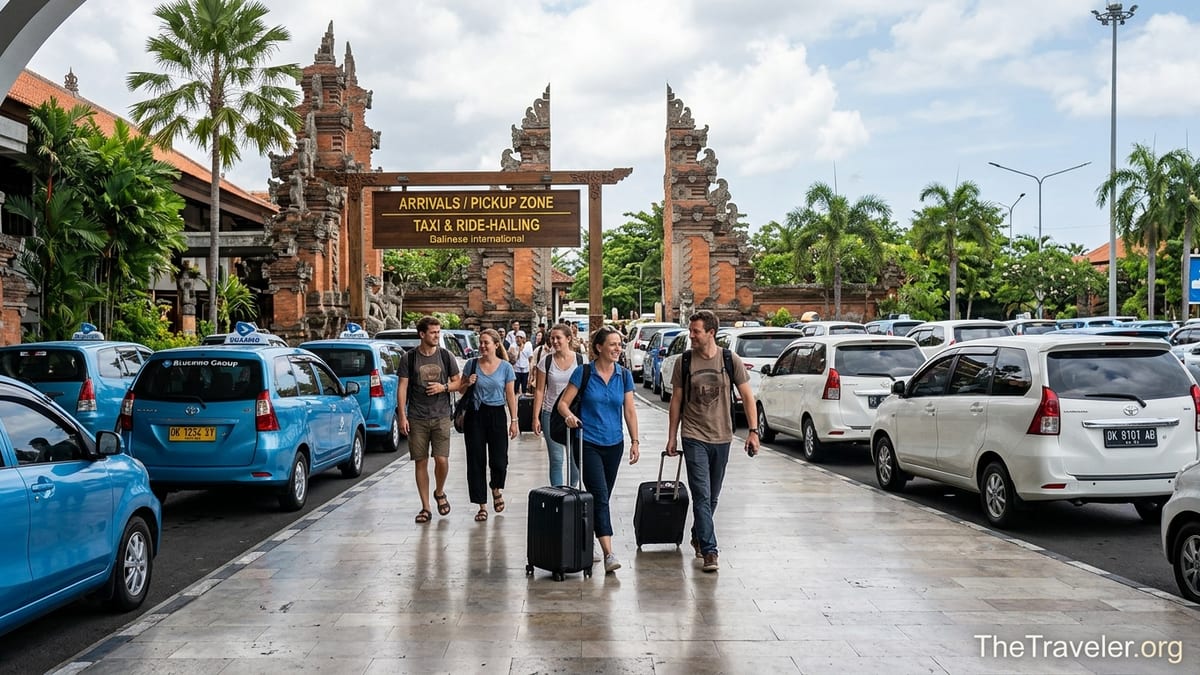
Understanding Bali’s Airport and the Route to Seminyak
I Gusti Ngurah Rai International Airport, often referred to as Denpasar or simply DPS, sits on the narrow strip of land between Kuta and Jimbaran. Seminyak lies about 9 to 12 kilometers north of the airport, depending on whether your hotel is near Double Six Beach, the Eat Street area around Oberoi, or further up near Petitenget. In light traffic, the drive can be as quick as 25 minutes, but in the late afternoon and early evening it can easily stretch to 45 minutes or more, especially during peak seasons such as July, August and late December.
Most routes from the airport to Seminyak follow the main Ngurah Rai Bypass and then cut in toward Kuta and Legian before reaching Seminyak. Some drivers will take the Bali Mandara toll road when heading toward Nusa Dua or Sanur, but for Seminyak, the toll is usually not necessary and adds little time advantage. You should still expect your driver to pass several traffic lights, narrow side streets and occasional roadworks or religious processions, which are part of daily life on Bali and can temporarily slow traffic.
When estimating your arrival time at the hotel, factor in airport formalities as well. In 2026, arrivals at Bali often clear immigration, collect luggage, and pass customs within 45 to 75 minutes of landing, depending on time of day and the number of simultaneous international flights. After that, your actual travel-time clock to Seminyak starts. This is why many experienced visitors now pre-book drivers or at least have a clear transport plan before they leave home.
In Seminyak itself, traffic patterns vary by micro‑area. A resort on the quieter northern side near Batu Belig may be reached via different back roads than a hotel on crowded Jalan Kayu Aya (Eat Street). This can add 5 to 10 minutes compared with a beachfront property near Double Six, so it is useful to give your driver the exact hotel name rather than just saying “Seminyak.”
Official Airport Taxis: How They Work and What They Cost
For many travelers, the first visible option at the exit from customs is the official airport taxi counter. This is a desk located in the arrivals hall where you tell the staff your destination, are quoted a fixed price based on zones, pay in rupiah or by card, and receive a printed ticket. You then proceed to a waiting area outside where a dispatcher matches you with a driver and car. This system avoids haggling and gives you a clear price before you get in the vehicle.
Fares are set by zone, and Seminyak sits in one of the mid‑range zones. As of 2026, published guides and local fare calculators indicate that official airport taxis typically charge in the range of 250,000 to 350,000 Indonesian rupiah for a standard car to most parts of Seminyak, regardless of exact distance or time spent in traffic. A short hop to southern Kuta might be considerably cheaper, while a longer transfer to Ubud or Canggu will cost more, but a resort on Seminyak Beach and a villa on the inland side of Jalan Raya Seminyak are usually charged the same set rate.
The benefits of using the airport taxi counter are simplicity and predictability. You do not need local apps or data, and there is minimal risk of being overcharged as long as you use the official desk rather than following individuals who approach you inside the terminal. Vehicles are generally basic but air conditioned, similar to standard sedans you find elsewhere in Indonesia. Families with large luggage might be offered an MPV such as a Toyota Avanza or Innova for a slightly higher fixed price. For example, a family of four with two big suitcases and two cabin bags might be quoted a higher Seminyak fare for an MPV than a solo traveler with a backpack going to the same hotel.
The main drawback of official airport taxis is that they are rarely the cheapest option. Compared with app‑based rides or pre‑booked transfers, you may pay a premium for the convenience of a fixed counter. During busy evenings, even with a fixed ticket you may still have to wait 10 to 20 minutes outside the terminal while the dispatcher finds an available car, especially if you need a larger vehicle. Travelers arriving late at night, however, often find this the least stressful option because the counter remains open and clearly marked even when other services thin out.
Grab and Gojek: Using Ride-Hailing Apps from the Airport
Ride-hailing apps are now firmly established in Bali, and in 2026 both Grab and Gojek operate official pick‑up areas at Ngurah Rai Airport. This is a significant change from earlier years when airport cooperatives limited app‑based drivers, forcing passengers to walk outside the airport grounds. Today, the airport lists Grab and Gojek lounges or kiosks near the arrivals zone, and signs in both Indonesian and English direct passengers to these designated pick‑up points.
In practice, after you exit customs and pass the crowd of hotel and driver name boards, you follow signs for Grab or Gojek, usually toward the edge of the terminal building. You can either open the app on your own phone or, in some cases, ask staff at a small branded counter to assist if your SIM card is not yet active. Cars are not allowed to stop immediately outside the main international arrivals door, so be prepared for a short outdoor walk of 3 to 7 minutes, either along a covered walkway or through the general pickup area, until you reach the marked ride‑hailing zone.
Fares on Grab and Gojek fluctuate with demand, route and time of day, but recent examples from travelers show that a standard GrabCar or Gojek GoCar from Ngurah Rai Airport to central Seminyak often falls between 120,000 and 220,000 rupiah in normal traffic conditions. In shoulder season, a mid‑afternoon ride to a hotel near Seminyak Square might cost around 150,000 rupiah, while a late‑night ride during the holidays, when many flights arrive back‑to‑back, could surge closer to 220,000 rupiah. You will see the estimated fare and any airport surcharge before you tap Confirm in the app.
One point that still surprises some visitors is the small entrance or exit fee for vehicles entering the airport complex. Sometimes this is included in the app fare; other times your driver may ask you to pay a few thousand rupiah in cash to cover the parking or barrier ticket. The amount is modest compared with the overall fare, but it can feel confusing if you are not expecting it. If the fee is not clearly part of the app breakdown and you are uncomfortable with the request, you can politely ask whether it is an official airport charge and request a receipt, though most drivers simply show the parking ticket and add the sum to your total.
Private Transfers and Hotel Drivers: Door-to-Door Convenience
Beyond taxis and apps, pre-booked private transfers remain one of the most popular ways to reach Seminyak, especially for first‑time visitors, families and anyone arriving after a long-haul flight. Local transport companies and many hotels offer door-to-door pick‑up that includes a driver waiting at arrivals with a name sign, luggage assistance and an air‑conditioned car or van reserved specifically for your group.
Pricing in 2026 varies by provider and vehicle, but airport transfer price lists commonly quote around 200,000 to 300,000 rupiah for a private car from Ngurah Rai Airport to Seminyak for up to two or three passengers, often with a modest premium for late-night arrivals. Some villa management companies in Seminyak build this into the nightly rate or offer a complimentary pick‑up for stays of a certain length. For example, a boutique villa may advertise “free airport transfer for stays of 5 nights or more,” which effectively saves guests the equivalent of a one‑way GrabCar fare.
Private drivers have the advantage of local knowledge and the ability to navigate directly to smaller laneways and villa complexes that do not appear clearly on ride‑hailing maps. If your accommodation is off Jalan Drupadi in a narrow gang, or hidden behind a cafe on Petitenget, a driver who has already communicated with your host can often avoid confusion. This is particularly valuable late at night when street signs are harder to see and when some villa gates look similar in the dark.
Another advantage is flexibility with luggage and passengers. Groups of five or six friends traveling with surfboards, golf bags or multiple large suitcases will be more comfortable in a pre‑booked van than trying to hail two separate app cars at the airport. A typical 10‑ or 12‑seat van can carry large groups and bulky items in one trip from the airport to a shared villa near Seminyak Beach, making private transfer costs competitive on a per‑person basis.
Traffic, Timing and Seminyak Hotel Zones
Travel time between the airport and Seminyak is highly sensitive to both time of day and which part of Seminyak you are staying in. Morning flights arriving before 9 a.m. often enjoy relatively clear roads, with a transfer to a hotel near Double Six Beach taking roughly 25 to 30 minutes. By contrast, mid‑afternoon and early evening, when both visitors and local commuters are on the roads, can double that time, especially if your driver needs to pass through Kuta and Legian to reach Seminyak.
Seminyak itself can be thought of in three broad zones that impact your final transfer time. The southern zone, around Double Six Beach and the border with Legian, is closest to the airport. Many midrange hotels and beachfront bars are clustered here, so it is usually the quickest area to reach. The central zone includes the famous Eat Street (Jalan Kayu Aya), Seminyak Square and nearby boutique hotels and villas. Traffic around this area can be slow as cars compete with scooters and pedestrians near cafes and beach clubs.
The northern zone stretches from Petitenget up toward Batu Belig and the Canggu border. Trendy beach clubs and upscale resorts line the waterfront, and narrow streets wind back from the main road. Reaching a resort in this zone, such as those near Petitenget Temple or Batu Belig Beach, often adds 10 to 15 minutes to your journey compared with a hotel closer to Double Six. In the evening, access roads can clog with drop‑offs and pickups around popular sunset spots, which affects both taxis and app‑based rides.
To manage expectations, many seasoned travelers now plan for a 45‑minute transfer during peak times and treat anything faster as a bonus. If your flight lands around sunset, let your hotel know your arrival time and ask reception what the typical transfer duration is on that day of the week. For example, a Friday evening arrival in August will almost certainly take longer than a Monday morning in February. Sharing your flight number with a private driver or hotel also allows them to track delays and adjust pickup times so you are not rushed or left waiting.
Luggage, Family Travel and Accessibility Considerations
Bali’s airport is modern by regional standards, but the transition from baggage claim to your vehicle can still feel hectic after a long flight. There are luggage trolleys within the terminal, but you will need to navigate ramps, crowds and sometimes uneven pavement on the short walk to taxi ranks or ride‑hailing zones. If you are traveling with small children, elderly relatives or anyone with limited mobility, it is worth considering how much walking and waiting you can comfortably manage before choosing your transport option.
Official airport taxis and private transfers usually offer the most straightforward experience for families. Drivers meet you close to the terminal exits, help load bags into the car and know where they can legally stop for a few minutes. For example, a family of four arriving with a stroller, two large suitcases and hand luggage might find a pre‑arranged private driver easiest, as they can move at their own pace from customs to the meeting point without juggling apps, SIM cards or language barriers.
Grab and Gojek can still work well for travelers with luggage, but you should be prepared to specify the type of car in the app. Both platforms offer options similar to “XL” or “Plus” vehicles, which fit more baggage. If you are carrying surfboards or bulky sports equipment, message the driver in the app before they arrive to confirm that everything will fit. Drivers are generally helpful, but not every car can safely carry large items plus several passengers on the same trip.
For travelers with mobility challenges, it is wise to contact your hotel or a trusted transfer company ahead of time and ask specific questions about vehicle type and accessibility. While most cars are standard sedans or MPVs without special equipment, some providers can arrange vans with easier step access or extra space, which makes getting in and out less strenuous. Inform them that you are traveling from Ngurah Rai to Seminyak and outline your needs so they can advise whether an airport taxi, private driver or even a combination with a porter service will work best.
What to Expect Immediately After Landing
The first minutes after landing in Bali set the tone for your transfer to Seminyak. After deplaning, you follow signs for immigration, where queues vary widely depending on arrival peaks. Holders of electronic visas or visa‑on‑arrival should have their documents ready and may be directed to automated gates, but there can still be lines during busy hours. Once your passport is stamped, you proceed to baggage claim, where carousels serve multiple flights, and then through customs where officers may ask to see your luggage on scanners.
As soon as you exit customs into the arrivals hall, you enter a dense, lively space filled with people holding name boards, families waiting for relatives, and representatives calling out for taxi or tour services. It can feel overwhelming if you have just stepped off a long‑haul flight. If you have pre‑arranged a private transfer, look for your name among the many signs, often grouped on the right or left side of the hall. Many drivers wear polo shirts with their company logo, while some hotels send staff in branded uniforms to make them easier to spot.
If you have not arranged transport, you will see the official taxi counter along one side of the hall, usually marked with airport branding and a large fare board. Airport staff may approach you politely asking “Taxi?” and direct you to the counter. Avoid following unlicensed touts who offer rides without taking you to an official desk or without using a recognized app. If you plan to use Grab or Gojek, resist the temptation to order a car at the threshold; instead, follow the signs or ask airport staff for the current ride‑hailing meeting point, as these zones can be relocated occasionally to ease congestion.
Before you leave the terminal, this is also the practical moment to obtain local cash and connectivity. There are ATMs and money changers in the arrivals area, and several mobile operators run booths selling prepaid SIM cards. For example, a typical tourist SIM in 2026 might include several dozen gigabytes of data for a fixed price, enough to run ride‑hailing apps, mapping and messaging during your stay. Once your phone is online and you have rupiah on hand for incidental costs such as tolls or tips, you are well prepared to navigate your chosen transfer option to Seminyak.
Money, Safety and Common Scams to Avoid
Bali is generally safe, and most rides between the airport and Seminyak are uneventful. Nonetheless, new arrivals should be aware of a few common issues. The first involves unofficial drivers inside or just outside the terminal who quote prices verbally without a meter, ticket or app record. These offers can sometimes be double or triple the normal rate, especially late at night when passengers are tired. Politely declining and either using the airport taxi counter or an app will usually result in a fairer and more transparent fare.
Another point to watch is how extra charges are handled. As mentioned earlier, vehicles entering and exiting the airport complex may incur small parking or gate fees. In some cases, drivers legitimately ask passengers to pay this on top of the agreed fare. In other cases, travelers have reported exaggerated amounts demanded in cash at the end of the ride. To avoid confusion, ask before starting the journey whether any additional airport or toll fees apply and how much they are likely to be. When using apps, check the receipt afterwards to see which costs were included.
Payment methods also matter. Official airport taxis and many private transfer companies now accept card payments, but drivers may still prefer cash for speed and simplicity. Apps such as Grab and Gojek allow in‑app card or wallet payments, though international cards can sometimes be declined. Carrying a modest amount of rupiah in small notes makes it easier to cover incidental expenses. Tipping is not obligatory, but rounding up the fare by a few thousand rupiah for helpful drivers, especially those who handle heavy luggage or navigate complex villa locations, is appreciated.
For added safety, note your driver’s details before you depart. In apps, screenshots of the driver profile and plate number offer a quick reference. With airport taxis and private transfers, you can take a photo of the car and license plate as you load your bags. Share your hotel name and anticipated arrival time with someone you trust, particularly if you are traveling solo and arriving in the late evening. These are standard precautions in any busy tourist destination and help ensure a smooth first journey on the island.
The Takeaway
Traveling from Bali’s Ngurah Rai Airport to Seminyak in 2026 is more structured and transparent than in the past, thanks to a combination of official taxis, fully integrated ride‑hailing zones and a mature ecosystem of private drivers and hotel transfers. Your best option depends on your priorities: simplicity and fixed pricing, the lower costs of Grab or Gojek, or the comfort of a pre‑booked car waiting with your name on a sign.
Solo travelers comfortable with apps and light luggage often find ride‑hailing the most economical and flexible, with typical fares that are competitive even when demand is moderate. Families, groups and those arriving from long‑haul flights frequently value the predictability of private transfers or official taxis, particularly when navigating luggage, children or older relatives through a busy arrivals hall.
Whatever you choose, arriving prepared makes a noticeable difference. Having a rough idea of current price ranges, knowing where to walk for each option, and understanding how Seminyak’s hotel zones affect travel time all help reduce stress. With this knowledge, your first journey from the runway to the resort becomes a straightforward transition rather than a test of bargaining skills, leaving you free to start enjoying sunset on Seminyak Beach as soon as possible.
FAQ
Q1. How long does it usually take to get from Bali Airport to Seminyak?
In light traffic it can take around 25 to 30 minutes, but during busy late afternoon and evening periods it often stretches to 45 minutes or a little longer, especially if your hotel is in the northern part of Seminyak.
Q2. How much should I expect to pay for a taxi from Ngurah Rai Airport to Seminyak?
Official airport taxis use fixed zone pricing. In 2026, a standard car to most Seminyak areas typically costs somewhere in the region of 250,000 to 350,000 rupiah, depending on vehicle type and exact hotel location.
Q3. Are Grab and Gojek allowed to pick up passengers at Bali Airport now?
Yes. Both Grab and Gojek operate official pick‑up zones at Ngurah Rai Airport in 2026, with signs in the terminal directing passengers to the designated meeting points just outside the main arrivals area.
Q4. What does a Grab or Gojek ride from the airport to Seminyak cost?
Prices vary with demand, but many recent riders report paying roughly 120,000 to 220,000 rupiah for a standard car between the airport and central Seminyak, with higher fares during peak arrival times or public holidays.
Q5. Should I book a private transfer in advance or just decide on arrival?
If you are arriving after a long flight, traveling with children, carrying lots of luggage or arriving late at night, pre‑booking a private transfer is often more comfortable. Solo travelers with light bags and daytime arrivals may be happy choosing between a taxi counter or app rides on the spot.
Q6. Will my hotel in Seminyak arrange an airport pick‑up?
Many hotels and villas in Seminyak either offer their own paid transfer services or work with trusted local drivers. Some higher‑end properties include complimentary pick‑up for longer stays, so it is worth asking your accommodation directly before you travel.
Q7. What is the best option if I have a lot of luggage or surfboards?
In that case, a pre‑booked private transfer or a larger “XL” style car on Grab or Gojek is usually best. These vehicles have more space for bags and sports equipment and let you avoid squeezing into a small sedan after a long flight.
Q8. Is it safe to take taxis and app cars from the airport at night?
Generally yes, provided you use official airport taxis, reputable transfer companies or recognized apps like Grab and Gojek. Avoid unmarked vehicles that approach you without going through a counter or the app, and always confirm the fare or booking details before departing.
Q9. Do I need cash, or can I pay by card or app for my transfer?
Many services accept cards or in‑app payments, but it is still wise to carry some rupiah in small notes. Cash is useful for airport or toll fees, small tips and situations where electronic payment temporarily fails or is not available.
Q10. What if my flight is delayed and I have a pre‑booked transfer?
Most reputable transfer companies and hotels monitor flight times and adjust pickup schedules when delays occur, especially if you have provided your flight number. It is still a good idea to check your booking conditions in advance and, if possible, message your driver once you land and connect to local data.