


More news on this day
Black smoke and flames were seen near Riyadh’s King Khalid International Airport on Saturday, September 19, after overnight mobile-phone alerts warned of a “hostile aerial threat” across parts of Saudi Arabia and Yemen’s Houthi movement claimed strikes on “sensitive sites” in the capital.
Get the latest news straight to your inbox!
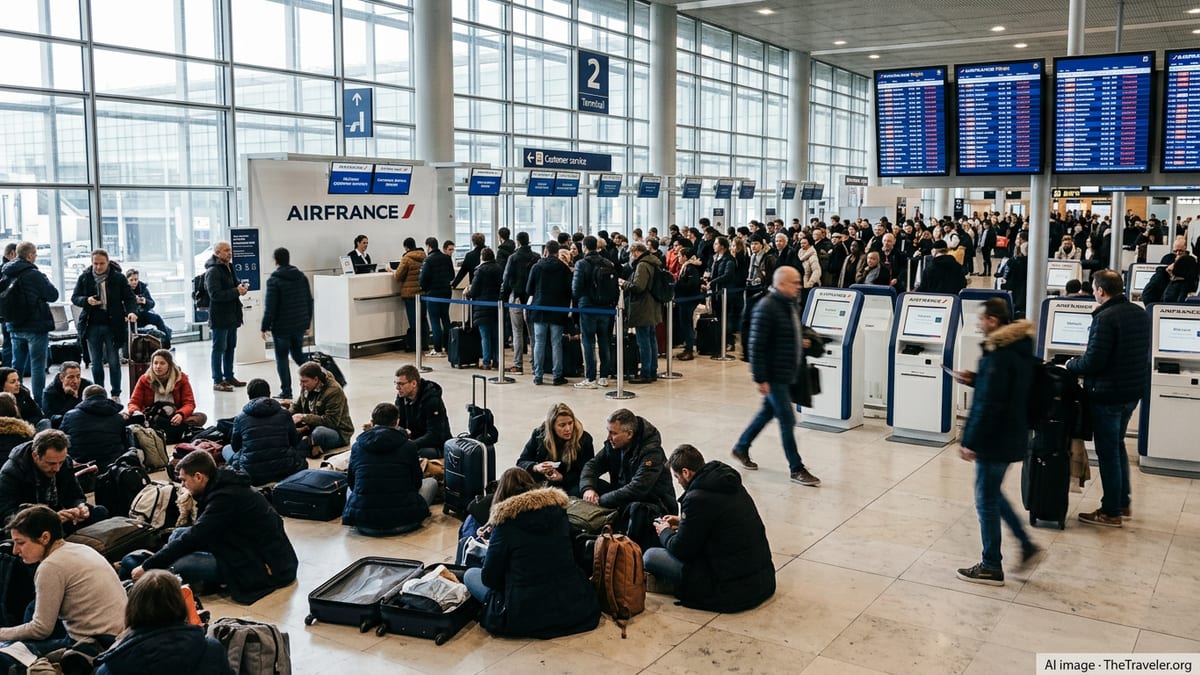
What was seen at King Khalid International Airport
Images and video carried by multiple international outlets showed a thick, dark column of smoke rising from an area adjacent to the airport complex, with the terminal area and airport road visible in the foreground. Coverage described the smoke as coming from the airport’s fuel storage area or a nearby fuel depot rather than from passenger terminals.
Additional reporting described firefighters working near a burning fuel truck and a blaze involving fuel infrastructure near the airport perimeter. Several accounts also referenced flames visible behind what appeared to be fuel tanks, although the exact origin point, trigger, and sequence of events remained unclear in early public reporting.
Saudi Arabia’s public messaging during the incident focused on risk alerts and later “all clear” notifications, while the cause of the smoke and fire was not publicly detailed in the same way across all channels. As a result, public coverage has treated the smoke incident and the claimed attack as related in timing, while leaving open whether the fire was directly caused by a strike, debris, or a separate accident.
The attack claims and Saudi interception narrative
The Houthis said they carried out operations involving missiles and drones aimed at targets in Riyadh and also referenced facilities tied to Saudi Aramco in Yanbu, a Red Sea port city. Those claims circulated widely in international coverage, with outlets noting that the assertions were not independently verified at the time of publication.
In parallel, published coverage described Saudi air defenses intercepting and destroying a ballistic missile launched toward Riyadh early Saturday. Some reporting framed the incident as the first claimed targeting of the Saudi capital in the current escalation, after a summer uptick in cross-border launches and retaliatory strikes tied to the Yemen conflict.
The mismatch between a visible fuel-area fire and competing statements about interceptions has left a key question unresolved for travelers: whether the smoke was caused by a direct impact, falling debris from an interception, or a non-combat incident that occurred during a heightened security alert. Several outlets emphasized that Saudi Arabia had not issued a detailed public explanation for what specifically sparked the fire near the airport.
Flight disruptions and what travelers experienced
Air-travel impacts appeared quickly. Flight-tracking coverage noted significant operational disruption at King Khalid International Airport, with delays and re-routing reported across a portion of Saturday’s schedule. Some outlets described “major problems” affecting arrivals and departures, with ripple effects that can persist beyond the immediate incident as aircraft and crews fall out of rotation.
For travelers, the practical effect was uncertainty: even when terminals remain open, incidents near airport fuel areas or perimeter roads can prompt temporary ground holds, gate restrictions, taxiway access limits, or changes to fueling operations. That type of disruption can produce delays that are longer than the incident itself, especially for connecting itineraries.
Published reporting did not indicate broad, long-term closure of Riyadh’s airport, and some coverage said there were no immediate reports of casualties or major terminal damage. Still, the combination of emergency alerts, visible smoke, and high-profile attack claims heightened concern among passengers planning to transit through Riyadh on regional or long-haul routes.
Broader context: renewed escalation around Saudi Arabia and the Red Sea
The smoke incident came amid a period of renewed tension involving the Houthis, Saudi Arabia, and regional shipping routes. Recent coverage has described a pattern of missile and drone launches, including incidents Saudi Arabia has linked to strikes on civilian areas and infrastructure, alongside Houthi statements framing attacks as retaliation for Saudi and allied actions in Yemen.
International coverage in recent days has also referenced disruptions to energy infrastructure and heightened security postures, alongside concerns that the confrontation could broaden. This backdrop matters to travelers because aviation risk advisories, route planning, and airline operational decisions can shift quickly when air-defense alerts become more frequent near major hubs.
While Riyadh sits far from Yemen’s border, the city’s role as a major business and transit center makes any incident near its main airport especially sensitive for global connectivity. Even a localized fire at a fuel depot can become a major travel story when it coincides with air-raid style warnings and competing claims about incoming threats.
What to watch next for passengers flying via Riyadh
In the near term, the most important updates for passengers are operational rather than political: whether airport fueling capacity, perimeter access roads, or specific runways and taxiways face restrictions; and whether airlines issue travel waivers for rebooking. Those details typically appear first in airline notifications and airport operational updates rather than in geopolitical statements.
Travelers with upcoming itineraries through King Khalid International Airport may want to monitor flight status closely and allow extra time for airport access and security processing, as heightened alert levels can affect traffic patterns and checkpoint throughput. Connecting passengers should also watch for schedule adjustments that change minimum connection times or shift gates between terminals.
More broadly, passengers flying across the Arabian Peninsula and the Red Sea region may see airlines adjust routings to manage risk and operational constraints. Even when changes are precautionary, they can lengthen flight times and contribute to knock-on delays, making real-time flight-status checks and flexible booking options more valuable in the days following Saturday’s smoke incident.