


More news on this day
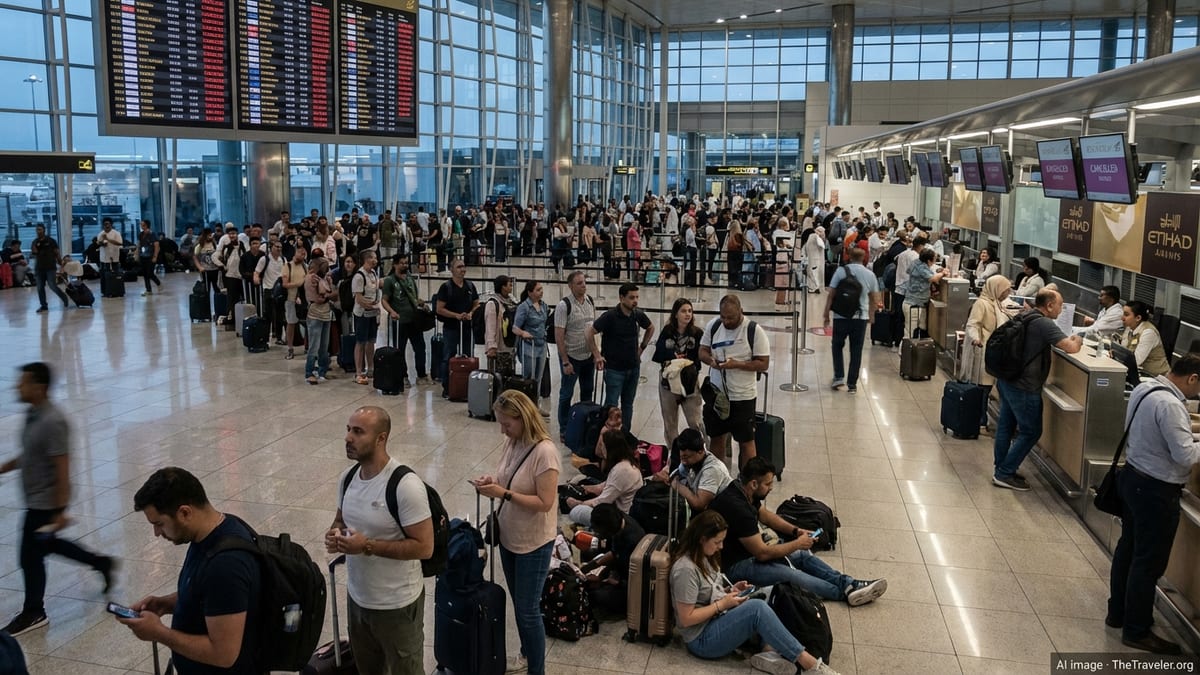
Travelers moving through the UAE are seeing intermittent delays and selected cancellations at Dubai International (DXB) and Abu Dhabi’s Zayed International Airport (AUH), as airlines work through a mix of route-specific operational issues and knock-on disruption from overseas air-traffic constraints that can ripple into Gulf schedules.
Get the latest news straight to your inbox!
What’s driving the disruption this week
Published coverage over the past two weeks has linked a portion of the UAE’s disruption to problems outside the country, including a UK air-traffic control incident on September 8, 2026 that affected departures and arrivals across the UK network. When UK capacity tightens, the impact often shows up hours later on long-haul rotations, including flights to and from Dubai and Abu Dhabi, where aircraft and crews may be arriving late or need to be re-timed.
In the UK, publicly available updates describe a technical failure within the National Air Traffic Services (NATS) flight planning or processing systems on September 8, followed by several days of operational recovery. Subsequent reporting in mid-September described NATS publishing a preliminary report into the incident on September 18, 2026, while UK consumer guidance and airline statements continued to address passenger disruption and recovery timelines.
Separately, region-linked factors can also affect Gulf flying on any given day, including airport flow constraints, weather and airspace restrictions, and airline-specific operational issues. Recent reporting has pointed to additional disruption drivers that may not be UAE-based, but can still influence schedules for services routed through constrained airspace or arriving from disrupted hubs.
Dubai International (DXB): How to check status and what to expect
Dubai Airports maintains a flight status lookup for DXB that allows passengers to search by airline, city, or flight number. When disruption is present, the most useful approach is to confirm the exact flight number and then re-check status close to departure, since delays can be adjusted multiple times throughout the day.
Emirates has also issued travel-update guidance in September 2026 tied to the UK air-traffic control disruption, advising customers to regularly check flight status, keep booking contact details current, and monitor email notifications for changes, delays, or cancellations before heading to the airport. That guidance is particularly relevant for passengers connecting through Dubai on itineraries to or from the UK, or for travelers whose aircraft rotation originates in the UK.
Passengers should also be aware that disruption can show up differently depending on the journey type. For example, a flight might still operate but depart late, while a short-notice cancellation may occur if aircraft positioning or crew duty limits are affected by earlier delays. For connecting passengers transiting DXB, even a modest inbound delay can tighten connection times, so it is worth confirming the connection status as well as the long-haul segment.
Abu Dhabi (AUH): Zayed International operations and airline impacts
Zayed International Airport’s public information pages indicate the airport remains open and operational, with flight status tools available for departures and arrivals. For travelers, the immediate practical step is to verify the status of each segment, especially for itineraries that include a connection onward from Abu Dhabi, where late arrivals can compress the transfer window.
Recent UAE-focused coverage has described significant delay volumes on a Sunday in mid-September, with Abu Dhabi among the airports affected, and also noted examples of route-specific impacts involving Etihad services on certain days. Such disruptions are not necessarily systemwide; instead they can be concentrated in particular routes, aircraft rotations, or time blocks.
For passengers trying to gauge how widespread cancellations have been, independent flight-tracking summaries for September 2026 have indicated a limited number of cancellations logged at AUH so far this month, alongside broader delay activity. Because these trackers are not official airport records and can vary in coverage, travelers should treat them as directional and rely on airline and airport flight-status tools for final confirmation.
What travelers should do now: practical steps before heading to DXB or AUH
First, confirm status in two places: the airport’s flight-status page and the airline’s own flight-status or manage-booking tools. When disruptions are related to network constraints, airline updates can also reveal whether rebooking options, waivers, or alternative routings are being offered, and whether the carrier is contacting passengers directly by email or app notification.
Second, allow extra time and plan for irregular operations inside the terminal. Even when flights operate, late gate changes, altered boarding times, and longer queues at customer-service desks can occur during disruption waves. If you have a connection, check the minimum connection time for your terminal and the latest gate information as close to departure as possible, since late gate moves are more common during re-timing.
Third, keep documentation and notifications organized. Save boarding passes and delay or cancellation notices you receive, and take screenshots of updated departure times when changes occur. For flights linked to UK disruption, travelers may also see evolving consumer-rights guidance from UK aviation bodies; compensation eligibility can depend on the cause of the disruption and which consumer-protection regime applies to the itinerary.