


More news on this day
Europe is accelerating the shift to digital capacity management on its railways, betting that smarter, software-driven use of existing tracks will relieve chronic congestion, add space for more trains and support climate and freight goals without waiting for decades of new construction.
Get the latest news straight to your inbox!
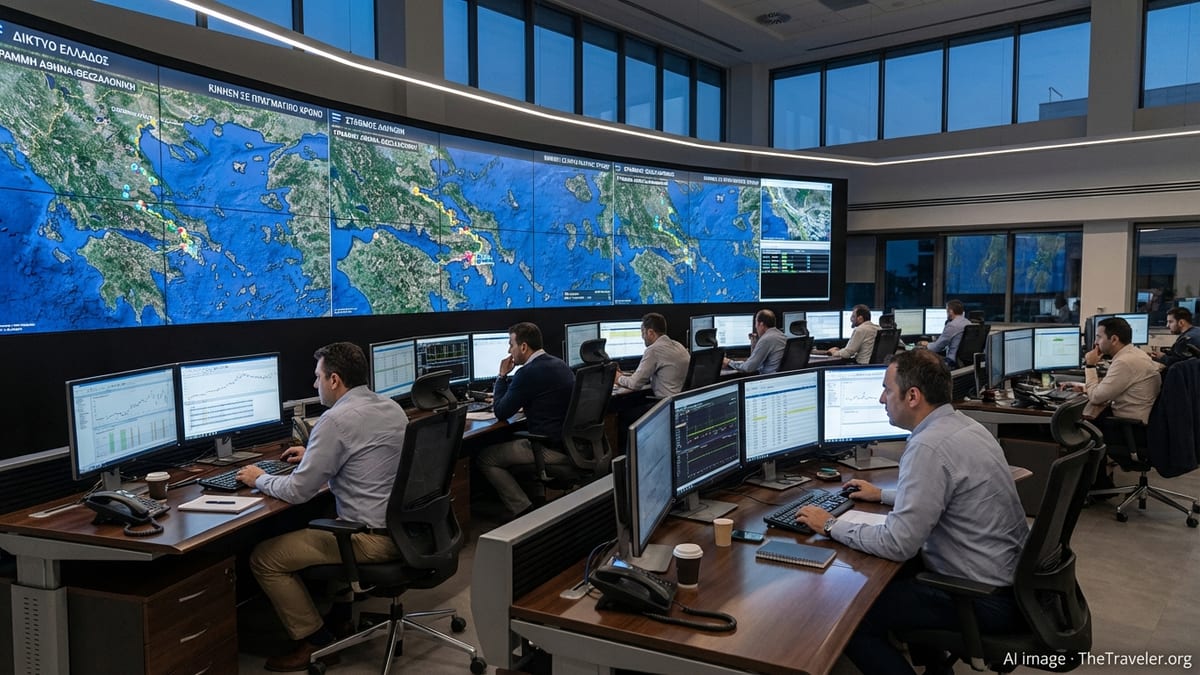
New EU rules aim to squeeze more trains onto existing tracks
The European Parliament’s recent adoption of a regulation on rail capacity management marks a significant step toward reshaping how train paths are planned and allocated across the bloc. The measure introduces a harmonised, three-tier planning approach built around long-term strategy, an annual timetable and in-year adjustments, all designed to make better use of limited infrastructure.
Publicly available summaries of the regulation describe new tools such as capacity strategies, detailed capacity models and capacity offers that together give infrastructure managers a much clearer, shared picture of how their networks are used. The rules also provide for common frameworks on disruption management and introduce penalties for both infrastructure managers and rail operators if they fail to use allocated train paths efficiently.
Supporters argue that this legal framework is the missing piece that will allow new digital tools to scale beyond pilots. By standardising processes and responsibilities, the regulation is expected to encourage investment in shared European platforms that can dynamically manage paths, reroute trains and absorb more services into the same physical network.
The approach fits into a wider policy push often labelled the “greening freight” agenda, which promotes rail as an alternative to road for long-distance cargo. Policymakers have repeatedly highlighted that capacity bottlenecks and opaque path allocation are among the main barriers preventing more freight from switching from trucks to trains.
Digital Capacity Management projects move from concept to deployment
Alongside regulatory changes, a series of European projects are now putting digital capacity management, or DCM, into practice. These initiatives are co-financed through the Connecting Europe Facility and coordinated through RailNetEurope and infrastructure managers in multiple countries, with the goal of creating a fully digital, harmonised timetable process across borders.
Project descriptions from participating infrastructure companies explain that DCM replaces largely manual, nationally fragmented timetable planning with shared digital tools and standardised data. Capacity models describe a typical traffic day down to route segments and time slices, while advanced planning software can quickly test different scenarios for new passenger or freight services.
Early project material suggests that widespread deployment of DCM could create several percent more capacity on busy corridors, equivalent to hundreds of additional train paths daily on the most saturated routes. By providing a near real-time overview of existing services, maintenance windows and temporary capacity restrictions, the system can identify underused slots and reallocate them more fairly and efficiently.
Crucially for rail operators, the move to DCM is intended to deliver more predictable and transparent access. Instead of opaque negotiations with multiple national infrastructure managers, operators would use common digital interfaces to request paths, monitor their status and receive updates when construction work or disruptions require timetable changes.
From static timetables to real-time traffic and capacity management
Digital capacity management does not exist in isolation, but builds on other European rail digitalisation efforts such as the European Rail Traffic Management System, upgraded traffic management systems and new telematics applications for freight and passengers. Together, these technologies are gradually shifting rail operations from fixed, paper-based timetables to dynamic management based on real-time data.
Europe’s Rail Joint Undertaking, the public-private partnership that coordinates much of the sector’s research and innovation, has identified intelligent capacity management as one of its core priorities. Its recent programme documents describe a future in which traffic management, train control and capacity planning are tightly integrated, allowing trains to run closer together safely while maintaining punctuality.
Research deliverables published under Europe’s Rail flagship projects point to the use of simulation tools to quantify how technologies such as modern signalling, driver advisory systems and automatic train operation can increase line capacity. These studies provide the analytical backbone for the claim that digital upgrades can unlock significant performance gains on existing infrastructure.
At the same time, sector bodies stress that harmonisation is critical. Fragmented national solutions would risk creating new digital borders, undermining the very cross-border flows that Europe’s rail policy seeks to strengthen. System architecture work coordinated at EU level is therefore focusing on common data models, interfaces and cyber-secure platforms that can be adopted across the network.
Impacts for passengers, freight and cross-border corridors
For passengers, the most visible impact of digital capacity management is expected to be more reliable, frequent services on busy lines. By planning capacity more strategically several years ahead, infrastructure managers can better align maintenance work with demand peaks, reducing the last-minute disruptions that currently force cancellations or lengthy diversions.
In long-distance freight, DCM is seen as a key enabler for making rail more competitive with road transport on time-sensitive routes. With a clearer overview of capacity and faster, more predictable allocation processes, freight operators could plan corridor-wide services that match logistics needs more closely. This is particularly important for north-south and east-west freight corridors, where today’s patchwork of national timetables can cause long dwell times at borders.
Industry analyses also highlight the potential for digital capacity management to support multimodal logistics. As ports, terminals and inland hubs invest in their own digital systems, interoperable rail capacity tools would make it easier to synchronise train arrivals and departures with ship calls and truck schedules, cutting idle times and improving asset utilisation.
However, the transition will not be instantaneous. The new EU regulation foresees a gradual phase-in, with many of the core obligations applying from the early 2030s timetable years. In the meantime, pilot deployments on selected corridors and networks are expected to demonstrate how digital capacity tools perform under real-world conditions and inform further refinements to the rules.
Challenges ahead: investment, data sharing and skills
Despite the clear momentum behind digital capacity management, significant challenges remain. Deploying interoperable digital platforms across dozens of infrastructure managers, hundreds of operators and thousands of kilometres of track will require sustained investment and careful coordination.
Sector reports note that establishing common data spaces and standard interfaces is technically complex and politically sensitive. Infrastructure managers and operators will need to agree on how operational data is shared, who can access which information and how commercial sensitivities are protected, while still enabling the transparency necessary for efficient capacity allocation.
There is also a human factor. Shifting from manual, experience-based timetable construction to algorithm-supported planning requires new skills and organisational changes. Staff will need training to work with advanced planning tools, interpret model outputs and manage traffic in a more data-rich environment, all without losing the local knowledge that has long underpinned safe operations.
Even with these hurdles, the direction of travel is clear. As the regulatory framework comes into force and digital pilot projects mature, digital capacity management is set to become a central pillar of how Europe runs its railways, promising to free up precious space on congested lines and support broader climate and competitiveness goals.