


Working out how many days to spend in Siena is harder than it looks. Italy guidebooks sometimes squeeze the city into a single chapter or suggest it as a quick day trip from Florence. Yet travelers who give Siena time to breathe often come away saying it was the place that finally made Tuscany click. The ideal length of stay depends on whether you want a quick hit of medieval atmosphere or a deeper, more relaxed immersion in its streets, museums and nearby countryside.
Get the latest updates straight to your inbox!
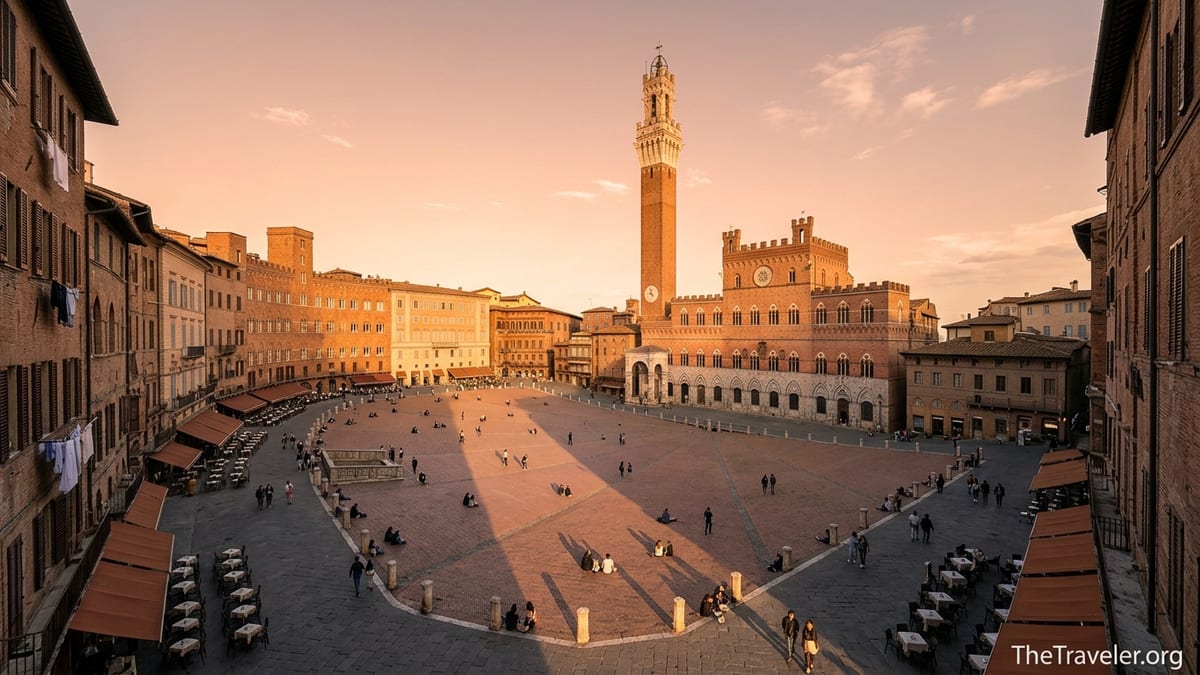
So, how many days do you really need in Siena?
If your goal is to see the absolute essentials of Siena at a fairly brisk pace, one long day or an overnight stay can work. You can walk the compact historic center, step into the cathedral, and experience the atmosphere of Piazza del Campo without feeling completely rushed. This is essentially the same amount of time many organized “Florence to Siena” coach tours allow, but staying overnight replaces bus windows and tight schedules with quiet streets and a proper evening in town.
For most first-time visitors, two full days in Siena is the realistic sweet spot. Tourism offices and regional sites now publish suggested weekend itineraries built around 48 hours, which is enough to see the Duomo complex, climb at least one viewpoint, explore a museum such as Santa Maria della Scala, and still find time for long coffees on the Campo or an unhurried trattoria lunch. With two days you are not choosing between art and atmosphere; you can have both.
If you dream of tasting wine in Chianti or the Val d’Orcia, or you want to use Siena as a base for nearby hill towns, plan on three to four days. Many small-group tours to Montalcino, Montepulciano or San Gimignano depart from Siena in the morning and return by late afternoon, effectively using up a full day. A four-night stay gives you two days dedicated to the city itself and two more for countryside excursions, without reducing everything to box-ticking.
Finally, if your itinerary in Italy is very tight, it is possible to visit Siena as a day trip from Florence. Trains and buses between the two cities run regularly and take roughly 1.5 to 2 hours each way. This gives you perhaps six to seven usable hours on the ground. You will see the famous square and cathedral, but you will miss Siena’s evening light, quieter lanes and the way the city slowly empties after the tour groups leave.
What you can see with 1 day in Siena
A single day in Siena revolves around two spaces: Piazza del Campo and the Duomo area. If you are arriving by bus from Florence, you are likely to emerge near the top of the historic center, then follow sloping streets down to the Campo. Grab a morning espresso at a bar under the brick towers, then walk into the shell-shaped square itself. Even without any formal sightseeing, simply sitting on the slanted pavement and watching locals cut across the square on their way to work is a highlight in itself.
With limited time, you will need to prioritize. Most travelers start with the cathedral. The Duomo’s striped marble facade and dense Gothic interior are among Italy’s most dramatic. The cathedral complex is ticketed in different combinations, but a common option is a pass that covers the main church, Piccolomini Library, crypt, baptistery and museum. As of 2026, typical bundled passes are in the mid-teens of euros per adult, and purchasing one is usually better value than buying separate tickets if you want to see at least two or three elements.
An efficient one-day plan might look like this in practice. Morning: Campo, then the Duomo and library. Early afternoon: a simple Tuscan lunch of pici all’aglione and a glass of house red at a small trattoria on Via di Città or Via di Pantaneto, where main courses often run around 12 to 18 euros. Late afternoon: climb either Torre del Mangia on the Palazzo Pubblico for a panoramic view of Siena’s terracotta roofs, or choose a slightly less busy viewpoint such as the Facciatone terrace attached to the Duomo museum, if it is open during your visit.
Evening is when Siena finally feels like itself again. On a one-day visit where you stay for dinner before returning to Florence or boarding a late train, aim for somewhere within the walls rather than near the station. A glass of Vernaccia di San Gimignano or Chianti Classico at a wine bar near the Campo, followed by a leisurely dinner of ribollita or bistecca at a family-run osteria, gives you at least a taste of how the city moves when the day-trippers have gone.
Two perfect days: the ideal Siena stay for most travelers
With two full days, you can slow the tempo and begin to connect the landmarks. On day one, dedicate your time to the classic postcard views. Start at Piazza del Campo early, while shadows are still long and delivery trucks circle the square. Visit the Palazzo Pubblico and its frescoed council rooms, then climb Torre del Mangia if you are comfortable with narrow stairways. Ticket prices for these climbs fluctuate but are typically in the low double digits in euros, with combined options available that include palace museums.
In the afternoon, shift to the cathedral complex. With two days you do not need to rush from chapel to chapel. Spend an hour simply tracing the inlaid marble floors, then another in the adjacent Piccolomini Library, its ceiling saturated with Renaissance color. If the combined Duomo ticket includes timed access to a viewpoint such as the unfinished nave facade, book a late afternoon slot to see the city’s rooftops flushing pink at sunset.
Day two is your chance to deepen things. Many recent weekend itineraries promoted by regional tourism boards suggest crossing from the Campo to the Basilica of San Domenico and the surrounding streets, which give a more residential feel. You might spend an unrushed morning at Santa Maria della Scala, the former pilgrimage hospital across from the cathedral that now houses layered archaeological displays, frescoed halls and rotating exhibitions. Standard adult tickets here are usually in the single to low double digits, and the complex can easily absorb two or three hours.
With your afternoons and evenings free, you can simply wander. Walk sections of the old city walls near the Medici Fortress, where locals jog and walk dogs, or seek out gelato from neighborhood spots that still feel primarily local in the evening. If you enjoy food, consider booking a simple wine tasting at the enoteca housed inside the fortress, where flights of Tuscan wines are poured in a vaulted former armory, generally starting under 15 euros.
Three to four days: using Siena as your Tuscan base
Staying three or four nights in Siena turns the city into a base for the surrounding countryside without sacrificing your relationship with the place itself. Many travelers now choose this pattern: two days focused on churches, museums and neighborhood strolls; then one or two days exploring the hills. Because Siena sits at a crossroads of regional bus and country road networks, it works well whether you are dependent on public transportation or renting a car.
Popular day trips from Siena in 2026 include San Gimignano to the northwest, the wine towns of Montalcino and Montepulciano to the south, and the gentle wheat fields and cypress-lined lanes of the Val d’Orcia. Direct buses to San Gimignano, for example, typically take around 60 to 75 minutes from Siena’s bus stops near the historic center, with advance-purchase one-way tickets usually under 10 euros. Small-group minivan tours that combine two or three towns plus a winery lunch are widely sold in Siena’s agencies and hotel lobbies, often priced from around 90 to 130 euros per person depending on inclusions.
If you are traveling without a car and on a tighter budget, consider picking just one classic hill town and reaching it by public bus. A realistic choice is a simple day in San Gimignano: depart Siena on an early bus, stroll the lanes before the tour groups arrive, taste Vernaccia in a small wine bar and climb the Torre Grossa for another Tuscan panorama before returning in the late afternoon. Travelers with a hire car can be more ambitious, linking together two or three places. A common self-drive loop from Siena might include breakfast in Buonconvento, lunch at a farmhouse restaurant near Pienza and an evening walk around the walls of Montalcino.
Four nights also give you space to respond to the weather and your own energy. On a rainy morning you can duck into the Pinacoteca Nazionale, where Sienese painters from the city’s medieval heyday line the walls, or join a cooking class that begins with a market visit in the old center. On a hot afternoon you can retreat to your hotel courtyard or an air-conditioned cafe for an hour, instead of feeling compelled to march from sight to sight because you only have a single day in town.
Where to stay and how your hotel choice affects timing
How many days you need in Siena is closely tied to where you sleep. If you book a room just inside the historic walls, perhaps five to ten minutes’ walk from the Campo along streets like Via di Città or Via dei Rossi, you can dip back to your hotel for a rest in the heat of the afternoon. Central midrange hotels and guesthouses typically start around 120 to 180 euros per night in shoulder seasons, with higher rates in peak summer and during Palio periods in July and August. These central stays make even a one- or two-day dash feel richer because you are woven into the city’s daily rhythm.
Budget-minded travelers often look slightly outside the core, near the stadium or in newer districts above the historic center, where simple hotels and B&Bs can be 20 to 30 percent cheaper. From here you may rely on escalators and local buses to reach the old town, which adds transit time but can be manageable on a longer three- or four-day visit. Apartment rentals are another option; a small one-bedroom in a lane off the Campo or near the Duomo can be a good value if you are staying four nights and plan to cook occasionally with ingredients from local grocers.
Your accommodation type also shapes your evenings. Staying centrally means you can return to the Campo after dark for a final gelato or grappa without worrying about late buses or a long uphill walk. If you base yourself in the countryside around Siena in an agriturismo, mornings and evenings may be devoted to the property’s pool and vineyards, and you might only come into the city for day visits. In that case, even if you spend three nights “in Siena,” you will realistically experience only a day or two inside the walls.
If you are traveling during the Palio periods around 2 July and 16 August, book as early as possible. Many rooms are locked in months ahead by repeat visitors and tour groups, and minimum stays are common. During those days the city feels entirely different: noisy, crowded and thrilling. It is not the ideal moment for a quiet, contemplative first encounter with Siena, but it can be unforgettable if you know what you are walking into.
Practical planning tips: when to come and how to pace yourself
Even the “right” number of days can feel wrong if you choose the wrong season or try to match summer pacing in shoulder months. Siena’s climate is typically hot and fairly dry in July and August, with afternoon temperatures often climbing well above 30 degrees Celsius. Standing in lines for tower climbs or packed into small chapels can be draining. In high summer, a two-day visit may feel like plenty. Many travelers come away wishing they had scheduled more nap time and fewer reservations.
Spring and autumn, on the other hand, reward a slower approach. In April, May, late September and October the city is busy but not overwhelming, and walking between sights is a pleasure in itself. Here, an extra day or two really pays off. You can detour down smaller streets, watch neighborhood life around lesser-known churches, or linger longer over a second coffee at a bar on Via Banchi di Sopra while locals stand at the counter ordering cappuccini and cornetti.
Whatever the season, build in unscheduled time. An easy practical rule is that each major paid sight in Siena generally takes at least an hour once you factor in walking, ticket purchase and a short rest. The Duomo complex alone can fill half a day, and Santa Maria della Scala can fill another. Add in meals, and a one-day visit is effectively full with just two or three attractions. Overstuffing itineraries is one of the main reasons travelers feel they have not seen a place properly, even when their calendars say they have.
Consider advance bookings for specific elements if you are traveling in peak periods or on weekends: tower climbs, some special Duomo floor openings, and popular small-group wine tours can sell out. The goal is not to rigidly schedule every hour, but to protect one or two experiences you care about so that the rest of your time can remain flexible. With a well-chosen two- to four-day window, Siena can feel both manageable and spacious.
The Takeaway
For a first encounter with Siena, two full days is the sweet spot for most travelers. It allows you to take in the Campo, Duomo, a major museum and at least one viewpoint, with enough breathing room for coffees, aimless walks and evenings on the square. One long day will give you the postcard highlights, especially if that is all your wider Italy itinerary can spare, but you will leave knowing there was more beneath the surface.
Travelers who want to use Siena as a base for Tuscan countryside and wine should look at three or four days, especially if they hope to visit San Gimignano, Montalcino or the Val d’Orcia without rushing. Hotel choice, season and personal pace all shape how far your time stretches, but as a rule, Siena rewards every extra night you give it. The city is compact enough not to intimidate, yet layered enough to keep revealing new details on your third evening stroll home.
Ultimately, how many days you need in Siena comes down to what you want from Tuscany. If you are collecting famous squares and facades, a day might suffice. If you want to feel the texture of brick under your palm as you lean on a medieval wall at dusk, listening to the echo of shoes on stone alleys, aim for longer. In Siena, time is not just something you measure in days; it is part of the experience you come for.
FAQ
Q1. Is one day in Siena really enough to see the highlights?
One full day is enough for the essentials if you move efficiently: you can visit Piazza del Campo, the cathedral interior and at least one panoramic viewpoint, but you will have little time left for museums or relaxed wandering.
Q2. How many days in Siena do you recommend for a first-time visitor?
For most first-time visitors, two full days offer the best balance. You can see the major sights, revisit favorite corners and still have downtime for long meals and evening strolls.
Q3. How long should I stay in Siena if I want to do wine tours and countryside day trips?
If you plan to join a wine tour or visit hill towns like San Gimignano or Montalcino, aim for three to four days based in Siena so that you can devote at least one or two full days to the countryside without sacrificing time in the city.
Q4. Can I visit Siena as a day trip from Florence?
Yes, Siena works as a day trip from Florence by bus or train, with around three to four hours of travel total. You will have time for the Campo and Duomo, but you will miss much of the city’s evening atmosphere.
Q5. Is Siena walkable, or will I need public transport inside the city?
Siena’s historic center is compact and almost entirely walkable, though streets are steep in places. Most visitors never use city buses once they are inside the walls, especially on shorter two- or three-day stays.
Q6. When is the best time of year to visit Siena for a short stay?
Spring and autumn are ideal for a short visit, with milder temperatures and lively but manageable crowds. Summer brings more heat and visitors, which can make a one- or two-day dash feel more tiring.
Q7. How does visiting during the Palio affect how many days I need?
During the Palio periods around early July and mid-August, Siena is crowded and intense. If you come specifically for the race and events, three or more days make sense, but it is not the best time for a calm first visit.
Q8. Are two days in Siena enough if I am traveling with children?
Two days are usually enough with children if you keep the pace gentle, include breaks on the Campo, and perhaps skip one or two smaller museums in favor of playground time or gelato stops.
Q9. Should I stay overnight in Siena or just do a long day trip?
Staying at least one night transforms the experience. Overnight guests enjoy quieter streets, softer evening light and more authentic restaurant experiences once day-trippers have left.
Q10. How many days in Siena make sense on a longer Tuscany itinerary?
On a weeklong Tuscany itinerary, setting aside two or three days for Siena is a good rule of thumb. It leaves enough time for Florence, countryside stays and perhaps one more town without constant packing and unpacking.