


Before I used Parks Canada’s official tools, planning a Canadian Rockies trip meant juggling blogs, social media tips, and guesswork. I pictured turquoise lakes and glacier views, but I had only a hazy idea of how shuttle reservations worked, when campgrounds opened, or whether I actually needed a rental car every day. That changed once I built my itinerary around Parks Canada’s own resources and reservation system. What had felt intimidating and crowded suddenly became structured, realistic, and surprisingly stress free.
Get the latest updates straight to your inbox!
Starting With Parks Canada, Not Instagram
On my first attempt to plan a Rockies road trip, I did what most travelers do: I started with Instagram photos of Moraine Lake, TikTok reels of Lake Louise, and a few top 10 lists from big travel sites. It left me fired up but with almost no practical information. I booked flights into Calgary, reserved a car, and assumed I could simply drive to the big-name lakes at sunrise. Only later did I learn that Moraine Lake is no longer accessible by personal vehicle and that parking at Lake Louise often fills before 7 a.m. in peak season. By then, shuttle departures were already sold out for my dates, and I was left refreshing third-party sites in frustration.
For my next trip, I flipped the process. I started on the Parks Canada website instead of social media and quickly realized that this is where the real trip planning lives. Pages for Banff, Yoho, Jasper, and Kootenay National Parks clearly explained seasonal openings, shuttle-only roads, wildlife closures, and which experiences required reservations months in advance. Instead of building a wish list and hoping logistics would follow, I did the opposite: I let availability and realistic logistics shape my wish list.
Using Parks Canada as the backbone of planning did not limit my trip. It made it more honest. I stopped assuming I would magically get a last-minute parking spot at Moraine Lake in July, and instead looked at what was actually possible on my travel dates. That shift alone eliminated a lot of disappointment and refund-chasing later on.
This approach also filtered out outdated advice. Some blogs still describe driving directly to Moraine Lake or lining up at 4 a.m. for Lake Louise parking, advice that no longer matches current rules and shuttle requirements. By cross-checking everything against Parks Canada first, I built an itinerary anchored in current conditions rather than nostalgia or viral videos.
Mastering the Parks Canada Reservation System
The single biggest change in how I planned was learning how the Parks Canada Reservation Service actually works, and then timing my entire Rockies trip around its launch dates. Instead of picking random July dates, I checked the reservation schedule for campgrounds and shuttles across Banff, Jasper, Yoho, and Kootenay. Frontcountry campsites, backcountry trails, and high-demand shuttles like Moraine Lake and Lake Louise all have specific opening days and times, often at 8 a.m. local time. That is when most inventory is released for the entire summer season.
For example, reservations for the Moraine Lake and Lake Louise lakeshore shuttles open on a set spring date, with bookings available online 24 hours a day afterward. On launch morning, popular time slots can disappear in minutes. The same is true for frontcountry campgrounds like Tunnel Mountain Village in Banff or Whistlers Campground in Jasper, which can book up quickly for July and August weekends. By noting these dates and being online right when reservations opened, I managed to secure a week of camping across Banff and Jasper plus shuttle slots to Lake Louise and Moraine Lake, all in a single, organized morning.
That launch-day strategy also helped with Lake O’Hara in Yoho National Park, which is one of the most competitive reservations in the Rockies. Parks Canada manages day-use shuttle seats via a random draw, with applications open for a limited period in March, and releases all overnight campground reservations for Lake O’Hara on a specified February morning. Rather than relying on hope, I applied during the lottery window and blocked out backup plans in case I was not selected. Planning around these clearly published systems turned a “maybe if I’m lucky” destination into a structured possibility instead of a blind gamble.
Crucially, once I understood the reservation system, I stopped wasting time obsessively checking multiple third-party booking platforms. There is one official place for national park campsites and shuttles, and that is the Parks Canada Reservation Service. Having a single source of truth made it much easier to see what was actually sold out versus what was just not yet released, and to decide whether to adjust dates or pivot to another campground or park.
Designing Each Day Around Shuttles, Not Parking
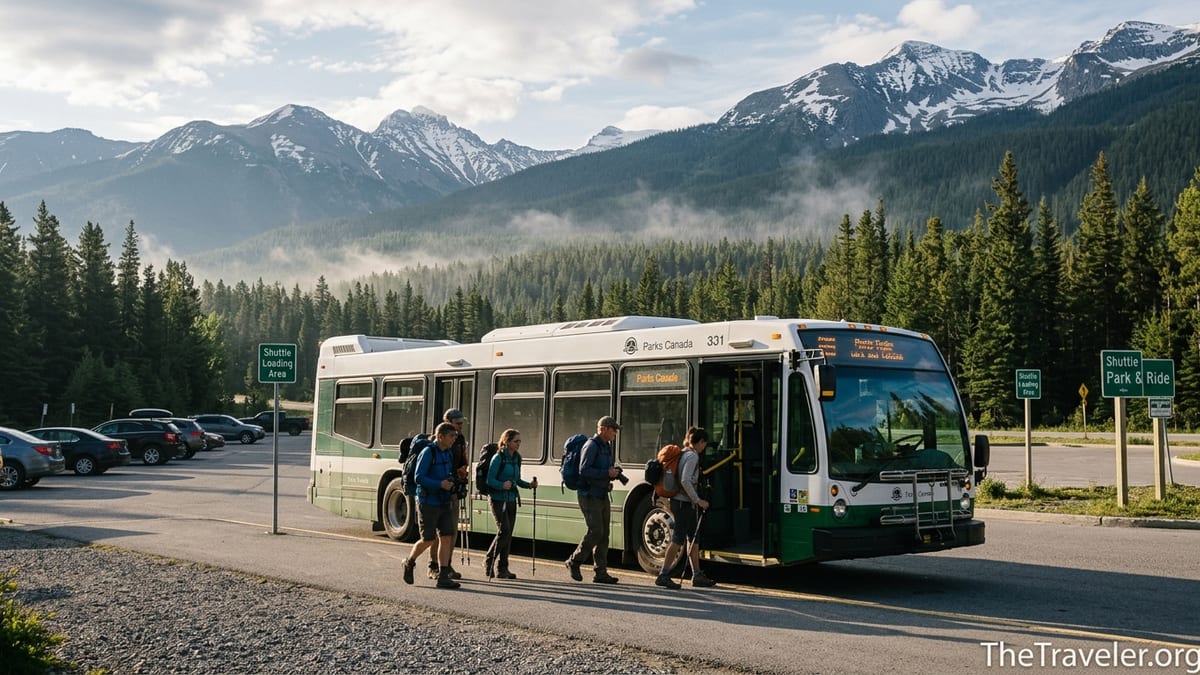
Shuttles were where Parks Canada reshaped my daily logistics the most. In Banff National Park, the most famous lakes are now effectively public-transit destinations. For Lake Louise and Moraine Lake, a Parks Canada shuttle reservation is required for access to the lakeshores in peak season. Once I accepted that I was planning around shuttle schedules instead of my car, the trip became smoother and far less stressful.
On my Banff days, the shuttle booking confirmed my daily rhythm. A mid-morning departure from the Lake Louise Park and Ride meant I could leave my campsite at Tunnel Mountain by 7:30 a.m., grab coffee in the town of Banff, and still be at the park-and-ride well before the recommended arrival time. I knew I had a guaranteed seat up to Lake Louise, and, if I wanted, I could use the Lake Connector shuttle from Lake Louise to Moraine Lake later that same day using the same booking, subject to availability on the connector buses.
Instead of circling for parking or rolling the dice on traffic, my day was mapped to shuttle departure and return windows. On one day, I booked an early shuttle, hiked the Lake Agnes Teahouse trail, then returned in the late afternoon with a reserved seat. On another, I used a midday shuttle and spent the cooler evening hours strolling the lakeshore and photographing reflections. Knowing exactly when I could leave and return allowed me to build in meals, grocery stops in Banff or Lake Louise village, and even downtime at camp without feeling rushed.
I also learned to treat the shuttle system as part of the experience, not a hurdle. Many buses have visitors from around the world comparing notes about wildlife sightings, trail conditions, and weather. Being on official transport meant not worrying about roadside parking fines, unmarked pullouts, or contributing to congestion in fragile alpine areas.
Getting Real About Camping and Accommodation
Before I leaned on Parks Canada, my mental image of camping in the Rockies was a romantic blur of alpine meadows and quiet forest sites where you could roll up any afternoon and find a spot. The reality is that frontcountry campgrounds in Banff and Jasper, particularly in July and August, are structured, busy operations that absolutely require advance reservations if you want specific dates or hookups. Once I read the campground pages for places like Tunnel Mountain, Two Jack Lakeside, and Whistlers, my expectations became much more grounded.
On the official campground pages, Parks Canada lists the services at each site, from whether there are showers and flush toilets to whether fire permits are available for purchase. In Jasper, for instance, Whistlers Campground is a large, recently renovated base with showers included in the campsite fee, plus direct access to trails and easy driving distance to the Jasper SkyTram and town amenities. Knowing that I would have showers and power at Whistlers meant I could plan a proper laundry and reset day mid-trip, instead of guessing at what facilities might exist.
These details also helped me choose between campgrounds rather than simply clicking the first available night. In Banff, I picked Two Jack Main for a more rustic feel on part of my stay, then shifted to Tunnel Mountain Village for easier access to town transit and services. I could see at a glance which campgrounds allowed fires with a purchased permit, which were better for small tents versus big RVs, and which sites had stricter limits on generator hours. That level of information is rarely spelled out on third-party booking engines.
Understanding the distinction between frontcountry and backcountry camping through Parks Canada also reshaped my ambitions. Backcountry trips like the Skyline Trail in Jasper require permits and careful planning, and booking them through the reservation service made the difference between a legal, supported wilderness trip and an improvised overnight that could easily run afoul of regulations. Once I saw the backcountry permit requirements and quotas, I either committed to doing the preparation properly or chose ambitious day hikes instead.
Budgeting Around Park Passes and Seasonal Offers
Using Parks Canada directly also clarified one of the most confusing aspects of Rockies planning for first-time visitors: park entry fees and passes. A national park pass is required for every day you are inside places like Banff, Jasper, Yoho, and Kootenay, whether you are staying overnight or just driving the Icefields Parkway. Instead of piecing together conflicting advice from forums, I checked current entry fees for specific parks and realized that a multi-day trip made a longer-duration or Discovery-style pass better value than buying individual day passes.
By factoring the pass cost into my base budget, I avoided the sticker shock some travelers feel when they reach the park gates and suddenly have to pay for several days of entry on top of fuel and accommodation. Parks Canada also periodically offers promotions, such as free national park entry and discounted camping fees during certain summer periods. For example, in recent seasons there have been promotions that included free admission to parks like Banff and Jasper for several weeks, with discounted overnight stays at participating locations. Seeing this information directly from Parks Canada let me time my trip to overlap at least partially with lower overall park costs.
Knowing that my pass covered entry to multiple national parks in the Rockies cluster also inspired me to widen my route. With one pass, I could legitimately explore Banff, then drive the Icefields Parkway to Jasper, detour into Yoho for a day around Emerald Lake or Takakkaw Falls, and slip into Kootenay National Park for quieter hikes near Marble Canyon or Sinclair Canyon. Without that clear explanation of how passes applied across parks, I might have stuck nervously to a single base in Banff and missed half the region’s variety.
Most importantly, budgeting with official fee information kept my expectations realistic. The Rockies are not a low-cost destination, but planning with accurate prices and any current promotions allowed me to allocate more comfortably for special experiences like a night in a mountain lodge or a guided glacier walk, instead of being surprised by everyday costs at the park gate.
Building Flexibility With Real-Time Conditions and Closures
Another way Parks Canada transformed my planning was by bringing real-time conditions into the picture. The mountain national parks publish up-to-date information on trail conditions, wildlife activity, road construction, and area closures. Instead of printing a static list of hikes months in advance, I learned to use these condition reports as a living document and to keep a Plan B and Plan C for every day.
During one July visit, for instance, a popular trail near Lake Louise had a temporary closure due to bear activity shortly before my arrival. Because I was checking Parks Canada’s trail condition reports in the week leading up to the trip, I knew about the closure early and shifted my plan to hike a nearby trail that remained open. When I reached the area, I saw confused visitors at the trailhead surprised by gates and closure notices. My own day, by contrast, unfolded smoothly because I had already adjusted.
Similar issues can arise with wildfires, flooding, or avalanche hazards. In Jasper, information about wildfire impacts at Whistlers Campground and the surrounding forest was clearly communicated through Parks Canada updates. This helped me understand what the landscape would realistically look like and decide whether to keep or change my booking. Instead of arriving with a postcard image in my head and feeling disappointed by charred hillsides or smoky views, I arrived informed and prepared, knowing that new growth was slowly returning and that some trails had limited access.
These real-time updates are especially important on the Icefields Parkway, where construction, wildlife crossings, or weather can affect travel times between Lake Louise and Jasper. By checking Parks Canada’s advisories, I built in extra driving time on days when roadwork was scheduled and made sure my shuttle and campground reservations at either end left enough buffer. That small amount of research saved me from panicked drives to beat check-in times or shuttle departures.
The Takeaway
Using Parks Canada as the backbone of my Canadian Rockies planning did more than help me secure hard-to-get reservations. It fundamentally changed how I thought about the trip. Instead of treating the parks as a backdrop for a checklist of social media highlights, I started to see them as living, managed landscapes with rules, capacities, and seasons that deserved respect.
By starting with official information, I set realistic expectations for shuttles, campgrounds, and backcountry routes. By mastering the reservation system, I stacked my trip around what was truly available rather than gambling on last-minute luck. By budgeting with accurate pass and fee data, I avoided unwelcome surprises and could splurge intentionally where it mattered most. And by following real-time updates, I stayed flexible in the face of wildlife closures and changing conditions.
The result was a Rockies trip that felt less like fighting the crowds and more like moving with the natural rhythm of the parks. If you are dreaming of turquoise lakes and glacier-lined highways, consider doing what I eventually did: open Parks Canada before you open Instagram, and let the parks themselves guide how your adventure unfolds.
FAQ
Q1. Do I really need to use the Parks Canada Reservation Service for a Canadian Rockies trip?
Yes, if you plan to visit in peak season and want campgrounds, popular shuttles, or backcountry permits, using the official reservation service dramatically increases your chances of getting the dates and experiences you want.
Q2. How far in advance should I book campgrounds in Banff and Jasper?
Most reservable frontcountry sites for summer open on specific launch days in late winter or early spring, and many July and August dates book up within hours. Aim to be online right when reservations open, or be flexible with your dates and campgrounds.
Q3. Can I still visit Moraine Lake or Lake Louise without a shuttle reservation?
In peak season, personal vehicle access to Moraine Lake is no longer allowed, and parking at Lake Louise is extremely limited. A Parks Canada shuttle reservation from the Lake Louise Park and Ride is the most reliable way to visit these lakes.
Q4. What is the benefit of buying a national park pass instead of daily entry?
A longer-duration or Discovery-style pass often works out cheaper than buying daily entry if you are spending several days in Banff, Jasper, Yoho, or Kootenay. It also simplifies logistics because one pass covers multiple national parks in the region.
Q5. How competitive is it to get a Lake O’Hara reservation?
Lake O’Hara is one of the most competitive experiences in the Rockies. Day-use shuttle seats are allocated via a random draw, and overnight campground reservations open on a specific February date. Treat it as a bonus if you get in, and always plan a solid backup.
Q6. What happens if my chosen hike is closed due to bears or weather?
Parks Canada regularly updates trail and area closures for reasons such as wildlife activity, flooding, or avalanche risk. If a route is closed, you must choose another; checking conditions before you arrive lets you have alternative hikes lined up.
Q7. Are all campgrounds in the Rockies reservable, or can I just show up?
Many popular frontcountry campgrounds are fully reservable, especially near Banff, Lake Louise, and Jasper. Some smaller or more remote campgrounds may operate partly on a first-come, first-served basis, but relying on walk-up sites alone is risky in peak season.
Q8. Do I need a reservation to drive the Icefields Parkway between Lake Louise and Jasper?
No reservation is required to drive the Icefields Parkway itself, but you do need a valid national park pass, and you should have accommodation or camping booked at your destination, especially in midsummer.
Q9. Is renting a car still useful if so many places rely on shuttles?
Yes. A car remains very useful for reaching trailheads that are not served by public transit, exploring quieter areas, and moving between parks. Shuttles then handle access to the most crowded alpine hotspots where private vehicles are restricted or parking is scarce.
Q10. Where should I start if I feel overwhelmed planning a Rockies trip?
Begin on the main Parks Canada pages for Banff, Jasper, Yoho, and Kootenay. Check entry fees, shuttle details, campground options, and reservation launch dates, then shape your travel dates and wishlist around what is realistically available.