


Banff National Park is one of those places that seems to exist on every traveler’s bucket list: turquoise lakes, rugged peaks, wildlife at the roadside and a postcard-perfect mountain town. But with rising visitor numbers, changing rules for iconic spots like Moraine Lake, and ever-increasing travel costs, many people now ask a fair question before booking: is Banff still worth visiting? The short answer is yes, for most travelers it is. The longer answer is that it depends on your expectations, budget and timing, and you need to understand how Banff works in 2026 before you commit.
Get the latest updates straight to your inbox!
Why Banff Continues To Draw Millions
Banff National Park is Canada’s oldest national park and receives well over four million visitors a year, with records continuing to be broken as of 2025 and early 2026. The appeal is obvious the moment you step off the bus or park the car: steep, glaciated peaks surround a deep valley, rivers cut through spruce forests, and in minutes you can be walking beside the Bow River, soaking in the Banff Upper Hot Springs or riding a gondola to an alpine ridge. Even with the crowds, the scenery feels genuinely wild and dramatic in a way that many more accessible mountain regions do not.
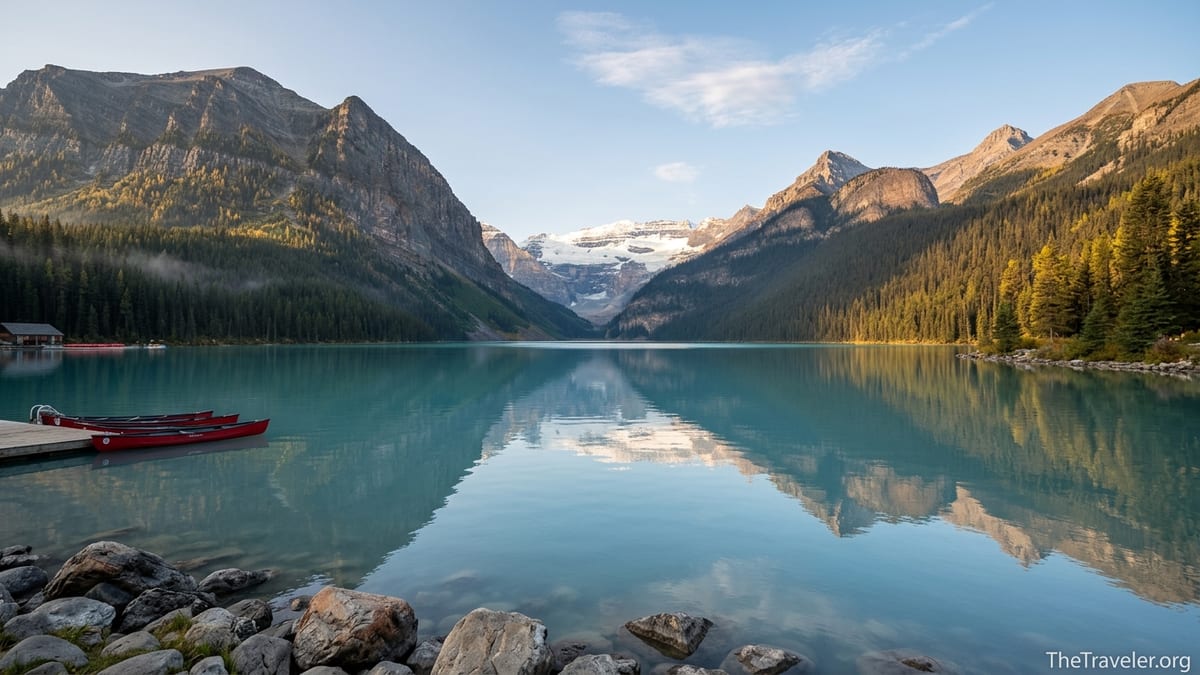
For many travelers, the first big “worth it” moment comes from the lakes. Lake Louise and Moraine Lake are among the most photographed lakes in the world, and in clear weather their colors can look almost implausible. On a calm early morning in July, visitors lining the Lake Louise shoreline watch the Victoria Glacier glow pink, while paddlers in rented canoes pull away from the boathouse at prices that often exceed 150 Canadian dollars per hour. The cost can be a shock, but for some, that single hour on the water becomes the defining memory of their entire Canadian trip.
Beyond the lakes, Banff offers varied experiences in a compact area. In a single day in September, you can ride the Banff Gondola to the top of Sulphur Mountain, walk the boardwalks over steaming pools at Cave and Basin National Historic Site, then catch an evening wildlife tour where elk bugle in the meadows and, if you are lucky, a black bear appears along a distant slope. This density of “classic Rockies” experiences, all reachable without a rental car if you use local transit and tours, is a major reason Banff remains high on many itineraries.
All of this said, Banff is not a remote, quiet wilderness gateway anymore. In peak summer, downtown Banff can feel closer to a busy ski resort than a national park town. That reality is part of the decision about whether it is the right destination for you and how to approach your visit.
Costs, Park Passes and the 2026 Free Entry Window
Any serious look at whether Banff is worth it has to start with money. By law, everyone entering Banff National Park needs a valid Parks Canada pass, whether you are driving your own vehicle, arriving on a tour bus or traveling by public transit. In early 2026, typical adult daily entry fees are in the low teens in Canadian dollars per day, with family or group rates capping the cost for a carload. An annual Parks Canada Discovery Pass works out to better value if you will spend roughly a week or more in Canadian national parks during a twelve month period, and current prices for that pass are well under two hundred dollars for a family group.
There is one unusual twist for 2026 that can make Banff substantially more affordable. Under a federal program sometimes described in local guides as part of a “Canada Strong” initiative, Parks Canada has announced a free admission period from June 19 to September 7, 2026 across participating national parks, including Banff. During that window you will not pay the daily park entry fee at all, and some commercial guides already highlight this as a chance for budget-conscious visitors to save a significant amount, especially for longer trips. Normal camping fees, hotel rates and private tour costs still apply, but eliminating entry charges can easily save a family of four more than a hundred dollars over a week.
Beyond park entry, travelers need to budget for the town itself. Banff’s accommodation prices are high, particularly from late June through early September and during popular ski weekends. It is common to see three star hotels in town charging 350 to 500 Canadian dollars per night for a standard room in peak season, with well known luxury properties at Lake Louise and Banff often running into four figures per night. Many budget travelers cut costs by staying in nearby Canmore, where prices are usually somewhat lower and a frequent Roam Transit bus connects to Banff.
Daily expenses add up quickly. Expect restaurant main courses in the mid-twenties to mid-thirties in Canadian dollars at casual sit-down places in downtown Banff, plus drinks and tip. Lift tickets for the Banff Gondola, entry to Banff Upper Hot Springs, and guided excursions such as canyon walks or wildlife tours each add roughly 30 to 80 dollars per person, depending on the activity and season. When you put the numbers together, Banff is rarely a “cheap” destination, but with planning, shared accommodations and use of transit instead of a car, many travelers keep overall costs within a moderate vacation budget.
Crowds, Traffic and the New Reality at the Lakes
The single biggest surprise for many first time visitors is just how busy Banff now is. Peak summer weekends see long lines at park gates, nose to tail traffic through the townsite and full parking lots at popular trailheads before breakfast. Local officials have spent years warning that you cannot assume you will be able to drive to every viewpoint whenever you wish. The iconic Moraine Lake illustrates this shift more than anywhere else in the park.
Since 2023, private vehicles have been banned from Moraine Lake Road. Access is limited to Parks Canada shuttles, Roam Transit on certain routes and licensed commercial operators such as guided tour companies and hotel shuttles. This policy came in after years when park staff were turning away thousands of vehicles on busy days, and visitors slept in cars along the highway to get a dawn parking space. Today, if you simply drive toward Moraine Lake in your rental car one morning in July expecting to park at the lakeshore, you will instead find a gate, a closure notice and staff directing you back.
Lake Louise, just up the valley, still allows private vehicles but fills extremely early in high season. On a clear Saturday in August, the main lot can be full by dawn and overflow parking on the access road often closes soon after. For travelers who do not want to spend their pre sunrise hours hovering near a parking lot or who are visiting without a car, the practical solution is to use shuttles. Parks Canada operates its own system between a park and ride lot located near the Lake Louise ski area and both Lake Louise and Moraine Lake, typically running every thirty minutes or so from early morning into the evening during the peak season. Seats on these shuttles must be reserved online for specific departure windows, and same day bookings at the parking lot are strongly discouraged because they often sell out in advance.
Commercial shuttles and tour companies fill out the picture. For instance, a guest staying at a major hotel in Lake Louise in July 2026 can often purchase combined gondola and lakeshore shuttle tickets, timing their morning for wildlife viewing from the chairlift before catching an afternoon transfer to Moraine Lake. Independent operators based in Banff and Canmore also run “lakes and waterfalls” tours that bundle guaranteed access to Moraine and Lake Louise with guided walks and photo stops, at prices that typically range from about 120 to 200 Canadian dollars per person for a full day.
Getting Around Without Losing Your Sanity
Banff’s townsite is small, only a few square kilometers, but the sheer number of vehicles now makes parking and driving downtown one of the more frustrating parts of a visit. To manage congestion, the municipality has introduced visitor pay parking in many central areas. If you pull into a street space on Banff Avenue in summer, expect to pay by the hour at posted meters or via a mobile payment system. These fees are separate from the national park pass and are used locally for things such as transit and trail maintenance.
Because of this, local authorities and tourism organizations strongly encourage visitors to park once and rely on public transportation, walking and cycling. Roam Public Transit operates modern, low floor buses around town and out to major attractions including the Banff Gondola, Lake Minnewanka, Johnston Canyon and the neighboring town of Canmore. A one way adult fare on the route linking Banff and Canmore is typically under ten Canadian dollars, and day passes offer better value if you are riding several times. The buses are equipped with bike racks, and summer schedules are frequent enough that many visitors treat them much like a city metro line.
For those staying in Canmore or at highway hotels between Calgary and Banff, private shuttles and scheduled coaches provide another car free option. Several companies run multiple daily departures from Calgary International Airport directly to Banff hotel doorsteps, with one way prices often in the 70 to 90 dollar range per adult. Once you are in town, it is entirely possible to build an itinerary that relies on Roam Transit and booked excursions for activities further afield, such as Columbia Icefield tours along the Icefields Parkway or evening wildlife safaris in the Bow Valley.
That said, a rental car still offers flexibility, especially for travelers who want to start hikes very early, detour to quieter viewpoints or drive the full length of the Icefields Parkway at their own pace. In exchange for that freedom, you need to accept the hassle of hunting for parking and the reality that some roads, like Moraine Lake Road, are no longer open to private vehicles regardless of how early you arrive.
When To Visit and What Type of Traveler Banff Suits
Whether Banff is worth visiting also depends heavily on when you go. Summer, roughly late June through early September, brings the fullest menu of activities: the lakes are thawed, high elevation trails and passes open as snow melts, seasonal shuttles run to Moraine Lake and Lake Minnewanka, and restaurants and patios hum late into the evening. In these months, you trade solitude for accessibility. A mid July afternoon at Johnston Canyon, for example, means walking narrow walkways shoulder to shoulder with hundreds of other visitors. If you want that classic blue lake photo and do not mind crowds, summer is still the default time to visit.
Shoulder seasons offer a different experience. In late May and early June, valley bottom trails around the townsite, Vermilion Lakes and Bow Falls are usually hikeable, but Moraine Lake may still be closed by snow until around the start of June and some higher passes remain risky or off limits. September brings cooler temperatures, fall colors in the larches above Lake Louise and generally fewer families, as Canadian and U.S. school holidays end. For many travelers who want strong chances of good weather and thinner crowds, early to mid September is the sweet spot.
Winter transforms Banff into a snow destination. From late November to April, visitors come for skiing at Sunshine Village, Lake Louise Ski Resort and Mount Norquay, ice walks in Johnston Canyon, snowshoeing around Lake Minnewanka and skating on frozen lakes when conditions permit. Town feels quieter midweek, and hotel rates can dip significantly outside holiday periods. Travelers focused on skiing or winter landscapes often find Banff particularly good value compared with more famous North American ski resorts, provided they are comfortable with winter driving or book shuttles.
Personality wise, Banff tends to suit travelers who are comfortable with a developed, busy park experience. If you picture your ideal mountain trip as a quiet cabin at the end of a gravel road with more wildlife than people, you might prefer lesser known parts of the Rockies. If you want big scenery, solid tourist infrastructure, restaurants and bars in walking distance and the comfort of established tours and services, Banff remains one of the best options on the continent.
Environmental Pressures and How Visitors Can Help
Rapidly growing visitation has real consequences. Banff’s ecosystems, from alpine meadows to riparian corridors, are under steady pressure from trail erosion, wildlife habituation and traffic. The shift to shuttle only access at Moraine Lake was driven in large part by environmental concerns and traffic chaos. Long lines of idling vehicles on a narrow mountain road meant noise, emissions and safety risks for both people and animals. Limiting access to buses and commercial vehicles allows Parks Canada to control total numbers better and reduces individual car trips.
For travelers, the question is whether the park’s popularity and associated rules diminish its value. In practice, many visitors still find meaningful contact with nature here, but it often requires a small step away from the busiest spots. For example, after taking the standard photos at Lake Louise’s shoreline, walking even thirty minutes along the Lakeshore Trail toward the Plain of Six Glaciers spreads people out. Hikes such as the Larch Valley above Moraine Lake remain popular, yet starting early or going a bit further on connecting routes like Sentinel Pass can provide periods of relative quiet even on busy days.
There are also straightforward ways to lessen your impact. Staying on marked trails, giving wildlife generous space, storing food properly at campsites, and obeying seasonal area closures designed to protect species such as grizzly bears are all basic expectations. Using public transit and shuttles instead of individual vehicles, especially when travel is just between the townsite and major attractions, directly reduces congestion and emissions. Many travelers now factor these environmental considerations into their decision making, seeing Banff’s rules not just as inconveniences but as necessary tools to keep the park visitable for the long term.
If you are particularly concerned about overtourism, you might choose to spend more time in less famous areas within the broader Rockies region, such as Kootenay or Yoho National Parks, while still including a short, focused visit to Banff for the highlights. This combination can offer a balance between seeing the iconic sights and supporting a more dispersed pattern of travel.
The Takeaway
So is Banff worth visiting in 2026? For most travelers interested in big mountain landscapes, accessible outdoor activities and a wide range of services, the answer is still yes, provided you go in with clear expectations. Banff is no longer a hidden gem. It is a heavily visited, carefully managed national park that combines world class scenery with resort level crowds and prices at peak times.
If you are willing to plan ahead for shuttle reservations, accept that you will share the boardwalks and viewpoints with many other people, and budget realistically for accommodation and experiences, Banff can deliver some of the most memorable days of any trip to Canada. Standing on the shore of Moraine Lake on a calm September morning, with peaks reflected in the water and the sound of distant avalanches cracking high above, most visitors conclude that the logistics and costs were justified.
On the other hand, if your highest priority is solitude, spontaneity and minimal regulations, you may find better value and satisfaction in less famous corners of the Rockies or other mountain ranges entirely. Banff is best approached not as a secret wilderness hideaway but as a remarkable, and remarkably popular, protected landscape that you share with many others.
Ultimately, Banff is worth visiting if its strengths match your travel style: dramatic accessible scenery, excellent infrastructure, and a dense menu of things to do, balanced against crowds, rules and costs. Understanding those tradeoffs before you book helps ensure that when you finally see those turquoise lakes for yourself, they feel like the payoff you expected rather than an overhyped surprise.
FAQ
Q1. Do I really need a park pass to visit Banff?
Yes. Everyone entering Banff National Park needs a valid Parks Canada pass, whether you arrive by private car, tour bus or shuttle, except during limited free entry periods announced by Parks Canada.
Q2. Can I still drive my own car to Moraine Lake?
No. Since 2023, private vehicles are not allowed on Moraine Lake Road. Access is by Parks Canada shuttles, public transit on certain routes or licensed commercial operators.
Q3. Is Banff too crowded to enjoy in summer?
Summer is very busy, especially in July and August, but many visitors still enjoy their trips by starting early, using shuttles and spending time on less famous trails and viewpoints.
Q4. When is the best time of year to visit Banff?
It depends on your priorities. July and August offer the most services and open trails, September is slightly quieter with fall colors, and winter is best for skiing and snow based activities.
Q5. Is Banff possible without renting a car?
Yes. With airport shuttles, Roam Public Transit and numerous guided tours to major sites, many travelers navigate Banff and nearby attractions entirely by bus and organized excursions.
Q6. How expensive is a typical Banff trip?
Banff is generally a mid to high cost destination. Expect higher than average hotel and restaurant prices, plus park passes and activity fees, though careful planning and transit use can keep costs down.
Q7. Are there quieter alternatives near Banff?
Yes. Nearby national parks such as Yoho and Kootenay usually see fewer visitors, and even within Banff, lesser known trails and viewpoints offer more solitude than headline spots like Lake Louise.
Q8. Do I need to book shuttles to Lake Louise and Moraine Lake in advance?
In peak season, advance reservations for Parks Canada shuttles and many commercial services are strongly recommended, as same day seats are limited and often sell out.
Q9. Is Banff suitable for families with children?
Very much so. There are short, easy walks, lakeside beaches, wildlife viewing tours and accessible attractions like gondolas and hot springs that work well for kids and multi generation groups.
Q10. Is Banff still worth it if I have already visited other mountain destinations?
For many travelers, yes. Even if you have seen places like the Alps or the U.S. Rockies, Banff’s combination of turquoise lakes, glaciers and a compact, well serviced park town offers a distinct experience.