


For many trips to Canada’s national parks, the hardest decision comes before you ever see a mountain or coastline: should you buy a Parks Canada Discovery Pass, or simply pay the daily fee at each park gate? The right choice depends less on abstract rules and more on your actual itinerary, group size, and timing. With daily adult admission to places like Banff now over 12 dollars and a family Discovery Pass in the mid 160s range, the math adds up quickly. This guide walks through real-world scenarios across Canada so you can decide which option makes sense for your trip in 2026 and beyond.
Get the latest updates straight to your inbox!
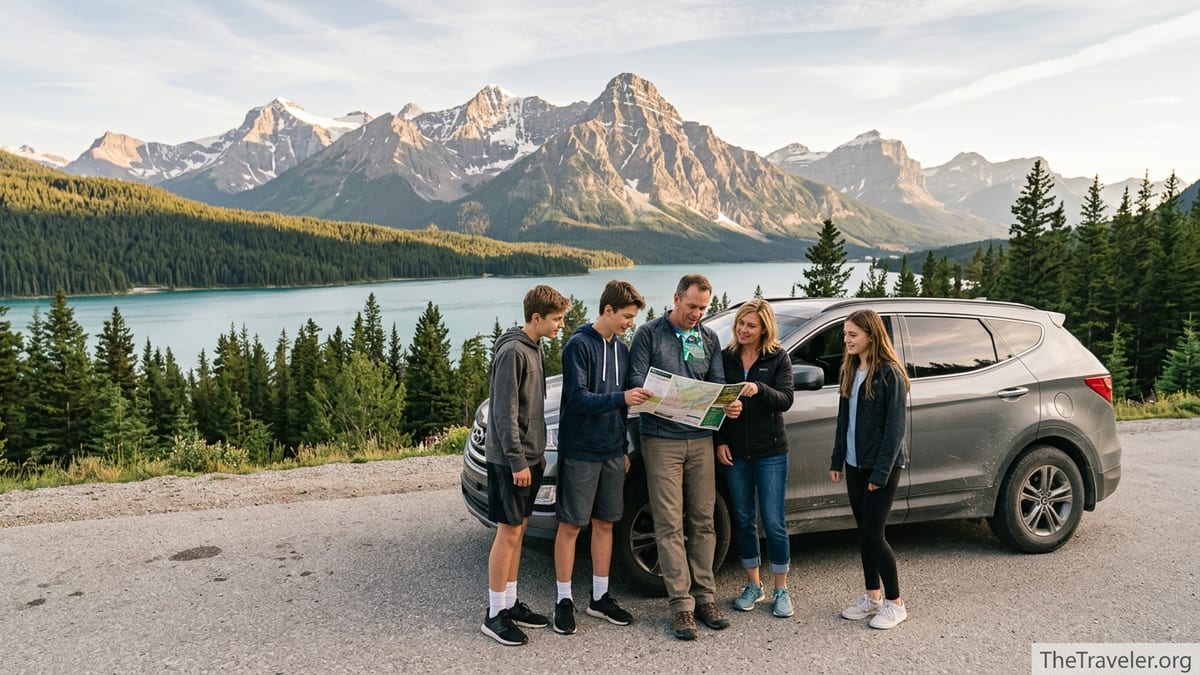
How Parks Canada Fees Work Today
Parks Canada manages dozens of national parks, historic sites, and marine conservation areas across the country, from Banff and Jasper in the Rockies to Fundy in New Brunswick and Gros Morne in Newfoundland. Most of these places charge an entry fee, either per person or per vehicle, that contributes to trail maintenance, visitor centers, search and rescue, and conservation work. In 2026, a typical daily adult entry fee to a flagship park like Banff is just over 12 Canadian dollars, while a family or group in a single vehicle pays roughly double that amount for the day. Youth aged 17 and under continue to receive free admission at federally managed Parks Canada sites, which changes the cost equation for families.
Entry fees are separate from other charges. A park pass does not cover things like front-country or backcountry camping, hot springs, guided hikes, hut stays, parking at certain crowded trailheads, reservation service charges, or shuttle buses. For example, in Banff you still pay extra to soak at Banff Upper Hot Springs, to book a campsite, or to park at premium lots such as Lake Louise lakeshore in summer, even if everyone in the car has valid park entry. Understanding that distinction is crucial; the Parks Canada Discovery Pass is strictly about admission, not a blanket discount card for everything inside park boundaries.
Daily passes are usually valid from the day of purchase until 4 p.m. the following day, which effectively gives you up to a day and a half of sightseeing if you time your arrival for the afternoon. That small quirk can be surprisingly important when you compare daily fees with the cost of a Discovery Pass. A couple who enters Banff at 3 p.m., hikes that evening, and then explores again until midafternoon the next day will only use one daily pass each, not two.
Parks Canada also sometimes introduces time-limited national promotions. In 2017, admission was free for Canada’s 150th birthday, and the government has recently launched the Canada Strong Pass initiative, which offers free admission for everyone and discounts on selected camping dates for part of the summer 2026 season. If your trip falls inside such a window, the entire Discovery Pass vs daily-fee debate can temporarily disappear.
What the Parks Canada Discovery Pass Actually Covers
The Parks Canada Discovery Pass is the federal annual pass that covers unlimited admission to national parks, national historic sites, and national marine conservation areas operated by Parks Canada for 12 months from the date of purchase. It is available in versions for adults, seniors, and a family or group traveling in one vehicle, with prices in 2026 sitting in the low 80s for an individual adult and around the mid 160s for a family or group pass. The pass is presented as a physical card that you hang in your vehicle when driving into parks or show at staffed entrances to historic sites.
In practice, the Discovery Pass functions like an all-access ticket across the country. A family driving from Vancouver to the Rockies could use it for multiple days in Pacific Rim National Park Reserve on Vancouver Island, then again for several days each in Mount Revelstoke, Glacier, Yoho, Banff, Kootenay, and Jasper without paying a separate daily fee at any gate. Add in quick stops at historic sites such as Fort Langley in British Columbia or Rocky Mountain House in Alberta, and the total value grows quickly, especially on longer road trips.
The pass is particularly powerful for travelers who return to Parks Canada places several times in a year or who build multi-park itineraries. A Calgary local who spends a dozen weekend days between Banff, Yoho, and Kootenay, plus a week of vacation in Jasper and another long weekend in Waterton Lakes, will usually come out far ahead with a family Discovery Pass even if they only ever drive a single vehicle. On the other hand, a visitor who will see just one park for a couple of days may find that daily fees are cheaper.
It is important to note what the Discovery Pass does not replace. It does not cover parking that is run by municipalities, such as paid street or lot parking in the town of Banff. It does not substitute for provincial or territorial park permits, which are completely separate systems managed by each province. For example, Alberta’s Kananaskis Conservation Pass, required for many trails east of Banff around Canmore and Kananaskis Country, is not included. Nor does the Discovery Pass waive reservation, camping, backcountry permit, or special activity fees, though you still must show valid park entry for those experiences.
When Daily Park Fees Make More Sense
If you are planning a short visit to a single park, especially as a solo traveler or couple, paying daily admission can be the smarter choice. Take Banff as a concrete example. In 2026, a daily adult entry fee is a bit over 12 dollars. That means a solo traveler would need at least seven separate days in Parks Canada places before the cost of daily admission surpasses the price of an adult Discovery Pass. A couple traveling together would need roughly the same number of park days between them before a family pass is clearly cheaper than simply buying daily entries each time.
Imagine you are flying into Calgary for a long weekend, renting a car, and spending two full days in Banff National Park, with a short stop in Yoho on the drive back. You arrive at the Banff gate on Friday afternoon and leave the mountains Sunday evening. Because each daily pass is valid until 4 p.m. the following day, those 2.5 days on the ground might only require two days of admission as long as you time your driving sensibly. For a couple, that might amount to roughly the cost of four daily adult entries over the weekend, still far below the price of a family Discovery Pass.
Daily fees are also reasonable for people whose park usage is concentrated in a single region and limited to a specific trip. A family of four from Toronto planning a five-day vacation in Prince Edward Island National Park, without side trips to any other Parks Canada sites that year, will likely find that buying daily admission for those five days comes out close to, and often lower than, the cost of a Discovery Pass. Since youth are free, their total might be only the adult and senior daily rates multiplied by five. Without additional parks on their calendar, an annual pass would not deliver much extra value.
Short visits outside of peak season are another case where per-park payment works well. Shoulder-season road trips, such as a two-day photography outing to Fundy National Park in late October or a spring hiking weekend in Gros Morne, often come with reduced opening hours and fewer operational services. If you only spend a couple of days in the park and do not expect to visit any other Parks Canada locations in the next 12 months, the daily fee structure keeps your costs aligned with your actual use.
When a Parks Canada Discovery Pass Clearly Pays Off
The Discovery Pass becomes attractive as soon as you add multiple parks or a longer stay to your plans. A common rule of thumb is that if you will spend around seven or more full days in national parks and historic sites that charge admission within a year, the adult pass begins to save money. For a family or small group in one vehicle, the break-even point can be even lower, especially if two or three adults are traveling together regularly while youth ride free regardless.
Consider a classic Rockies itinerary for a family of four flying into Calgary in July. They spend three days in Banff, two days in Yoho, three days in Jasper, and a final day exploring Waterton Lakes at the tail end of a two-week trip. Because daily passes cover the Icefields Parkway drive between Banff and Jasper and remain valid into the following afternoon, they might need around nine or ten days of paid entry overall. Buying daily admission each day at current rates would likely exceed the cost of a family Discovery Pass by a comfortable margin. In this scenario, the pass saves money and simplifies logistics, since they can drive past staffed gates without stopping to pay each time.
The savings can be even clearer on cross-country road trips. Imagine two friends from Germany renting a campervan in Vancouver for a three-week drive to Calgary and back via Vancouver Island and the Rockies. They spend two days in Pacific Rim National Park Reserve, three in the mountain parks around Revelstoke and Glacier, four in Yoho and Banff, three in Jasper, and a final day in Mount Revelstoke National Park on the return. Combined, that is well over ten days inside Parks Canada sites. Buying a family or group Discovery Pass at the first park they enter would almost certainly cost less than per-day fees for the same itinerary.
The Discovery Pass also shines for locals and repeat visitors. A couple living in Edmonton who hikes in Jasper on several weekends each summer, plus a winter trip to Elk Island National Park and a shoulder-season camping weekend in Banff, might log fifteen or more separate park days without much effort. Rather than buying daily admission each time, they can purchase a family or group Discovery Pass once and hang it from their rearview mirror whenever they drive into a park gate. Over the course of a year, this can turn into substantial savings, especially if they occasionally bring along visiting relatives who can ride under the same group pass.
Special 2026 Promotions and How They Affect the Math
For 2026, it is especially important to pay attention to national promotions that temporarily change admission rules. As part of a government initiative commonly referred to as the Canada Strong Pass, Parks Canada is offering free admission for everyone at its national parks, national historic sites, and national marine conservation areas for a substantial portion of the peak 2026 summer season, roughly from mid June to early September. During these dates, you do not need to purchase park entry at all, though regular fees for camping, hot springs, backcountry permits, and reservation services still apply.
This promotion has major implications for travelers planning large summer trips. Suppose a family from Houston is driving to the Canadian Rockies between June 20 and July 5, 2026. Under ordinary fee rules, they might debate whether to buy a Discovery Pass, because they expect to spend more than a week between Banff, Jasper, and Yoho. In 2026, however, those same days fall completely inside the free-admission window. In their case, buying a Discovery Pass would provide almost no value for that particular trip, unless they also plan to visit Parks Canada places again later in the year outside the promotional period.
The promotion can also shift the balance for shoulder-season trips that straddle the free period. For example, a couple might book a three-week September road trip in Atlantic Canada, visiting Cape Breton Highlands National Park, Fundy, and several historic sites in Nova Scotia and New Brunswick. If their trip begins during the last week of the free-admission window but continues into mid September, they might only need to pay daily entry for the final week of their itinerary. In such a case, the total number of paid days could fall below the threshold where a Discovery Pass pays off, and buying daily entry at each site becomes more economical.
Because these national promotions are limited-time offers, travelers should double-check their exact dates on Parks Canada’s official fee pages before finalizing the decision. If your visit falls outside any free-admission periods, the traditional math for comparing daily entry and the Discovery Pass still applies. If it falls entirely within a free window, you can safely skip the debate and focus instead on booking campsites, shuttles, and accommodation, where competition and costs remain very real even when entry is free.
Real Itineraries: Pass vs Pay-Per-Park
To see how this plays out on the ground, it helps to run through concrete trip examples. Picture a four-day winter getaway to Banff in February for two adults flying in from Chicago. They arrive in the park on Thursday afternoon, ski and sightsee on Friday and Saturday, then depart Sunday afternoon. Because the daily passes roll over to 4 p.m. the next day, they might only need to purchase daily entry for Thursday and Saturday, effectively covering the whole stay. At roughly two daily fees per person, the total admission cost remains well below the price of a Discovery Pass, so paying per park clearly wins.
Now consider a ten-day August family road trip from Vancouver to the Rockies, avoiding the 2026 free-admission window. The itinerary includes two days in Mount Revelstoke and Glacier, four days in Banff and Lake Louise, and three days in Jasper, plus an overnight stop in Yoho National Park on the drive back. Even with clever timing of arrival and departure around the daily pass rollover, they will likely rack up eight or nine days of paid entry. With adult daily rates near the low teens and a family daily rate roughly double that, their cumulative admission cost approaches and can surpass the price of a family Discovery Pass. In this scenario, buying the pass at the first park gate they encounter is simpler and more economical.
As a final example, imagine a couple from Halifax who love the Atlantic parks. Over a 12-month span, they take a spring hiking trip to Fundy National Park for three days, a five-day summer camping holiday in Prince Edward Island National Park, and a long weekend in Cape Breton Highlands in October. Meanwhile, they visit the Fortress of Louisbourg National Historic Site twice with visiting relatives. Added together, they spend well over ten days at Parks Canada places that charge admission in one year. Instead of paying separate daily fees for each outing, buying an adult or group Discovery Pass at the start of the season would reduce their total cost and add the flexibility to squeeze in extra day trips without thinking about entry prices at all.
These scenarios highlight a consistent pattern. For people who focus on a single park for two or three days, especially during shoulder season, daily admission is usually cheapest. For travelers whose plans stretch across multiple parks, multiple seasons, or multiple regions, the Discovery Pass becomes a tool for unlocking both savings and spontaneity. The more you spread your travels across Canada’s federally managed places in a single year, the stronger the case for the pass.
The Takeaway
Deciding whether a Parks Canada Discovery Pass is worth buying is less about chasing a perfect formula and more about matching the pass to your real travel habits. In 2026, with daily adult fees in popular parks like Banff sitting in the low double digits and a family Discovery Pass in the mid 160s range, many short single-park trips do not justify the upfront cost of the pass. Solo travelers or couples spending only a long weekend in one park, or a few scattered days at isolated sites, will usually pay less if they purchase daily admission as needed at the gate.
The equation shifts quickly once you add more days, more parks, or more adults into the picture. A family or group planning a Rockies road trip that strings together Banff, Yoho, Jasper, and Waterton Lakes, or a cross-country drive that hits mountain, prairie, and coastal parks in the same summer, will generally save money and hassle by investing in a Discovery Pass. Locals who find themselves returning to national parks and historic sites month after month often benefit even more, since each extra spontaneous park day effectively lowers the cost of the pass.
Finally, remember that 2026 brings a special twist in the form of free-admission periods backed by the federal government. If your trip falls entirely within a nationwide free window, you can skip buying a pass altogether and focus on securing campsites, lodging, and shuttles. If your travel dates lie outside those promotions, run the numbers for your own itinerary: count your paid park days, consider how many adults are traveling in one vehicle, and check whether you might visit other Parks Canada places later in the year. With a few minutes of honest planning, the best choice between a Discovery Pass and paying per park usually becomes obvious.
FAQ
Q1. How many days in Parks Canada sites do I need before a Discovery Pass is worth it?
For most adults, the break-even point is around seven or more full days in parks and historic sites that charge admission within a 12 month period, especially if those days include high-fee flagship parks like Banff or Jasper. Families or small groups in one vehicle may reach the break-even point slightly sooner because the group pass spreads the cost across several adults.
Q2. Does the Discovery Pass cover camping, hot springs, or parking fees?
No. The Discovery Pass only covers admission to Parks Canada national parks, historic sites, and marine conservation areas. You still pay separately for front-country and backcountry camping, hot springs like Banff Upper Hot Springs, municipal parking in towns such as Banff, reservation service fees, and any shuttles, guided tours, firewood, or special event fees.
Q3. If youth are free, is a family or group Discovery Pass still useful?
Yes, in many cases. Youth 17 and under do not pay federal park admission whether you buy a pass or pay daily, but a family or group Discovery Pass can still save money by covering two or more adults in the same vehicle who visit parks frequently. The pass also simplifies logistics, since you only manage one card rather than multiple individual passes or daily receipts.
Q4. Do I need a Discovery Pass if my 2026 trip is during a national free-admission promotion?
Not for park entry itself. During federal promotions that make admission free for everyone, you do not need a Discovery Pass or daily ticket to enter Parks Canada places. However, you might still consider buying a pass if you plan significant travel to parks outside the free period later in the same 12 month window, or if you want to support the system financially even when admission is waived.
Q5. Is it better to buy the Discovery Pass online in advance or at the gate?
Either works, but many travelers find it easiest to buy the pass at the first staffed gate or visitor center they encounter. Buying on arrival ensures you purchase the pass close to when you begin using it, which maximizes the 12 months of validity. Online purchases can be convenient if you like to have everything arranged ahead of time, but you should still account for shipping time and keep the start of your trip within the pass’s coverage year.
Q6. Does a daily pass let me visit more than one park on the same day?
In some regions, yes. Around the Rockies, a daily pass purchased for Banff can also cover your visit to connected parks like Jasper, Yoho, or Kootenay on the same day, including drives such as the Icefields Parkway, as long as the pass remains valid. You still need valid entry for each day you are inside national park boundaries, but you do not have to buy separate passes for each adjacent park on the same date.
Q7. How does the 4 p.m. daily pass rollover affect the decision?
The daily pass being valid until 4 p.m. the following day can reduce the number of days you need to pay for. If you time your arrival at a park gate for late afternoon, that same ticket can cover your activities that evening plus most of the next day. For short trips of two or three calendar days, this rollover sometimes means you only pay for one or two days of admission rather than three, which can tip the balance away from buying a Discovery Pass.
Q8. Are provincial and territorial park passes included in the Parks Canada Discovery Pass?
No. Provincial and territorial parks, such as Alberta’s Kananaskis Country or Ontario’s provincial parks, are run by their respective provincial governments and have completely separate fee systems. You may need both a Parks Canada pass and a provincial permit on the same trip if you visit federal and provincial protected areas, but the Discovery Pass itself applies only to federally managed places.
Q9. Can multiple vehicles use the same family or group Discovery Pass?
Generally, a family or group Discovery Pass is intended for up to seven people traveling together in a single vehicle. The pass is meant to hang in the vehicle that is actually entering the park. If your group splits into two cars, you would normally need appropriate admission for each vehicle, whether that is a second Discovery Pass or daily fees for the additional car.
Q10. If I am on a guided tour or shuttle, do I still need to buy my own park pass?
Often the tour operator or shuttle company includes park admission in the price of your ticket, but not always. In the Rockies, for example, many organized sightseeing tours, long-distance shuttles, and day trips automatically bundle Parks Canada fees into their advertised price. You should confirm this at the time of booking. If park entry is included, you will not need to buy a separate daily pass or Discovery Pass for that specific activity, although you will still need valid admission for any independent driving or hiking you do before or after the tour.