


Planning a trip to Canada’s national parks is not as simple as just showing up at the gate, especially in busy places like Banff, Jasper or Cape Breton Highlands. Between entry passes, online reservation launch days that sell out in minutes, and campground rules that can affect everything from when you burn a campfire to whether you can drink a beer at your site, a little preparation goes a long way. This guide walks you through how Parks Canada passes, reservations and on-the-ground rules work in 2026, with concrete examples you can use to plan your own trip.
Get the latest updates straight to your inbox!
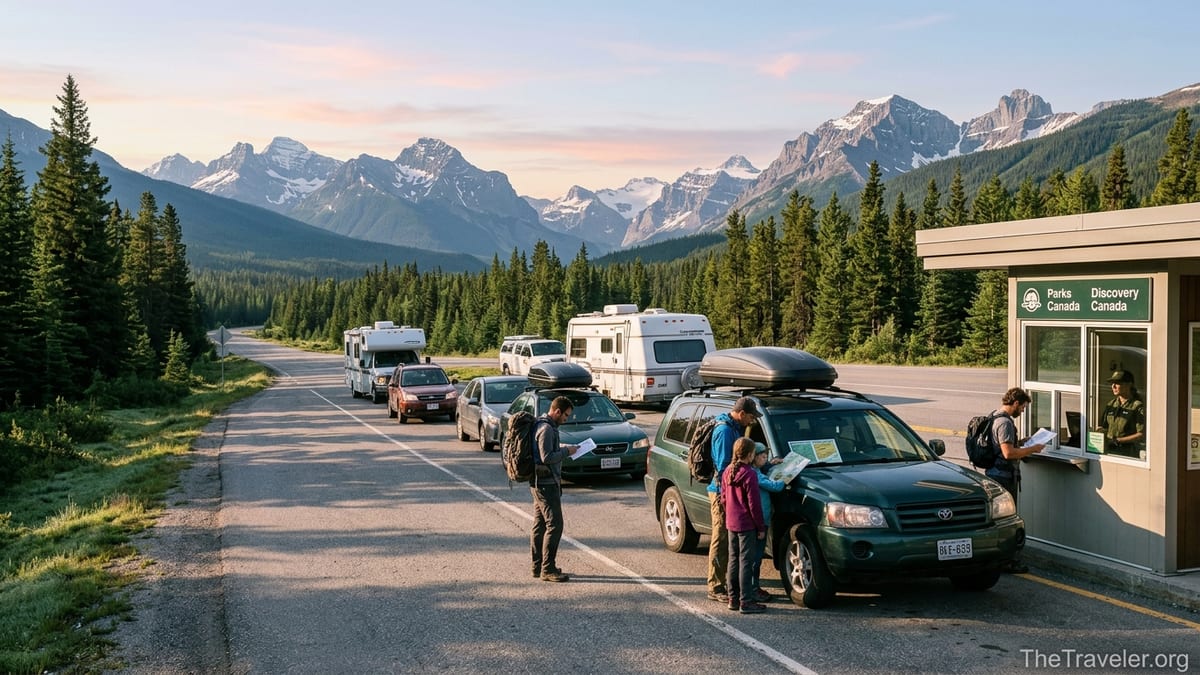
Understanding Parks Canada Passes in 2026
Parks Canada manages dozens of national parks and historic sites across the country, and most of them charge an entry fee. You pay this fee either as a daily pass for a specific park or through a Parks Canada Discovery Pass that covers almost all national parks and national historic sites in one purchase. In 2026, daily adult entry at Banff National Park is about 12 dollars per person, while a family or group daily pass covering up to seven people in one vehicle is around 24 dollars. An annual Discovery Pass is roughly in the mid 80 dollar range for an adult and the mid 160 dollar range for a family or group, and gives unlimited entry for 12 months from the month of purchase to participating federal sites across Canada.
You do not need a Discovery Pass for every trip, but it makes sense fast if you are visiting multiple parks or staying for several days. For example, if two adults spend four days in Banff and two days in Jasper in the same summer, paying daily entry in each park can easily exceed the cost of one Discovery Pass. On the other hand, if you are planning just a single day trip to Fundy National Park in New Brunswick, buying a single day pass at the gate will often be cheaper than the annual pass.
In 2026 there is also a temporary national promotion often referred to as the Canada Strong offer, which provides free admission and about 25 percent off many camping and overnight stays at Parks Canada locations between June 19 and September 7, 2026. During this period, visitors, including international travelers, do not need to pay the normal daily entry fee at participating national parks. However, the promotion does not apply outside those dates and does not automatically discount every type of accommodation, so you still need to budget for camping fees, roofed lodging and any dates before June 19 or after September 7.
Regardless of which pass you use, it is important to understand that entry fees and camping fees are separate. Paying for a campsite or a cabin does not cover your park entry, and having a Discovery Pass does not mean your camping is free. Many first time visitors to Banff or Jasper are surprised to find that their campground reservation confirmation shows only the camping charge, and they still need to display a valid Parks Canada pass on their vehicle dashboard or attached to their bike while inside the park.
Daily Entry vs Discovery Pass: Which Is Better For You
The decision between paying daily entry or buying a Discovery Pass comes down to how long you will be in Parks Canada sites within a 12 month period. As a rule of thumb, if you are an individual adult visiting for more than about seven paid days in one year, the annual pass becomes competitive. For a family group entering together in one vehicle, the breakeven point often comes after roughly seven or eight days of paid entry, depending on the mix of parks you visit and any free admission periods.
Consider a typical western Canada itinerary. A family of four spending five nights in Banff, three in Jasper and one in Yoho might be entering parks on nine or ten separate days if they move between parks. If they paid daily group entry of around 24 dollars each day, the total could surpass 200 dollars for entry alone. In that scenario a Discovery Pass family rate in the mid 160 dollar range would both save money and simplify things, since they would not have to buy new day passes every time they drive through a different park gate on the Icefields Parkway.
On the other hand, solo travelers and couples who focus on a single location for a short trip may find that daily fees are enough. A couple flying into Halifax for a long weekend at Cape Breton Highlands National Park might only need three days of park access, which at typical daily rates would come out near or below the cost of even a single adult Discovery Pass. If they are unlikely to return to a national park in the same year, paying per day makes sense.
Visitors planning to travel during the 2026 free admission window should still run the numbers. For example, a European couple traveling from mid June to early July might have all of their park entry covered by the promotion. If they extend the trip into late September and plan to spend another week in parks then, buying a Discovery Pass on arrival in September could be cheaper than paying daily for that second leg. Since passes are valid for 12 months from purchase, someone arriving on September 1, 2026 with plans for another Canadian trip in spring 2027 could continue using the same pass then.
How Parks Canada Reservations Work
Parks Canada operates an online reservation system for most frontcountry campgrounds, many backcountry trips, and some popular activities like the West Coast Trail or guided hikes. Reservations typically open once a year for the main visitor season. For the 2026 season, Parks Canada has been launching reservations starting in January, but on different days and times for each park or region. For example, a winter camping season at Bruce Peninsula National Park in Ontario has its own November 2025 launch date, while Alberta mountain parks such as Banff and Jasper open in January at specific times, usually around 8 a.m. local time.
On reservation launch mornings, the website places visitors in an online queue. Your place in line determines when you can access the booking system. In recent years some reservation days have seen tens of thousands of people waiting for the most popular campgrounds, particularly in Banff, Jasper and on coastal backpacking routes in British Columbia. During the January 2026 launch, an IT outage forced Parks Canada to temporarily pause some reservation days and reschedule openings like Waterton Lakes, Elk Island and Wood Buffalo to early February, a reminder that technical issues can affect your planning.
Once you are through the queue, you can search by park, campground, date and type of site. You will need to create or sign into a Parks Canada account, pick your campsite or backcountry itinerary, enter the number of people and vehicles, and pay a non refundable reservation fee in addition to the nightly camping rate. A typical frontcountry camping stay in Banff or Cape Breton Highlands will show line items such as a nightly camping fee, a fire permit or firewood bundle if applicable, and a reservation service fee per booking. You pay these online at the time of booking and receive a confirmation email to show at check in.
Not every Parks Canada experience requires a reservation, but the trend is moving towards booking ahead for anything popular. Top demand tent campgrounds near Banff townsite or on the shores of Lake Louise can fully book for summer weekends within minutes of the system opening. Meanwhile, less known parks such as Grasslands in Saskatchewan or Pukaskwa on Lake Superior may still have first come, first served options or leftover reservable sites well into the season. It pays to check the reservation page for each park you plan to visit rather than assume you can simply arrive and find a site.
Timing Strategies and Realistic Expectations
Because of the heavy demand, success on reservation day usually depends on preparation. A few weeks before the launch date for your target park, study the campground maps and decide your preferred locations. In Banff, for instance, Tunnel Mountain Village and Two Jack Lakeside each offer a mix of serviced and unserviced sites, and some are better for tents while others fit large RVs more comfortably. Knowing which specific loop or site numbers suit your trailer length or desire for shade allows you to move faster once you get past the online queue.
It is also important to be realistic. On busy January launch mornings, many campers find themselves several thousand places deep in the virtual line minutes after 8 a.m. People aiming for summer weekends in July and August at Banff’s lakeside or full hook up sites often watch every Friday and Saturday vanish within the first hour. For a family from Toronto wanting to camp in Banff in peak season, having flexibility to visit midweek or in June or September can make the difference between getting a reservation and missing out entirely.
Travelers from abroad should pay close attention to time zones. A visitor in New York trying to book Jasper on a morning that opens at 8 a.m. Mountain Time needs to be ready at 10 a.m. Eastern. It is common to log in about 15 to 30 minutes before the opening time so the queuing system can place you correctly when bookings go live. Some experienced campers sign in on a laptop and a phone simultaneously, but Parks Canada has been tweaking its systems to reduce the advantage of multiple devices, and it is possible for extra sessions to be bumped or flagged.
If you do not secure your preferred dates, alternatives exist. Many national park campgrounds have a mix of reservable and first come, first served sites that are released day of. For example, at less pressured parks such as Riding Mountain in Manitoba or Terra Nova in Newfoundland, showing up early on a weekday often yields a decent campsite, especially in June or September. In high demand areas like Lake Louise, you may have better luck looking at nearby provincial parks operated by the provinces rather than Parks Canada, or considering overflow areas and commercial campgrounds outside the park boundary.
Key Rules That Shape Your Stay
Once you arrive at a Parks Canada campground, several nationwide rules and local policies will shape your experience. Quiet hours are one of the most important. Many national park regulations specify quiet hours from 11 p.m. to 7 a.m. During those times, Parks Canada typically prohibits loud music and excessive noise, and in many campgrounds campfires, alcohol and cannabis use are not allowed at all during quiet hours. Banff, for instance, lists quiet hours from 11 p.m. to 7 a.m. and states that music, campfires and alcohol or cannabis consumption are prohibited during those hours, with only the registered occupants of a campsite allowed on that site after 11 p.m.
Alcohol rules can be stricter than visitors expect. General Parks Canada visitor guidelines commonly ban alcohol at day use areas, beaches, cook shelters and on trails, allowing it only on registered campsites outside designated alcohol ban periods. Around some long weekends, parks introduce full or partial alcohol bans to discourage large parties. Even when alcohol is allowed on your campsite, you are required to store bottles and cans securely when not in use and to keep consumption within your own site. Walking along campground roads with open drinks or carrying a beer to a lakeside picnic table a few hundred metres away can lead to fines.
Campfires are another area where federal and local regulations intersect. You may only have a campfire in designated fire pits or metal fireboxes provided at your site or day use area. In many popular parks you must purchase a fire permit or firewood bundle from Parks Canada rather than bringing your own wood. Banff and other mountain parks strongly advise against transporting firewood into the park and encourage campers to buy wood locally to prevent spreading invasive insects and tree diseases. During periods of high wildfire risk, fire bans may prohibit all open flames except in gas stoves, making it illegal to have a wood fire even inside a campground fire ring.
Other national regulations cover campground etiquette and wildlife safety. Cutting trees or collecting deadfall for firewood is prohibited, as is leaving food or cooking equipment unattended, especially in bear country. In parks like Riding Mountain or Jasper, any coolers, dishes, garbage and scented items must be locked inside a vehicle, hard-sided trailer or food storage locker when you are not actively using them. Failure to do so can result in fines or eviction from the campground, since food conditioned wildlife are more likely to be destroyed for safety reasons. National Camping Regulations also allow Parks Canada staff to evict guests whose behaviour unreasonably disturbs others, so repeated noise complaints can end a trip quickly.
Practical Examples: Banff, Cape Breton Highlands and Beyond
Looking at a few real world examples helps bring these abstract rules to life. Take Banff National Park, Canada’s busiest. A family from Chicago planning a seven night July stay at Tunnel Mountain Village would first need to book their campsite as soon as reservations open in January. They might choose a site with electricity for a small trailer, paying a nightly camping fee plus a reservation service charge. Once in the park, they must also either purchase a Discovery Pass family pass or pay daily group entry at the park gates. If they arrive during the Canada Strong free period, their entry fee will be waived, but their camping fee remains due, although some nights might be discounted by about a quarter compared with shoulder seasons.
Once camped, they discover that generators are only allowed during narrow windows in the morning and late afternoon, and that quiet hours start at 11 p.m. One evening they finish roasting marshmallows around 10:45 p.m., then fully extinguish their fire before 11 p.m. to comply with the rule that campfires are not allowed during quiet hours. They keep voices low and move inside their trailer by 11:30 p.m. rather than sitting outside with music, avoiding a visit from a park warden.
On the Atlantic coast, a couple road tripping from Montreal to Nova Scotia might reserve two nights at a seaside campground in Cape Breton Highlands National Park. The park notes that a standard campsite fee includes one camping unit, one cooking unit, one vehicle and up to four adults per site, so when friends driving a second car join them for one night, they pay an additional vehicle fee. Quiet hours again run from 11 p.m. to 7 a.m., and alcohol is restricted to the registered campsite. When they decide to walk down to the beach to watch the sunset with a drink, they leave the beer behind and bring only non alcoholic beverages to stay within the rules.
Even in smaller or lesser known parks, similar patterns apply. In Riding Mountain National Park in Manitoba, the main Wasagaming Campground observes quiet hours around 11 p.m. and sells bundled firewood rather than allowing guests to collect it. Across the system, visitors are expected to obey posted speed limits, stay on designated roads and campsites, and respect closures for wildlife or restoration work. The specific details at each park may vary, but if you arrive expecting a structured, rule based environment, you will be well prepared.
The Takeaway
Traveling through Canada’s national parks in 2026 means navigating three overlapping systems: entry passes, campground reservations and on the ground rules that shape your stay. Understanding the difference between daily entry fees and the Discovery Pass, and factoring in the temporary free admission promotion between June 19 and September 7, 2026, will help you choose the most economical option for your itinerary. Planning ahead for reservation launch days is essential for top demand parks, where January mornings can determine where you sleep in July and August.
Once you arrive, the rules around quiet hours, alcohol, campfires and wildlife safety are designed to protect both the environment and your fellow campers’ experience. Many of these policies are stricter than what you might encounter at a private campground or in some other countries, but they are clearly posted and consistently enforced in busy parks. If you embrace the structure, secure your reservations early and build your plans around the realities of the system, you will spend less time worrying about logistics and more time enjoying sunrise over Lake Louise, the Cabot Trail’s coastal cliffs or the prairie skies of Grasslands National Park.
FAQ
Q1. Do I need a Parks Canada pass if I am only driving through a national park?
If your route passes through a national park, you are generally required to have a valid Parks Canada entry pass, even if you do not stop, though enforcement can vary by location.
Q2. Are international visitors included in the free admission promotion in summer 2026?
Yes. The 2026 free admission period applies to all visitors, including international travelers, for participating Parks Canada locations during the specified dates.
Q3. Does a Parks Canada Discovery Pass cover camping fees?
No. The Discovery Pass only covers entry fees to national parks and historic sites. You still pay separate camping or accommodation fees for each stay.
Q4. How far in advance should I book campgrounds in popular parks like Banff or Jasper?
For peak summer dates, you should aim to book as soon as reservations open in January for those parks. Prime weekends can sell out within minutes of launch.
Q5. Can I bring my own firewood to a Parks Canada campground?
Often you are discouraged or prohibited from bringing outside firewood due to pest concerns. Many parks require or strongly recommend buying firewood on site or nearby.
Q6. Are campfires allowed all night in national park campgrounds?
No. In many Parks Canada campgrounds, campfires are not permitted during quiet hours, commonly from 11 p.m. to 7 a.m., and may also be restricted during fire bans.
Q7. Is alcohol allowed in national park campgrounds?
Alcohol is usually allowed only on your registered campsite and may be banned entirely during some long weekends or special periods. It is not allowed in day use areas or on trails.
Q8. What happens if I arrive late to my reserved campsite?
If you expect to arrive after normal check in hours, you should contact the park in advance. Sites are usually held until a stated check in deadline, after which they may be released or charged as a no show.
Q9. Do I need a reservation to visit a national park for a day hike?
In most Parks Canada sites, day visitors do not need a reservation, only a valid entry pass. However, a few specific activities or parking areas may require advance booking.
Q10. Can I rely on first come, first served camping instead of reservations?
Some parks still offer first come, first served sites, but availability is never guaranteed, especially on summer weekends. In busy parks, reservations are strongly recommended.