


For many modern travelers, especially digital nomads and long-term backpackers, moving money across borders is part of everyday life. You might need to pay a landlord in Mexico from a US bank account, send emergency funds to a friend in Vietnam, or simply get local currency in Colombia without hunting for the one ATM that accepts your card. Remitly is one of the specialist services built for exactly these situations. Understanding how it works in real travel scenarios can help you cut costs, avoid stress, and get your money where it needs to be, fast.
Get the latest updates straight to your inbox!
What Remitly Is, And Why Travelers Use It
Remitly is a US-based digital remittance service that lets you send money from countries like the United States, Canada, the United Kingdom and much of Europe to more than 170 countries worldwide. Instead of the old model of walking into a storefront and filling out forms, everything happens in the app or on the website. Once you create an account, you choose where you are sending money from, the destination country, the amount, and how your recipient will receive it, such as bank deposit, mobile wallet, or cash pickup at a partner location.
For leisure travelers, Remitly is often used to send money home, help out friends you meet on the road, or pay for services where local banking is tricky. A US traveler working remotely from Medellín might send pesos to their Colombian landlord’s bank account each month, while paying Remitly in dollars from a US bank. A backpacker in Thailand could send money to a partner stuck in Europe after a flight cancellation, with cash available for pickup at a local partner bank within minutes.
Unlike broad payment platforms that focus on card payments or peer-to-peer transfers in a single currency, Remitly is built around cross-border remittances. That focus means support for payout options that travelers actually need on the ground, such as cash pickup in Mexican convenience stores, bank deposits to Indian accounts, or mobile wallet top-ups in parts of Africa and Southeast Asia, depending on corridor availability.
Because Remitly does not operate physical branches, it partners with local banks, microfinance institutions and retail chains to deliver money. This network gives it reach into places where a foreign traveler’s own bank card might not work reliably, or where local ATMs are limited, making it especially useful in secondary cities and rural areas that still depend heavily on cash.
How Remitly Works Step by Step When You Are On The Road
Using Remitly as a traveler starts with setting up your account in your home country, ideally before departure. You download the app, verify your email and phone number, and enter basic personal details that satisfy local regulations. In many sending countries you will also need to provide an ID document such as a passport or driver’s license, and sometimes additional information if you want to increase your sending limits.
Once your account is active, you select your sending country and the destination. Suppose you are in New York preparing for a long trip through Mexico. On the Remitly app you choose the United States as your sending country and Mexico as your destination. You enter an amount in dollars, like 300 USD for a first month’s rent in Oaxaca, and Remitly shows how many Mexican pesos your contact will receive, the applicable fee, and an estimated delivery time for each available delivery method.
After you choose a delivery method, you add the recipient’s information. If you are paying a landlord with a bank account in Mexico City, you enter their name, bank name, and account details as requested. If you are planning to pick up cash yourself in Cancún, you choose a cash pickup option and list your own name exactly as it appears on your passport, since that is what staff will check at the counter. You then select how to fund the transfer, usually by linking a bank account or using a debit or credit card, and press send.
As the transfer processes, you receive notifications in the app and by email or SMS. Status updates include when the transfer is created, when it is approved, and when it has been delivered or is ready for pickup. If you are running through an airport in Istanbul and sending emergency money to a friend in Manila, being able to glance at your phone and see “available for cash pickup” can be the difference between calm and panic on both sides.
Fees, Exchange Rates, And Real-World Cost Comparisons
Remitly’s pricing has two main components that matter to travelers: explicit transfer fees and the exchange rate you receive. Transfer fees vary based on the sending country, destination, payout method, and speed you choose. In some popular corridors, especially for bank deposits, there may be low or promotional fees for new customers, while in other routes or for express transfers you will see a higher fee per transaction.
The exchange rate is just as important as the visible fee. Remitly typically earns revenue by adding a margin to the mid-market exchange rate. For example, if the live market rate is 1 USD to 18.00 MXN, you might see something like 1 USD to around 17.4 to 17.7 MXN in the app, depending on the corridor and promotions. That difference of a few percent is effectively part of the cost of your transfer, even if the listed fee appears low. Competing services such as Wise, Xoom, and traditional players like Western Union apply their own mix of fees and exchange rate margins, which can make one provider cheaper than another for a specific route and amount.
To understand how this plays out on the road, imagine a US digital nomad in Lisbon who needs to send 1,000 USD worth of local currency back to family in the Philippines. Using Remitly, they might see an upfront fee in dollars, plus a peso rate that is slightly below the market rate. By checking another provider’s rate for the same transfer, they may find a slightly higher fee but a better exchange rate, or vice versa. Over a single emergency transfer the difference might be the cost of a meal out, but over a year of monthly support payments or rent, it can add up to several hundred dollars.
Travelers should also factor in the hidden costs of their own bank if they simply withdraw cash from foreign ATMs instead of using a dedicated remittance service. Many US banks add a foreign transaction fee to ATM withdrawals, plus a flat per-withdrawal charge and poor exchange rates. Someone living for three months in Medellín and relying only on their US card at local ATMs might easily pay 3 percent in foreign transaction fees and another few dollars per withdrawal. Using Remitly or a similar service to send a larger amount in one go for rent or tuition can reduce the impact of those bank and ATM fees, particularly in countries where ATMs have tight withdrawal limits or inconsistent availability.
Delivery Options: Bank Deposit, Cash Pickup, Mobile Wallet
The way money arrives matters just as much as how cheaply it travels. Remitly’s main delivery options are bank deposits, cash pickup, and mobile wallets, with availability depending on the country corridor. For a traveler paying regular bills, bank deposit is often the most convenient. If you rent an apartment in Chiang Mai for several months, you can pay your Thai landlord directly into their local bank account from your US or European account, avoiding the need to carry or withdraw large amounts of cash.
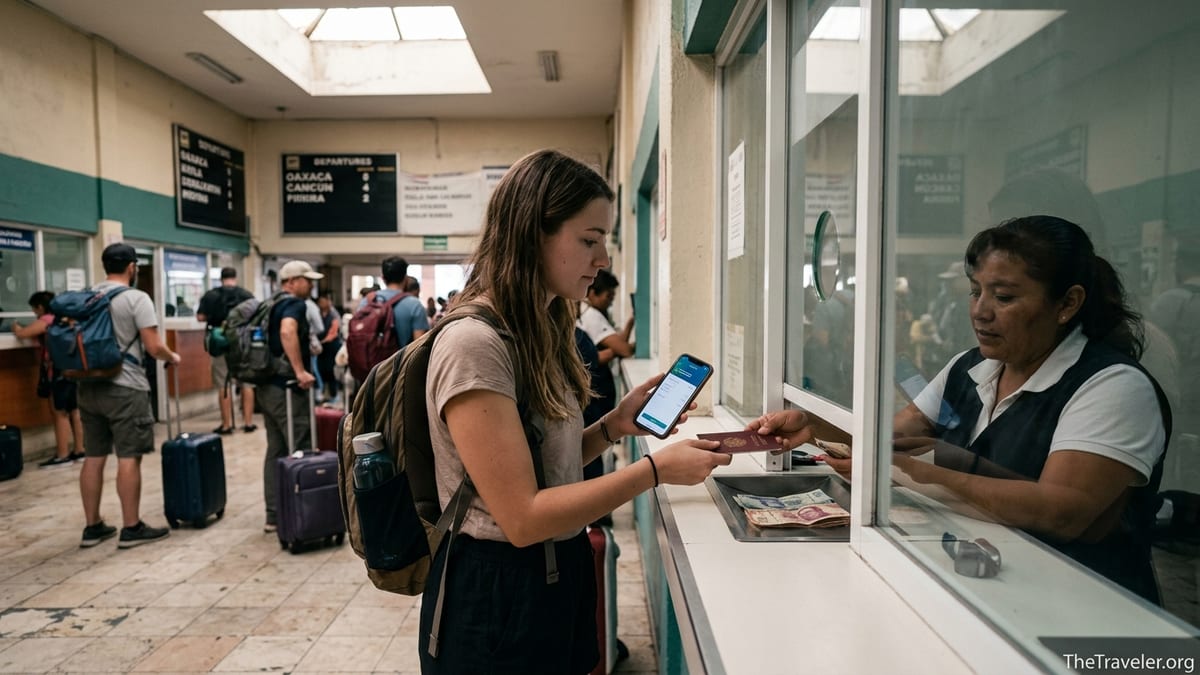
Cash pickup is especially useful in countries where card acceptance is limited or where travelers do not yet have a local bank account. Remitly partners with banks and retail chains, so in Mexico a visitor might pick up pesos at a supermarket or money exchange outlet, while in the Philippines the cash could be waiting at a partner pawnshop or bank branch. Imagine arriving in Cancún late at night with an ATM card that does not work. Before leaving the United States, you could have sent yourself a Remitly transfer with cash pickup at a store near your hotel. The next morning, you show your passport and the reference code at the counter and walk out with enough pesos for your first few days.
Mobile wallets are another option in some regions. In parts of Africa and Asia, Remitly can send money directly into popular wallet services that locals already use to pay utility bills and buy groceries. A traveler volunteering long-term in Nairobi might send money from a European account into a friend’s mobile wallet so they can pay school fees without needing a bank account. This model can be more flexible than cash pickup, since recipients do not have to visit a physical location during business hours.
In all cases, the Remitly app displays which methods are available for each destination when you set up a transfer, along with estimated delivery times. Some bank deposits arrive within minutes, while others may take up to a few business days depending on the corridor and local banking hours. Cash pickup is usually fast once the transfer is approved, but availability always depends on the opening hours and network connectivity of the specific partner location.
Speed, Limits, And Safety Considerations For Travelers
Speed is a major selling point for Remitly, particularly in emergencies. In many of its most popular corridors the company offers options where funds arrive within minutes to a bank account, mobile wallet or cash pickup point, especially when funded by a debit or credit card. In other cases, particularly transfers funded by bank account, the delivery can take longer, sometimes one to three business days. The app will show you the estimated arrival time before you confirm, which is critical if, for example, your friend needs bail money tonight rather than later in the week.
Transfer limits are another factor that matters for travelers paying large tuition bills, medical expenses, or housing deposits abroad. Remitly uses tiered sending limits based on how much information you provide and local regulatory rules. A new user might be limited to a few thousand dollars per day or month, while a fully verified customer who uploads additional documentation can often send much larger sums over a six-month period. If you are planning to pay a 10,000 USD language school tuition bill in Spain or a multi-month apartment deposit in Tokyo, it is wise to raise your limits well before the invoice is due.
On safety, Remitly is regulated in its sending countries and uses security measures similar to those of traditional financial institutions. The app relies on encrypted connections, secure card processing, and identity checks. However, for a traveler the main risks are usually not the platform itself but scams and mistakes. Because cash pickup transfers are paid out in physical currency, they are difficult or impossible to reverse once collected. Stories of scammers asking for money through remittance services are common on traveler forums and online communities, involving fake landlords, romance scams, or bogus tour operators.
To stay safe, send money only to people and organizations you know and trust, double-check recipient details, and treat anyone pressuring you to send funds quickly with suspicion. When you are using Remitly to pay a new landlord in Mexico City, insist on seeing a rental contract and verifying that the bank account truly belongs to them. If someone you just met in Hanoi asks you to send a large transfer to a third party “for visa help,” consider alternative arrangements. Use the app’s tracking and customer support options if you believe an error was made, and remember that once cash is collected, the money is almost always gone for good.
Comparing Remitly To Other Options Travelers Use
Travelers deciding whether to use Remitly are usually comparing it to at least three other categories of money movement: simply using a regular bank card at foreign ATMs, using other digital transfer services, or carrying and exchanging physical cash. Each option has its own cost, convenience, and risk profile, and the best choice often depends on the country and specific situation.
Using your bank card at ATMs is the default for many short-term tourists. In major cities in Europe, Japan, or Australia, you can rely heavily on ATMs and card payments, with reasonable exchange rates if your home bank offers low foreign transaction fees. However, in parts of Latin America, Southeast Asia, or North Africa, ATMs can be unreliable, may have very low withdrawal limits, or may charge high local fees per withdrawal. A traveler staying several months in Medellín might find that they need four or five ATM visits to withdraw what they could send in a single Remitly transfer to a trusted local contact or landlord, each visit incurring foreign and local fees.
Other digital transfer services like Wise, Xoom, or traditional remittance brands are also strong competitors. Wise markets itself heavily on mid-market exchange rates with transparent fees, which can be attractive for bank-to-bank transfers between accounts in your own name. Remitly, on the other hand, often leans on speed, promotional rates for first-time users, and a particularly dense cash pickup network in some corridors. A traveler might prefer Wise to move savings between their US and European accounts, but choose Remitly to get cash quickly to a hostel owner in rural Philippines.
Carrying large amounts of physical cash and exchanging at local bureaus of change is usually the worst option from a safety perspective and often mediocre on price. While a backpacker might bring a few hundred dollars for emergencies, walking around with several thousand dollars in notes exposes you to theft and loss, and exchange counters at airports and tourist zones often offer poor rates. Using a service like Remitly to send local currency only when needed, with clear visibility of the total cost, reduces both the physical risk and the guesswork involved in comparing handwritten rates on chalkboards.
The most practical strategy for long-term travelers is to mix tools. Use a fee-free debit card where ATMs are plentiful and safe, and a service like Remitly when you need to support friends or family back home, pay local bills in a different currency, or get money to places where your own bank card will not reach. Evaluating each option against the real prices and conditions you face on the ground will usually save more than loyalty to a single method.
The Takeaway
For travelers, Remitly sits somewhere between a traditional money transfer counter and a modern banking app. It is designed for people sending money across borders regularly, but many of its strengths align closely with what long-term travelers and digital nomads need: fast transfers, flexible delivery methods including cash pickup, and an interface that makes costs and timing relatively transparent before you send.
Used thoughtfully, Remitly can help you pay foreign landlords, support relatives back home while you are abroad, or get local currency in destinations where your own bank card struggles. It is not always the absolute cheapest option, especially once promotional offers expire, and its true cost depends on both fees and exchange rates. That is why comparing it with at least one other provider and with your own bank’s ATM terms is a smart habit before large or repeated transfers.
The real power of a service like Remitly for travelers is flexibility. A backpacker in Mexico, a remote worker in Portugal, and a volunteer in Kenya can all use the same app to solve different money problems: getting rent paid on time, handling an emergency, or helping a local friend. If you understand how its fees, speeds, and delivery options work in practice, Remitly can become a reliable part of your travel finance toolkit rather than a last-minute scramble when things go wrong.
FAQ
Q1: Can I send money to myself with Remitly while traveling?
Yes. Many travelers send money to themselves for cash pickup in the country they are visiting. You enter your own name as the recipient, choose a nearby pickup location listed in the app, and bring your ID and reference code when collecting the cash.
Q2: Is Remitly cheaper than using my bank card at foreign ATMs?
It depends on your bank’s fees, the ATM fees in the destination country, and Remitly’s exchange rate and transfer fee on that corridor. If your bank charges high foreign transaction and ATM fees or offers poor rates, a Remitly transfer for rent or larger expenses can work out cheaper than multiple small cash withdrawals.
Q3: How fast do Remitly transfers arrive?
Transfer speed varies by payment method, destination, and payout type. In many popular routes, card-funded transfers to cash pickup or certain banks can arrive in minutes, while other bank transfers may take one to three business days. The app shows an estimate before you confirm.
Q4: What information do I need to send money with Remitly?
You need a Remitly account with your personal details and a valid payment method such as a bank account, debit card, or credit card in the sending country. For the recipient, you usually need their full name and either bank details, mobile wallet account, or cash pickup information as requested for that corridor.
Q5: Are there limits on how much I can send with Remitly?
Yes. Remitly applies tiered sending limits based on your verification level and the rules of your sending country. New customers can usually send smaller amounts, while those who provide additional documents may be allowed to send substantially more over daily, monthly, or six-month periods.
Q6: What happens if my recipient does not pick up the cash?
If a cash pickup transfer is not collected within a certain time frame or if there is an issue, the transfer may be canceled and funds returned to the sender’s payment method. Exact rules depend on the corridor and partner, so you should check the transfer status in the app and contact customer support if a pickup is delayed.
Q7: Can I cancel a Remitly transfer after I send it?
Sometimes. If the transfer has not yet been delivered or picked up, you may be able to cancel it from within the app or by contacting support. Once the money has been deposited into a bank account or collected in cash, cancellation is usually no longer possible.
Q8: Is it safe to use Remitly on public Wi-Fi while traveling?
Remitly uses encrypted connections, but using any financial service over unsecured public Wi-Fi carries some risk. When possible, use a trusted network or mobile data, enable two-factor authentication on your account, and avoid logging in from shared or public computers.
Q9: Does Remitly work in every country?
No. Remitly is available only in specific sending countries and supports transfers to a defined list of receiving countries. Coverage is broad, with more than 170 destinations, but not universal. Before relying on it for a trip, check that your current country is supported as a sending location and that your destination can receive funds.
Q10: How does Remitly compare with services like Wise or Western Union for travelers?
Wise often focuses on transparent fees and mid-market exchange rates for bank-to-bank transfers, which can be efficient if you are moving money between accounts you control. Western Union has a very large physical network for cash pickups worldwide. Remitly sits between these models, offering digital convenience with strong support for bank deposits, cash pickup, and mobile wallets in many travel-heavy corridors, often with competitive pricing, especially for first-time or frequent remittance-style transfers.