


More news on this day
Published coverage indicates the Netherlands is seeking extra time and greater flexibility around the EU’s Entry/Exit System (EES) requirements at airports, after the biometric border program contributed to longer waits for some non-EU travelers at Amsterdam Schiphol and other hubs during peak periods.
Get the latest news straight to your inbox!
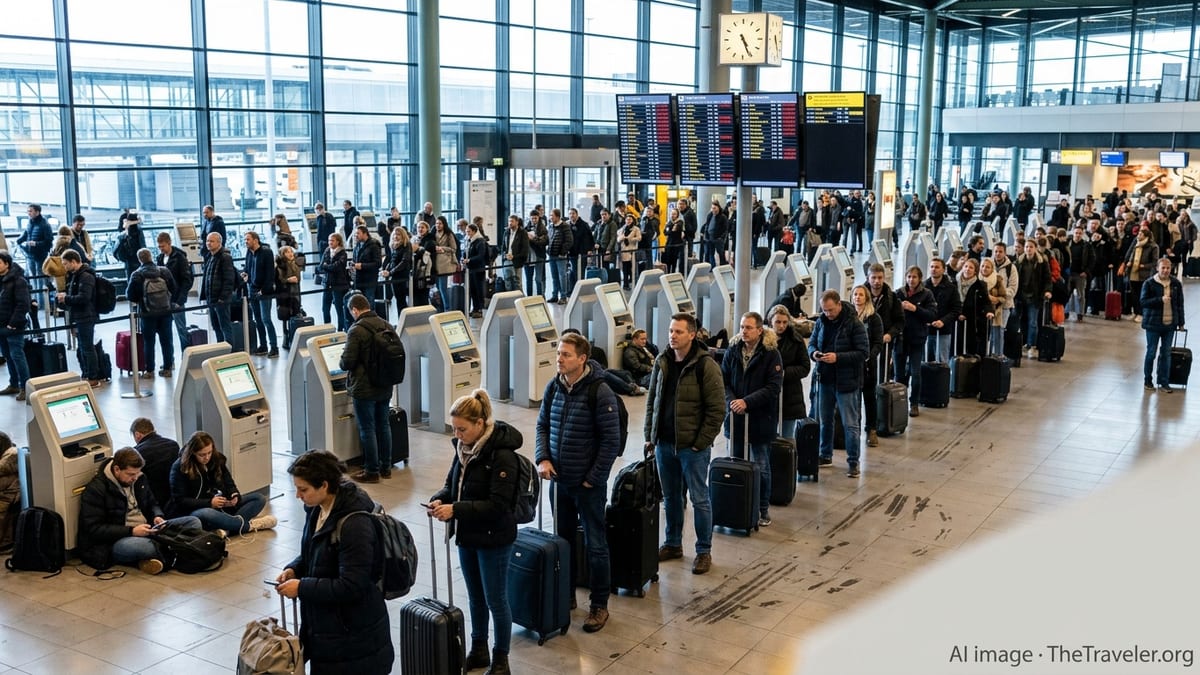
Why the Netherlands is pressing for a slower EES pace
The EES is designed to replace manual passport stamping for short-stay visitors from outside the EU and Schengen area, logging entries and exits digitally and adding biometric checks such as facial images and fingerprints. In practice, the first-time registration step has been a major pinch point at busy airports, where thousands of arriving passengers can funnel into limited border-control space at the same time.
Recent reporting across European outlets has described how several countries, including the Netherlands, have sought additional leeway to prevent prolonged queues at passport control. The pressure has been most visible at large airports where the volume of long-haul arrivals can spike sharply by hour, leaving border posts vulnerable to knock-on delays.
At Schiphol, airport information pages have warned travelers that peak arrival waves and the introduction of the new European border system have contributed to crowding at passport control, particularly affecting non-EU travelers who must complete EES steps. Separate coverage from Dutch media this summer described one- to two-hour waits at border control during busy moments, with responsibility for border operations resting with the Royal Netherlands Marechaussee.
What EES changes at Schiphol and other Dutch border posts
The Netherlands began a phased EES introduction in October 2025, initially at two maritime border posts, with Schiphol following through a small-scale start and later expansion. Under the EU’s staged deployment model, countries could bring locations online gradually before the system became fully operational across participating states.
Publicly available Dutch and EU information describes EES as applying to “third-country nationals” visiting for short stays of up to 90 days within any 180-day period. The system is meant to record entry, exit, and refusals of entry, as well as detect overstays more reliably than ink stamps.
In the Netherlands, Schiphol has been highlighted as the key airport location for automated processing options connected to EES, with the Royal Netherlands Marechaussee describing Schiphol as the only Dutch site where certain non-EU travelers can use automated eGates as part of the EES process. Other Dutch border posts, including regional airports, ferry terminals, and international rail stations, have been described as having more limited automated gate availability, which can shape how quickly biometric steps can be handled.
Europe-wide “flexibility” is tightening, raising stakes for airports
A major complication is that EES has not been experienced uniformly across Europe. Airline and airport industry groups have repeatedly argued that operational readiness, staffing, and the physical layout of border halls vary widely, making rigid, one-size implementation risky during peak travel seasons.
Published coverage in early September described how time-limited flexibility measures used during rollout were set to expire, reducing the ability of border authorities to ease biometric requirements when passport-control areas become overwhelmed. Industry statements have urged EU institutions to extend discretion to pause or partially suspend EES processes during periods of severe congestion, warning that reduced flexibility can translate quickly into longer lines and missed connections.
Within that broader European context, reports have described multiple countries asking for additional time or adjustments, with the Netherlands among those seeking extra breathing room. While the EES framework is EU-wide, day-to-day passenger experience depends heavily on local staffing levels, kiosk availability, and how arrivals are sequenced across terminals and piers.
What travelers should expect now, and who is most affected
For many EU passport holders, the practical process at Dutch airports changes little because EES targets short-stay visitors from outside the EU and Schengen area. Schiphol has explicitly messaged that travelers arriving with Dutch or other EU passports are not the target group for these new steps.
Non-EU travelers entering the Schengen area through Schiphol should plan for added border time, especially on first entry after EES registration requirements apply. Schiphol’s traveler updates have pointed to the new system as one factor behind longer waits at peak moments, alongside the common airport reality that many flights can land simultaneously.
For connecting passengers, the biggest risk is a tight onward connection that requires clearing passport control to continue to a Schengen destination. Travelers who remain airside on certain international-to-international transfers may not face the same border step at Schiphol, but connection routings vary, and airport signage and staff directions remain important.
What happens next for EES and the Netherlands’ airports
The Netherlands’ push to postpone or soften EES impacts at airports lands as European institutions and member states continue refining how the system operates in real-world conditions. EU materials describe EES as a cornerstone of modernized border management, but recent travel-season experience has highlighted the operational challenge of adding biometrics at scale without expanding border infrastructure or staffing proportionally.
At Schiphol, passenger-facing messaging emphasizes coordination with the Royal Netherlands Marechaussee and other partners, along with measures such as better wayfinding and extra assistance in the terminal. Still, published reports this summer have framed the core constraint as capacity at border control, where technology, staffing, and physical space must work together to keep queues moving.
For travelers, the near-term outlook remains uneven: EES is a fixed policy direction in Europe, but the day-by-day reality may involve temporary adjustments, additional national requests for flexibility, and fluctuating waits depending on arrival banks and staffing. Anyone arriving on long-haul flights into the Netherlands during peak hours should budget extra time at passport control until the system is consistently smooth across airports.