


More news on this day
The Netherlands is slowing the pace of airport processing tied to the EU’s Entry/Exit System (EES) after fresh reports of long lines at Amsterdam Schiphol highlighted how biometric registration can amplify border delays during peak arrival banks.
Get the latest news straight to your inbox!
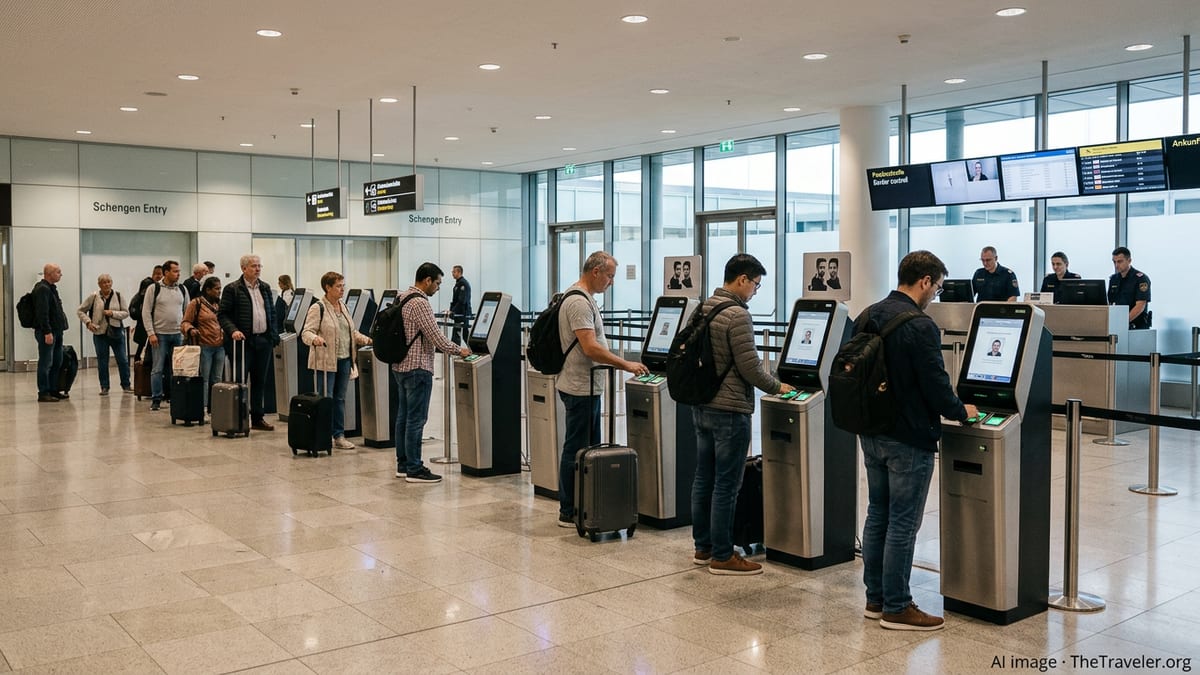
What is being postponed and why it matters for passengers
EES is the EU’s new digital border-registration system for non-EU travelers entering or leaving the Schengen area for short stays. It replaces manual passport stamping with electronic records and, for many travelers, first-time biometric enrollment that includes a facial image and fingerprints. That first registration step is the part most associated with longer border-processing times when large numbers of widebody flights arrive close together.
Published coverage and publicly available airport guidance show that Schiphol has experienced periods of extended waits at non-EU passport controls since EES became fully operational across participating countries on April 10, 2026. Schiphol messaging to travelers has explicitly linked crowding to both flight peaks and the new border system, underscoring how even small slowdowns at kiosks and desks can quickly turn into queues.
The Dutch approach has leaned on flexibility within the EU’s phased implementation framework, which was designed to help airports and border agencies scale up gradually. In practice, the “postponement” is less about abandoning EES and more about pacing how consistently and broadly EES steps are applied in airport flows so that border halls do not seize up during busy periods.
Schiphol’s bottleneck: biometric enrollment meets peak arrival waves
Schiphol is the country’s primary pressure point because it concentrates long-haul arrivals and transfer traffic in a single terminal complex. The Royal Netherlands Marechaussee, which handles border control at Dutch airports, indicates that Schiphol is currently the only place in the Netherlands where certain travelers can use automated eGates as part of the EES process, while other airports and border posts rely more heavily on staffed processing.
Recent reporting in Dutch media has described average waits of one to two hours at times for arriving passengers with non-EU passports at Schiphol, framing the situation as operationally unacceptable for an airport that sells tight connections. Separately, Schiphol’s own traveler updates have warned that border delays can be driven by simultaneous arrivals as well as the additional steps introduced by EES.
For travelers, the practical impact is that arrival experience can vary dramatically by time of day and by whether a traveler is completing first-time enrollment. Passengers who have already been enrolled may still face lineups if the hall is congested, but first-time registration remains the most time-consuming part because it adds kiosk interaction, capture quality checks, and potential routing to a staffed desk when automated verification fails.
How the Netherlands has been rolling EES out, step by step
The Netherlands began EES operations in a staged way. Government information shows the initial step-by-step introduction started on October 12, 2025 at two maritime border posts, Eemshaven and IJmuiden/Amsterdam-Haven, with a small-scale launch at Schiphol following on November 3, 2025 and further expansion planned afterward.
EU-level materials describe the broader coordinated approach: EES began operating on October 12, 2025 with a progressive rollout across 29 countries, then became fully operational on April 10, 2026. That design reflected a recognition that new equipment, new procedures, and traveler behavior changes would not be frictionless on day one.
In the Netherlands, the operational reality at airports has included a mix of self-service kiosks, eGates for eligible travelers, and manual processing at border desks. The Marechaussee’s public EES guidance outlines that travelers may be directed either to an eGate route or to a staffed route depending on age, passport chip compatibility, nationality eligibility, and whether a warning appears during processing.
What travelers should expect now at Dutch airports
For U.S. and other non-EU travelers flying into the Netherlands, the most important change remains the same: the first time entering the Schengen area under EES, biometric enrollment may be required, adding time at arrival and potentially again at departure. Schiphol guidance has emphasized that EU-passport travelers generally see fewer changes, while non-EU travelers should be prepared for additional steps.
Connecting passengers are a special case. Publicly available Marechaussee information indicates that since April 2026, EES has applied to transfers that involve moving between non-Schengen and Schengen zones, and Schiphol has enabled pre-registration via self-service kiosks in some transfer areas. That can help, but it does not eliminate the need to clear border control, and it does not guarantee short lines during arrival spikes.
Because the Dutch “postponement” is about pacing and operational easing rather than a rule change for travelers, passengers should not assume EES requirements have disappeared. The safer expectation is variability: the same flight bank can produce very different wait times depending on staffing levels, kiosk uptime, and the proportion of travelers who need first-time registration.
What comes next for EES and Europe’s wider border-tech timeline
EES is part of the EU’s broader “smart borders” push, and airports across Europe have been warning that the transition period could be bumpy. Industry statements from airport groups have argued that the ability to use flexibilities, including temporary operational adjustments during peak periods, can be critical to avoiding severe disruption while the system stabilizes.
The next major milestone for many travelers is that EES data will be used to calculate lawful stay more automatically, supporting detection of overstays. After EES, Europe’s upcoming ETIAS travel authorization scheme is still expected after EES implementation, with EU materials previously pointing to a later start, which keeps attention on how border and carrier processes will evolve for visa-exempt travelers in the near term.
For now, the Netherlands’ decision to ease the airport rollout pace highlights a practical lesson for travelers: even when a system is officially “live,” the on-the-ground experience can depend on how border agencies and airports phase procedures to keep terminals moving.