


More news on this day
A fresh wave of air-travel disruption rippled across parts of Asia in mid-September 2026, with aggregated flight-tracking snapshots indicating 165 cancellations and 3,258 delays spread across multiple countries and several of the region’s busiest airports.
Get the latest news straight to your inbox!
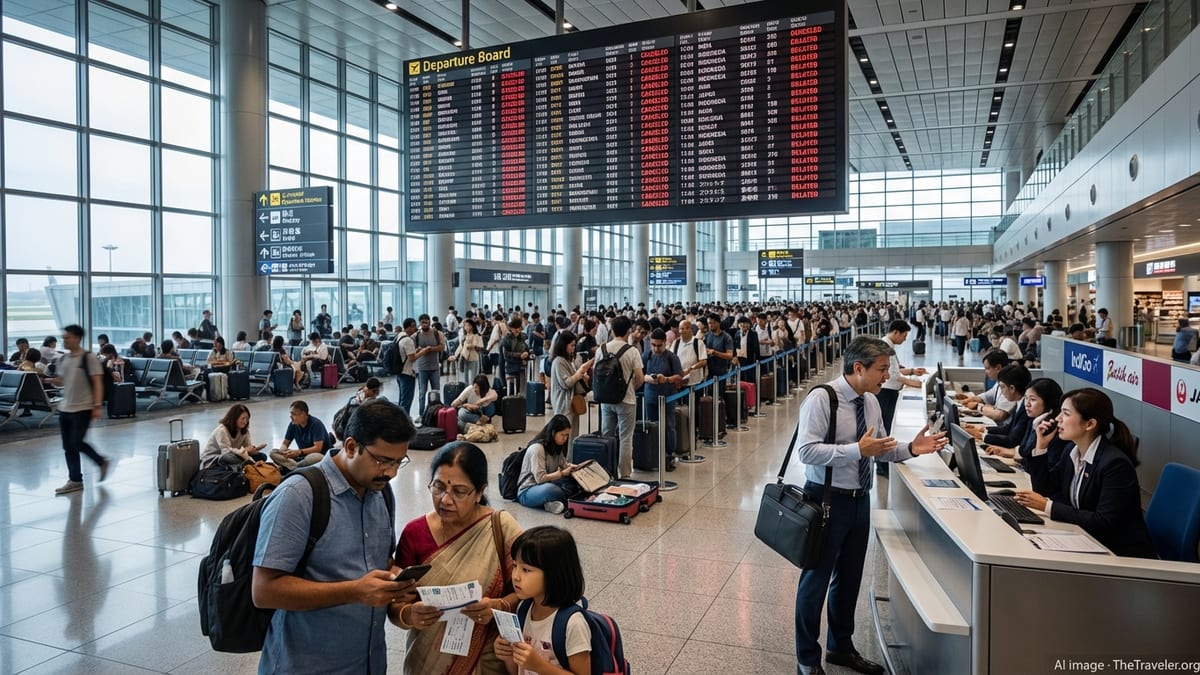
Where the disruption clustered across Asia’s busiest hubs
The headline totals come from widely used real-time tracking dashboards that compile airport and airline operating status, and the counts can shift throughout the day as schedules update, aircraft rotate, and airlines consolidate frequencies. Still, the pattern was clear: delays outnumbered cancellations by a wide margin, suggesting networks were strained but largely still operating rather than shutting down outright.
Published coverage tied the heaviest concentration of delays to major gateway airports that already run close to capacity on normal days. Among the airports repeatedly flagged across tracking summaries were Tokyo Haneda, Guangzhou Baiyun, Shanghai Pudong, Jakarta Soekarno-Hatta, and Delhi Indira Gandhi International, all of which sit at the center of dense domestic and regional banks where a backlog can rapidly propagate.
While “Asia-wide” disruption headlines often imply a single root cause, the more common reality is a mix of localized constraints at multiple airports occurring simultaneously. That combination can produce an outsized regional impact because airlines and aircraft are scheduled in tight, multi-sector rotations, with limited spare aircraft available to recover.
What appears to be driving cancellations and long delays
Mid-September is a period when weather systems can still influence East and Southeast Asia, and published reporting around this time frame pointed to conditions capable of suppressing airport arrival rates and forcing ground holds. In China’s Yangtze River Delta, for example, coverage referenced typhoon impacts that reduced operational capacity and led to widespread schedule disruption in the Shanghai area.
Separate, more localized issues can also create extreme outliers. In India, recent reporting highlighted passenger frustration around very long delays on specific services, illustrating how a single operational problem or aircraft-rotation disruption can strand large numbers of travelers even when an airport remains open.
Across the region, operational pressure itself is a recurring accelerant: congested departure banks, short turnaround times, gate constraints, and air traffic flow management can turn modest delays into rolling multi-hour disruptions. Flight-tracking tools such as Flightradar24 also provide airport-level “disruption” views that show how delay rates can spike at individual airports even when cancellations stay relatively low.
Airlines and routes most exposed when backlogs build
When delays dominate, network carriers and large low-cost operators can both be affected, but the pain points differ. Full-service carriers often face complex hub waves and international connections that magnify missed onward itineraries. Low-cost carriers, meanwhile, may have less schedule padding and fewer spare aircraft, making it harder to “swap in” recovery capacity after an aircraft and crew fall behind.
Published disruption summaries during this episode pointed to elevated delay counts across several major Asian airlines. These kinds of airline-level delay surges often reflect where an operator’s fleet is concentrated and how many departures are funneled through a handful of hub airports at peak times.
Travelers should also expect that the longest knock-on effects may not be on the most obviously affected routes. A disruption at a mega-hub can create secondary cancellations later in the day at smaller outstations, especially on the final legs of an aircraft’s rotation where airlines may consolidate flights to protect aircraft positioning for the next day.
What passengers can do right now at the airport and during rebooking
In a delay-heavy disruption day, the most practical first step is to rely on primary, airline-controlled channels for the operative status of a booking: the carrier’s app, booking management page, and airport screens. Third-party trackers are useful for context and spotting systemwide congestion, but the rebooking and customer service workflow is ultimately determined by the airline’s own inventory and policies.
When a flight is cancelled, publicly available passenger-rights guidance generally points to two immediate pathways: re-routing on the first available option or a refund, with additional care and assistance obligations in some jurisdictions. The International Air Transport Association’s passenger-rights overview notes that entitlements vary widely by country and by whether circumstances are considered within an airline’s control, which is why outcomes can differ even on similar itineraries.
For travelers transiting or departing from Malaysia, consumer guidance published by the Civil Aviation Authority of Malaysia sets out expectations around notice, alternative flight options, and refund pathways under the national consumer protection framework. In practical terms, that guidance can help travelers structure a request: confirm the final status, ask for the first available comparable reroute if travel is still necessary, and document key timestamps and notifications to support any later claim or refund processing.