


More news on this day
Fresh scrutiny of flight punctuality in Nigeria is sharpening debate over why delays persist, after United Nigeria Airlines Chief Commercial Officer Adedayo Olawuyi linked recurring disruptions to airport congestion, infrastructure constraints, and adverse weather rather than airline decision-making alone.
Get the latest news straight to your inbox!
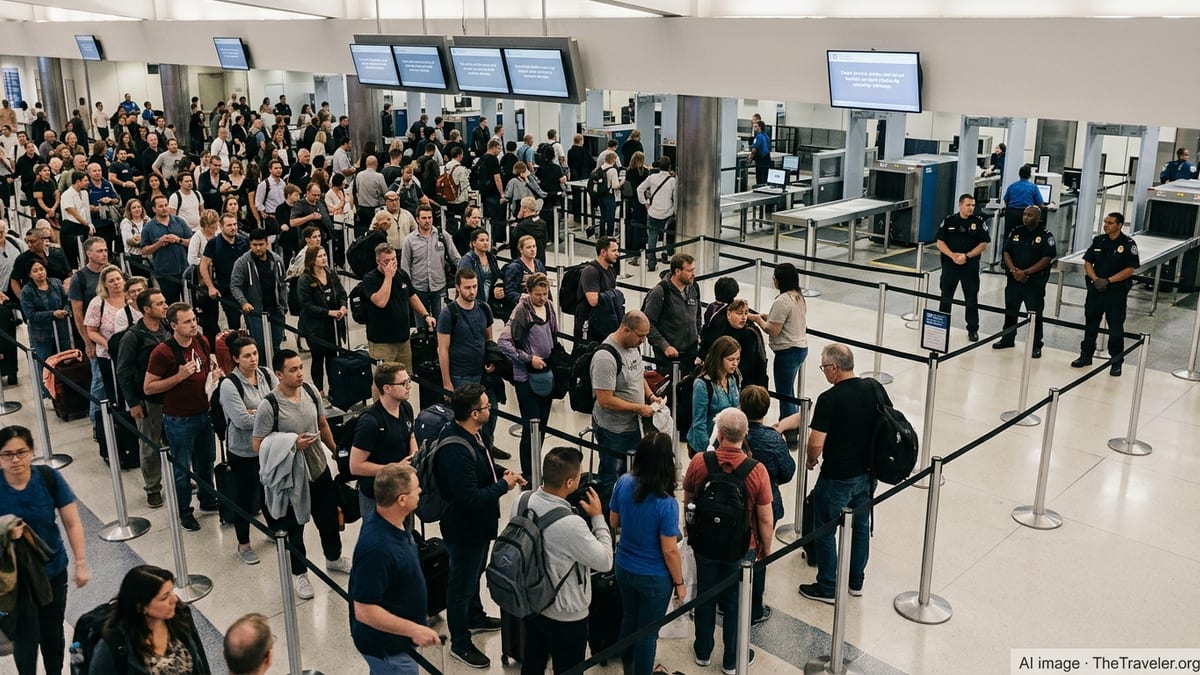
What Adedayo Olawuyi said and why it is resonating now
Published coverage in Nigeria this week attributed the comments to Adedayo Olawuyi, the Chief Commercial Officer at United Nigeria Airlines (UNA), who framed delay drivers as largely structural: crowded airports, limited airside and terminal capacity, and weather events that can quickly ripple through tightly timed schedules.
The remarks land at a moment when passengers have grown less tolerant of late departures and missed connections, and when airlines face reputational pressure to distinguish between controllable disruptions and those tied to broader system constraints. In Nigeria’s domestic network, even modest delays early in the day can cascade as aircraft rotate through multiple city pairs.
Olawuyi’s profile has also been in the spotlight following his appointment as UNA’s CCO earlier in 2026, according to BusinessDay coverage, as the airline emphasizes commercial execution and expansion while operating in a challenging, capacity-limited environment.
Congestion: when demand meets limited airport and airspace capacity
Congestion is often most visible to travelers as long taxi-out times, gate holds, and delays waiting for takeoff slots. Reports discussing Olawuyi’s comments pointed to ramp and taxiway crowding as a recurring operational bottleneck, especially during peak departure banks when multiple carriers push aircraft simultaneously.
In practical terms, congestion compounds quickly when schedules are tight and turnaround windows are short. If an arriving aircraft cannot get to a stand promptly, the next departure may be delayed even if the inbound flight was only slightly late. Where spare stands are limited, arriving flights may need to wait for gates to open.
Congestion can also be triggered by restrictions beyond the terminal area, including temporary air traffic flow measures and constraints in surrounding airspace. When airports are operating close to their practical capacity, the system becomes less resilient to disruption, making it harder to “catch up” later in the day.
Infrastructure constraints: the hidden causes passengers rarely see
Infrastructure limitations range from airside capacity, such as taxiway layout and stand availability, to the reliability and coverage of operational systems that support safe movements. In published discussions of delays, these constraints are frequently cited alongside congestion, reinforcing that the physical and procedural capacity of airports can be a ceiling on on-time performance.
Publicly available information from the Federal Airports Authority of Nigeria (FAAN) indicates the agency manages 21 airports nationwide, underscoring the scale of the network that must be maintained and upgraded as passenger volumes and aircraft movements grow.
At the regulatory level, publicly posted consumer guidance from the Nigeria Civil Aviation Authority (NCAA) sets expectations for passenger care during delays, including refreshment obligations for delays in the two to four hour range and hotel accommodation requirements when the expected departure time moves to at least six hours after the previously announced time. That framework can increase the financial and logistical stakes of disruptions, even when the initial trigger is outside an airline’s control.
Bad weather: a major disruptor with outsized knock-on effects
Weather remains a leading source of operational disruption across global aviation, and published coverage around Olawuyi’s comments highlighted adverse conditions as a recurring trigger for last-minute holds, diversions, and departure delays.
From a safety standpoint, airlines and air navigation services must adjust to thunderstorms, low visibility, wind shear risk, and heavy rain. NCAA documentation aimed at operators has emphasized hazardous weather considerations during the rainy season and the importance of pre-flight actions that support safer decision-making when conditions deteriorate.
Internationally, weather’s role in delay data is well documented. In the United States, the Federal Aviation Administration’s published material on weather delay indicates that weather accounted for 74.26% of system-impacting delays greater than 15 minutes over the six years from June 2017 to May 2023, illustrating how large the weather component can be even in highly resourced aviation systems.
What this means for travelers: rights, expectations, and practical planning
For travelers, the core issue is not only what causes delays, but what happens during them. NCAA’s consumer guidance provides a baseline for care and recourse: when a delay falls into defined thresholds, airlines are expected to provide support such as refreshments and communication options, and in longer disruptions, hotel accommodation and transport where applicable.
Passengers can also reduce risk by planning around the system’s most vulnerable periods. Weather-prone seasons, peak-day travel flows, and tightly banked schedules increase the likelihood that a single disruption will cascade. Even when a flight’s initial delay is small, downstream knock-on effects can be substantial if an aircraft, crew, or gate is needed for subsequent rotations.
Olawuyi’s comments, as reported, reflect a broader tension familiar in many markets: passengers often experience delays as an airline failure, while carriers argue that airport capacity, infrastructure readiness, and weather resilience are equally decisive. As Nigeria’s aviation sector continues to grow, the interplay between airport upgrades, operational procedures, and transparent passenger handling is likely to remain central to the on-time performance conversation.