


More news on this day
From conflict zones in Eastern Europe to fast-changing restrictions over the Middle East and even surprise shutdowns in the United States, sudden airspace closures are increasingly forcing airlines to reroute or cancel flights with almost no notice, leaving travelers to absorb the disruption.
Get the latest news straight to your inbox!
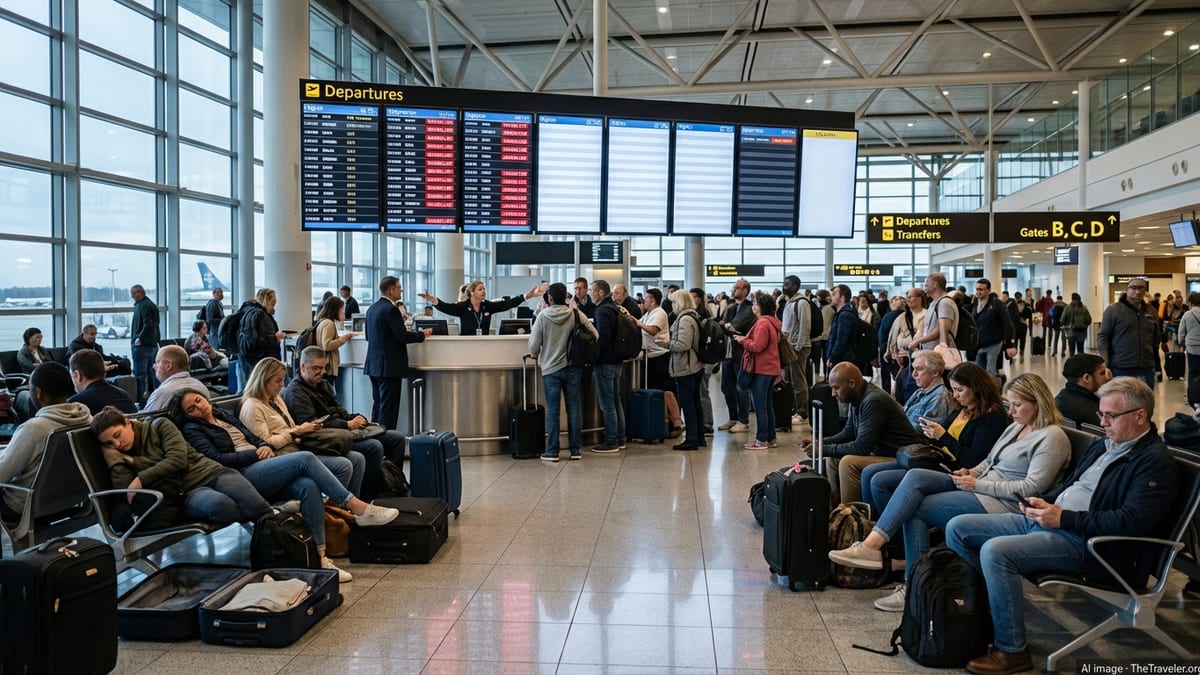
Geopolitics Is Redrawing Global Flight Paths
Modern commercial aviation depends on a web of overflight permissions that can change in a matter of hours. When a country closes its skies, airlines must quickly redraw routes, often midseason and sometimes midflight. Research and industry data show that long-haul corridors between Europe and Asia have been among the most affected, particularly since large portions of Russian and Ukrainian airspace became unavailable to many carriers in 2022. Airlines have been pushed onto longer polar or southern routings, adding distance, fuel burn and time to journeys once considered routine.
Academic studies using global flight trajectory data indicate that these closures have reduced horizontal flight efficiency and increased average route length on key intercontinental sectors. On some Europe Asia and North America Asia connections, analysts have measured additional flight times of more than an hour as aircraft detour around restricted zones. Publicly available information from Eurocontrol and other regional network managers similarly points to persistent congestion along remaining corridors, where traffic has concentrated into narrower bands of available airspace.
These structural changes are not limited to Europe. Network reports and route analyses describe shifting flows over Central Asia, the Middle East and the North Atlantic, as airlines try to balance safety guidance, sanctions regimes and operational costs. For passengers, the result is a travel map that looks stable on a booking screen but is, in reality, highly fluid behind the scenes.
Middle East Flashpoints Show How Fast Skies Can Empty
Recent events in the Middle East have highlighted how quickly airspace closures can alter global aviation. In April 2024, during a spike in tensions involving Iran and Israel, flight-tracking data and published coverage showed large sections of airspace over Israel, Jordan, Iraq and parts of surrounding states temporarily cleared of civilian traffic. Multiple countries issued restrictions within hours, prompting airlines to cancel departures, divert en route aircraft and hold planes on the ground until routes could be reassessed.
Subsequent strikes and military activity in the region continued to trigger short-notice airspace restrictions. Business media and flight-tracking analyses documented long-haul flights between Europe and Asia making wide detours around Iranian airspace, as well as Gulf carriers adjusting routings through Saudi Arabia, Egypt or further south over the Arabian Sea. These shifts often happened overnight, reshaping the flows through global hubs such as Dubai, Doha and Abu Dhabi and extending flight times for passengers far removed from the immediate conflict.
Social media communities that monitor live flight data frequently illustrate these changes in real time. Screens that typically show dense traffic over the Levant and northern Middle East have, at times, appeared almost empty, with traffic funneled along a handful of approved corridors. For travelers, this can translate into last-minute schedule changes, unexpected fuel stops or longer, more circuitous routes appearing only after boarding.
War in Ukraine Turned a Regional Crisis Into a Global Routing Shock
The war in Ukraine and the mutual closure of Russian and many Western airspaces in 2022 remain one of the clearest examples of how political decisions can rewire global aviation. According to industry analyses and international aviation bodies, Ukrainian airspace shut to civilian traffic early in the conflict, followed by sanctions and countermeasures that largely removed Russian skies from use by carriers from Europe, North America and other states.
Before the conflict, the most direct great-circle routes between many European and East Asian cities crossed Russian territory. With those paths now effectively blocked for a large share of airlines, operators have adopted a mix of polar routes, Central Asian detours and southern arcs via the Middle East and South Asia. Data from flight-tracking platforms and European network reports show sustained increases in average track length, with some Europe Asia flights adding hundreds or even thousands of kilometers when compared with pre-2022 routings.
Economic assessments by aviation organizations link these longer detours to higher fuel consumption, increased crew and maintenance costs, and ultimately pressure on fares. At the same time, bottlenecks have emerged over alternative waypoints such as the Caucasus and parts of Central Asia, where more traffic is now squeezed into fewer viable options. These systemic changes mean that even travelers whose journeys do not touch Ukraine or Russia can experience knock-on effects in the form of delays, missed connections or thinner schedules on certain routes.
Surprise Closures Can Happen Close to Home
Although conflict zones draw much of the attention, sudden airspace restrictions are not confined to distant regions. In early 2026, publicly available records describe a sequence of temporary flight restrictions in the southwestern United States that closed portions of airspace over Texas and New Mexico with minimal advance public notice. One of the early February actions reportedly halted most operations at El Paso International Airport for security-related reasons, disrupting both passenger and cargo traffic across a wide area.
Domestic airspace shutdowns can arise from a range of triggers, including national security events, space launches, large-scale emergency responses or technical hazards such as wildfires and volcanic ash. In each case, the practical impact for travelers is similar: aircraft are held on the ground, diverted to alternate airports or required to follow narrow, prescribed routes that reduce capacity and create backlogs.
Because these restrictions are often activated through regulatory notices directed at pilots and operators rather than the general public, passengers may have little warning beyond last-minute updates in an airline app. Flights that appear normal at booking time can end up canceled, significantly delayed or rerouted through different hubs if a closure is extended or expanded.
What Travelers Can Expect When Airspace Closes
When a segment of airspace shuts unexpectedly, airlines must quickly recalculate routes, fuel loads and crew duty times. Longer routings can push flights beyond preplanned limits, forcing carriers to substitute different aircraft, add technical stops or trim payloads. In some cases, airlines cancel entire rotations rather than operate with large delays or operational uncertainty, particularly on long-haul services.
For passengers, the most visible impacts are schedule changes and extended flight times. A nonstop that once followed a straight great-circle path may now arc far north or south to avoid restricted zones, adding an hour or more to the journey. Tight connections become riskier, and irregular operations ripple through network hubs as delayed arrivals push back subsequent departures.
Travel industry guidance generally recommends that passengers monitor their bookings closely in periods of geopolitical tension or major regional news. Airline and airport advisories, mobile notifications and departure boards often update more quickly than general news coverage. Flexible itineraries, longer connection windows and awareness that routings shown at the time of purchase may change significantly can help travelers navigate a landscape in which airspace closures are an increasingly common part of global aviation.