


More news on this day
Passengers flying to and through Dubai and Saudi Arabia are facing a new phase of uncertainty as partial airspace closures, evolving security assessments and shifting airline schedules continue to reshape key routes across the Gulf.
Get the latest news straight to your inbox!
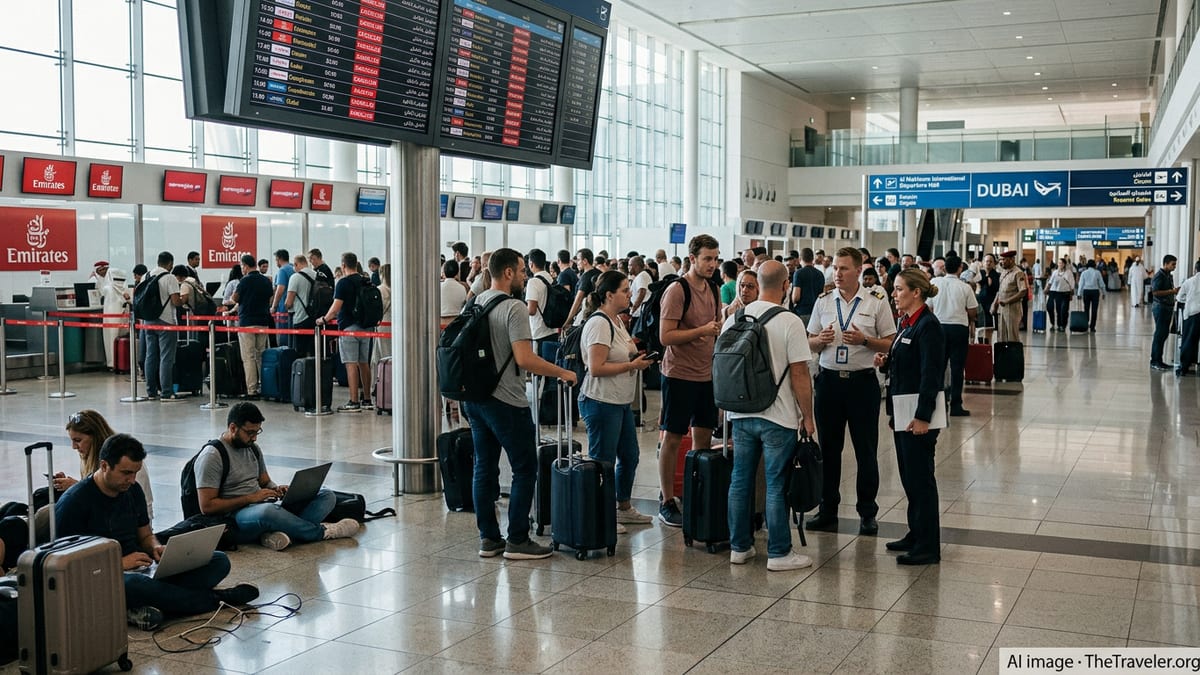
Partial Gulf Airspace Closures Keep Airlines on Edge
Commercial aviation in the Gulf is still adjusting after a cascade of airspace shutdowns that began on February 28, 2026, when regional conflict triggered the temporary closure or restriction of multiple flight information regions across the Middle East. Published coverage shows that large sections of airspace over Iran, Iraq and parts of the Gulf were effectively off limits following missile strikes and military activity, prompting widespread suspensions and diversions of flights serving Dubai, Doha and other hubs.
Updates in early May indicate that the United Arab Emirates has moved from a full reopening to a tightly controlled “security corridor” regime, with the Emirates Flight Information Region described as partially closed and traffic funneled through a limited number of approved corridors subject to hourly caps. This structure has restored a degree of connectivity but left airlines with little operational slack, particularly during peak banking waves at Dubai International and Abu Dhabi’s Zayed International airports.
Specialist aviation briefings highlight that Saudi Arabia, Egypt and other neighbors have absorbed much of the rerouted traffic as carriers seek alternatives to the most restricted zones. While this has helped keep some long haul links between Europe, Asia and Africa functioning, the reliance on a narrower set of routes means any new notice to air missions or security update can quickly ripple through schedules, forcing further timetable changes with minimal warning.
Dubai Hub Under Pressure as Global Carriers Trim Schedules
Dubai’s role as one of the world’s busiest long haul hubs has left it particularly exposed to the evolving restrictions. Shortly after the late February escalation, home carrier Emirates temporarily suspended operations when multiple regional airspace segments were closed, before gradually rebuilding a reduced schedule as corridors reopened. Publicly available airline guidance continues to warn travelers that some flights may operate on longer routings than usual, with extended flight times and tighter aircraft rotation.
European network airlines have meanwhile been more cautious in restoring services. Industry trackers report that Lufthansa Group carriers, along with several European partners, extended suspensions of flights to Dubai and other Gulf gateways into late May, citing ongoing security assessments and the operational complexity of flying around both Russian and Middle Eastern restrictions. Some services that have returned are operating with reduced frequencies or altered timings to accommodate new routings.
For travelers, the result is a patchwork of options that can change from week to week. Seats on remaining non stop services between major European cities and Dubai have tightened, while itineraries that once involved a single connection via the UAE may now require multiple stops or substantial detours. Fare comparison data referenced in recent reporting suggests that prices on certain corridor dependent routes, particularly between Europe, India and Australia, have risen in response to longer flight times and constrained capacity.
Saudi Arabia Balances Rerouting Role and Domestic Connectivity
Saudi Arabia has emerged as both a beneficiary and a pressure point in the new routing landscape. With parts of Iranian and Iraqi airspace restricted, publicly available flight tracking analysis shows more long haul services skirting Saudi territory or using Saudi airports as alternates, adding to traffic handled by Jeddah and Riyadh. This has reinforced the kingdom’s long term ambition to position itself as a major aviation hub, but the shift has also complicated planning for domestic and regional networks.
National and low cost Saudi carriers have continued to operate extensive domestic schedules, linking Jeddah, Riyadh, Dammam and other cities, but have had to adjust some international services as regional routings change. Capacity decisions for new or emerging routes into secondary Saudi airports are now being weighed against the need to preserve resilience on core regional links that intersect with constrained airspace corridors.
Travel platforms that aggregate schedule information between the United States and key Saudi gateways such as Jeddah indicate that most nonstop and one stop itineraries remain available, though journey times and connection patterns have been altered. Passengers flying between North America, Saudi Arabia and onward destinations in South or Southeast Asia are particularly exposed to last minute schedule updates arising from any new regional security notices.
Fragile Recovery Meets Higher Costs and Longer Journeys
Despite the uncertainty, data gathered by aviation analysts points to a cautious recovery in Gulf traffic since the sharp downturn in late February and March. By early May, several Gulf and international airlines had restored a majority of their pre crisis destinations, albeit with trimmed frequencies and carefully selected routings. Reports on Gulf aviation suggest that carriers such as Qatar Airways and Saudia are incrementally rebuilding networks while avoiding the most sensitive airspace segments.
Yet this recovery remains fragile. With Russian skies already closed to many Western airlines, the loss or restriction of additional Middle Eastern corridors has left few efficient alternatives between Europe and large parts of Asia. Route maps published by industry observers show complex detours that add hundreds of nautical miles to some journeys, increasing fuel burn and crew costs. Travel analysis sites estimate that fares on affected city pairs have risen by 20 to 30 percent compared with early 2025 levels, reflecting both higher operating expenses and reduced capacity.
For leisure and business travelers, the practical impact is often felt as longer flights, extended connection times and narrower windows for making tight transfers in Dubai, Riyadh and other hubs. Many industry reports advise passengers to allow additional time between connecting flights, avoid separate tickets where possible and monitor booking platforms and airline notifications closely in the days leading up to departure.
What Travelers to Dubai and Saudi Arabia Should Expect Next
Looking ahead into June, most publicly available forecasts suggest that schedules involving Dubai and Saudi airports will continue to see rolling adjustments rather than a rapid return to pre conflict patterns. Regulatory bulletins from European and other aviation authorities covering conflict zone airspace remain in force, and security focused notices for parts of the Gulf are being updated frequently, keeping airlines in a state of heightened caution.
In the short term, travelers planning journeys to or through Dubai, Jeddah, Riyadh or other regional hubs are likely to encounter a mix of full flight cancellations, aircraft swaps, retimed departures and extended routings, sometimes announced only a day or two in advance. Travel advisories consistently recommend that passengers verify their flight status directly through airline apps or official channels, and consider building in buffer time for critical connections and events.
Industry analysts note that any sustained de escalation in regional tensions could allow regulators to ease some restrictions and enable airlines to normalize routings, which in turn would relieve pressure on hubs in the United Arab Emirates and Saudi Arabia. Until then, the evolving airspace picture means that flights linked to Dubai and Saudi Arabia will remain particularly sensitive to geopolitical developments, with passengers bearing much of the uncertainty in the form of longer journeys and shifting travel plans.