


I was booking what I thought was a simple $75 concert ticket for a weekend trip to Chicago. By the time I reached the final checkout screen on Ticketmaster, that $75 seat had quietly turned into almost $110. The artist had not suddenly become more famous in the past three minutes. I was not magically closer to the stage. What changed was the stack of fees that appeared between the headline price and the final total.
Get the latest updates straight to your inbox!
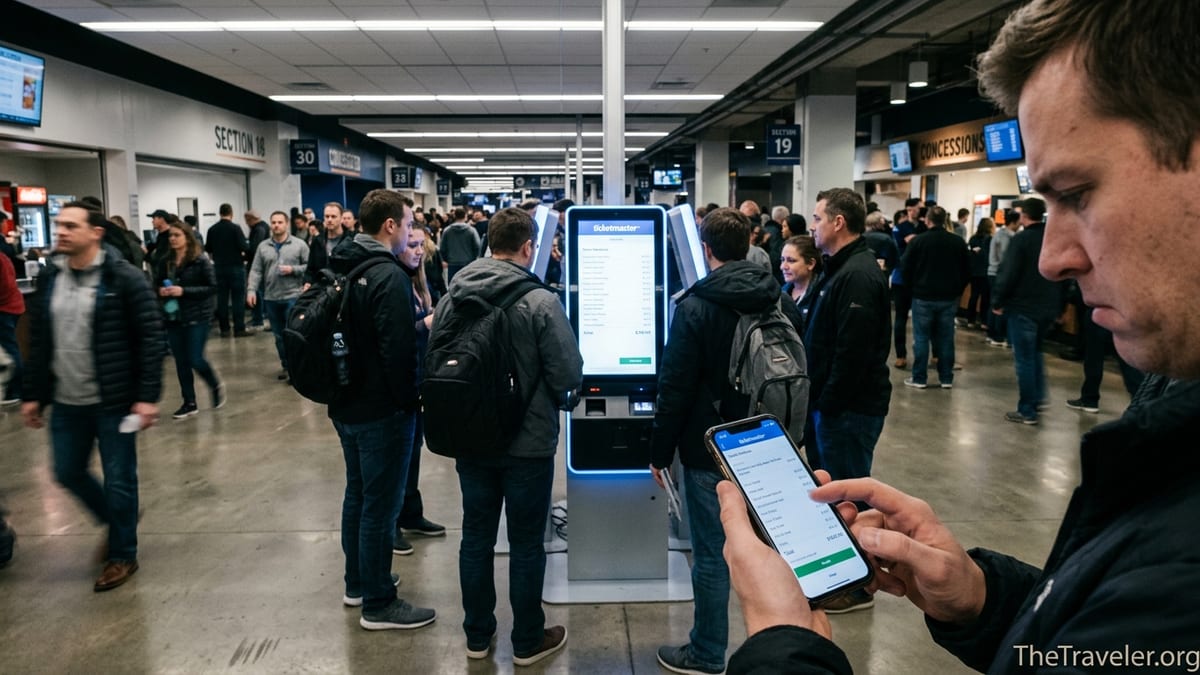
Why Ticketmaster Fees Feel So Extreme
For many travelers, concerts and sports events are the centerpiece of a weekend getaway. You see an ad that says "Tickets from $75" and start building your trip around that number. On Ticketmaster, though, the price that lures you in is only the starting point. By checkout, that $75 Chicago concert ticket might include a double-digit service fee, a facility charge for the arena, an order processing fee, and local taxes. In practice, it is common for buyers to see 20 to 40 percent added on top of the listed price once everything is tallied.
Ticketmaster is not unique in charging fees, but the company’s scale makes the impact hard to ignore. It is part of Live Nation Entertainment, which controls a large share of major venues and tours in the United States. Government lawsuits and consumer complaints in recent years have focused heavily on the way its "junk fees" and pricing practices affect what fans actually pay once they reach the final screen. The gap between the first price and the final total is where the real sticker shock lives, especially if you are planning travel around a big event and multiplying those tickets across friends or family.
Until very recently, many buyers would not see the full, all-in price until the last step of the purchase, often under the pressure of a countdown clock. Regulators and state attorneys general have accused Ticketmaster and similar platforms of a kind of bait-and-switch design, where people commit time and emotional energy based on an artificially low headline price and only discover the true cost when backing out feels difficult.
Breaking Down a Real Ticketmaster Checkout
To understand how much the final price can move, it helps to walk through a typical order. Imagine you are flying to New York for a long weekend and want to catch a major pop tour at Madison Square Garden. On Ticketmaster, you spot seats listed at $120 each in the lower bowl. At a glance, two tickets should cost $240. That number is what most travelers plug into their trip budget.
Click through to checkout, and the picture changes. A per-ticket service fee might add roughly 20 to 25 percent. On $120 seats, that could be in the neighborhood of $24 per ticket, instantly pushing each one to about $144. On top of that, the venue may charge a flat facility fee, for example around $5 per ticket, bringing each seat to about $149 before tax. Ticketmaster also typically adds a separate order processing fee, often a few dollars per order, which might nudge a two-ticket total up by another $5 or so. Only after those layers do you see sales tax based on New York City rates, which could tack on another 8 to 9 percent.
By the time everything is counted, the two tickets that looked like a $240 line item may realistically land closer to $330 or more. In this scenario, fees and tax add roughly $45 per ticket, or almost 40 percent of the original face value. For a solo traveler, that is a painful surprise. For a family of four planning a city-break around the same show, the gap between the advertised and actual total can easily exceed $300, enough to cover a night in a midrange hotel.
Similar patterns play out in smaller markets. A traveler heading to Nashville might find a $60 ticket to a country act at an amphitheater. With a 20 percent service fee, a facility charge in the single digits, and an order processing fee, that $60 seat can quickly climb into the mid $80s before tax. The extra $20 or more per ticket is often more than the cost of getting from the airport to downtown on a rideshare.
Dynamic Pricing, “Platinum” Seats and the Moving Target of Face Value
Fees are only part of the story. Many travelers have learned the hard way that the face value of a Ticketmaster ticket itself can move dramatically. Under what the industry calls dynamic pricing or "Official Platinum" seats, prices shift in real time based on demand, much like airline tickets or hotel rooms. During high-demand presales for major acts, buyers might see mid-level seats for $150 in the morning and then watch similar sections jump above $300 later the same day as demand spikes.
Consider a traveler planning a birthday trip to Los Angeles around a stadium tour. In the first minutes of a presale, upper-deck seats might appear at $95, with lower-bowl seats at $175. By the time the buyer fights through queues and error messages, those lower-bowl tickets could be repriced as "platinum" at $250 or more. Add on service and facility fees calculated as a percentage of that new, higher price, and each ticket might now cost well above $300 out the door, even before parking and concessions.
This moving target can wreak havoc on a travel budget. You might have booked nonrefundable flights to Seattle assuming you would pay around $200 per ticket for a tour stop at a local arena, only to find that dynamic pricing has pushed the same sections closer to $400 by the time you finally get into the system. Because many of the fees are percentage-based, a higher face value amplifies the fee burden. A 25 percent fee on a $150 ticket is $37.50, but on a $350 ticket it jumps to nearly $90.
For those chasing bucket-list shows while traveling, it can feel as if you are playing a high-stakes game against an opaque algorithm. Prices may briefly drop in the days before an event if demand softens, or they may climb again if inventory tightens. The end result is that even careful planners struggle to predict the real cost of a tour stop months in advance.
Regulation, Lawsuits and the New Reality of “All-In” Pricing
Public frustration with surprise ticket fees has drawn the attention of regulators and courts across the United States. Federal agencies have introduced rules targeting so-called junk fees in live-event ticketing, aiming to force platforms to show the total price, including mandatory charges, earlier and more prominently in the purchase process. The goal is not to eliminate fees themselves, but to stop the practice of hiding them until the last step.
At the same time, Ticketmaster and its parent company Live Nation have faced a wave of lawsuits from the Department of Justice, state attorneys general, and private plaintiffs. These cases center on allegations that their market power inflates prices and that design choices on ticketing sites mislead consumers about the true cost. Some recent settlements have required Ticketmaster to refund certain customers and to commit to showing full prices up front within particular jurisdictions.
For travelers, the practical effect is mixed. On some Ticketmaster event pages, especially in markets where rules are stricter, you may now see an "all-in" toggle or default view that displays the total price, including mandatory fees, from the first results screen. That is a win for transparency. Yet even when the platform surfaces an all-in price more clearly, the total amount can still be eye-watering, and add-on charges remain very much part of the business model.
It is also important to understand the limits of these reforms. Regulations typically apply to how prices are displayed, not to how high fees can be. Venues can still set facility fees, service charges can still be tied to ticket price, and dynamic pricing can continue as long as total prices are disclosed. So while deceptive “drip pricing” is under attack, the underlying economics that let a $100 ticket become a $140 checkout total still exist.
How Ticketmaster Fees Distort Travel Budgets
When you are building a trip around a marquee event, those hidden costs ripple across your entire travel plan. A couple flying from Denver to Austin for a festival might see three-day passes advertised at $325 each. In their head, that is $650 for tickets, leaving room in the budget for a boutique hotel and a few restaurant splurges. Once Ticketmaster fees and taxes are added, the passes might land closer to $400 apiece. The pair is suddenly facing an $800 ticket bill instead of $650, effectively deleting a night at their preferred hotel or forcing them to trade a high-end dinner for quick-service meals.
Families feel this most acutely. Take a parent treating two teenagers to an NBA game while visiting Miami. Lower-bowl tickets might be listed at $110 each. Three tickets should come to $330. After per-ticket service fees in the 20 to 25 percent range, a facility charge, and sales tax, the actual total can easily cross $420. That extra $90 could have paid for an Everglades day tour or covered airport transfers for the whole family.
Travelers who move between currencies face an additional twist. A Canadian traveler booking a concert in New York might see a ticket advertised at $95 in U.S. dollars. With fees, the final total might reach around $130. Once converted to Canadian dollars on a credit card statement, the real-world hit could be closer to $180 or more, especially after foreign transaction fees. If you planned your budget off the face value alone, that gap can feel enormous when it hits your account weeks later.
Even business travelers can be caught off guard. Someone extending a work trip to catch a game or show might be able to expense the face value printed on a confirmation but be personally responsible for the fees. In that case, a $150 arena ticket with $35 in add-ons is not just an annoyance, it is an unexpected personal expense large enough to change whether the outing feels worthwhile.
Practical Strategies to Keep Ticketmaster Fees in Check
Travelers cannot make Ticketmaster’s fees disappear, but there are concrete tactics that soften the blow. The first is to look for all-in price views before you commit to flights or hotels. On many event pages, you can toggle to see totals that already include mandatory fees. If that option is not obvious, clicking through to the seat map and adding seats to your cart will often reveal the near-final number before you enter payment details. Using that figure, not the headline price, as your budget anchor helps avoid nasty surprises later.
Second, whenever possible, consolidate your purchase in a single order. Because Ticketmaster commonly charges an order processing fee per transaction, buying four tickets together instead of two and two can save you paying that flat fee twice. For a group of friends meeting in another city for a show, designate one buyer and settle the cost among yourselves rather than each person making their own mini-order.
Third, compare primary Ticketmaster listings with authorized alternatives. In some cases, a venue box office sells tickets in person without certain service fees, although you may trade savings for time spent in line. Local partner platforms or team-controlled sites sometimes offer similar seats with slightly different fee structures. For example, a hockey fan in Toronto might find that tickets to a game cost nearly the same base amount on Ticketmaster and a team’s own portal, but the breakdown of service and facility charges can differ enough to save the equivalent of a round of drinks.
Finally, build a buffer into any trip budget that involves Ticketmaster. If your ideal tickets total $400 at face value, plan as if you will spend closer to $500 after fees and tax. If the final checkout number comes in lower, you win back some spending power for meals or attractions. If it lands where you expected, you will not be forced to cut corners elsewhere on your travels.
Alternatives Beyond Ticketmaster, With Trade-offs
Some travelers try to avoid Ticketmaster altogether by turning to resale marketplaces, fan-to-fan exchanges, or alternative primary sellers. These routes can help in certain situations, but they come with their own fee structures. On Ticketmaster’s own verified resale system, for instance, buyer fees on a marked-up ticket can still run in the 25 to 30 percent range. A $200 resale ticket might show a final checkout total around $250 or more once those charges are layered on top.
Independent resale platforms may advertise lower service fees, but they can offset that with higher seller markups or shipping-related charges for physical tickets. A traveler heading to Las Vegas for a residency show could see floor seats listed at $350 on the primary Ticketmaster sale Saturday morning, then find them for $290 on a resale site a week before the trip. After adding the resale site’s 20 percent buyer fee and taxes, the final price might end up within a few dollars of Ticketmaster’s all-in cost, despite what looked like a bargain at first glance.
Venue box offices sometimes remain the most straightforward alternative. For example, a visitor to Chicago might walk up to the United Center box office on the day of a game or concert and buy remaining inventory without the full stack of online service fees, paying only a modest facility charge and tax. The trade-off is uncertainty: popular events can sell out in advance, and travelers with tight schedules may not have the flexibility to wait until they reach the city.
The common thread is that the ticketing ecosystem is now built around fees in almost every direction. Avoiding Ticketmaster entirely can be difficult, especially for high-profile tours and major league sports. Instead of expecting a magical fee-free channel, travelers are usually better served by comparing all-in prices across options and choosing the least painful, most transparent route.
The Takeaway
Ticketmaster fees change the final price far more than most casual buyers expect, often turning a seemingly manageable ticket into a major line item in a travel budget. Service fees, facility charges, order processing fees, dynamic pricing, and taxes all compound, particularly when you multiply them across multiple people or multiple events on the same trip.
Regulators have forced more transparency, and recent legal actions have nudged Ticketmaster toward clearer all-in pricing. Yet the core economics that make a $100 ticket ring up at $130 or more are still in place. For travelers, that means assuming that the real price will be significantly higher than the headline number and planning accordingly.
If you treat the listed ticket price as a rough starting point, seek out all-in views early, and build a healthy cushion into your budget, Ticketmaster’s fees will still sting, but they will not derail the rest of your journey. The more you understand how those charges appear, the easier it becomes to decide which shows are truly worth building a trip around and which are better left for another time.
FAQ
Q1. Why do Ticketmaster fees add so much to the final price?
Ticketmaster layers several charges on top of the face value, including per-ticket service fees, venue facility fees, order processing fees, and applicable taxes, which together can add 20 to 40 percent or more to the original amount.
Q2. Are Ticketmaster fees the same in every city or venue?
No. Fees vary widely by event, venue, and market. A basketball game in Miami, a stadium concert in Los Angeles, and a theater show in Chicago can all have different fee structures, even if the base ticket prices are similar.
Q3. What is “all-in” pricing on Ticketmaster?
All-in pricing is a display option that shows the total cost of a ticket, including mandatory fees, from the start of the shopping process instead of revealing those charges only at the final checkout screen.
Q4. How does dynamic pricing affect what I pay when I travel for a show?
Dynamic pricing allows Ticketmaster to adjust face values based on demand. If interest in a tour stop spikes while you are booking travel, the base price and associated percentage-based fees can climb sharply before you buy.
Q5. Can I avoid Ticketmaster fees by buying at the venue box office?
Sometimes. Certain venues reduce or waive some online service fees for in-person box office purchases, but you may still pay a facility charge and tax, and availability can be limited close to event dates.
Q6. Are resale tickets on Ticketmaster cheaper once fees are added?
Not necessarily. Verified resale listings often carry their own service and buyer fees, so a ticket that looks cheaper at first glance can end up costing as much as or more than a primary ticket once all charges are included.
Q7. How much extra should I budget for Ticketmaster fees when planning a trip?
It is wise to assume that fees and taxes will add at least 20 percent to the face value and potentially closer to 40 percent for in-demand events, then build that cushion into your travel budget.
Q8. Do recent laws and regulations cap how high Ticketmaster fees can be?
Most current rules focus on transparency rather than caps, requiring clearer disclosure of total prices. They generally do not set specific limits on how much Ticketmaster or venues can charge in fees.
Q9. Is it better to buy tickets as a group or individually?
Buying as a group in a single order is usually cheaper because you pay the per-order processing fee only once. Multiple small orders can result in paying that flat fee several times.
Q10. What is the best way to compare real ticket costs across different sites?
Always compare all-in prices at the final checkout stage, not just the headline face values. Look at the total you would actually be charged on Ticketmaster, venue box offices, and alternative platforms before deciding which option fits your budget.