


Nice Carnival is one of Europe’s most spectacular winter festivals, yet it falls at a time when many travelers are watching their wallets. Between February room rates on the French Riviera, parade tickets and spontaneous splurges on costumes or cocktails, costs can climb faster than confetti in the night air. With some smart planning, though, you can enjoy the full color and atmosphere of Nice Carnival without overspending.
Get the latest updates straight to your inbox!
Know the Basics: Dates, Tickets and What Actually Costs Money
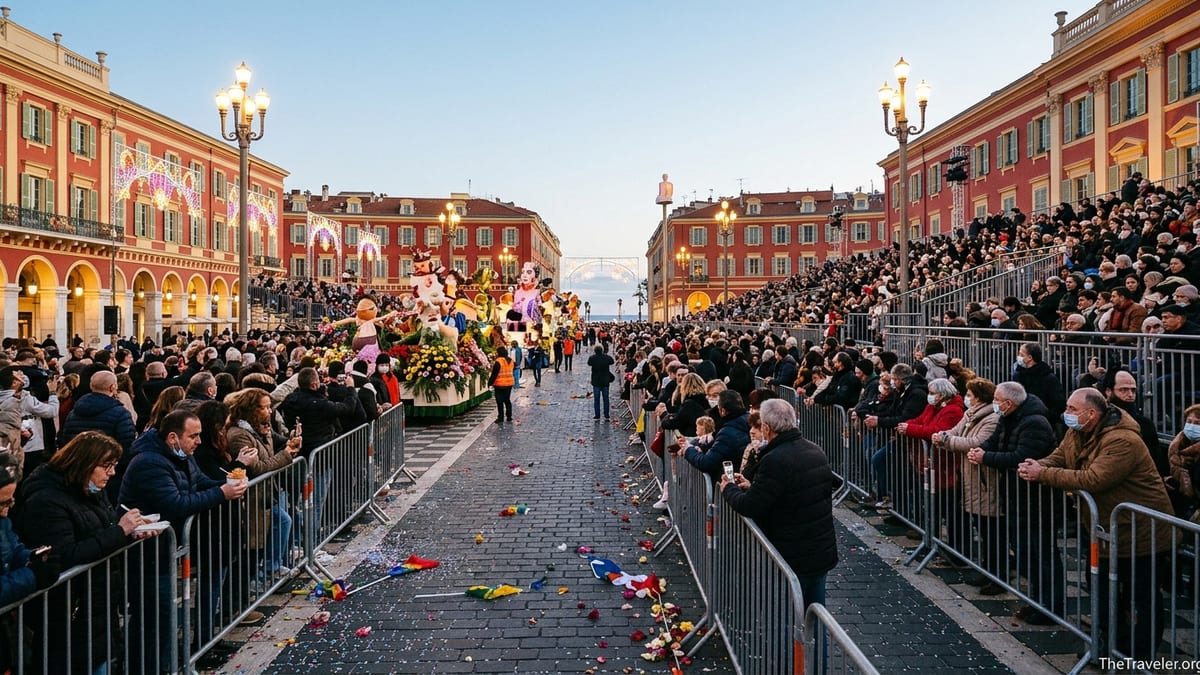
Nice Carnival usually runs for about two weeks in February and sometimes into early March, centered around Place Masséna and the Promenade des Anglais. The program typically includes illuminated night parades, daytime parades and the famous flower parades known as Batailles de Fleurs. The events are fenced off with controlled entry, so you cannot just wander in from the street at parade time and expect to see everything for free.
Ticket prices are tiered. Recent editions have offered standing “zone piétonne” access from around 12 to 15 euros for many parades, with seated grandstand tickets often starting around 30 to 35 euros and going higher for the most popular dates or better locations. Combined packages that include one flower parade and one illuminated parade have recently been advertised from about 45 euros. Prices vary slightly each year, but this gives a realistic range to plan around.
Children’s tickets are usually discounted or free below a certain age when they are in costume, but every person must still hold a ticket to enter the parade enclosure. That means a family of four can quickly exceed 100 euros for just one parade if everyone sits in the grandstands. For budget-conscious travelers, accepting a standing ticket in a pedestrian zone for at least some events is one of the most effective ways to control costs without skipping the Carnival atmosphere.
It is worth checking the official Carnival program as soon as dates and themes are published, typically several months in advance. The most sought-after nights, especially Saturdays and the opening and closing parades, can sell out of grandstand seats. If your budget only stretches to one high-cost event, you will want to use that seat on the most impressive parade night rather than whatever is simply left.
Choose Your Base Wisely: Where to Stay Without Breaking the Bank
Accommodation is the single biggest expense during Nice Carnival, and it is where you can save the most money with careful choices. Hotels close to the Promenade des Anglais or directly on Place Masséna charge a heavy premium during February festival dates. It is common to see three-star rooms that can cost around 90 to 120 dollars in shoulder season jump significantly during Carnival, especially for stays that cover weekends or the most popular parades.
To reduce costs, look just a little away from the seafront and main square. Areas around Nice-Ville train station, such as the Musicians’ Quarter or the streets north of Avenue Jean Médecin, often offer better value while still being a 10 to 15 minute walk from the main parade route. Well-known budget-friendly chains like ibis Styles Nice Centre Gare or small independent two and three-star hotels a few blocks inland can be markedly cheaper per night than similar properties on or next to the Promenade.
Hostels and guesthouses are another strong option for Carnival. Places like Villa Saint Exupéry or Ozz Hostel typically offer dorm beds that can be found from around 20 to 40 euros in low season and somewhat higher during major events, which is still far below hotel prices. A couple traveling together can often book a private room in a simple guesthouse or budget hotel for 60 to 90 euros per night if they reserve months ahead of the Carnival calendar announcement.
If you are very price-sensitive, look beyond Nice itself. Nearby towns like Antibes or Cagnes-sur-Mer sometimes maintain more normal winter pricing in February. With the regional TER trains and coastal buses, you can commute into Nice in under 30 to 40 minutes for about 3 to 5 euros each way. This strategy works best if you plan to attend one or two evening parades and do not mind returning late on the last trains or buses.
Smart Ticket Strategy: See the Best Shows for Less
Trying to attend every single parade, flower battle and special event is an almost guaranteed way to blow your budget. A more cost-effective approach is to decide in advance which experiences matter most and then buy strategically. Many seasoned Carnival visitors prioritize one illuminated night parade and one Bataille de Fleurs, then keep the rest of their schedule flexible.
If you are going to splurge on grandstand seating, it makes most sense to do so for the illuminated night parade. The floats are lit, performers interact more with the crowd, and you can see the details and choreography comfortably without craning your neck. Spending around 30 to 40 euros for a good grandstand seat on a key Saturday night can be the main “big-ticket” treat of your trip.
For the flower battle, the essence of the experience is watching elaborately decorated floats roll by and trying to catch the flowers thrown into the stands. Standing tickets along sections of the route can still provide a strong sense of the spectacle at a lower price, usually in the low teens of euros. If you are on a tight budget, consider taking a standing place for the flower parade while reserving your grandstand splurge for the night show.
Another simple tactic is to target weeknight parades. Friday and Saturday evenings tend to sell out first and are the most expensive. Tuesday or Wednesday illuminated parades are sometimes a little calmer and occasionally slightly cheaper or more available, while still offering the full artistic program. Booking early online when sales open lets you choose these dates before they are widely picked over.
Managing Daily Costs: Food, Transport and Small Extras
Outside of parade tickets and accommodation, the bulk of your Carnival budget will go on everyday expenses. The good news is that Nice can be managed on a controlled budget if you avoid constant restaurant meals and lean on local routines. Public transport within the city is particularly helpful: a single tram or bus ticket is usually around 1.70 euros, and day passes that allow unlimited travel cost only a few euros more. You can ride from the station area to the Old Town, the port or the northern districts without needing taxis.
For meals, work around local markets and bakeries. Cours Saleya, which is still lively during Carnival, is lined with food stalls at lunchtime where a socca slice, pan bagnat sandwich or slice of pissaladière onion tart can cost under 10 euros. In the streets around the station and in less touristy neighborhoods, fixed-price lunch menus at small brasseries often start around 15 euros including a main dish and coffee. Many travelers find that with one café breakfast of croissant and coffee, a simple market lunch and a more substantial dinner, they can keep daily food costs in the 25 to 35 euro range without feeling deprived.
Alcohol is where many Carnival budgets silently leak money. Ordering cocktails on or near the Promenade can easily reach 12 to 15 euros per drink. A common compromise is to enjoy a pre-parade glass of wine bought from a supermarket or local caviste and consumed in your accommodation, then limit bar drinks to one or two during the night. Look out for happy hour signs in Old Town between around 5 pm and 8 pm, when many bars reduce prices on beer or house wine.
Small extras also add up quickly: light-up headbands, masks, face paint and street snacks can nibble away at your wallet if purchased at the last minute from stalls near the event area. Bringing simple costume elements from home, such as a colorful scarf, sequined mask or LED accessories bought cheaply online, means you still blend into the Carnival mood without paying the highest on-site prices.
Experience the Atmosphere for Free or Almost Free
One of the secrets of enjoying Nice Carnival without overspending is recognizing that much of the magic happens outside the paid enclosures. The city dresses itself in lights and decorations, and the whole central area between Place Masséna, Avenue Jean Médecin and the Old Town comes alive with music, street performers and costumed revelers.
On parade days, arrive in the area early before the barriers are locked down. You can watch floats being prepared on side streets, musicians rehearsing and costumed groups taking photos by the Fontaine du Soleil. None of this costs anything, and you get a sense of “behind the scenes” energy that grandstand spectators might miss.
Between events, stroll the Promenade des Anglais, especially around sunset. The light on the Bay of Angels in February is often soft and golden, and watching locals and fellow visitors promenade along the waterfront is a show in itself. The beach is public and free; even if the water is too cold for swimming, you can sit on the pebbles with a takeaway coffee and feel fully part of the Riviera winter ritual.
Nice’s museums also help fill Carnival days without straining finances. Several municipal museums, such as the Matisse Museum or the archaeology site in Cimiez, have either low admission fees or occasional free-entry days for certain visitors, depending on current city policies. Even when there is a small charge, combining a museum visit with a self-guided walk in surrounding neighborhoods like Cimiez or the Port district offers excellent value for half a day of cultural exploration.
Timing and Booking Tactics to Keep Prices Down
When you visit and how early you book have significant impact on Carnival costs. Airfares to Nice and hotel rates both rise as dates approach, particularly for weekends and for the middle of the Carnival period. If you already know you want to attend a future edition, monitoring flight prices three to six months in advance and booking once you see a reasonable fare can shave notable amounts off your total budget.
For accommodation, reserving as soon as hotels release their February inventory pays off. Some budget travelers secure a cancellable booking at an acceptable rate six months out, then watch periodically for better deals or promotions. If a cheaper room appears in a comparable location, they simply switch and cancel the original reservation. This tactic works especially well with chain hotels and larger properties that adjust prices frequently.
Consider arriving in Nice a day or two before the program’s most popular parades and leaving shortly after your chosen events instead of staying the entire two weeks. A shorter trip that concentrates on your must-see parades can be more budget friendly than stretching your stay across the entire Carnival window. Many visitors report that three to five nights is enough to see several major parades, enjoy the city and still have time to explore neighborhoods without feeling rushed.
Finally, be flexible where you can. If a Saturday night illuminated parade with prime grandstand seats pushes your budget beyond comfort, look at a Thursday or Tuesday show from a less expensive stand or a pedestrian zone. The floats and performers are the same, and the slightly calmer crowd can even make for a more pleasant experience.
The Takeaway
Nice Carnival can look intimidatingly expensive at first glance, with its grandstands, flower-strewn floats and Riviera hotel rates in the middle of winter. Yet with clear priorities, early planning and a few local habits, it is entirely possible to experience the festival’s color, music and community energy without losing control of your spending.
Anchor your budget in solid accommodation choices a little away from the seafront, add one or two carefully chosen parade splurges, and fill the rest of your days and evenings with walks, markets and informal street celebrations. Think of Carnival not only as a series of ticketed shows but as a citywide atmosphere that you can enter simply by stepping into the streets.
The travelers who leave Nice with the best memories and the least financial regret are rarely those who bought the most expensive packages. They are the ones who arrived informed, spent deliberately on what mattered most to them and allowed the rest of the experience to unfold through simple, often free, pleasures.
FAQ
Q1. How far in advance should I book for Nice Carnival to save money?
Booking flights three to six months ahead and accommodation at least three months before Carnival usually gives you the best balance of choice and price, especially for weekends.
Q2. Is it worth paying extra for grandstand seats at the parades?
For one illuminated night parade it usually is, because you see the floats and performances clearly and comfortably. Beyond one or two events, standing tickets in pedestrian zones offer better value.
Q3. Can I enjoy Nice Carnival if I only buy one parade ticket?
Yes. Many travelers attend a single major parade and spend the rest of their time enjoying free street atmosphere, markets, the Promenade des Anglais and neighborhood walks.
Q4. What is a realistic daily budget in Nice during Carnival?
For a budget traveler staying in a hostel or simple guesthouse, using public transport and eating modest meals, 60 to 90 euros per day is a realistic target, excluding flights.
Q5. Are there cheaper areas to stay that are still convenient for Carnival?
Yes. Neighborhoods around the main train station, the Musicians’ Quarter and streets a few blocks inland from the Promenade often have lower hotel rates while remaining walkable to Place Masséna.
Q6. How can I save on food and drinks during Carnival?
Use bakeries and markets for breakfast and lunch, choose simple bistros or fixed-price menus for dinner, and limit expensive cocktails by taking advantage of happy hours or enjoying wine purchased from shops.
Q7. Is public transport in Nice during Carnival safe and affordable?
Yes. Trams and buses are generally safe, with single tickets under 2 euros and day passes only slightly more. They are an easy, budget-friendly way to move between districts.
Q8. Do I need an elaborate costume to fit in at Nice Carnival?
No. A simple mask, colorful scarf or a few small accessories are enough to feel part of the celebration. Buying or bringing low-cost items avoids last-minute splurges on expensive costumes.
Q9. Are there free or low-cost activities on non-parade days?
Plenty. You can explore Old Town, climb Castle Hill for views, walk the Promenade des Anglais, visit markets and choose one or two low-cost museums without straining your budget.
Q10. Is it cheaper to stay in another town and commute to Nice for Carnival?
Often it is. Towns like Antibes or Cagnes-sur-Mer can have lower February rates, and regional trains or buses let you reach Nice for a few euros each way, which can offset the commute time.