


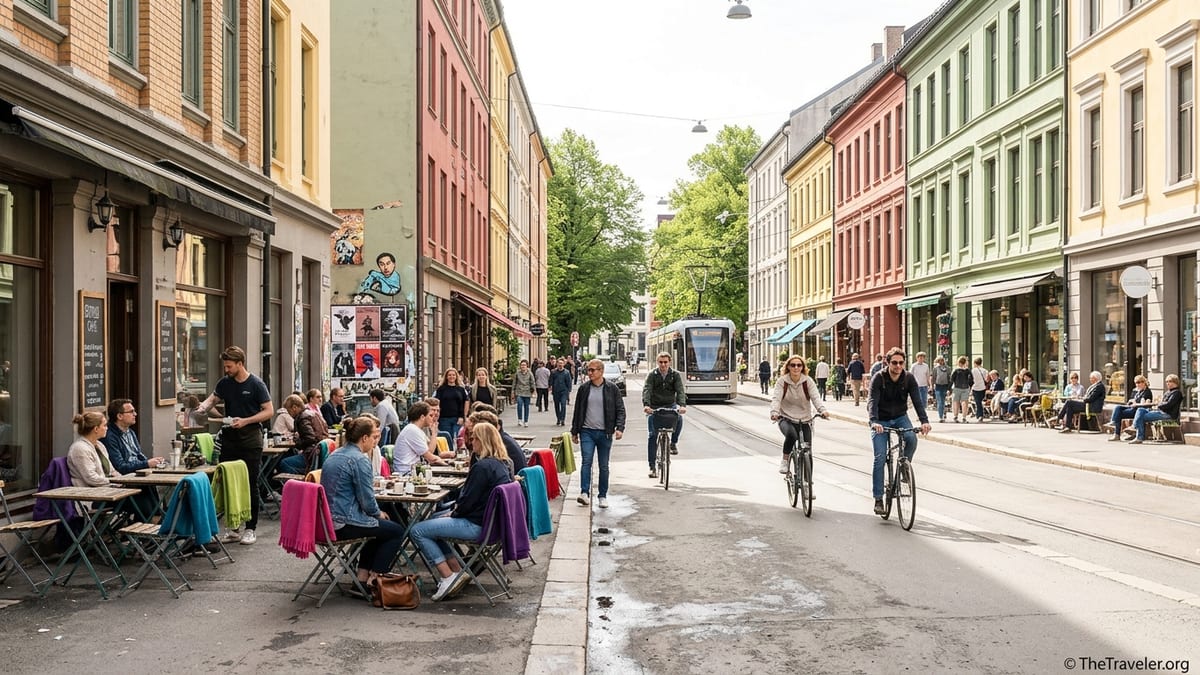
Once a working class district of factories and workshops, Grünerløkka has become Oslo’s most lived in, local feeling neighborhood. Colorful tenement blocks line leafy streets, small bars spill onto the sidewalks, and the Akerselva river cuts a green corridor through it all. Explore beyond the postcard highlights and Grünerløkka rewards you with markets known mainly to locals, tucked away courtyards, and some of the city’s best coffee, craft beer and street art.
Get the latest updates straight to your inbox!
Getting Your Bearings in Grünerløkka
Grünerløkka sits just northeast of central Oslo, about a 15 to 20 minute walk from Oslo Central Station. At its heart are two parallel streets, Thorvald Meyers gate and Markveien, both lined with tram tracks, bike lanes, corner bars, secondhand shops and bakeries. The neighborhood stretches west to the Akerselva river and east toward Sofienberg Park and the classic apartment blocks of Rodeløkka.
Locals treat Grünerløkka less as a list of sights and more as their extended living room. On a weekday morning you will see parents pushing strollers to kindergartens, freelancers opening laptops in cafés, and retired residents in the same window seats they have occupied for decades. Time your visit outside of peak summer cruise hours if you can, and you will find the side streets almost eerily quiet just a block away from the main tram line.
The easiest way to arrive is by tram. Lines that run along Thorvald Meyers gate typically stop at Nybrua, Schous plass and Olaf Ryes plass, all excellent starting points. A single ticket on Oslo’s public transport network usually costs the equivalent of around 4 to 5 euros and covers tram, bus, metro and local trains within the central zone, making it simple to hop in and out of the neighborhood several times a day.
For a first orientation, start at Olaf Ryes plass, a small triangular park with tall trees and a playground, then wander west toward the river or south along Thorvald Meyers gate. Within ten minutes you will understand why many Oslo residents say they could happily live their entire lives inside this small grid of streets.
Markets and Food Halls Locals Actually Use
Grünerløkka is known among Oslo residents for its markets, from sleek indoor food halls to improvised Sunday stalls. The most famous is Mathallen, a large indoor food hall in the Vulkan complex beside the Akerselva. Built inside a former iron foundry, Mathallen gathers small-scale Norwegian producers and international food counters under one roof. Expect everything from freshly shucked oysters and fish soup at a seafood bar to Norwegian cured meats, farmhouse cheeses, and bakeries selling cinnamon buns still warm from the oven.
Prices in Mathallen are in line with Oslo’s general cost level, which is to say not cheap, but you can keep things reasonable by sharing plates or taking advantage of lunch specials. Many stalls serve generous soups or daily dishes that hover around a mid range price rather than sit down restaurant levels. Locals often stop here for a casual lunch or early dinner before a concert nearby, and you will see families with kids, office workers and students all crammed around the same high tables.
On Sundays, the open air market outside the music venue Blå on the riverbank turns a former industrial yard into a lively flea market. From around midday to late afternoon, vendors set up tables piled with vintage jackets, handmade ceramics, vinyl records and secondhand books. Prices can be surprisingly fair by Oslo standards, especially if you are looking for everyday clothes or smaller pieces of homeware. Unlike some tourist oriented markets, this one still feels anchored in the local creative community, with many sellers also involved in art, design or music projects nearby.
Further north along Markveien and surrounding streets you will often find smaller seasonal markets, especially in the lead up to Christmas, when schoolyards and courtyards host pop up stalls. These are good places to buy locally produced honey, knitted mittens, or hand printed postcards without the markup of airport souvenir shops. Ask at a neighborhood café if any such markets are planned during your stay, as information often spreads through posters and word of mouth rather than big advertising campaigns.
Street Art, Murals and the Akerselva Riverside
Grünerløkka’s reputation as Oslo’s creative heart is written on its walls. The highest concentration of murals and graffiti stretches along the Akerselva river and around the former industrial zones near Blå, often referred to as one of the city’s key street art hubs. Large scale pieces climb entire factory facades, while more intimate works appear under bridges and along staircases leading up from the water.
For an easy self guided walk, start at Nybrua bridge and follow the path north along the eastern bank of the river. Within minutes you will pass walls layered with tags, stencils and large murals. The area around the narrow alley sometimes called Ingens gate, close to Blå, is especially dense. The walls here change regularly as new works are commissioned or painted over older layers, so even locals find something new every few months.
The riverside itself is one of Grünerløkka’s great local secrets. Despite its proximity to the city center, stretches of the Akerselva path feel almost rural, with cascades, ducks, and wooden footbridges beneath trees. Residents use it as a commuting corridor on foot or bike, but also as a place to slow down. Bring a takeaway coffee from a café on Thorvald Meyers gate, then drop down to the river path and sit on one of the benches or low stone walls. In late summer evenings, groups of friends gather here for simple picnics or to listen to the muffled beat from nearby concert venues.
Guided street art tours sometimes pass through on weekend afternoons, but early mornings or weekdays offer a more tranquil experience. If you are interested in the stories behind specific murals, many local cafés display small flyers or posters about current projects and artists, often with English summaries. This is an easy way to understand how street art here connects to broader conversations about gentrification, activism and creative expression in Oslo.
Cafés, Bars and Where Locals Linger
Café culture in Grünerløkka is less about laptop work and more about slow conversation. Independent coffee bars dominate, each with a slightly different personality. Some specialize in Nordic style light roasts and pour over brewing, others in rich espresso and Italian pastries, and a few double as small record stores or bookstores. Prices typically sit around the equivalent of 3 to 4 euros for a basic black coffee and a bit more for a latte or cappuccino, which is standard for Oslo.
On a weekday morning, you will find locals queuing for cinnamon buns and filter coffee, chatting with baristas they know by name. Seating often spills onto the sidewalks in warmer months, with blankets provided when the air turns chilly. For a quieter experience, slip down one of the side streets off Thorvald Meyers gate. Here you are more likely to find half empty rooms with locals reading newspapers or parents swapping stories while strollers line the wall.
In the evenings, Grünerløkka’s bars and beer gardens fill up. Craft beer has a strong following in Oslo, and the neighborhood is home to several microbreweries and taprooms that pour their own pale ales, IPAs and seasonal specialties. Expect to pay a mid to high range price for a pint, depending on strength and style. Many locals arrive early to take advantage of after work deals or simply to secure a table before the late evening rush.
For a neighborhood feeling rather than a big night out, look toward smaller corner bars with candlelit tables and soft music. These places often have a short list of natural wines or Norwegian ciders alongside beer and simple bar snacks. You may find yourself sitting next to a graphic designer sketching in a notebook or a group of musicians planning a gig. It is common to see people in sweaters and sneakers rather than dressed up, and bartenders are usually happy to offer suggestions for other nearby spots once they sense your interest in exploring the area properly.
Vintage, Design and Everyday Shopping
Grünerløkka is one of the best places in Oslo to browse independent shops instead of international chains. Markveien in particular is known for small boutiques and vintage stores, many of them long standing fixtures. Instead of overflowing piles of clothes, these shops usually favor curated racks with carefully selected pieces. Prices reflect the curation and the high cost of running a shop in Oslo, but you can still find good value on items like wool sweaters, denim jackets or mid century glassware if you take your time.
Several vintage clothing stores specialise in Scandinavian and European pieces from the 1960s through the 1990s, often grouped by color or style rather than by brand. It is common to see locals trying on secondhand ski jackets or patterned dresses for upcoming festivals. Many of the shop owners are enthusiastic about their stock and can tell you where a particular item was sourced or how best to repair older fabrics, which adds a personal dimension to the shopping experience.
Beyond fashion, you will find stores focused on Norwegian ceramics, minimalist homeware and locally designed prints. Small galleries and design studios often double as shops, with one wall devoted to framed artworks and another to stationery, textiles or jewelry. Prices range from affordable postcards and tote bags to investment level art pieces. Even if you are not shopping, these spaces offer a glimpse into the contemporary design scene that helps define Oslo’s creative identity.
For practical needs, locals rely on a mix of small grocery stores, bakeries and ethnic supermarkets scattered along the main streets. If you are staying in an apartment, picking up basics like rye bread, Norwegian butter, smoked salmon and fruit at these shops is an easy way to bring a bit of Grünerløkka’s everyday life into your breakfast or picnic plans without paying restaurant prices for every meal.
Hidden Spots, Backyards and Green Corners
Part of enjoying Grünerløkka like a local is knowing where to step slightly off the main axis. One of the best examples is Sofienberg Park, a spacious green area just east of the busiest streets. Once a cemetery, it is now one of the neighborhood’s primary meeting places in summer, with groups of friends spreading blankets on the grass, students practicing guitar, and families pushing prams along the paths. There are no dramatic monuments here, just a calm atmosphere that makes it easy to linger for an hour between sightseeing elsewhere.
Another local favorite green space is Birkelunden, a park framed by historic brick buildings and a small church. On certain days, particularly Sundays in warmer months, a flea market sets up along its paths selling everything from antique furniture and retro lamps to old magazines and enamel mugs. Locals come here as much to people watch and meet friends as to buy, often grabbing a coffee from a nearby kiosk and doing slow laps around the stalls.
Hidden courtyards might be Grünerløkka’s most understated treasure. Behind many street facing buildings are internal yards filled with bicycles, lush plants in old wooden crates, and playgrounds for resident children. These are usually private, so it is important to respect boundaries and only enter spaces clearly marked as public, but you will still catch atmospheric glimpses through archways and open gates. Walking the narrower residential streets of Rodeløkka and the blocks east of Thorvald Meyers gate in the evening gives you a sense of how people really live here, far from the riverfront bars.
If you need a pause from the buzz, duck into one of the small neighborhood libraries or cultural centers scattered around the borough. These spaces often have free exhibitions, reading rooms and children’s corners, and they are used heavily by locals. They are also ideal spots to warm up on a cold day between riverside walks and market browsing without feeling obliged to buy another coffee.
Practical Tips for Exploring Like a Local
Grünerløkka is best explored on foot, but it pays to think a bit like a resident when planning your day. Mornings are calmer, with parents on school runs and cafés gradually filling up. Late afternoon into early evening is when streets and riverside paths are most animated, especially on sunny days. If you want to photograph murals and markets without crowds, aim for the first couple of hours after opening.
Weather in Oslo can change quickly, even in summer, so locals dress in layers and always have a light jacket or sweater at hand. This is especially useful if you plan to spend time by the Akerselva, where cool air funnels along the water. In colder months, most cafés and bars provide blankets on outdoor chairs and use heaters where possible, meaning you can still sit outside and watch daily life unfold without freezing.
Payment is almost entirely cashless. Even flea markets and small stalls usually accept cards or mobile payments, and many locals do not carry cash at all. This makes it straightforward to sample food at Mathallen or pick up a secondhand sweater without hunting for an ATM. Tipping is less formal than in some countries; rounding up a bill or leaving a modest tip in bars and cafés is welcome but not strictly expected.
Finally, remember that for many residents this is simply home. Keep noise levels moderate late at night on residential streets, avoid photographing people’s windows or private backyards, and follow basic recycling and litter rules around parks and the river. By doing so you will find that Oslo locals are generally relaxed, happy to share recommendations, and appreciative of visitors who treat their neighborhood with care.
The Takeaway
Exploring Grünerløkka like a local is less about ticking off major sights and more about slowing down in a compact, lived in neighborhood. It means wandering between markets, murals and green spaces, letting coffee breaks and chance discoveries shape your route rather than rigid schedules. A morning at Mathallen, an afternoon stroll along the Akerselva, and an evening in a small bar or park can tell you more about everyday Oslo than many formal tours.
By focusing on locally used spaces and independent businesses, you also help sustain the creative community that gives Grünerløkka its distinct personality. Skip at least one big chain restaurant or souvenir shop in favor of a family run café, a vintage store or a Sunday market stall. In return you will take home stories and objects that feel tied to specific streets and faces instead of generic travel memories.
Whether you have a few hours or several days in Oslo, carving out time in Grünerløkka offers a clear, human scaled window into the city. Sit on a bench above the river, listen to tram bells and snippets of Norwegian conversation, and watch residents go about their routines. In that moment you will be experiencing the neighborhood much as they do, and that is the essence of exploring Grünerløkka like a local.
FAQ
Q1. How do I get to Grünerløkka from central Oslo?
From Oslo Central Station you can walk to Grünerløkka in about 15 to 20 minutes or take a tram that runs along Thorvald Meyers gate and get off at stops such as Nybrua, Schous plass or Olaf Ryes plass, all within the heart of the neighborhood.
Q2. What is the best time of day to explore Grünerløkka?
Mornings are quieter and ideal for coffee and photography, while late afternoons and early evenings are livelier, especially along the river and around bars and restaurants, giving you more of a local social atmosphere.
Q3. Are the markets in Grünerløkka open year round?
Indoor venues such as Mathallen operate year round with regular hours, while outdoor markets like the Sunday market by Blå and seasonal flea markets in parks such as Birkelunden are more active in the warmer months and may slow down or pause in winter.
Q4. Is Grünerløkka safe to walk around at night?
Grünerløkka is generally considered safe, and locals routinely walk between bars, tram stops and home late into the evening, though as in any urban area it is sensible to stick to well lit streets, avoid very isolated spots by the river after dark and keep normal awareness of your belongings.
Q5. How expensive is food and drink in Grünerløkka?
Prices reflect Oslo’s overall cost level, so coffee and pastries are moderate by local standards and craft beer and restaurant meals can feel expensive, but you can manage costs by choosing lunch specials, sharing plates at Mathallen and mixing restaurant visits with simple picnics from local grocery stores and bakeries.
Q6. Can I see Grünerløkka’s main sights in one day?
Yes, the neighborhood is compact enough to cover in a single day, allowing time for a walk along the Akerselva, a visit to Mathallen, browsing vintage shops on Markveien and Thorvald Meyers gate, and an evening drink, though staying longer lets you experience more subtle local rhythms.
Q7. Do I need cash for markets and small shops?
In most cases you do not, as Oslo is highly cashless and even many flea market stalls, small boutiques and cafés accept card payments or mobile apps, so carrying a bank card is usually sufficient.
Q8. Where can I find the best street art in Grünerløkka?
The highest concentration is along the Akerselva river and around the industrial courtyards near the venue Blå, including narrow alleys with walls covered in large scale murals and evolving graffiti pieces, which you can easily explore on a short riverside walk.
Q9. Is Grünerløkka suitable for families with children?
Yes, families are a visible part of the neighborhood, and you will find several playgrounds in parks like Olaf Ryes plass and Sofienberg, child friendly cafés with high chairs, and car free paths along the river that work well for strollers and small bikes.
Q10. What should I wear to blend in with locals in Grünerløkka?
Locals favor practical, layered clothing suited to changeable weather, often pairing jeans or casual trousers with sneakers and simple jackets, and dressing slightly smarter only in the evening, so comfortable, understated outfits will help you fit in while staying ready for both sun and sudden showers.