


Vigeland Sculpture Park in Oslo is one of Scandinavia’s most distinctive art experiences: more than 200 granite and bronze sculptures spread across a classic city park that locals simply call Frognerparken. The park is free, open around the clock, and easy to reach on public transport, which makes it a natural stop on almost any Oslo itinerary. A bit of planning, however, helps you see beyond the famous photo spots and understand what Gustav Vigeland was trying to do with this monumental project.
Get the latest updates straight to your inbox!
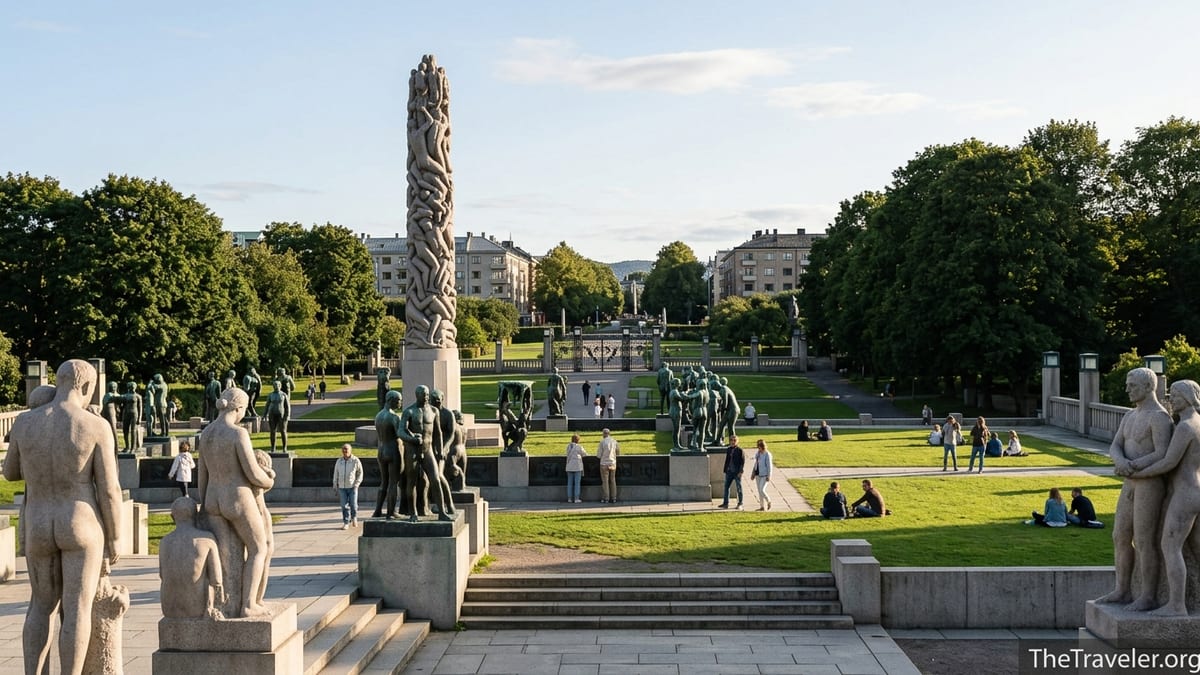
Understanding Vigeland Sculpture Park and Its Layout
Vigeland Sculpture Park is the popular name for the Vigeland installation inside Frogner Park, a large green space in western Oslo. Spread over roughly 80 acres, the installation brings together more than 200 sculptures in bronze, granite and wrought iron, all designed by the Norwegian artist Gustav Vigeland. The city gave Vigeland a studio and lifetime support in exchange for his work, and between the 1920s and 1940s he shaped not only the sculptures but the entire sequence of terraces, bridges and stairways that visitors follow today.
The park is organized along a central axis almost 850 meters long. Most visitors start at the wrought‑iron Main Gate on Kirkeveien, continue over the Bridge lined with 58 bronze figures, pause at the great bronze Fountain, and then climb to the Monolith plateau with its 17‑meter granite column carved from a single stone. At the far end stands the Wheel of Life, a circular sculpture of intertwined human figures. Even if you arrive with little background, this gradual progression from separate figures to densely packed human forms gives a sense of the park as one continuous artwork rather than a random collection of statues.
Just as important as the main axis are the lawns, tree‑lined paths and quieter corners of Frogner Park that surround the sculptures. Locals come here to jog, walk dogs, or barbecue on summer evenings, using the sculpture park as a dramatic backdrop to everyday life. When you plan your visit, it is worth setting aside time simply to wander off the main route and see how Oslo residents interact with a place that for many tourists is primarily an attraction.
When to Visit: Seasons, Light and Crowds
The sculpture park is open 24 hours a day, year‑round, and entry is free. That flexibility means you can choose your timing based on light, weather and crowds rather than fixed opening hours. In practice, most visitors come between late May and early September, when Oslo’s weather is mild, the lawns are green and the days are long. In June and July, the sky can stay bright until late in the evening, so an 8 or 9 pm stroll is still comfortable and lets you enjoy softer light and fewer tour groups.
For photography and quieter contemplation, early morning or late afternoon on weekdays usually works best. Local tour companies that include Vigeland Sculpture Park on city tours often arrive mid‑morning or early afternoon. If your schedule allows, plan to reach the Bridge and the famous “Angry Boy” statue before 9 am, or aim for the Monolith plateau after 6 pm, when many buses have already departed. In summer, you will still have enough daylight to see details in the stone and bronze.
Winter visits can be atmospheric, especially after fresh snow. Oslo’s winter days are short, with daylight in December and January limited to a few hours around midday, but the low sun and snow cover make the sculptures stand out in high contrast. On a February afternoon you may find the park almost empty, with only a few locals walking across Frogner Park to nearby neighborhoods. Be prepared for icy paths and cold wind across the open lawns; proper shoes with grip and a warm hat and gloves are essential if you plan to linger at the Monolith or the Fountain.
Spring and autumn can be rewarding shoulder seasons. In April and early May, trees begin to bud and the park feels less crowded than in peak summer, while late September and early October bring golden foliage that frames the granite figures beautifully. These seasons also pair well with shorter city breaks or business trips, when you might only have one free morning or evening to explore.
Getting There: Practical Transport Options
Vigeland Sculpture Park is located in western Oslo, at Nobels gate 32, a short ride from the city center. Public transportation is straightforward, and for many visitors the journey itself offers a glimpse of ordinary Oslo neighborhoods. Tram line 12 stops at Vigelandsparken, directly opposite one of the main entrances. If you are staying near Oslo Central Station or along Karl Johans gate, you can board the tram at stops like Jernbanetorget or Nationaltheatret and ride west for about 15 minutes before stepping off almost at the park gate.
Bus line 20 also stops near the park, useful if you are coming from neighborhoods such as Grunerløkka or Galgeberg. When using the Ruter public transport app, search for stops named Vigelandsparken or Frogner plass and choose the one closest to where you plan to enter. Another option is the Oslo metro: any westbound line that stops at Majorstuen station will place you about a 5 to 10 minute walk north of the park. From Majorstuen, many visitors simply follow signs for Frognerparken or join the small stream of people heading toward the lawns and sculptures.
If you hold an Oslo Pass, city trams, buses and the metro are included, making the trip to the park effectively free once you have the pass. Without a pass, single tickets on Ruter cost roughly the price of a coffee in central Oslo and can be purchased via ticket machines or the official app. Taxis are widely available but more expensive; a short ride from central Oslo to Frogner Park can easily cost as much as a casual restaurant lunch, so most budget‑minded travelers avoid them unless traveling late at night or with heavy luggage.
Many locals choose to bike to the park, and visitors can do the same using Oslo’s public bike system in the warmer months. There are bike racks near Frogner Stadium and along Kirkeveien, so you can cycle from areas like Aker Brygge or Grønland in 15–25 minutes, lock your bike, and then explore on foot. Some guided bike tours also include a loop through Vigeland Sculpture Park, combining orientation to Oslo with a structured introduction to the art.
What to See: Signature Sculptures and Subtle Details
Although the park holds more than 200 sculptures, a handful have become iconic. On the Bridge, look for Sinnataggen, often translated as the Angry Boy: a small bronze child stamping his foot, fists clenched and face contorted. Visitors frequently touch his left hand for photos, and over time the patina has worn to a bright shine. Nearby, other bronzes depict people wrestling, embracing, carrying children or twisting in mid‑air, all without clothing or elaborate props. Vigeland intended them as universal scenes of human emotion and relationships rather than portraits of specific individuals.
Further along the axis, the Fountain presents a ring of towering bronze figures holding a broad basin, supported by tree‑like structures wrapped with human forms. Water cascades into a large circular pool, and in warm weather children press against the railings while adults sit on the surrounding benches. At different times of day, the water’s reflection of the surrounding trees and sky can change the mood of the entire area, from bright and playful at midday to more somber near dusk.
The Monolith plateau is the dramatic culmination of the park. The central column, carved from a single block of granite, rises more than 17 meters and contains 121 human figures entwined and climbing toward the top. Around it, additional granite groups show people at every stage of life: infants tumbling over one another, parents with small children, and elderly couples clinging together on simple stone benches. Rather than rushing straight to the column for a standard photo, it is worth walking a slow circle around the terrace and pausing at individual groups to see how Vigeland echoes or contrasts gestures and expressions from one sculpture to the next.
At the far end of the axis, the Wheel of Life provides a quieter final note. This stone circle of four adults and a child forms a loop suggesting continuity, a subtle counterpoint to the upward thrust of the Monolith. Many casual visitors do not make it this far, turning back after the main terrace, so if you continue you may find a calmer atmosphere. Along the way, look for details like the wrought‑iron gates that show human figures when viewed in silhouette, and smaller stone pieces partly hidden among trees. These less photographed works often give the clearest sense of how carefully Vigeland thought about human bodies in motion.
Combining the Park with the Vigeland Museum
Just south of the main sculpture area, across a quiet street, stands the Vigeland Museum. Housed in the former studio and residence of Gustav Vigeland, it provides useful context if you are curious about how such an ambitious project came to be. Inside, you can see original plaster models for many of the park sculptures, tools from Vigeland’s workshop and temporary exhibitions that explore different aspects of his work and that of related artists. Because the park itself is free and unguided, the museum is where you can most easily understand the planning stages behind familiar figures like the Angry Boy or the Monolith groups.
As of 2026, the museum typically opens from Tuesday to Sunday, with longer hours in summer and shorter hours in winter, and remains closed on Mondays and some public holidays. Adult tickets are priced at a level comparable to a modest Oslo cafe meal, with discounts for students and seniors, and free entry for children under 18. Holders of the Oslo Pass usually receive free admission. These details can change, so it is sensible to check current hours and prices on the museum’s official page before planning a tightly timed visit.
A practical strategy is to visit the park first, walking the main axis and taking in the overall impression, and then head to the museum for an hour to deepen your understanding. For example, you might spend 9 to 11 am in the park on a summer day, when the light is good but midday crowds are still thin, then cross to the museum when it opens late morning. There you can see early versions of the Monolith, including how Vigeland worked with assistants and stone carvers, and studies for figures that did not reach their final form until years later.
Because the museum sits only a few minutes’ walk from tram and bus stops, it also provides a convenient indoor refuge if the weather turns wet or cold. Travelers visiting in November or March, when Oslo’s weather can shift from sun to sleet within an hour, often find it easiest to keep their schedule flexible and decide on the day whether to add the museum or spend more time in the open‑air parts of Frogner Park.
Planning Your Time and Reading the Atmosphere
Most visitors spend between one and three hours in the park itself, depending on their interest in sculpture and the weather. If you only have an hour, concentrate on the main axis: start at the Main Gate, walk the Bridge, pause at the Fountain and then climb to the Monolith plateau before looping back. This route contains the densest concentration of major works and gives you a sense of the overall concept. In two hours, you can add the Wheel of Life and side paths, plus a short rest on the grass or a bench.
If you have three hours or more, treat the park partly as an outdoor gallery and partly as a local recreational space. One realistic plan for a summer afternoon might be to pick up takeaway food from a bakery or supermarket near Majorstuen metro station, enter the park from the north, and find a picnic spot with a view of the Monolith in the distance. After eating, you could circle toward the Fountain and the Bridge, then exit near the tram stop on Kirkeveien and ride back toward the harbor as the evening light softens.
The atmosphere changes noticeably with time of day and weather. On a sunny Saturday in July you may encounter children climbing on granite figures, teenagers posing for social media shots and organized tours in multiple languages explaining the strong emotions many sculptures depict. On a drizzly Tuesday in October, by contrast, you might share the space mostly with dog‑walkers and runners using the park as a green corridor between neighborhoods. Keeping this in mind can help you choose a time that matches your own preferences, whether you enjoy seeing a place alive with activity or prefer a quiet, reflective visit.
Guided tours, both public and private, are available from several companies and can be worthwhile if you prefer structured commentary. A walking tour that focuses solely on Vigeland Sculpture Park might last 90 minutes, while some city‑wide tours include a 30 to 45 minute stop here alongside other attractions like the Opera House or Holmenkollen ski jump. When comparing options, consider how much time they actually allocate within the park; if sculpture is a highlight for you, a dedicated tour or self‑guided visit may offer better value than a quick bus photo stop.
Practical Tips for a Comfortable Visit
Although there is no entrance fee or ticket check, it pays to prepare for Vigeland Sculpture Park as you would for any outdoor attraction in Scandinavia. Good walking shoes are essential: the paths are generally well maintained, but you may find yourself climbing stone steps, crossing grassy areas or detouring onto gravel lanes. In summer, bring a light jacket even on warm days, as a breeze across the open lawns can feel cooler than city streets. From October through April, dress in layers and bring a hat and gloves so you can pause to study individual sculptures without quickly getting chilled.
There are public toilets in and around Frogner Park, but their exact availability can vary by season, and they may charge a small fee. Cafes and kiosks operate near some entrances in summer, selling coffee, ice cream and simple snacks, while nearby residential streets offer bakeries and small restaurants where you can buy a more substantial meal before or after your visit. For families, the large playgrounds in Frogner Park can serve as useful breaks for younger children who may not be ready for a fully art‑focused outing.
Respectful behavior enhances the experience for everyone. While you will often see children climbing on certain sculptures, particularly the granite groups near the Monolith, be aware that not all visitors are comfortable with this, and local attitudes continue to evolve. Avoid standing on plinths or treating sculptures as gym equipment, and keep a reasonable distance when others are photographing or contemplating a piece. Dogs are allowed in the wider park on leashes, but you should check for updated local rules before assuming that pets are welcome everywhere, especially near the densest sculpture clusters.
Finally, remember that this is not only a tourist site but also a neighborhood park. If you visit in the early morning, you may find residents jogging before work; in the evening, groups gather on the grass for barbecues or informal football games. Joining this everyday rhythm, whether by sitting on a bench with a takeaway coffee or strolling without a fixed route, can make your visit feel less like ticking off an attraction and more like borrowing a few hours of Oslo life.
The Takeaway
Vigeland Sculpture Park rewards both quick impressions and slow attention. On the surface, it is easy to appreciate the bold forms, the sheer number of sculptures and the dramatic setting of the Monolith terrace. With a little planning, though, you can also read the park as a long meditation on human life, unfolding as you move from the gate to the Wheel of Life at the far end of the axis. Choosing the right time of day, wearing comfortable clothing, and allowing enough time to wander beyond the main path all help to transform a routine stop into a memorable experience.
Because entry is free and the park never closes, you can fit it flexibly around other Oslo sights. A morning walk before museums open, a golden‑hour visit after exploring the waterfront, or even a contemplative stroll on a winter afternoon can each reveal different facets of the same sculptures. Combined with the nearby Vigeland Museum for context, the park becomes not just a postcard image but a rich story about how a city and an artist collaborated on a shared public space.
For travelers who value encounters with everyday local life as much as major attractions, Vigeland Sculpture Park offers both at once. Here, monumental art and casual recreation coexist in the same lawns and pathways. Arriving prepared with realistic expectations about weather, transport and facilities, you can focus on what matters most: noticing the details, reading the expressions carved in stone and bronze, and perhaps recognizing something of your own relationships and experiences in the figures that surround you.
FAQ
Q1. Do I need a ticket or reservation to visit Vigeland Sculpture Park?
Tickets are not required. The sculpture park area in Frogner Park is free to enter and open to the public at all hours, with no reservations or turnstiles.
Q2. How long should I plan to spend in the park?
Plan at least one hour for a quick walk along the main axis from the gate to the Monolith. For a more relaxed visit that includes side paths, photo stops and a rest on the lawns, allow two to three hours.
Q3. What is the best way to get there from central Oslo?
The simplest option is to take tram line 12 from the city center to the stop named Vigelandsparken, which sits just outside the park. You can also ride any metro line to Majorstuen and walk 5 to 10 minutes, or use bus 20 to stops near Frogner Park.
Q4. Is the park suitable for children and families?
Yes. The open lawns, paths and nearby playgrounds in Frogner Park make it easy to combine sculpture viewing with time for children to play. Some sculptures depict nudity and strong emotions, so parents may want to be prepared for questions, but families are a common sight here.
Q5. Can I visit the Vigeland Museum on the same day?
Yes, and many visitors do. The museum stands just south of the main sculpture area and is an easy walk from the park. It has separate opening hours and a modest admission fee, so check the current schedule and prices in advance if you want to combine both.
Q6. Are there guided tours available in the park?
Several Oslo tour companies offer guided walks or bike tours that include Vigeland Sculpture Park, and some focus exclusively on the sculptures. In peak season, you may also come across scheduled group tours in various languages. If you prefer a structured visit, it is worth booking a tour slot ahead of time.
Q7. What should I wear and bring for a visit?
Wear comfortable walking shoes and dress in layers suitable for the season. In summer, a light jacket and sun protection are useful; in colder months, bring a warm hat, gloves and a wind‑resistant outer layer. A reusable water bottle and a small snack can be handy, especially if you plan to stay for several hours.
Q8. Is the park accessible for visitors with limited mobility?
Many main paths are paved and relatively flat, particularly around the Bridge and Fountain. Reaching the Monolith plateau involves climbing stone steps, which can be challenging for some visitors. If mobility is a concern, focus on the bridge area and lower terraces, where you can still see a significant number of sculptures without steep climbs.
Q9. Are there food and restroom facilities nearby?
Public toilets are available in and around Frogner Park, though some may charge a small fee and not all are open year‑round. In warmer months, kiosks and nearby cafes sell coffee, ice cream and light meals, and residential streets around the park offer bakeries and small restaurants suitable for a casual lunch before or after your visit.
Q10. Is it safe to visit the park early in the morning or in the evening?
Frogner Park is in a generally calm residential area and is commonly used by locals at many hours of the day. As in any city park, it is wise to stay on main paths, be aware of your surroundings and avoid very isolated corners late at night, but most travelers find early morning and evening visits both safe and enjoyable.