


Vintgar Gorge, a 1.6‑kilometre canyon carved by the Radovna River just northwest of Lake Bled, has become one of Slovenia’s most in‑demand natural sights. Wooden walkways clinging to the rock walls, turquoise pools and the Šum waterfall at the exit make it a memorable half‑day trip. But popularity has also brought time‑slot ticketing, mandatory shuttles in peak season and stricter rules that can surprise unprepared visitors. Here is what to know before you go, based on the latest information and recent traveller experiences.
Get the latest updates straight to your inbox!
Understanding Vintgar Gorge Today
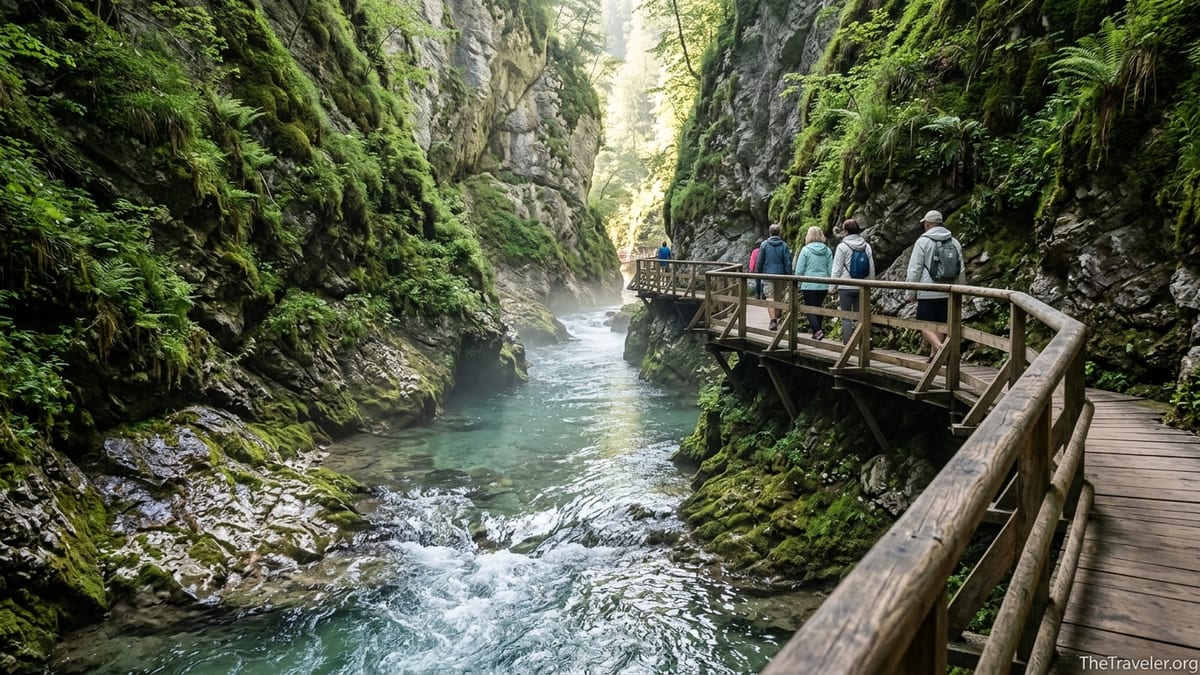
Vintgar Gorge lies about 4 kilometres from Bled, in the municipality of Gorje. The main walking route follows the Radovna River through a narrow limestone canyon on raised wooden boardwalks and bridges, ending near the 13‑metre Šum waterfall. The standard one‑way walk takes most visitors around 60 to 90 minutes, depending on how often they stop for photos.
The gorge is no longer a casual “show up whenever” attraction. In recent years local authorities have introduced timed entry tickets, limits on private car access and a one‑way walking system to protect the fragile environment and avoid dangerous overcrowding on the narrow walkways. From the entrance near the village of Podhom you follow the river downstream; you exit at a different point near the waterfall, then walk back to one of the villages or a pickup point on marked trails rather than through the gorge itself.
For visitors, this means planning is essential. You need to think about how you will reach the entrance, how you will get back afterwards and how that fits with your overall schedule in Bled or Ljubljana. On busy summer days, latecomers without reservations are often turned away or given time slots hours later than they hoped for, so treating Vintgar as a structured half‑day excursion rather than a spontaneous stop tends to work better.
Despite the extra logistics, the reward is a remarkably beautiful river canyon that feels wild in places, with swirling emerald water and mossy rock walls. Many travellers combine it with time at Lake Bled the same day, either starting early at Vintgar and spending the afternoon by the lake, or reversing the order in shoulder season when mornings are colder.
Tickets, Opening Seasons and When to Go
Vintgar Gorge is usually open from late spring to late autumn, with exact dates varying by year depending on water levels and maintenance. In a typical season, it opens sometime in April and closes by November. In winter the boardwalks can be icy or damaged by snow and the site is closed to visitors.
Entry is ticketed with time slots, and in high season you are strongly encouraged or required to buy tickets in advance. Recent practice has been to restrict on‑site ticket sales during the busiest hours in the morning, meaning that from around 09:00 to 13:00 many walk‑up visitors are redirected to online booking or to official sales points away from the gorge. Adult tickets in recent years have been in the rough range of 10 to 20 euros depending on season and whether you purchase packages that include a shuttle or add‑ons such as audio guides; child, student and senior prices are usually lower.
Because prices and conditions can change from one season to the next, it is worth checking shortly before you travel, but you can safely budget a mid‑teens euro amount per adult for basic entry. Families visiting in July or August often buy bundled products such as an “All‑in‑One” pass that includes timed entry and a shuttle seat, which removes much of the stress of juggling separate reservations.
In terms of timing, the gorge is busiest in July and August, particularly between about 09:30 and 14:00 when day‑trip buses and tour groups from Ljubljana and coastal cities tend to arrive. The quietest experiences are usually at the very first time slots in the morning or towards the end of the day. For example, booking an 08:00 or 08:30 entry in midsummer often lets you walk the first half of the canyon with relatively few people, then be back in Bled by late morning. In shoulder months such as May, June, September and early October, crowds are lighter, but weekends and sunny public holidays can still be busy.
Getting To and From the Gorge
Because of traffic and environmental concerns, the approach to Vintgar Gorge has been rethought in recent years. Instead of letting every visitor drive directly to the narrow local road at Podhom and attempt to park near the entrance, local authorities now promote shuttle services and public transport, and in peak periods they close or strictly limit the small parking lots near the gorge.
If you are staying in Bled, the most practical way in high season is usually the dedicated VINTGAR shuttle that runs between Bled’s main bus station and the Vintgar visitor centre. The shuttle is typically operated with electric minibuses, and in recent seasons it has run at least hourly during the main visiting window. In the height of summer, Bled tourism materials describe it as free for holders of certain Vintgar passes, or bundled into all‑in‑one tickets, so you effectively pay once for both transport and entry. Travellers arriving in Bled by train usually change to a local bus or walk to the central bus station to board this shuttle.
There are also private shuttle and taxi operators that focus specifically on Vintgar. For example, several Bled‑based agencies advertise return shuttles that pick you up in the town centre, drive you to the entrance in about 10 minutes, then collect you later at a designated café near the exit or in the village of Blejska Dobrava after you have completed the one‑way walk and a short forest trail. Prices for these private shuttles are commonly quoted in the range of around 10 to 20 euros per person including both directions, sometimes with options to pre‑book your gorge ticket as well.
Budget‑minded travellers sometimes use the regional Arriva buses that run between Bled and nearby villages such as Spodnje Gorje or Podhom, then walk 20 to 30 minutes to the entrance. This can work well in shoulder season, but in peak summer local buses to and from Bled are frequently reported as crowded, with some passengers unable to board at intermediary stops. If you are on a tight schedule, especially heading back to catch a long‑distance train, it is safer to allow plenty of buffer time or use a dedicated shuttle.
Parking, Access Rules and Route Layout
One of the most important changes for visitors is that you should not count on being able to drive up and park next to the gorge entrance, even if an older guidebook suggests this. To reduce congestion on the narrow access roads, only official Vintgar shuttle buses and residents are routinely allowed near the main entrance in peak months, and public parking close to the gorge has either been closed or strictly controlled. Instead, drivers are directed to official parking hubs on the outskirts of Bled or Gorje, where they leave their car and connect to the shuttle.
If you visit early or outside the main summer period, some parking closer to the gorge may be available, typically on a paid basis. Fees are designed to discourage long stays and random roadside parking; expect to pay a modest hourly rate, and be prepared that spaces may still fill quickly. Illegal parking along the narrow approach roads is regularly ticketed. For example, travellers arriving after 10:00 in August often report police or wardens patrolling and turning cars away once the area reaches capacity.
Inside the gorge the walking route is clearly defined and one way. From the entrance gate near Podhom you walk along wooden galleries attached to the rock walls, interspersed with short stretches of gravel path. The walkway sits directly above the river in many places; there are simple wooden or metal railings but not much extra space, which is why the one‑way system and capacity limits are taken seriously. Overtaking is difficult when the path is busy, so keep moving at a steady pace and step aside only at wider viewpoints.
At the exit near Šum waterfall you cannot re‑enter the gorge or walk back the way you came. Instead, you follow waymarked trails back towards Blejska Dobrava, Podhom or other villages. A common option is to continue a short distance beyond the official exit to a small bridge and viewpoint over the waterfall, then climb up into the forest to join the return paths. Depending on your chosen route, it takes around 45 to 90 minutes to reach a shuttle pickup or bus stop. Some visitors choose to stop at a local café near Blejska Dobrava for a drink while waiting for their return shuttle to Bled.
How Much Time to Allow and Suggested Day Plans
For planning purposes, the gorge itself is a relatively short walk, but the total outing is longer once you factor in shuttles, queues and return trails. A realistic estimate for most travellers is around three to four hours door to door from Bled, including transport and some time for photos and a snack. If you are moving slowly, taking many photos or visiting with young children, allow at least half a day.
A common strategy for visitors based in Bled is to book an early morning entry to Vintgar, take the first available shuttle from the central bus station and do the gorge before mid‑day heat and crowds. After finishing the one‑way walk and the forest return trail, you can ride back to Bled in early afternoon, have lunch in town and spend the rest of the day walking the lake loop or taking a traditional pletna boat to Bled Island. This works particularly well if you are staying two nights or more in Bled and can spread out activities.
Travellers day‑tripping from Ljubljana need to consider transport connections more carefully. Fast buses from Ljubljana to Bled often sell out in summer, and there are regular reports of full departures where late‑arriving passengers cannot board. An alternative is to take a regional train to Lesce‑Bled and then a short taxi or local bus ride into Bled. From there you connect to the Vintgar shuttle. In practice, if you leave Ljubljana early in the morning, you can still visit the gorge and have some time at the lake before returning, but you will want to avoid the very last evening bus back to Ljubljana in case of delays.
If you are driving your own car through Slovenia and only have one night in Bled, you might consider visiting Vintgar either in the late afternoon on your arrival day or early the next morning before continuing your road trip. For example, some travellers coming from Ljubljana or from Austria arrive in Bled around lunchtime, check in to their accommodation, then catch a mid‑afternoon shuttle to the gorge when crowds are easing and the light in the canyon is softer for photography.
What to Wear, Safety Considerations and Photography Tips
The wooden walkways in Vintgar Gorge can be damp and slippery even on clear days, as spray from the river and shaded sections keep the boards wet. Sturdy shoes with good grip are strongly recommended. For most visitors, light hiking shoes or trainers are sufficient; sandals with rigid soles and secure straps can work in high summer, but smooth‑soled fashion trainers or flip‑flops are a poor choice. In early spring and late autumn, the air in the gorge can be several degrees cooler than in Bled, so a light jacket or fleece is useful.
There are no guard rails suitable for small children in some sections; the railings are designed for adult height and there are gaps that a toddler could potentially slip through. Families with young kids often prefer to use child carriers rather than pushchairs. Standard strollers are impractical because of the narrow boardwalks and occasional steps. The gorge is not suitable for wheelchairs or visitors who rely on mobility scooters.
Official advice is to stay on the marked paths at all times, not to climb over barriers and not to sit on the outer railings for photos. The wooden galleries are anchored into steep rock walls, and the river below can be fast flowing. In recent seasons staff have monitored behaviour and occasionally paused entry when visitors blocked narrow sections to pose for photos. A practical compromise is to walk at a steady pace and use the wider lay‑bys and viewpoints to stop, where you can safely let others pass and take your time with photography.
For photos, the gorge is at its most atmospheric in soft light. On clear summer days, strong midday sun creates harsh contrasts with very bright highlights and deep shade, which can be challenging for cameras and phones. Early morning or late afternoon visits give more even light and deeper colour in the water. Photographers often bring a polarising filter to reduce reflections on the water surface and enhance the green tones. Tripods are technically allowed but can be awkward on narrow boardwalks, so a small, quick‑deploy travel tripod or simply bracing your camera on the rail is usually more practical than a large setup.
Facilities, Food and Combining With Other Activities
Facilities at Vintgar Gorge are basic but adequate if you plan ahead. There are toilets at or near the main entrance and usually another set near the exit, but there are no toilets along the boardwalk itself. It is sensible to use the facilities before starting the walk. Small kiosks or cafés near the entrance and exit sell snacks, drinks and simple local dishes such as sausages, sandwiches and strudel; prices are slightly higher than in less touristy villages but generally reasonable for a major attraction.
Inside the gorge there are no trash bins along most of the route, to reduce the risk of litter being blown into the river. Visitors are expected to carry out all rubbish, including water bottles and snack wrappers. Bringing a small reusable bag for your own waste is helpful. A refillable water bottle is a good idea in summer, as shade in the gorge does not fully offset the heat on the approach paths and return trails.
Vintgar combines well with several other short activities in the Bled area. Many visitors walk the 6‑kilometre loop around Lake Bled, climb up to Bled Castle for views of the lake and Julian Alps, or rent a rowboat to the island. Slightly further afield, you can continue the nature theme by visiting the Pokljuka plateau for forest hikes or heading towards Lake Bohinj for a more expansive alpine lake experience. Organised tour companies in Bled sometimes package Vintgar with half‑day cycling, canyoning or rafting on the Sava Dolinka river, making it easier to fill a full day without a car.
If you are reliant on public transport and visiting in July or August, keep in mind that buses and roads around Bled are heavily used in mid‑day. Booking accommodation within walking distance of the central bus station or lakeshore can make it easier to manage shuttles and return times. Recent travellers have noted that in peak season, late evening buses back to Ljubljana can be unreliable or full, so an overnight stay in Bled may be preferable if your schedule allows.
The Takeaway
Vintgar Gorge is no longer the quiet side trip it once was, but with realistic expectations and a bit of planning it remains one of the highlights of a visit to Slovenia. The key is to think in terms of timed entry, shuttles and one‑way walking rather than a casual out‑and‑back stroll. Book a morning or late‑afternoon slot, secure your transport from Bled in advance, wear shoes suitable for damp wooden walkways and allow time for the return trail.
In return you get an immersive walk through a dramatic river canyon, with turquoise water, mossy rocks and the steady roar of the Šum waterfall at the end. Combined with a few relaxed hours at Lake Bled before or after, Vintgar makes for a satisfying half‑day that showcases the green, watery side of the Julian Alps without requiring technical hiking. For many travellers, it becomes one of the defining memories of their time in Slovenia.
FAQ
Q1. Do I need to buy Vintgar Gorge tickets in advance?
Advance purchase is strongly recommended in the main season from late spring to early autumn, especially for morning time slots. Same‑day tickets are sometimes available, but in busy periods on‑site sales during the late morning may be limited or suspended, and walk‑up visitors are often given later entry times than they would prefer.
Q2. How long does a visit to Vintgar Gorge take?
The walk through the gorge itself usually takes 60 to 90 minutes at a relaxed pace with photo stops. Including shuttle transport from Bled, some time at viewpoints near the Šum waterfall and the forest trail back to a pickup point, most visitors should plan for around three to four hours door to door.
Q3. Can I walk back through the gorge the same way I came in?
No. The walking route inside Vintgar Gorge is one way for safety and crowd‑management reasons. After exiting near the Šum waterfall you continue on marked trails through the forest to villages such as Blejska Dobrava or Podhom, where you can connect with a shuttle, taxi or bus back towards Bled.
Q4. Is Vintgar Gorge suitable for young children and strollers?
Many families visit with children, but the narrow wooden walkways and railings are not designed for strollers or toddlers who like to run ahead. A child carrier is a safer choice than a pushchair, and adults should keep a close hold on young children in exposed sections. The route is not suitable for standard prams or for wheelchairs.
Q5. What is the best way to get to Vintgar Gorge from Bled without a car?
The most convenient option in peak season is usually the dedicated Vintgar shuttle that runs from Bled’s central bus station to the visitor centre. Alternatively, you can use regional buses to nearby villages and walk to the entrance, or book a private shuttle or taxi through a Bled‑based operator that includes pickup and drop‑off at set times.
Q6. Can I drive and park directly at the gorge entrance?
In recent years, direct public parking at the gorge entrance has been heavily restricted or closed in peak periods to protect local roads from congestion. Drivers are directed to official parking areas near Bled or Gorje and then use shuttle services to reach the entrance. Limited closer parking may exist in shoulder seasons, but you should not rely on finding a space next to the gorge in summer.
Q7. What should I wear for the walk in Vintgar Gorge?
Wear comfortable shoes with good grip, as the wooden boardwalks can be wet and slippery. Light hiking shoes or sturdy trainers are ideal. In early spring and late autumn a light jacket or fleece is useful, as the gorge can feel noticeably cooler and more humid than Bled, especially in shaded sections.
Q8. Are there toilets and places to buy food and drinks?
Yes. Toilets are available near the entrance and usually near the exit, but there are no toilets along the boardwalk itself. Small kiosks and cafés at both ends sell drinks and snacks, and sometimes simple hot dishes. You should still bring water and perhaps a small snack, especially if visiting with children or in hot weather.
Q9. Is Vintgar Gorge open in winter?
Typically the gorge is open from spring to late autumn and closed in winter due to safety concerns such as ice and snow damaging the walkways. Exact opening and closing dates vary from year to year depending on conditions and maintenance, so it is wise to check close to your travel dates if you are visiting early in the season or late in autumn.
Q10. Can I visit Vintgar Gorge and Lake Bled in one day from Ljubljana?
Yes, but you need to plan transport carefully. Many travellers take an early bus or a train plus bus combination from Ljubljana to Bled, connect with the Vintgar shuttle for a half‑day visit to the gorge, and then spend a few hours at Lake Bled before returning to Ljubljana in the evening. In peak summer, buses to and from Bled can be full, so allowing generous buffer time between connections is important.