


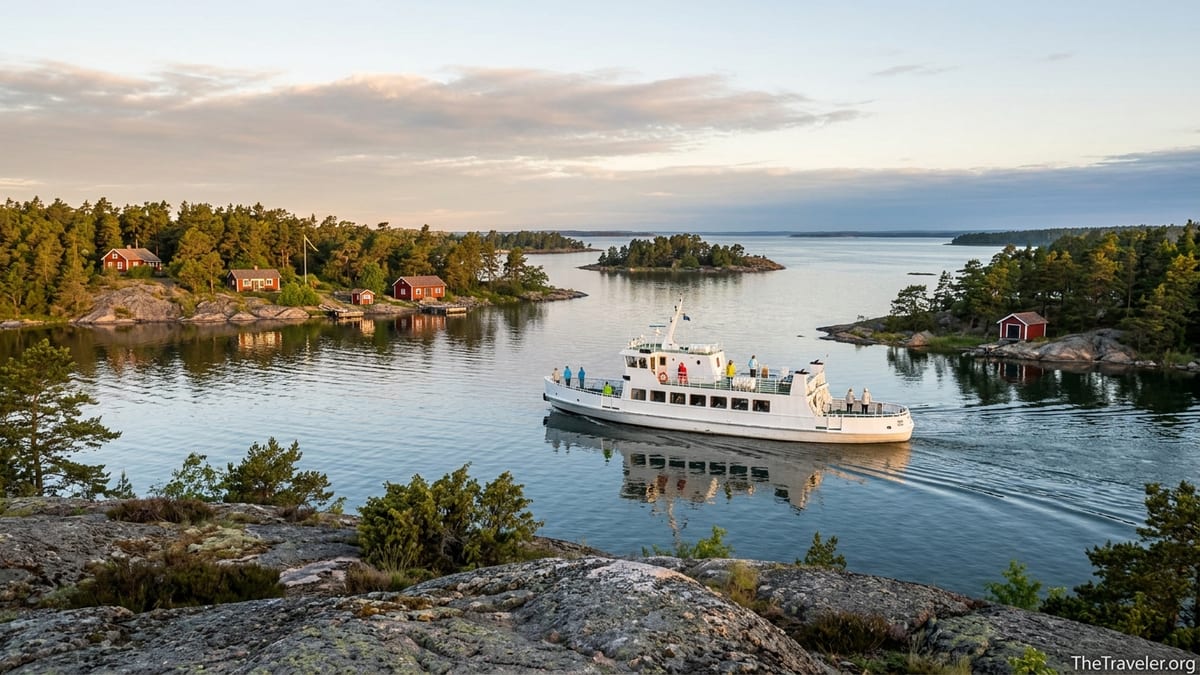
Just beyond Stockholm’s harbor, the city dissolves into a maze of pine-clad islands, smooth granite rocks and red wooden cottages. With around 30,000 islands and skerries scattered across the Baltic, the Stockholm archipelago is one of Europe’s most accessible wilderness areas, and the easiest way to experience it is by boat. Whether you prefer a guided cruise with lunch on board or want to ride public ferries from island to island, it is entirely possible to build your own archipelago adventure, even on a short visit.
Get the latest updates straight to your inbox!
Understanding the Stockholm Archipelago and Its Ferries
The Stockholm archipelago begins almost at the edge of the city center and stretches about 80 kilometers east into the Baltic Sea. The inner archipelago is close to Stockholm and features larger, greener islands like Vaxholm and Värmdö with small towns, cafes and guesthouses. The outer archipelago, including places like Sandhamn and Möja, feels wilder and more exposed, with open sea views, smaller settlements and wind-bent pines.
Two main ferry systems give visitors access to these islands. Waxholmsbolaget is the county-owned company that runs most of the seaborne public transport in the archipelago, operating year-round boats from central quays such as Strömkajen to dozens of inhabited islands. Several routes function like buses on water, stopping at small jetties where locals hop on with groceries and luggage.
Alongside these public ferries, private operators run sightseeing and excursion boats tailored to tourists. Companies such as Stromma operate classic archipelago cruises, including half-day sightseeing tours, lunch cruises and full-day trips like the Thousand Islands Cruise or canal tours to Sandhamn. These excursions usually depart from central berths like Nybroviken or Strandvägen and include live commentary, restaurants on board and, on some routes, time on shore.
For many travelers, the best approach is to combine both systems. You might take a guided Stromma cruise to get oriented and then spend another day using Waxholmsbolaget or commuter boats included in the Stockholm public transport network to explore at your own pace. Understanding the differences in schedules, tickets and comfort levels will help you choose the right mix.
Choosing Between Guided Tours and DIY Island Hopping
Guided archipelago tours suit visitors who want a relaxed introduction with minimal planning. A typical example is an "Archipelago Tour with Guide" run by Stromma, which lasts roughly 2.5 to 3 hours and loops through the inner archipelago from central Stockholm. Another popular option is the boat trip to Vaxholm, a charming little town on an island about an hour from the city, where passengers can disembark to stroll the harbor and return on a later departure. Full-day cruises, like the Archipelago Canal Tour to Sandhamn or the Thousand Islands Cruise, often include several hours of sailing with commentary plus time ashore and meals.
These organized trips cost more than local ferries but remove guesswork. As of 2026, shorter guided tours generally start in the range of the equivalent of 30 to 60 US dollars per adult, with full-day packages costing more. Prices vary depending on season and whether food is included, but in exchange you get an English-speaking guide, reserved seating and clear timetables that are easy for visitors to follow.
DIY island hopping is ideal for independent travelers or anyone staying in Stockholm for several days. With a travel card valid on Stockholm’s public transport, you can ride certain commuter ferries from Slussen or Nybroviken to nearby islands within the same zone as metro and buses. In addition, Waxholmsbolaget runs regular boats further out into the archipelago, with separate tickets purchased at quays, on board or online. This approach feels more like riding a local bus: fewer explanations, but more flexibility to hop on and off and mix boats with island buses and walking trails.
If you enjoy planning and do not mind checking timetables, DIY hopping lets you reach quieter islands where tour boats rarely stop. For example, you could ride a commuter ferry out to Vaxholm in the morning, connect to a Waxholmsbolaget boat to the smaller island of Grinda for an afternoon hike and swim, then continue to Värmdö or return to Stockholm in the evening, all using scheduled public services.
Key Departure Points, Lines and Typical Routes
Most visitors start from central Stockholm. From Nybroviken and the nearby Strandvägen waterfront, private sightseeing boats and some Waxholmsbolaget ferries depart throughout the day in summer. This is where you are likely to board Stromma’s archipelago tours, the Cinderella boats to Sandhamn or fast boats to islands like Grinda and Möja. The area is an easy walk from popular districts such as Östermalm and Norrmalm.
Strömkajen, a quay below the Grand Hotel opposite the Royal Palace, is a major Waxholmsbolaget hub. From here, boats fan out towards classic archipelago destinations including Vaxholm, Grinda and Möja. Travelers with early departures often pick accommodation within walking distance so they can be at the pier 20 to 30 minutes before sailing, which is recommended for popular morning services in July and August.
Public commuter ferries, which are part of Stockholm’s SL network, depart from central piers like Slussen, Nybroplan and Klara Mälarstrand. These lines focus on the inner archipelago and city islands. For example, one commuter route connects central Stockholm with the island suburb of Vaxholm in around an hour, and others hop between city districts such as Södermalm, Djurgården and Nacka. The same tickets you use on the metro or buses cover these boats, which makes them an inexpensive way to experience the waterways.
A classic full-day route for first-time visitors might look like this: depart Strömkajen around 9:00 for Vaxholm on a Waxholmsbolaget or commuter ferry, spend two hours exploring the town and its fortress views, then continue by boat around midday to Grinda. After lunch at the island inn and a swim at one of the smooth rock outcrops, catch a late afternoon boat back towards Stockholm, arriving in the city by early evening. With careful timetable checks, a variation of this loop is possible on most summer days.
Tickets, Passes, Prices and Seasonality
Understanding tickets can save both time and money. Stockholm’s public transport authority issues travel cards and passes that are valid on metro, trams, buses and designated commuter boats. A 24-hour or 72-hour pass, for example, allows unlimited travel during its validity, including on inner archipelago commuter lines. For a traveler staying in the city for two or three days, this card often pays for itself after a couple of boat journeys mixed with normal city transport.
Waxholmsbolaget tickets are separate from most SL fares, although in recent seasons certain stretches, such as boats between Stockholm and Vaxholm, have been included in the public transport area. The simplest approach for visitors is to treat Waxholmsbolaget as a stand-alone ferry company. You usually pay a per-leg fare based on distance and sometimes season. As of 2026, a single adult journey from Stockholm to Vaxholm on a regular ferry commonly costs in the same order of magnitude as a typical city restaurant main course, with outer-archipelago trips like Stockholm to Sandhamn naturally higher. Always confirm current prices at ticket counters or in official apps before you sail.
Private sightseeing and excursion operators such as Stromma price their tours per cruise, often with online pre-booking discounts. Half-day sightseeing cruises into the archipelago typically fall into a mid-range leisure activity price bracket, while premium products like a full-day Thousand Islands Cruise with multiple island stops and meals onboard sit closer to the cost of a fine dining evening with wine in Stockholm. Families should look for child discounts and family tickets, which are commonly offered during school holidays.
Seasonality matters. Summer, from roughly mid-June through August, brings the densest network of departures, extra express boats and warmer water for swimming. Shoulder seasons in May, early June and September still offer many services, often with fewer crowds and somewhat lower prices on tours, but some smaller island guesthouses reduce hours. In winter, several inner archipelago routes continue year-round, but many leisure-oriented services pause and some outer routes navigate ice conditions or stop entirely. If you are traveling outside summer, plan conservative itineraries using islands with reliable winter connections, such as Vaxholm, Värmdö and larger hubs.
Island Highlights and Sample Itineraries
Vaxholm is the archetypal first stop. Often called the capital of the archipelago, this small town sits about an hour by regular ferry from central Stockholm. Visitors stroll wooden streets lined with pastel houses, pause for coffee and cinnamon buns at harbor cafes and view the imposing 16th-century Vaxholm Fortress across the water. Many travelers combine a morning in Vaxholm with an onward boat to a quieter island, returning to Stockholm in the evening.
Grinda, a nature reserve island, offers easy walking and classic summer activities. Arriving at the main jetty, you can follow forest paths to sandy coves and smooth rock outcrops suitable for picnics and swimming. A small inn and seasonal restaurants serve local fish, salads and Swedish classics. The island is small enough to explore in a few hours yet feels far removed from the city. In high season, boats from both Stockholm and Vaxholm call several times a day, making day trips straightforward.
For a taste of the outer archipelago, many visitors choose Sandhamn on the island of Sandön. Fast boats such as the Cinderella services reach it in roughly two to three hours from central Stockholm, and the journey passes narrow channels and open stretches of sea. Sandhamn has a busy harbor filled with sailing boats in July, a handful of hotels and guesthouses and sandy beaches among the pines. A typical full-day trip might involve a morning departure, lunch on the waterfront, a walk across the island’s dunes and evening return, though some travelers stay overnight to enjoy quieter mornings and sunsets.
Closer to Stockholm, the Fjäderholmarna islands make for an easy half-day excursion. Boats from the city center take around 25 to 30 minutes, depositing you at a compact island dotted with craft workshops, smokehouses and rocky swimming spots. This is an excellent option if you only have a few hours but want to say you have visited the archipelago. Another alternative is to use public commuter boats to island suburbs such as Nacka or Lidingö, combining short ferry rides with waterfront walks and lunch at marinas facing the city skyline.
Practical Tips for a Smooth Boat and Island Experience
Weather in the archipelago can change quickly, even in July. It is wise to dress in layers, with a windproof jacket and something warmer in your daypack, as the apparent temperature on deck drops when boats pick up speed. Good walking shoes or sandals with grip help on pine roots and smooth granite rocks, which can be slippery when wet. Many visitors also carry a lightweight towel and swimwear, since the temptation to plunge into a sheltered bay on a hot day is hard to resist.
Food planning depends on where you are going. Popular islands such as Vaxholm, Sandhamn and Fjäderholmarna have multiple cafes and restaurants, often open daily in summer but with reduced hours outside peak weeks. Smaller islands might have only one seasonal cafe or none at all. It is common for locals to pack picnic supplies from Stockholm supermarkets and enjoy a meal on the rocks or at public grilling spots. If you rely on a particular restaurant, check its opening hours before travel, especially in May or September.
Timetables deserve respect. Many routes, particularly beyond the inner archipelago, have only a few departures per day. Missing the last boat back can mean an unexpected night on the island. Build in generous margins between connections and aim to return to the pier at least 15 to 20 minutes before departure. In peak season, popular departures can be busy, and while operators may deploy extra capacity, it is safer not to cut it too fine.
Finally, remember that many Waxholmsbolaget boats and commuter ferries are primarily public transport for residents. Boarding etiquette resembles a bus or metro: stand in line, let passengers disembark before you get on, keep luggage out of aisles and avoid loud conversations late at night. From the upper deck, you will often see islanders carrying groceries, dogs and even building materials. Sharing their everyday boat is part of the archipelago experience.
Planning Multi-Day Island Hopping Adventures
Travelers with three or more days to spare can string together multiple islands into a slow archipelago journey. One common approach is to choose a loose direction, such as heading northeast towards Vaxholm, Grinda and Möja, and book simple guesthouses on two or three islands along that line. Using Waxholmsbolaget timetables, you can plan legs of one to three hours between islands, sailing in the mornings or late afternoons and spending the bulk of the day hiking, swimming or cycling.
For example, a three-night route might begin with a night in Vaxholm to ease into archipelago life, then continue to Grinda for nature walks and saunas on the waterfront, and end on a quieter outer island like Möja or Svartsö, where dirt roads, forest trails and small harbors dominate. On the final day, a return boat from the outer island brings you back to Stockholm in a few hours. Many accommodation providers are used to guests arriving and departing by boat and will advise on the best departures for check-in and check-out times.
Southern routes, including islands like Utö and Nåttarö, are usually reached via a mix of regional buses and boats from mainland jetties such as Årsta havsbad. These islands offer long sandy beaches and pine forests that feel more remote than their distance from Stockholm suggests. Some travelers combine a few nights in the southern archipelago with cycling or hiking packages that include detailed route notes and pre-booked lodgings, taking the strain out of logistics while preserving the feel of independent travel.
When planning multi-day itineraries, aim for one or two key ferries per day rather than a chain of tight connections. The joy of the archipelago lies in slowing down: reading on a jetty between boats, following a forest path just to see where it leads or lingering over a late dinner at a waterfront inn while the sun slides along the horizon. Leave room in your schedule to follow good weather or a local’s recommendation to a favorite swimming rock.
The Takeaway
Exploring the Stockholm archipelago by ferry is one of Scandinavia’s great easy adventures. With a mix of commuter boats, county ferries and guided cruises departing directly from central Stockholm, you can step from city streets onto island paths in under an hour. Whether you opt for a half-day sightseeing tour with commentary or build your own route between Vaxholm, Grinda, Sandhamn and smaller islands, the key is to understand the boat systems, respect the timetables and travel with flexible expectations.
For first-time visitors, an ideal plan might be to start with a guided archipelago tour to get your bearings, then use a public transport pass and Waxholmsbolaget tickets for a day or two of independent island hopping. Pack layers, a picnic and a willingness to change your plan if a local points you towards a better beach or forest trail. With a bit of preparation and a spirit of curiosity, the ferries and islands of Stockholm’s archipelago offer far more than a day trip; they provide a memorable glimpse into Swedish summer life on the edge of the sea.
FAQ
Q1. Can I explore the Stockholm archipelago using only public transport tickets?
Yes, to a point. Stockholm public transport passes cover commuter ferries within designated zones, including some inner-archipelago routes such as boats to Vaxholm. For many islands further out, you will also need separate Waxholmsbolaget tickets, which you can buy at quays, on board or via official sales channels.
Q2. Which island is best for a first-time day trip from Stockholm?
Vaxholm and Grinda are two of the most user-friendly choices. Vaxholm offers a small town feel with cafes and fortress views, reachable in about an hour by ferry. Grinda is better if you want swimming and easy nature walks. Both have multiple daily departures in summer, making them simple to combine or visit separately.
Q3. Do I need to book ferries in advance?
For commuter ferries and most Waxholmsbolaget boats, advance booking is usually not required and tickets can often be purchased on the day. However, for popular private sightseeing cruises and fast boats to outer islands in July and early August, advance reservations are recommended, especially on weekends or if you are traveling in a group or with children.
Q4. Is it possible to visit the archipelago in winter?
Yes, but the experience is very different. Some inner archipelago routes operate year-round, connecting larger islands like Vaxholm and Värmdö to the city, though they may adjust paths when ice forms. Many leisure-focused services and smaller island routes pause until spring. In winter, focus on larger, well-connected islands, dress very warmly and plan conservative itineraries.
Q5. How expensive are archipelago trips compared with other Stockholm activities?
Public commuter ferries included in a transport pass are among the most budget-friendly sightseeing options in Stockholm. Separate Waxholmsbolaget journeys cost roughly the same as modest meals in the city, depending on distance, while organized cruises range from mid-priced half-day outings to premium full-day experiences comparable with fine dining. Overall costs are manageable if you mix public ferries with only one or two paid excursions.
Q6. Can I bring luggage or a bicycle on the ferries?
Small luggage such as backpacks and cabin-sized suitcases is normally fine on both commuter ferries and Waxholmsbolaget boats, provided it does not block aisles. Many archipelago ferries also carry bicycles, sometimes for an extra fee and subject to space. If you are planning a cycling trip between islands, check specific routes and seasonal rules in advance and aim for less crowded departures.
Q7. Are there restaurants and shops on the islands?
Larger and more popular islands, including Vaxholm, Sandhamn, Utö and Fjäderholmarna, have several cafes, restaurants and small shops, especially in summer. Smaller islands may have only one seasonal cafe or no services at all. Always check ahead outside July and August, and when in doubt carry snacks or a picnic so you are not reliant on a single venue being open.
Q8. Is swimming in the archipelago safe?
In summer, locals and visitors swim regularly from beaches and rocks throughout the archipelago. Water temperatures vary by month and location, but sheltered bays can feel relatively mild by Nordic standards in July and August. As with any open-water swimming, choose safe entry points, avoid boat lanes, keep an eye on children and be aware that wind and currents can make conditions feel colder than the air temperature suggests.
Q9. How many islands can I realistically visit in one day?
For a relaxed day trip, one or two islands is ideal. Trying to see three or more often leads to rushing for boats and leaving little time to enjoy each place. A common pattern is to combine a busier hub like Vaxholm with a quieter nature island such as Grinda, spending several hours on each before returning to Stockholm in the evening.
Q10. Do ferries in the Stockholm archipelago run on time?
In general, yes. Both commuter boats and Waxholmsbolaget ferries have a reputation for punctuality, especially in calm summer conditions. However, factors like heavy passenger loads, occasional technical issues or weather can cause delays. Build some flexibility into your schedule, avoid very tight connections and aim to arrive at departure piers early, particularly for the last boat of the day.