


Just beyond Stockholm’s elegant waterfront lies a maze of more than 20,000 islands and skerries stretching deep into the Baltic Sea. Known simply as “skärgården” to locals, the Stockholm Archipelago feels a world away from the Swedish capital, yet it is close enough for a spontaneous day trip. For many travelers it is the highlight of a visit to Sweden, but is it worth carving out precious days for ferries, cabins and quiet pine forests? The short answer: if you enjoy nature, water and slow moments, the archipelago is hard to beat.
Get the latest updates straight to your inbox!
Why the Stockholm Archipelago Captivates Travelers
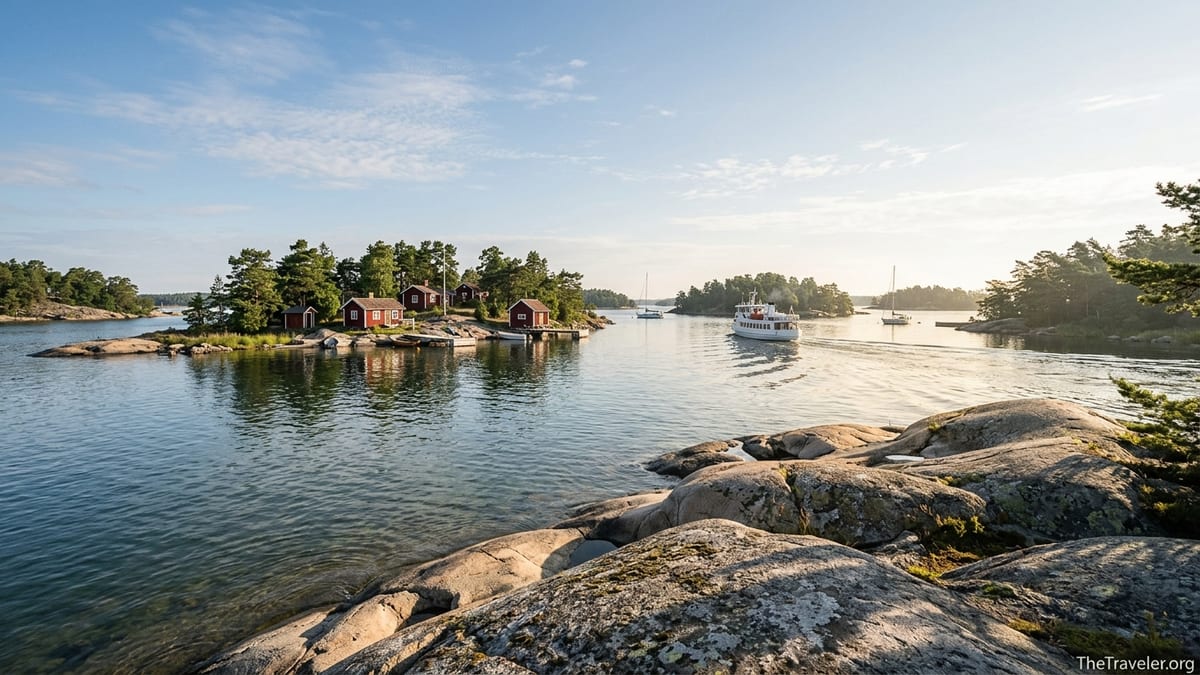
The Stockholm Archipelago is one of the largest in the Baltic Sea, with thousands of islands ranging from tiny uninhabited rocks to lively communities with guesthouses, restaurants and marinas. Boats leave central Stockholm and, within an hour, the city’s spires give way to pine-clad islets, red wooden cottages and glassy channels. For first-time visitors, that transition from urban waterfront to open seascape is often the “wow” moment that convinces them it was worth the detour.
What travelers love most is the contrast. You can spend the morning touring Stockholm’s museums and the afternoon swimming off a smooth granite rock, listening only to seabirds and the splash of the occasional fishing boat. Unlike some coastal destinations that are dominated by private villas or resorts, large parts of the archipelago feel remarkably accessible. Public ferries, basic guest harbors and Sweden’s tradition of enjoying the outdoors together make it feel welcoming even if you do not own a boat or a summer house.
The archipelago also offers a rare sense of scale. Close-in islands feel like Stockholm’s own suburban seaside, but as you go farther out the water broadens, the wind picks up and the horizon turns into open Baltic. On a single trip, you can experience sheltered bays filled with wooden sailboats, then walk across windswept dunes looking out toward Finland. That variety keeps many travelers coming back to explore new corners each time.
Finally, the archipelago fits a wide range of budgets and travel styles. Some visitors book a guided full-day cruise with lunch included. Others take a public boat using Stockholm’s transport card, hop off on a small island for a picnic, then return on an evening departure. There are polished hotels with spas in places like Sandhamn, but there are also campgrounds and rustic cottages on islands such as Grinda, so you can choose how simple or comfortable you want your stay to be.
Is It Worth It for a Short Stockholm Trip?
If you are in Stockholm for only two or three days, you might hesitate to sacrifice time in the city. In practice, even a half-day out among the islands can add a completely different dimension to your trip. The closest islets at Fjäderholmarna are only about 30 minutes by boat from central Stockholm, which makes them a realistic afternoon or evening escape. Travelers often pair a late-morning museum visit with a mid-afternoon ferry, a relaxed waterfront dinner on the island, and a twilight return as the city lights come on.
For those with three or four days in the capital, a full-day excursion deeper into the archipelago is usually well worth it. Many visitors choose a classic route to Vaxholm, a historic fortress town that lies roughly 50 minutes to 1.5 hours away by scheduled boats depending on the departure. Here, you can stroll cobbled streets lined with wooden houses, visit the coastal fortress on its own small island, and enjoy lunch at a harborfront café before heading back on a later ferry.
Travelers who enjoy hiking, swimming and quiet nature might want to go at least one step farther out to overnight. Islands such as Grinda and Sandhamn typically require around 1.5 to 2.5 hours by boat from central Stockholm, which makes them realistic as long, rewarding day trips and even better as one- or two-night stays. Visitors often comment that the feeling of waking up in the archipelago, with morning mist over the water and barely any traffic noise, is something you simply cannot get if you only base yourself in the city.
The main scenario where an archipelago visit may not feel “worth it” is if you strongly prefer dense urban energy, shopping and nightlife to nature. Outside high summer, many islands are quiet, with only a handful of restaurants open and limited evening options. In that case, a shorter panoramic boat tour that does not commit you to a particular island can still offer the scenic experience without taking over your schedule.
Signature Islands Travelers Love Most
For place-to-place comparisons, three islands come up again and again in traveler reports: Vaxholm, Grinda and Sandhamn. Each has a distinct personality and suits a slightly different kind of trip. Vaxholm is often described as the gateway to the archipelago, a small town with colorful wooden houses, ice cream stands and regular ferries. It works particularly well for families and for visitors who want “archipelago flavor” with minimal travel time.
Grinda, roughly an hour by boat from Stockholm on typical summer timetables, is a greener, more nature-focused island with no cars and only a few buildings. It is popular with couples and families who want swimming coves, easy forest paths and a clear starry sky at night. The historic inn on Grinda offers hotel-style rooms, while a cluster of simple cabins and a tenting meadow provide more budget-friendly ways to stay close to the shore.
Farther out lies Sandhamn, one of the outermost major islands and perhaps the most famous internationally. Boats here usually take between two and three hours from central Stockholm depending on the route, which is part of its appeal: by the time you arrive, the channels have opened into wide, breezy seascapes. Sandhamn’s harbor buzzes in summer with sailing yachts and day-trippers, while sandy paths lead through pine forest to broad beaches such as Trouville on the outer side of the island.
Beyond these well-known stops, there are dozens of smaller islands that attract repeat visitors. Möja draws cyclists and those looking for a traditional, lived-in island community. Utö, in the southern archipelago, appeals to active travelers with bike rentals and iron-mining history. Even with only one or two islands on your itinerary, knowing that there is always more to see in the archipelago gives a sense of discovery that keeps many travelers returning to Stockholm.
What You Actually Do There: Classic Archipelago Experiences
Daily life in the archipelago is not about big-ticket attractions but about simple activities in a striking setting. The obvious first experience is simply being on the water. Whether you choose a public ferry, a guided cruise or a small charter boat, time spent gliding between islands is a highlight in itself. Travelers often describe buying a takeaway coffee and a cinnamon bun before boarding, then enjoying them on deck as they pass rocky outcrops topped with red cottages and waving Swedish flags.
Once ashore, walking is the easiest way to explore. On Grinda, for example, a loop path leads from the southern ferry pier past beaches, grazing fields and small forested hills. It is common for visitors to stop at flat rocks where locals spread towels for sunbathing and swimming. On Sandhamn, footpaths lead from the busy harbor through quiet pine woodland to dunes and long sand beaches facing the open sea, where you can sit in the lee of a dune and watch ferries and sailing boats on the horizon.
Swimming is a central ritual for many. Even in comparatively cool water, locals plunge off jetties or from the smooth granite slabs that slope into the sea, often following a session in a simple wood-fired sauna. On some islands you can rent kayaks or stand-up paddleboards for a few hours, paddling along the shorelines between sheltered inlets and tiny skerries. Active travelers sometimes combine this with camping on designated sites or with a night in a waterfront cabin to create a short multi-day adventure.
Food is another key part of the experience. Many island restaurants serve a version of classic archipelago cooking: seafood soups, pickled herring with potatoes, grilled fish and local variations of shrimp sandwiches. At a place like the inn on Grinda, you might have lunch on a terrace overlooking the harbor, while on Vaxholm you can sit on the quay with a plate of fried herring and mashed potatoes. Prices are typical for Sweden, so travelers on a budget often pack picnic supplies from Stockholm supermarkets and then treat themselves to one sit-down meal or a coffee and cake stop on the island.
Practicalities: Ferries, Seasons and Costs
Reaching the archipelago is straightforward, but a little advance planning makes the experience smoother. In high season, roughly late June through early August, there are frequent boat departures from central Stockholm and from suburban jetties, with extra sailings to popular islands like Vaxholm, Grinda and Sandhamn. Outside this peak, schedules thin out and some island businesses close, but public transport boats usually still connect at least the larger communities. Visitors who hold Stockholm’s regional travel card can often ride certain commuter boats within the inner archipelago at no extra cost, which is worth checking when you plan.
For budgeting, a realistic approach is to think of a day in the archipelago as comparable in cost to a full day of sightseeing in Stockholm. Return tickets on classic excursion boats to mid-range islands such as Grinda or Vaxholm often come to a few hundred Swedish kronor per adult, with longer routes to outer islands priced somewhat higher. Special all-day guided cruises that include meals and commentary typically cost more but bundle several experiences, like visits to multiple islands and a buffet lunch, into one ticket.
Accommodation ranges from simple hostels and camping to boutique hotels. On Grinda, for example, there is a hotel near the waterfront, a set of modest cottages and a Sea Lodge offering compact rooms steps from the shore. Nightly rates at the inn’s hotel can range from modest to higher mid-range pricing, especially at weekends in July, while cabin rentals and tent camping offer more affordable options if you bring your own linens or sleeping bag. On Sandhamn, the Seglarhotellet and other guesthouses cater to sailors and leisure travelers who want more comforts such as on-site restaurants, bars and sometimes spa facilities.
Seasonally, most travelers find late May to early September the most rewarding time to visit, with July offering the warmest water and liveliest atmosphere. In June and August you still get long daylight hours and open venues but with slightly fewer crowds. Winter visits are possible, and a handful of islands maintain year-round ferry links and guesthouses, but options for dining and activities are much more limited. In colder months, the appeal lies in quiet walks, frost on the rocks and, occasionally, ice-framed channels rather than in swimming or beach life.
Matching the Archipelago to Your Travel Style
Whether the archipelago is “worth it” ultimately depends on what you enjoy most on a trip. If you value landscapes, slow mornings and time outside more than museums or nightlife, it is likely to be a highlight. For example, a couple on a long weekend might spend their first day exploring Gamla Stan and Djurgården, then dedicate the second day to Grinda: morning ferry, a hike across the island, an afternoon swim and a relaxed dinner at the inn before catching an evening boat back.
Families often appreciate how flexible an archipelago day can be. Children can run on open rocks, paddle in shallow bays and watch ferries up close. On Vaxholm, the combination of a short boat ride, a compact town and a fortress reached by a tiny shuttle boat makes for an adventure without long hikes. Parents can bring snacks and spare clothes in a backpack, stopping at playgrounds and waterfront cafés as needed, without committing to long transfers.
Solo travelers and photographers tend to gravitate toward quieter islands and shoulder seasons. A spring weekday on Sandhamn, for instance, can mean empty beaches and soft, low light over the water, with enough open cafés near the harbor to provide coffee and warmth between walks. In autumn, the trees on islands like Vaxholm and Grinda shift into reds and yellows, and the lower angle of the sun gives the granite rocks and wooden houses a particularly photogenic glow.
Those who prioritize nightlife and shopping will find the archipelago more subdued. Aside from a handful of lively summer evenings in places like Sandhamn or Utö, most islands settle into a calm routine once dinner service winds down. In that case, you might still enjoy a half-day cruise that departs from central Stockholm, loops through the islands with commentary and returns in time for an evening in the city’s bars and restaurants.
The Takeaway
So, is the Stockholm Archipelago worth visiting? For travelers who enjoy nature, water and a slower rhythm alongside their city break, the answer is almost always yes. Even a short excursion offers a sense of Sweden that you cannot fully grasp from Stockholm’s streets alone: the red boat sheds on quiet bays, the brackish Baltic on your skin after a cold swim, the smell of pine and wood smoke drifting over a harbor.
If your time is tight, choose a simple plan rather than trying to see everything. A half-day hop to nearby Fjäderholmarna or Vaxholm fits neatly into most itineraries. With a little more flexibility, an overnight stay on Grinda or Sandhamn lets you experience both golden late-evening light and the quiet of an island morning. In every case, the key is to slow down, watch the horizon and let the rhythm of boat departures and the sound of waves dictate the pace of your day.
Travelers looking back on their trips to Stockholm often remember a particular archipelago moment: sipping coffee on a ferry deck as they passed summer cottages, jumping into unexpectedly cold water from a sun-warmed rock, or walking home along a sandy path as the sky turned pale at midnight. Those memories, more than any checklist of sights, are what make the Stockholm Archipelago feel not just worth visiting, but quietly unforgettable.
FAQ
Q1. How long does it take to reach the Stockholm Archipelago from the city center?
Travel time varies by island and type of boat, but many popular stops are surprisingly close. Nearby Fjäderholmarna can be reached in about 30 minutes from central Stockholm on typical summer services. Vaxholm is often around 50 minutes to 1.5 hours depending on the route and vessel, while mid-archipelago islands like Grinda are commonly about an hour away. Outer islands such as Sandhamn usually take closer to two to three hours, which many travelers treat as part of the experience rather than just transport.
Q2. Do I need to join a guided tour, or can I visit the islands on my own?
You can easily visit the archipelago independently using regular ferries and commuter boats, and many visitors do exactly that. Buying a ticket at the quay and hopping on a scheduled boat to Vaxholm, Grinda or Sandhamn is straightforward, and you can plan your own hikes, swims and meals. Guided full-day tours are a good choice if you prefer commentary in English, a fixed schedule and included meals, or if you want to visit multiple islands in one day without worrying about connections.
Q3. Which island is best for a first-time visitor?
For a short first visit, Vaxholm or Grinda make excellent introductions. Vaxholm offers a small-town feel with cafés, shops and a historic fortress, plus relatively short travel times that work well for half-day trips. Grinda suits travelers who prioritize nature, swimming and walking, with car-free paths and several swimming spots within easy reach of the ferry pier. If you have a full day and like a livelier harbor scene and long sandy beaches, Sandhamn is a rewarding, if slightly longer, choice.
Q4. Is the archipelago very expensive to visit?
Costs are similar to spending a day in Stockholm itself, and you can adjust your spending based on how you plan. Boat tickets to nearby islands are usually moderate, with longer routes to outer islands priced higher but still accessible for most visitors planning a special day trip. Eating in waterfront restaurants can add up, so many budget-conscious travelers bring snacks or a picnic from city supermarkets and then buy one main meal, coffee or ice cream on the island. Accommodation ranges from simple camping and hostels to comfortable inns and hotels, so you can choose an option that fits your budget.
Q5. When is the best time of year to visit the Stockholm Archipelago?
The most popular and convenient time is from late May to early September, when boat schedules are frequent and most island cafés, inns and activity providers are open. July typically offers the warmest water and the liveliest atmosphere, while June and August can be slightly quieter but still summery. Spring and autumn bring cooler air and fewer services but also more solitude and beautiful light. Winter visits appeal mainly to those who enjoy stark seascapes and very quiet islands, and they require more planning because of fewer departures and open facilities.
Q6. Can I swim in the Stockholm Archipelago, and how cold is the water?
Swimming is a major part of archipelago life, and you will find jetties, ladders and smooth rocks used as natural bathing spots on many islands. In peak summer, surface water temperatures in sheltered bays can feel relatively mild by Nordic standards, though still cooler than typical southern European seas. Outside July and early August the water is noticeably colder, and visitors who prefer warmth often opt for a quick dip followed by time in a sauna where available. Locals are used to the chill and swim for much of the season, so you will be in good company if you decide to try it.
Q7. Is it possible to stay overnight on the islands without a car?
Yes, and in fact most travelers arrive without cars, since many islands are car-free or reachable only by boat. You can book a room in an inn or small hotel near the ferry pier, rent a basic cottage a short walk from the harbor, or bring a tent to designated camping areas on islands that allow it. Because boat schedules are less frequent in the evening, staying overnight can be more relaxing than trying to rush back to Stockholm after dinner, and it lets you enjoy early morning or late evening light when day-trippers have left.
Q8. Are the islands suitable for children and families?
Many islands are very family-friendly. Children often enjoy the boat rides themselves, watching the captain dock at tiny jetties and pointing out seabirds and lighthouses. Once ashore, there are safe places to paddle in shallow water, pine forests to explore and open rocks for picnics. On busier islands like Vaxholm and Grinda, you will also find cafés, ice cream stands and sometimes playgrounds or simple beach facilities. Just be sure to bring sun protection, spare clothes and snacks, as shops and services can be more limited than in the city.
Q9. What should I pack for a day in the archipelago?
Weather in coastal Sweden can shift quickly, so layers are key. A light windproof jacket, comfortable walking shoes, swimwear, a towel and sun protection are practical basics in summer. Many visitors also bring a reusable water bottle and simple picnic supplies, especially if they plan to explore beyond the harbor area where cafés might be spaced out. A small backpack makes it easier to carry everything on board and along island paths, leaving your hands free for photos or holding onto railings on breezier boat rides.
Q10. Is the Stockholm Archipelago accessible outside the summer season?
Yes, though the experience changes significantly. Some commuter boats and larger ferries operate year-round to inhabited islands, so it is still possible to visit in spring, autumn and winter. However, timetables are more limited, and many seasonal restaurants, guesthouses and activity providers close or reduce their hours. In the off-season, the draw lies in quiet walks, crisp air and the feeling of being almost alone among the rocks and pines rather than in beach life or busy harbors. If you plan a shoulder- or winter-season visit, check boat schedules carefully and book any needed accommodation in advance.