


Few travel dilemmas are as pleasant as choosing between the Stockholm Archipelago in Sweden’s east and the Gothenburg Archipelago out west. Both offer low-slung red cottages, skerries brushed by sea wind and long summer evenings that seem to go on forever, yet the experiences they deliver are surprisingly different. Here is a clear, practical comparison to help you decide which coastal world fits your style, time and budget.
Get the latest updates straight to your inbox!
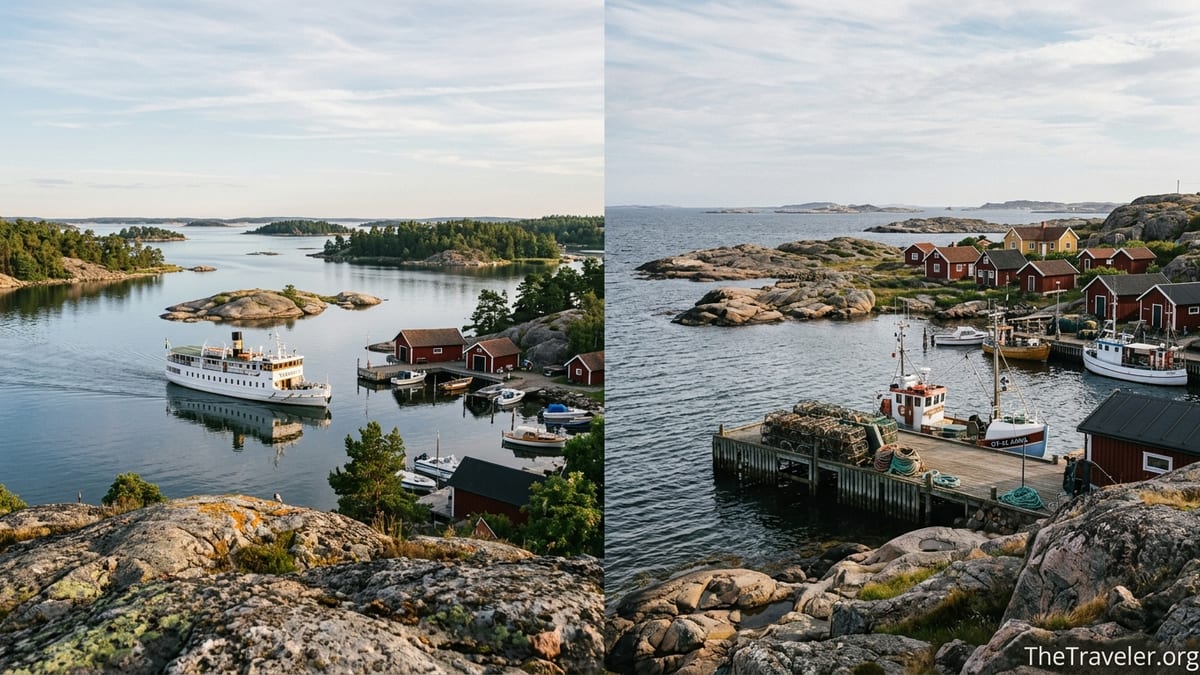
Understanding Sweden’s Two Great Archipelagos
The Stockholm Archipelago stretches out into the Baltic Sea in a great fan of more than twenty thousand islands and skerries. It begins right at the edge of the capital and runs over 100 kilometers from the inner islands like Fjäderholmarna and Vaxholm to wild outer islets where there are more seals and sea birds than people. Ferries operated by the public company Waxholmsbolaget connect inhabited islands with Stockholm, forming a genuine seaborne public transport network that locals use year-round.
The Gothenburg Archipelago lies in the Kattegat on Sweden’s west coast, split into a southern car free group of islands reached from the Saltholmen terminal and a northern group like Hönö and Björkö, linked by car ferries from Lilla Varholmen. The southern islands such as Styrsö, Brännö and Vrångö feel like small villages floating just off Gothenburg, with grocery shops, cafés and guesthouses but virtually no cars, which immediately slows down the pace.
Stockholm’s islands feel like a vast, intricate world where you could explore new corners for weeks. You might take a morning ferry from central Stockholm to Vaxholm for coffee by the fortress, then continue to islands like Grinda or Möja for swimming and walks through pine forest. Out in the outer archipelago the scenery becomes almost lunar, with low, smooth rocks polished by winter ice and dotted with small marinas and simple inns.
By contrast, the Gothenburg Archipelago is compact and easy to grasp in a few days. From downtown Gothenburg, tram and ferry combinations bring you out to car free islands in under an hour, and distances between islands are short enough to hop between them on the same day. The west coast light, the working harbors and the proximity to the larger Bohuslän coast further north give this archipelago a slightly saltier, more maritime feel compared to Stockholm’s often tranquil Baltic waters.
Access, Ferries and Getting Around Without a Car
Access is one of the biggest practical differences between the two archipelagos. In Stockholm, you can ride city buses and the metro to piers such as Strömkajen or Slussen, then continue with Waxholmsbolaget boats or private excursion lines. Many routes operate year-round as true public transport, with integrated planning tools and options to combine your Stockholm public transport pass with extra boat tickets purchased on board. Journey times vary widely: twenty minutes to Fjäderholmarna, about an hour to Vaxholm, and several hours to remote outer islands.
In Gothenburg, reaching the southern archipelago is almost disarmingly simple. You take a tram from central stops like Brunnsparken to Saltholmen, then transfer directly to the Västtrafik ferries that serve islands including Brännö, Styrsö, Donsö and Vrångö. The ferries are part of the same regional public transport system, so visitors with a valid zone ticket or day pass typically just tap in and walk aboard, treating the sea crossing like a tram on water. For the northern archipelago you travel by bus or car to Lilla Varholmen, then board the short car ferry across to islands such as Hönö.
For travelers who prefer to avoid cars entirely, Gothenburg’s southern islands are hard to beat. You can land on Styrsö, walk directly to your guesthouse, then explore the rest of the island chain by boat and on foot. In Stockholm, a car free trip is absolutely possible, but planning becomes more important because not all routes are frequent outside peak summer. For example, a day of island hopping from Stockholm might include a morning departure to Vaxholm, an onward connection to Grinda for swimming and lunch, then an evening boat back to the city, each segment booked or checked in advance to ensure you do not miss the last sailing.
When it comes to longer stays, access to grocery stores and everyday services is also relevant. Vaxholm, Sandhamn and Möja have small supermarkets and regular ferries, which makes them realistic bases for a week of self-catering in Stockholm’s islands. In Gothenburg, Styrsö and Brännö have year-round residents, small shops and ferries that run even in winter, giving that feeling of being in a living community rather than a purely seasonal resort.
Landscape, Atmosphere and Seasons
The Baltic and the Kattegat shape their coastlines in different ways, and you feel this difference as soon as you step ashore. Stockholm’s islands are often cloaked in pine and birch, with sheltered bays and relatively calm water thanks to the sheer number of skerries breaking the swell. In the inner archipelago you find classic wooden villas, guest harbors and sandy little beaches, while further out the trees thin and the rock takes over, creating vast flat slabs of granite ideal for sunbathing and cliff jumping in summer.
The Gothenburg Archipelago, open to the North Sea through the Kattegat, feels more rugged. The rock is rougher, the coastline more indented and exposed, and weather changes can be dramatic. On islands like Vrångö or Hönö you may see working fishing boats, lobster pots stacked by the harbor and gulls circling above. Even in high summer the wind can carry a sharp edge off the sea, which makes a sheltered cove or a smooth, sun warmed rock especially appealing.
Seasonality also differs slightly. Stockholm’s archipelago wakes up visibly in late spring, with an explosion of summer house residents and visitors from June through August. Many restaurants and seasonal guesthouses shut or scale back outside these months, especially on smaller islands, though the year round ferry services mean you can still visit in shoulder seasons for quiet hikes and cold dips. Winter brings short days but atmospheric trips between snow dusted islands, especially on ice strengthened ferries that keep running when the sea begins to freeze.
In Gothenburg, the archipelago is woven more tightly into everyday city life, so there is activity even outside summer. Commuters ride ferries in all seasons and some cafés and bakeries on islands such as Brännö and Styrsö stay open much of the year. However, peak tourism still concentrates between late June and mid August, when locals swim from smooth rocks until late in the evening, and guesthouses are busy with visitors who pair island days with nights out in central Gothenburg.
Costs, Accommodation and Food: What You Actually Spend
Both archipelagos sit in a country with relatively high prices by global standards, but there are ways to keep costs reasonable. In Stockholm, guided full day kayaking excursions in the archipelago that include lunch and transport often start around 1,800 to 2,000 Swedish kronor per person, according to current offerings from local outfitters. Independent travelers can rent single sea kayaks from providers south of the city or in the central islands; a typical daily rental might be around the equivalent of 55 to 65 euros, including paddle, life jacket and spray skirt, based on recent price lists from rental bases serving the southern Stockholm archipelago.
Accommodation in Stockholm’s islands ranges from simple hostel style rooms in old pilot houses to stylish boutique hotels. On Grinda, for example, there is a mix of hotel rooms and cabins, while Sandhamn offers classic wooden hotels and sailing club accommodations. Summer double rooms in popular spots regularly climb above 2,000 kronor per night, with cheaper hostel beds and basic cabins offering more budget friendly options. Self catering cabins booked for a week can be cost effective if you travel as a couple or family, especially if you shop at mainland supermarkets before boarding the ferry.
In the Gothenburg Archipelago, prices are often similar but the public transport integration can produce some savings. Because ferries in the southern archipelago are part of the regular Västtrafik system, a day ticket that covers tram, bus and boat travel lets you reach islands like Brännö and Vrångö without needing to purchase separate excursion cruises. Organized activities such as sea kayaking tours in the southern archipelago tend to be slightly cheaper than comparable tours in Stockholm, with standard guided day trips advertised around 1,200 to 1,300 kronor per person including equipment.
Food wise, both archipelagos reward travelers who alternate restaurant meals with picnics. In Stockholm, a lunch of fish soup and bread at a harbor restaurant on Vaxholm or Grinda might cost in the region of 150 to 250 kronor, without drinks. Grocery store prices on the islands are usually a little higher than on the mainland but still reasonable for breakfast supplies and simple dinners. In Gothenburg’s islands, casual waterside cafés and smokehouses serve shrimp sandwiches, fish plates and daily specials; again a main course often lands around the 150 to 250 kronor mark, with higher prices in peak summer and at more upscale venues.
Activities, Adventure and Relaxation
If your main goal is to experience outdoor adventure, both archipelagos deliver, but in slightly different flavors. The Stockholm Archipelago is vast enough to support multi day kayaking expeditions, often with wild camping on small, uninhabited islands. Several operators run overnight tours where participants pitch tents on smooth rock slabs above the water and cook dinner on camp stoves while watching the sunset fade behind distant skerries. Less intensive day tours leave from the city and explore quieter parts of the inner or middle archipelago before returning in time for an evening in Stockholm.
In Gothenburg, sea kayaking is equally popular, but distances between islands and the more exposed conditions of the west coast create a more rugged paddling environment. Outfitters in the southern archipelago rent kayaks from islands such as Donsö or Vrångö and offer guided trips that weave between channels, cross open sounds when conditions allow and tuck into sheltered coves for fika breaks. Nearby Bohuslän, stretching north from Gothenburg, is often described as one of Europe’s finest sea kayaking regions, so ambitious paddlers can combine the Gothenburg islands with longer itineraries along the coast.
Beyond kayaking, Stockholm’s archipelago is strong on gentle hiking and cultural side trips. Trails on islands such as Utö and Möja lead through forest, across open meadows and past old farmsteads. Boat excursions from Stockholm also reach destinations like Birka on Lake Mälaren, an archaeological site that can be paired with a cruise that runs on a seasonal timetable between May and October. Casual travelers can simply board a classic archipelago steamer for a three hour cruise with commentary, disembark for lunch on an island, then return to the city without ever picking up a paddle.
Gothenburg’s archipelago, in turn, shines for relaxed, close to city escapes. It is easy to spend a hot summer afternoon swimming from rocks on Brännö and be back in central Gothenburg in time for dinner. Seal watching safaris depart from the northern islands such as Hönö, with small boats taking guests out among islets where harbor seals haul out on the stones. Some tours are priced as flat rates for small groups, while others sell per person seats for a couple of hours at sea. Fishing charters, sailing trips and even winter lobster safaris round out the menu of experiences.
Which Archipelago Fits Your Travel Style?
When travelers ask which archipelago is better, the more helpful question is often which archipelago better matches their travel style and itinerary. If you are already planning several days in Stockholm and you love the idea of big city culture paired with forays into a labyrinth of peaceful islands, then the Stockholm Archipelago is the obvious choice. It suits travelers who enjoy planning, like the romance of old archipelago steamers, and might be tempted by a two or three day kayaking and camping trip between quiet skerries.
The Stockholm islands also reward those with more time. With a week, you can combine a night in Vaxholm, a few nights in a cabin on a middle archipelago island such as Grinda or Finnhamn, and perhaps a final night on an outer island guesthouse where the stars feel incredibly close on clear nights. Each move involves a scenic boat ride that becomes part of the holiday itself, but requires checking timetables and sometimes reserving seats on the most popular departures in high summer.
Gothenburg’s archipelago suits travelers who prefer simplicity and spontaneity. Because the southern islands are so integrated into the city’s public transport system, you can wake up in Gothenburg, watch the weather and decide on the spot whether to ride the tram and ferry out for hiking on Vrångö or café hopping on Styrsö. It is an ideal choice for long weekends or trips where you want a taste of Scandinavian island life without devoting your whole itinerary to it.
Families with younger children often appreciate the short journey times and car free streets of the southern archipelago, where kids can roam more freely, and the logistics of strollers, beach toys and snacks are easier. Couples looking for rugged sunsets and seafood dinners may lean toward the west coast ambiance of Gothenburg’s islands, especially if they also plan to drive or bus further north along the Bohuslän coastline to places like Marstrand or Smögen.
The Takeaway
In the end, there is no wrong answer in the choice between the Stockholm and Gothenburg archipelagos. Stockholm’s archipelago is larger, more varied and more conducive to multi day sea adventures and complex island hopping. It pairs naturally with a city break in Sweden’s capital and offers that deep, far from the mainland feeling once you reach the outer skerries. If your dream of Sweden involves long paddles between pine clad islands, nights in remote cabins and classic white hulled archipelago steamers, this is your stage.
Gothenburg’s archipelago, on the other hand, is all about ease and immediacy. Within an hour of leaving central Gothenburg you can be walking along a gravel lane toward your guesthouse on Brännö, the sound of gulls overhead and the harbor just beyond. The islands fold seamlessly into daily life and reward short, unhurried visits filled with swimming, seafood and slow walks across low granite hills.
For a first time visitor to Sweden who must choose one, a simple rule of thumb helps. If you are more excited by the idea of sprawling, quiet seascapes and are happy to invest time in ferries and planning, choose the Stockholm Archipelago. If you prefer a compact, car free island world that slots neatly into a wider west coast itinerary with minimal logistics, choose the Gothenburg Archipelago.
And if you can, do both. Start in Stockholm for a few days of east coast islands and culture, then ride the train to Gothenburg and finish with a couple of nights on a southern archipelago island. The contrast between Baltic calm and west coast wind will leave you with a rounded sense of Sweden’s maritime heart.
FAQ
Q1. Which archipelago is better for a first time visitor to Sweden?
For a first visit, the better choice depends on your route. If you are centering your trip on Stockholm and have several days there, the Stockholm Archipelago gives a deeper sense of how locals use the sea as an extension of the city and offers more options for varied day trips and overnights. If your itinerary focuses on the west coast or you prefer simple logistics and quick access from a city, the Gothenburg Archipelago is ideal.
Q2. Is the Stockholm Archipelago more expensive than Gothenburg’s islands?
Prices for accommodation, food and activities are broadly similar, with individual businesses setting their own rates. Organized full day kayak tours around Stockholm often start slightly higher than equivalent tours in the Gothenburg Archipelago, reflecting demand and the popularity of overnight camping trips. However, in Gothenburg you may save on transport because the southern archipelago ferries are included in standard public transport tickets, while some Stockholm boat trips require separate fares.
Q3. Can I visit either archipelago as a day trip without a car?
Yes, both archipelagos are easy to reach by public transport. From central Stockholm you can ride buses or the metro to piers where ferries depart for nearby islands such as Fjäderholmarna and Vaxholm, making a full day of walking, swimming and café stops before heading back in the evening. From Gothenburg you can take a tram to Saltholmen and transfer directly to ferries serving islands like Brännö, Styrsö and Vrångö, returning to the city the same day.
Q4. Which archipelago is better for sea kayaking?
Both are excellent, but they cater to slightly different tastes. The Stockholm Archipelago is better for multi day journeys, with countless sheltered routes among thousands of islands and the possibility of wild camping on small skerries. The Gothenburg Archipelago and nearby Bohuslän coast offer more rugged, Atlantic influenced conditions with exciting crossings and dramatic rock formations, which appeal to paddlers seeking a wilder feel and who are comfortable with wind and waves.
Q5. Are the islands crowded in summer?
In July and early August, popular islands in both archipelagos can feel busy, especially near harbors and main beaches. In Stockholm, inner islands close to the city and famous destinations like Sandhamn attract many visitors, but you can usually find quieter spots by walking a little away from the main piers or by choosing less well known islands. In Gothenburg, day trippers fill ferries on sunny weekends, yet even then it is often possible to find empty stretches of rock or quiet footpaths once you move away from the main landing stages.
Q6. What is the best time of year to visit the archipelagos?
Late June through August offers the warmest weather, long evenings and the widest choice of ferries, tours and open restaurants. Shoulder seasons in May, early June and September can be beautiful for hiking and photography, with cooler air, fewer people and lower accommodation prices, though some seasonal services may be limited. Winter visits appeal to travelers who like stark light, short days and the experience of riding ice strengthened ferries between snow dusted islands.
Q7. Is swimming safe in the Stockholm and Gothenburg archipelagos?
Swimming is a cherished part of Swedish summer life in both regions, and locals regularly jump from piers or smooth rocks into the sea. Water temperatures in high summer typically remain cool by many travelers’ standards, so a quick dip is common, but longer swims are certainly possible for those used to cooler water. Always follow local signage, ask residents about currents or boat traffic, and favor designated bathing places or sheltered coves, especially if you are not a strong swimmer.
Q8. Do I need to book ferries and accommodation far in advance?
For regular public ferries in both archipelagos, advance booking is often not required, although some excursion cruises and longer routes benefit from reservations, particularly in July and on weekends. Accommodation on popular islands can sell out months ahead for peak summer dates, especially small guesthouses and family cabins, so early booking is wise if you have fixed travel dates. Outside the busiest period, it is often easier to find last minute rooms or cabins, especially midweek.
Q9. Which archipelago is better suited to families with children?
Families often find the Gothenburg southern archipelago especially convenient due to car free streets, short ferry rides and easy walking distances between harbors, beaches and guesthouses. Children can roam a bit more freely on islands like Brännö, and parents appreciate being able to return to Gothenburg quickly if weather changes. That said, many Stockholm islands, such as Grinda or Utö, also cater well to families with safe swimming spots, playgrounds and kid friendly cafés.
Q10. If I only have three days in Sweden, which archipelago should I choose?
With just three days, it usually makes sense to focus on the archipelago closest to your arrival city. If you fly into Stockholm, spend one day exploring the city and one or two days hopping through the inner archipelago, perhaps staying overnight on an island. If you arrive in Gothenburg or are especially drawn to the west coast, base yourself in the city and use the southern archipelago for relaxed day trips that combine swimming, walking and seafood before returning to urban restaurants and nightlife in the evening.