


El Hierro is the smallest and quietest of Spain’s Canary Islands, and reaching it takes one extra step compared with the better known neighbours. The island has a small airport and a single ferry port at Puerto de la Estaca, but no direct flights from mainland Spain or foreign airports and no long distance passenger ferries. Instead, you connect via Tenerife or sometimes Gran Canaria by inter island flight or by ferry from Los Cristianos. This guide explains the main route combinations, how to make your transfers work smoothly, and what to expect from buses, taxis and car hire once you arrive.
Get the latest updates straight to your inbox!
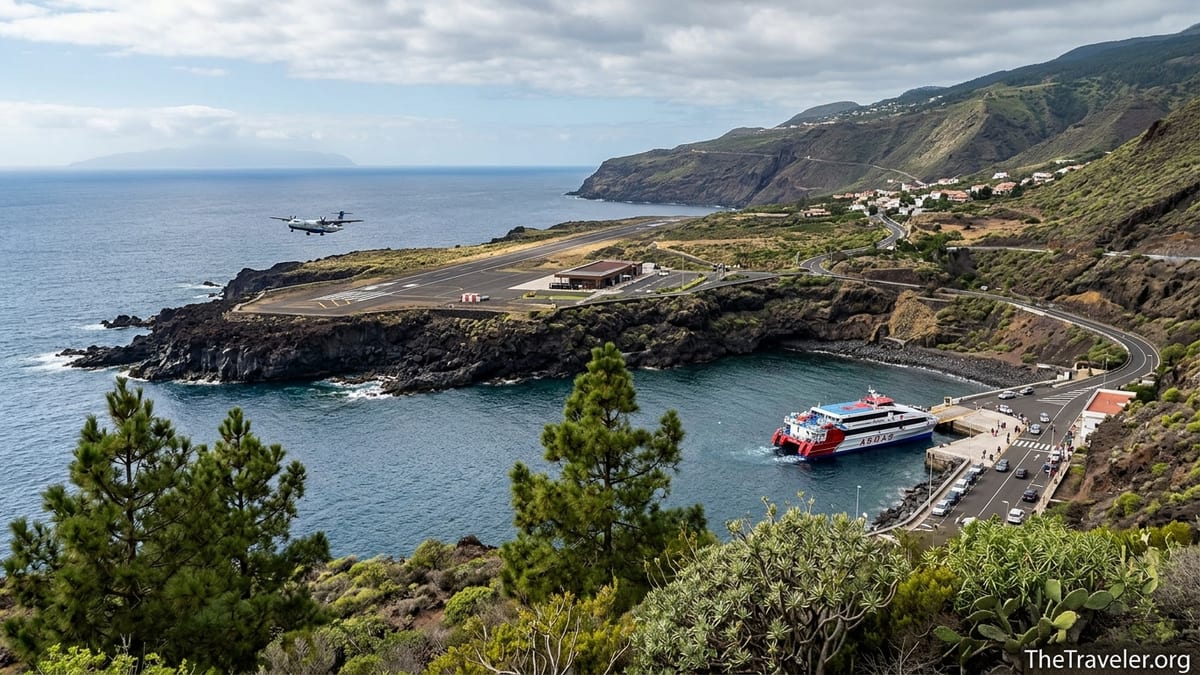
Understanding El Hierro’s Air and Sea Gateways
El Hierro Airport lies on the northeast coast near Valverde and handles only short haul inter island traffic. Official tourism and airport information confirms that there are currently no direct international or mainland Spain flights, and that scheduled services are limited to Tenerife North and Gran Canaria, operated primarily by Binter Canarias and Canaryfly. All travellers arriving by air therefore need at least one connection within the Canary Islands.
Maritime links use Puerto de la Estaca, a small port roughly 7 kilometres from Valverde. From here, ferries run to Los Cristianos on the south coast of Tenerife, primarily operated on a high speed catamaran by Naviera Armas, with additional services now sold by Fred. Olsen Express and related brands. There is currently no regular passenger ferry directly from mainland Spain to El Hierro, so travellers arriving by car ferry from the peninsula must first land on another island, most often Tenerife, and continue from Los Cristianos.
Because both the airport and the port are small and subject to Atlantic weather, schedules, frequencies and crossing times can change with the season. Any specific departure times, journey durations and sample fares mentioned in planning sources should always be treated as indicative and checked directly with the airline or ferry operator when you book.
For most visitors, this means that the core planning decision is how to combine a flight to the Canary Islands with either a short inter island hop by air or a scenic but slower ferry ride, sometimes with a mix of both.
Route 1: Fly to Tenerife Then Connect by Air to El Hierro
The most common routing is to fly into Tenerife and take a domestic flight onward to El Hierro. Tenerife has two airports: Tenerife South, which handles most international and holiday charter traffic, and Tenerife North, which is the hub for many inter island services including the El Hierro route. Binter Canarias and Canaryfly usually operate several daily flights between Tenerife North and El Hierro, plus at least some services from Gran Canaria according to recent schedules, although exact frequencies vary by day and season and must be verified at the time of booking.
If your inbound flight lands at Tenerife South, you need to factor in a transfer by road to Tenerife North. The drive between the airports typically takes around 45 to 60 minutes in light traffic, and can take longer in peak hours. Public buses connect both airports with Santa Cruz de Tenerife and other points, and there are buses that link the two airports with a change en route, but many travellers prefer a direct taxi or pre booked transfer for speed. Because inter island flights close check in earlier than many low cost carriers and can be affected by weather and air traffic, it is prudent to allow a generous connection margin: at least three hours between scheduled landing at Tenerife South and scheduled departure from Tenerife North, and longer if you need to collect checked luggage.
If you arrive directly into Tenerife North from mainland Spain or elsewhere in Europe, the connection is simpler. You can usually remain airside if both flights are on the same ticket and carrier, but many inter island tickets are sold separately, so you should be prepared to collect bags and check in again. In either case, building in a minimum of 90 minutes between flights is advisable, and more if you want a buffer for delays. Any specific minimum connection times quoted by airlines should take precedence, and you should confirm them when purchasing your ticket.
The final Tenerife North to El Hierro flight segment itself is short, often around 40 to 50 minutes in the air on a turboprop aircraft. Seats are limited compared with mainline jets, and loads can be heavy around Spanish public holidays, summer, and local events on El Hierro. Rather than relying on generic rules, a good strategy is to search several months’ worth of dates in peak periods and observe how quickly the lower fare buckets disappear, then book as early as practical for your own travel window if those patterns show consistent early sell outs.
Route 2: Fly to Tenerife and Take the Ferry from Los Cristianos
For travellers who enjoy sea journeys, are bringing a vehicle, or find that flights to El Hierro are sold out or poorly timed, the principal alternative is to continue by ferry. Services between Los Cristianos and Puerto de la Estaca operate several times per week, and on some days daily, with a typical advertised crossing time of around two and a half to three hours on a fast catamaran, subject to sea conditions. Operator websites and port authority information show multiple departures, but exact days, departure times and any intermediate stops can change, so you must check the current timetable directly with the ferry company when booking.
Most international flights land at Tenerife South, which is conveniently close to Los Cristianos. The transfer by road from the airport to the port area usually takes around 15 to 25 minutes depending on traffic. Public buses connect the airport with Los Cristianos and the wider southern resort area at regular intervals during the day, and there are usually taxis available rankside that can cover the journey more quickly for a higher cost. If your ferry departure is in the early morning, it is often sensible to overnight in the Los Cristianos area rather than risk a tight arrival connection.
From Tenerife North, the transfer to Los Cristianos is longer, typically an hour or more by road. You can make the journey by a combination of buses, using services that link the north of the island with the south via Santa Cruz or the main motorway corridor, or by pre arranged transfer or taxi. When combining a flight into Tenerife North with a ferry from Los Cristianos on the same day, you should again allow a comfortable buffer: for example, enough time to collect bags, transfer across the island and check in for the ferry, which may require arrival at the port at least an hour before departure for vehicle passengers and somewhat less for foot passengers, subject to the operator’s current rules.
Ferry tickets typically offer different fare levels for foot passengers and for vehicles, and there may be resident discounts for people registered in the Canary Islands. Because fuel prices, schedules and demand fluctuate, you should treat any fare examples as indicative only and always confirm the total price, luggage rules and check in requirements with the operator you choose.
Route 3: Via Gran Canaria and Other Island Hubs
Gran Canaria serves as another useful hub for reaching El Hierro. According to current airport and tourism information, Binter Canarias operates routes between Gran Canaria and El Hierro, sometimes direct and sometimes with a stop via Tenerife North depending on the season. Canaryfly may also operate or codeshare on some inter island services. However, these flights do not necessarily run daily year round, and timetables are periodically adjusted, so you must verify on the airline’s booking engine whether a same day connection is possible on your intended dates.
If you are flying from a European city that has strong links to Gran Canaria but fewer direct services to Tenerife, routing via Gran Canaria may produce a shorter overall journey or better pricing. Once you land, transfers within Gran Canaria Airport are straightforward because both international and inter island flights share the same terminal complex. As with Tenerife, many inter island flights are sold on separate tickets, so you should leave enough time to clear passport control if relevant, collect baggage and check in again. A safe planning margin is at least 90 minutes from scheduled landing to inter island departure, but this should be adjusted upward if your incoming flight is prone to delays or arrives in a busy time band.
Some travellers also combine Gran Canaria and Tenerife in a multi stop Canary Islands itinerary before heading to El Hierro. In that case, you can use a mixture of inter island flights and ferries between the larger islands and then make your final hop to El Hierro by whichever mode offers the best timing and weather window. Because domestic air and sea schedules are less frequent than on many mainland routes, it is wise to plan the El Hierro segment as a fixed point in your itinerary and build more flexible sightseeing days around it.
When comparing prices and timings across these options, remember that not all comparison websites capture every inter island fare, and some smaller carriers sell most of their inventory directly. Running a test search on airline and ferry operator sites for several shoulder and peak season dates will give you a sense of which routings are robust and which rely on very tight, disruption sensitive connections.
Route 4: Combining Flights and Ferries in One Itinerary
There are situations where mixing a short flight with a ferry makes sense. For example, you might fly from your origin to Tenerife North, take an inter island flight to El Hierro, and return by ferry to Los Cristianos to continue by road around Tenerife. Or you could arrive on a ferry with a rental car and depart by air as a foot passenger if your rental arrangement permits one way drops on another island. Each combination has different implications for luggage, cost and timetable flexibility.
Because inter island flights use smaller aircraft, they can be more sensitive to high winds, low cloud and crosswinds than larger jets. On days of unstable weather, flights to and from El Hierro may experience delays or occasional cancellations. Ferries are generally more tolerant of windy conditions but can be affected by heavy seas or port closures. If your schedule is tight, one strategy is to arrange at least one direction by the mode that appears less likely to be disrupted during your season of travel, based on the previous year’s pattern of advisories and anecdotal reports, and to avoid planning same day onward long haul flights without an overnight buffer.
When mixing modes, pay close attention to check in rules. Airlines may require passengers to be present at the airport significantly earlier than the actual flight time, especially if you have checked baggage, while ferry operators set their own latest arrival times for both foot and vehicle passengers. Because these rules change, it is essential to confirm the current requirements close to your date of travel and to allow extra time for road transfers between the airport and the port, particularly on Tenerife where motorway traffic can be heavy.
One advantage of combining flights and ferries is the varied experience: you gain aerial views of the volcanic landscape on the outbound leg and a front row perspective on the island’s cliffs and sea stacks from the ferry on the return. If experience matters as much as speed, this can be a compelling way to reach and leave El Hierro while still maintaining some resilience in your plan.
Choosing Between Flight and Ferry: Practical Considerations
Door to door travel time is often the main deciding factor. A same day itinerary of a European city to Tenerife and on to El Hierro by air can be remarkably efficient if flights line up, but even small delays can cascade when inter island frequencies are limited. A ferry based routing can look slower on paper, yet in practice may involve fewer separate check ins and security queues, especially if you arrive at Tenerife South, stay overnight near Los Cristianos, and board a morning sailing well rested. To compare options fairly, include all transfer segments, wait times and likely delays rather than focusing solely on direct flight times or published crossing durations.
Comfort and personal tolerance for seasickness also matter. Fast catamarans offer modern facilities and airline style seating, but crossings can be bouncy in strong winds and Atlantic swell, particularly in winter months. If you are prone to motion sickness, a short inter island flight may be preferable, despite the additional airport formalities. Conversely, those who dislike small aircraft or have limited mobility may find the ferry’s open spaces and simpler boarding more comfortable, though they should still confirm accessibility provisions with the operator.
Luggage and vehicle needs are another key factor. Ferries allow you to bring more baggage and to travel with your own car or campervan, subject to vehicle height and length limits and the operator’s rules. Inter island flights typically apply stricter checked baggage allowances, and sports equipment or dive gear may incur surcharges or require advance notice. Weather related disruption should also be weighed: winter storms and trade wind peaks can affect both modes, but not always at the same time or on the same days, so checking recent service notices and advisories shortly before travel is sensible.
Frequency is generally higher on the Tenerife North to El Hierro air route than on the ferry line, especially outside peak tourist seasons, though exact numbers vary year by year. In high demand months such as August, Easter week and local fiesta periods, both planes and ferries can sell out. Rather than quoting fixed booking windows, the most reliable method is to select likely travel dates in those months, inspect current seat and cabin availability several months in advance, and if the lower fares or preferred sailings are already tight, to commit early and then build the rest of your itinerary around those confirmed legs.
Getting Around El Hierro: Buses, Car Hire and Roads
Once on the island, you will find a small but useful public bus network, known locally as guaguas, operated by TransHierro under the island council’s oversight. Current guides and timetables indicate that there is a dedicated airport bus line that links El Hierro Airport with Valverde, and a separate line that connects Puerto de la Estaca with the capital. From Valverde, additional routes run to La Frontera in the northwestern valley and to El Pinar and La Restinga in the south, although not all lines operate with high frequency and services can be sparse in evenings, on Sundays and on public holidays.
The bus station in Valverde serves as a hub, with airport and port lines timed, as far as possible, to connect with some flight and ferry arrivals. However, schedules are subject to funding, demand and seasonal adjustments, and the latest departure times and frequencies should always be checked against the most recent timetable published by TransHierro or the island council. Fares have historically been modest, and discount schemes may exist for residents or frequent users, but visitors should be prepared for minor changes due to fuel and operating cost fluctuations.
For most travellers, especially those staying in rural casas or planning to explore hiking trails and scenic viewpoints, renting a car is the most flexible option. Several local and Canary wide rental agencies maintain small fleets on El Hierro, with offices at the airport, at Puerto de la Estaca for some ferry arrivals, and in larger towns such as Valverde and La Frontera. Common requirements include a valid driving licence held for at least one or two years, a minimum age that is often set around 21 to 23 for standard categories, and a credit card in the driver’s name for the security deposit. Because the island fleet is limited, it is strongly advisable to reserve well in advance for peak holiday periods and long weekends.
Driving on El Hierro is a pleasure but demands attention. Roads are generally well surfaced yet often steep, narrow and winding as they climb from sea level up to the central plateau and descend again into other valleys. Microclimates are pronounced: you may leave Puerto de la Estaca in sunshine and encounter thick fog or low cloud on the high passes before reaching La Frontera or El Pinar. In such conditions, allow much more time than any navigation app might suggest, use headlights and drive cautiously. Many rural lanes are single track with passing places, and livestock or cyclists can appear unexpectedly, so adopting a patient, defensive driving style is essential.
Taxis, Private Transfers and Non Drivers
Taxis are available at both the airport and Puerto de la Estaca, particularly around scheduled arrivals of flights and ferries. In quieter periods, late evenings or early mornings, you should not assume that a taxi will always be waiting at the rank; arranging a pick up by phone or through your accommodation is safer. Fares are regulated, with a combination of starting charges and per kilometre rates, plus supplements for night hours or luggage where applicable. Because official tariffs are periodically revised, any sample price for a journey such as airport to Valverde or port to La Frontera should be regarded as illustrative only, and you should check the latest guidance from the cabildo or local taxi cooperatives.
Private transfers and car with driver services are also available through local agencies and some accommodations. These can be cost effective for small groups, families with substantial luggage or travellers arriving on late ferries when bus services are limited. When comparing offers, pay attention to whether prices include waiting time in case of delayed arrivals, and confirm whether child seats or adapted vehicles are available if you need them.
Visitors who do not hold a driving licence can still enjoy a rewarding stay on El Hierro, but planning is crucial. By basing yourself in or near Valverde, La Frontera or La Restinga, you can take advantage of the more frequent bus routes and supplement them with occasional taxi rides to trailheads, viewpoints and remote villages. TransHierro and the island authorities have even produced hiking guides built around public transport stops, which can be valuable for walkers who wish to avoid renting a car.
However, those aiming to crisscross the island daily, explore multiple remote miradores in one outing or stay in very isolated rural lodgings will either need a car or should budget for substantial taxi use. Before committing to non refundable accommodation bookings, cross check the distance to the nearest bus stop, the latest return service of the day, and the availability of taxis at your planned travel times.
Accessibility, Sustainability and Responsible Travel
El Hierro has positioned itself as a model for sustainable tourism, and transport choices are part of that story. Travellers can reduce their impact by car sharing where possible, choosing smaller, fuel efficient vehicles rather than oversized models, and respecting parking rules in the island’s compact villages. Many popular miradores and trailheads have limited parking bays; if these are full, it is better to continue to a designated area and walk back than to block access roads or informal verges used by residents and emergency vehicles.
Protected natural areas, including certain sections of the island’s biosphere reserve and marine zones, may have restrictions on motor vehicle access. Pay attention to local signage, information from visitor centres and guidance provided by your host or tour operator. Entering prohibited tracks by car, motorcycle or quad not only damages fragile ecosystems but can also result in fines. Where feasible, consider using buses or shared taxis to reach starting points and continue on foot, by bicycle or with organised hiking groups.
For travellers with reduced mobility, the combination of steep terrain and limited public transport can be challenging, but not insurmountable. Some viewpoints and coastal zones are accessible by car with only short, relatively level walks from marked parking, and certain accommodations are equipped for wheelchair users. It is vital to discuss your specific needs directly with hosts and transport providers before travel, as facilities and vehicle adaptations vary widely on such a small island.
Whether you drive or rely on buses and taxis, a realistic mindset about travel times is important. The island’s scale looks small on a map, but vertical relief, hairpin bends and weather mean that a journey of only a few dozen kilometres can easily take an hour or more. Build this into your daily plans, avoid stacking too many commitments into one day, and treat transfers as part of the slower, more reflective rhythm that defines El Hierro.
Planning Checklist for a Smooth Journey
To bring everything together, it helps to think of your El Hierro trip in a series of planning steps. First, decide whether you prefer to arrive by air or by ferry, taking into account your origin city, any need to transport a vehicle, your tolerance for small aircraft or rough seas, and how much time you are willing to spend in transit. Next, examine actual airline and ferry timetables for your intended month of travel rather than relying on generic assumptions. If you see that certain flights or sailings in your week are already heavily booked or absent from the schedule, adjust your dates or routing before locking in long haul tickets.
Once you have chosen your inter island segments, plan the necessary transfers on Tenerife or Gran Canaria. Determine how you will travel between airports and ports, whether by bus, taxi or pre booked transfer, and add realistic cushions for traffic, check in and potential delays. Avoid scheduling any onward long haul flight on the same day as your El Hierro departure unless you build in many hours of buffer time or an overnight stop.
Reserve your accommodation and internal transport on El Hierro early, especially if you are travelling in school holidays, over Spanish public holidays or during local festivals and sporting events. Car hire in particular should be booked as soon as your dates are fixed, and if you plan to rely on buses, download or print the latest timetables, noting any seasonal changes. Shortly before departure, ideally a few days out, revisit airline and ferry sites to confirm that your flights or sailings are running at the expected times and check for any published operational notices.
By combining conservative connection planning, careful attention to local transport options and a flexible attitude to the island’s slower rhythm, you can make the journey to El Hierro part of the pleasure of visiting. With inter island routes, ferries, buses, taxis and hire cars understood in advance, you will be free to focus on the island’s landscapes, villages and ocean views rather than the logistics of getting there and getting around.