


From Sahara-style dunes to turquoise lagoons and wild Atlantic surf, the Canary Islands offer some of Europe’s most varied and dramatic beaches. Choosing where to base yourself is not always obvious, especially if you are trying to balance family-friendly swimming with a couple of surf days or a detour to a wild black-sand cove. This guide walks through the standout beaches of Gran Canaria, Fuerteventura, Lanzarote and Tenerife, with real-world tips on conditions, services and which islands suit which type of beach holiday.
Get the latest updates straight to your inbox!
Maspalomas: Dunes, Promenades and Year-Round Sun
Maspalomas, in the south of Gran Canaria, is often the first image visitors have of the Canary Islands: a long, honey-colored beach backed by shifting dunes that look like a slice of the Sahara. The main beach runs for several kilometers from Playa del Inglés to the iconic Maspalomas lighthouse, with plenty of access points from the seafront promenade. The sand here is soft and golden, the sea is usually calmer than on the north coast of the island, and there are lifeguards on duty on the main stretches, making it a comfortable introduction for first-time visitors to the archipelago.
In practical terms, Maspalomas works especially well for mixed groups. Families tend to base themselves near the lighthouse where the water entry is gentle, there are sunbed and parasol rentals, showers and food options ranging from simple beach cafés to hotel restaurants just behind the promenade. Couples and solo travelers often walk east into the dunes, where the beach becomes wider and quieter. Some sections further along are clothing-optional and attract a more adult crowd, so if you are with children you may want to stay close to the signed family areas.
Wind can pick up in the afternoons, especially in winter, but mornings are usually calm. If you are planning to spend a full day on the sand, many visitors combine a lazy morning near the lighthouse with a late-afternoon walk into the dunes for sunset. The area behind the dunes is a protected nature reserve, so keep to marked paths and avoid trampling vegetation. Parking around the lighthouse fills up most days by late morning in high season; many travelers find it easier to stay in nearby resorts such as Meloneras or Playa del Inglés and walk or use local buses instead.
Corralejo: Dunes, Family Beaches and Easy Surf
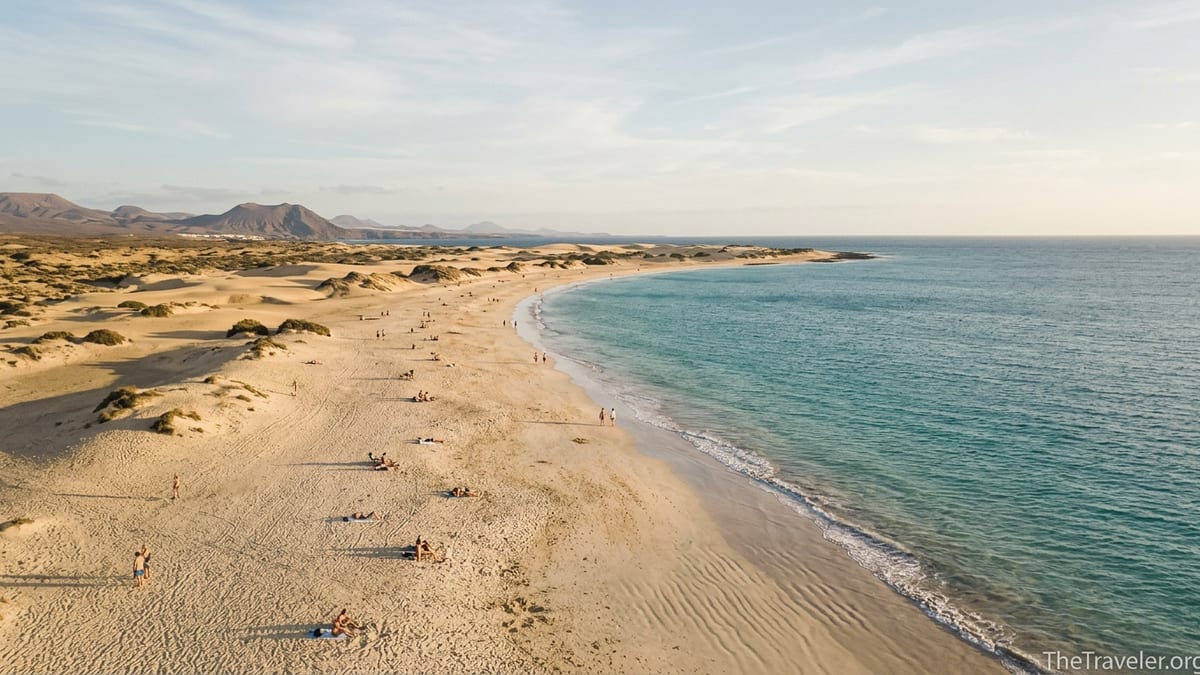
Corralejo, at the northern tip of Fuerteventura, offers a different style of beach escape. Here the standout draw is the Corralejo Natural Park, a sweep of pale dunes and low-lying sandbanks that runs south of town. Along this coast you will find wide, almost Caribbean-looking beaches with fine, light sand and clear water that ranges from turquoise shallows to deeper blue channels. Several sections, such as the area commonly called Flag Beach, are popular for kitesurfing and windsurfing thanks to reliable winds and open space, while more sheltered coves closer to town appeal to swimmers and paddlers.
For a family base, staying near Corralejo town itself works well. Within walking distance of the center you have small coves with very gentle waves where young children can play in knee-deep water. From town you can reach larger dune-backed beaches by hire car or local bus in around 10 to 15 minutes. On the exposed sections of coast, expect more wind and some wave chop; red or yellow flags indicate daily conditions, and you should be prepared for stronger currents than in a sheltered Mediterranean bay. On days with a red flag, many families choose to enjoy the sand and paddle only in the shallows while more experienced swimmers head to hotel pools instead.
Corralejo is also a good compromise if some in your group are keen to surf or learn a board sport. Several surf and kite schools operate from the town, offering group lessons that include transport to whichever beach has the best conditions that day. Prices are typically in line with other European surf towns, and many schools offer discounts if you book a multi-day package. Off the water, Corralejo has a compact center with supermarkets, casual restaurants and a relaxed evening atmosphere, so you do not need a car every day once you are based there.
Papagayo & Famara: Lanzarote’s Iconic Contrasts
On Lanzarote, the beaches at Papagayo and Famara showcase two very different faces of the island. In the far south, the Papagayo area consists of a series of small coves inside the Los Ajaches Natural Monument, reached via a rough dirt road from the resort town of Playa Blanca or by coastal walking paths. The sand here is a warm, golden color, and the little bays are sheltered by cliffs so the water is often calmer than on Lanzarote’s open west coast. Access by car involves a modest conservation fee per vehicle to enter the protected area, and parking is in simple dirt lots above the coves.
Services at Papagayo are intentionally limited. Besides a simple clifftop bar-restaurant, there are no formal sunbed rows, no large changing blocks and no lifeguards on the individual coves. Many visitors bring a lightweight beach umbrella, plenty of water, snacks and a dry bag for valuables. With that preparation, Papagayo becomes one of Lanzarote’s most appealing day trips: you can spend the morning exploring Timanfaya’s volcanic landscapes, then drive 20 to 30 minutes south for a late swim in clear, shallow water followed by sunset from the cliffs above the bay. In peak months, boats from Playa Blanca drop off day trippers, so arriving before late morning gives you a quieter experience.
On the opposite side of the island, Famara is Lanzarote’s wild beach: a long, straight stretch of sand set beneath dramatic cliffs, facing out to the Atlantic. Here the appeal is more about atmosphere and surf than about calm swimming. The waves can be powerful, currents are stronger, and there are often surf schools using the whitewater near shore to teach beginners the basics. Conditions change through the year, but you should assume that this is an exposed ocean beach and treat it accordingly: swim only where and when it is advised, stay within your depth, and follow instructions from any lifeguards on duty.
Famara village itself is low-key, with a handful of cafés, surf shops and rental apartments, so it suits travelers who are happier being close to nature and do not mind a bit of wind and sand. Many visitors choose to stay elsewhere on Lanzarote and visit Famara as a half-day trip for a beach walk and lunch with a view of the cliffs, while keeping their main swimming days for more sheltered bays such as Papagayo or the small town beaches of Playa Blanca.
Sotavento & the East Coast of Fuerteventura: Lagoons and Wind Sports
Further south on Fuerteventura, Sotavento is the island’s most famous beach for wind sports and one of the most photogenic strands in the Canaries. The shore here runs for several kilometers, forming a series of sandy tongues and a tidal lagoon that appears and disappears with the tide. At mid to high tide, large areas of shallow, knee- to waist-deep water form behind natural sandbars, creating a huge, mirror-like lagoon that attracts windsurfers and kitesurfers from around the world. International events are regularly held here, and dedicated centers line the beach offering equipment rental and lessons for different levels.
For a typical holidaymaker, Sotavento can be both spectacular and slightly demanding. The main beach is wide and sandy, and children enjoy splashing in the warm shallows of the lagoon at lower wind strengths. However, the constant breeze that makes the area so good for sailing means it is rarely a classic “lie very still with a paperback” beach. Sand can blow, parasols may need to be well anchored, and in the afternoons the wind often strengthens. If your priority is peaceful sunbathing, consider splitting time between Sotavento for the visual drama and quieter nearby beaches such as Costa Calma, which is more sheltered yet still offers wide, pale sand and clear water.
Reaching Sotavento requires a short drive from the main road down signed access tracks, and parking is usually on compacted dirt near the water sports centers. There are basic facilities including cafés, toilets and shade structures, but they are more limited than in resort towns. A common strategy is to base yourself in accommodation in Costa Calma or Morro Jable, rent a car for flexibility, and visit Sotavento on days when the wind forecast suits your group. Families with small children often enjoy walking along the sand at low tide when the lagoon is shallowest and the patterns left by the retreating water form natural paddling pools.
Las Teresitas & Tenerife’s Black-Sand Beaches
Tenerife has a reputation for black-sand beaches formed from volcanic rock, but one of its most attractive and accessible family beaches is actually golden. Las Teresitas, just north of Santa Cruz on the island’s northeast coast, is an artificial but very appealing crescent of imported pale sand protected by breakwaters. The bay is sheltered from swell, creating a long strip of water with only small, gentle waves and a sandy bottom that slopes slowly, which makes it popular with families from the capital on weekends. Palm trees line the back of the beach, and a low road separates it from the dramatic, dry hills of the Anaga range behind.
Facilities at Las Teresitas are straightforward but complete enough for a day out: lifeguards monitor the central sections, there are showers, toilets and changing cabins, and a mix of simple food kiosks and cafés behind the sand. Parking along the back of the beach is generally free and reasonably plentiful away from peak times, though on summer Sundays you may need to arrive earlier to find a spot. Because the sea is usually calm, stand-up paddleboarding and casual snorkeling near the rocks at the ends of the bay are common; you can often rent basic gear from small operators on or near the beach.
Elsewhere on Tenerife, the more “typical” beaches are dark or black sand, particularly along the north and northwest coasts. Places such as Playa Jardín in Puerto de la Cruz or Playa de la Arena on the west coast combine volcanic sand with promenade facilities, cafés and lifeguards, while smaller coves can be more rugged and exposed. Black sand heats up quickly in the sun, so lightweight beach shoes can make walking more comfortable at midday. The rewards for venturing beyond the resort strips are dramatic backdrops of cliffs and green hills, along with fewer crowds than at the major southern beaches of Playa de las Américas or Los Cristianos.
Family Beaches vs Surf Beaches: Choosing the Right Island
When deciding which Canary Island has the “best” beaches, the answer depends heavily on what you want from your time by the sea. For families with younger children who value safe swimming, easy facilities and relatively short airport transfers, southern Gran Canaria and southern Tenerife are strong choices. Areas such as Maspalomas and Playa del Inglés on Gran Canaria or the main resort beaches of Costa Adeje on Tenerife offer wide strips of sand, breakwaters or naturally calmer water, and dense clusters of accommodation close to the shore. You can stroll from your hotel to the beach with a stroller, find ice cream and shaded play areas nearby, and retreat back to your room without needing a car.
If your idea of a successful beach holiday includes learning to surf, kitesurf or windsurf, then Fuerteventura stands out. The combination of long sandy beaches, consistent trade winds and established schools make spots like Corralejo, El Cotillo and especially Sotavento particularly appealing to active travelers. Lanzarote’s Famara is also a favorite for surf camps, where week-long packages might include accommodation, daily lessons and simple breakfasts, creating a surf-town feel that is different from large resort complexes. In these areas, you trade a little comfort and shelter for waves, wind and a more laid-back village atmosphere.
For travelers who prioritize scenery and variety over one particular activity, Lanzarote can be an excellent middle ground. You can spend one morning on the sheltered coves of Papagayo, another afternoon exploring a black-sand cove near El Golfo, and a sunset walking along the wild sands of Famara, all within reasonable driving distances. Tenerife offers a similar mix but on a larger scale, with family-friendly Las Teresitas, resort beaches in the south, and rugged north-coast coves for those willing to rent a car. Gran Canaria, meanwhile, also hides black-sand beaches and small local coves away from Maspalomas, rewarding those who explore beyond the main tourist corridor.
Practical Beach Tips: Safety, Services and Seasons
Whichever Canary Island you choose, a few practical details help make beach days run more smoothly. Beach safety across Spain follows a flag system that is widely used in the Canaries: green for generally safe swimming, yellow for caution and red to indicate that entering the water is not recommended. Lifeguards tend to patrol the main resort and town beaches during daylight hours, but natural coves, wilder stretches such as some parts of Famara, and remote bays like some of the Papagayo coves may have no surveillance. On those beaches, it is wise to stay within your depth, avoid swimming alone and keep an eye on the wind and wave patterns.
Sun strength is another important factor. The Canaries sit closer to the equator than mainland Spain, and UV levels can be high even when temperatures feel comfortable. A common pattern is to enjoy a couple of hours on the beach before 11 a.m., retreat for lunch and a siesta, then return after 4 p.m. when the sun is less intense and the light is softer. Many regular visitors bring a lightweight beach tent or a pop-up sun shelter, particularly for beaches with limited natural shade such as Sotavento or the dunes near Corralejo, and prefer quick-drying long-sleeve rash vests for children rather than relying entirely on sunscreen.
Seasonally, the Canary Islands are genuinely year-round. Winter air temperatures are often mild enough for beach walks and sunbathing, though the water feels cooler, and winds are stronger on the more exposed islands. This is when surfers and kitesurfers are most active, especially on Fuerteventura and Lanzarote. Spring and autumn can be ideal for mixed groups, with warm but not sweltering days and slightly less crowded beaches. In high summer, all islands see an increase in visitors, but Fuerteventura and Lanzarote, with their breezier climates, can feel less humid than the leeward sides of Gran Canaria and Tenerife.
FAQ
Q1. Which Canary Island has the best beaches overall?
The answer depends on your priorities, but for pure variety and long, wild strands, many travelers rate Fuerteventura highest, with Lanzarote close behind for its mix of Papagayo coves and Famara’s dramatic sweep.
Q2. Where is best in the Canary Islands for families with small children?
Southern Gran Canaria and southern Tenerife work very well, especially around Maspalomas, Meloneras and Costa Adeje, thanks to gentle entry into the sea, lifeguards, promenades and nearby accommodation.
Q3. Which Canary Island is best for surfing and kitesurfing?
Fuerteventura is the top choice for board sports, particularly around Corralejo in the north and Sotavento in the south; Lanzarote’s Famara is also very popular with surfers.
Q4. Are the Papagayo beaches on Lanzarote suitable for non-swimmers?
The coves are sheltered and usually calmer than open west-coast beaches, but there are no lifeguards, so non-swimmers should stay in very shallow water and avoid days with strong swell.
Q5. Do I need a car to visit Sotavento or Papagayo?
A car is highly recommended for both. Public transport is limited, and the last sections to Sotavento and Papagayo involve access tracks where having your own vehicle offers much more flexibility.
Q6. Are black-sand beaches uncomfortable to walk on?
Black volcanic sand can become hot under strong sun, especially at midday. Beach sandals or light water shoes make walking more comfortable, particularly for children.
Q7. Is swimming safe at Famara and other surf beaches?
These beaches are exposed to Atlantic swell and can have strong currents. Many visitors focus on walking, sunbathing or supervised surf lessons rather than casual swimming beyond their depth.
Q8. When is the best time of year for a beach holiday in the Canary Islands?
The islands are a year-round destination. For a balance of warmth and manageable crowds, many visitors favor late spring and early autumn, though winter sun remains a major draw.
Q9. Can I rely on beach facilities like showers and sunbeds everywhere?
Main resort and town beaches usually have showers, toilets and paid sunbeds, while natural areas such as Papagayo coves or remote black-sand bays often have few or no services, so you should bring your own supplies.
Q10. How strong is the sun in the Canary Islands compared with mainland Europe?
The UV index is often higher than in much of mainland Europe, especially around midday, so high-SPF sunscreen, shade, hats and protective clothing are strongly recommended even on breezy days.