


Finland is one of those countries that can feel like three different destinations in one. In Helsinki you have Nordic design, busy food halls and tram-lined boulevards. A few hours away, dense forests and glassy lakes dominate the landscape. Farther north in Lapland, reindeer graze under winter auroras and the summer sun barely sets. Planning a trip that weaves these worlds together, while also choosing the right season, is the key to a memorable Finland itinerary. This guide walks you through how to combine cities, nature and seasonal highlights with concrete examples, realistic travel times and on-the-ground details.
Get the latest updates straight to your inbox!
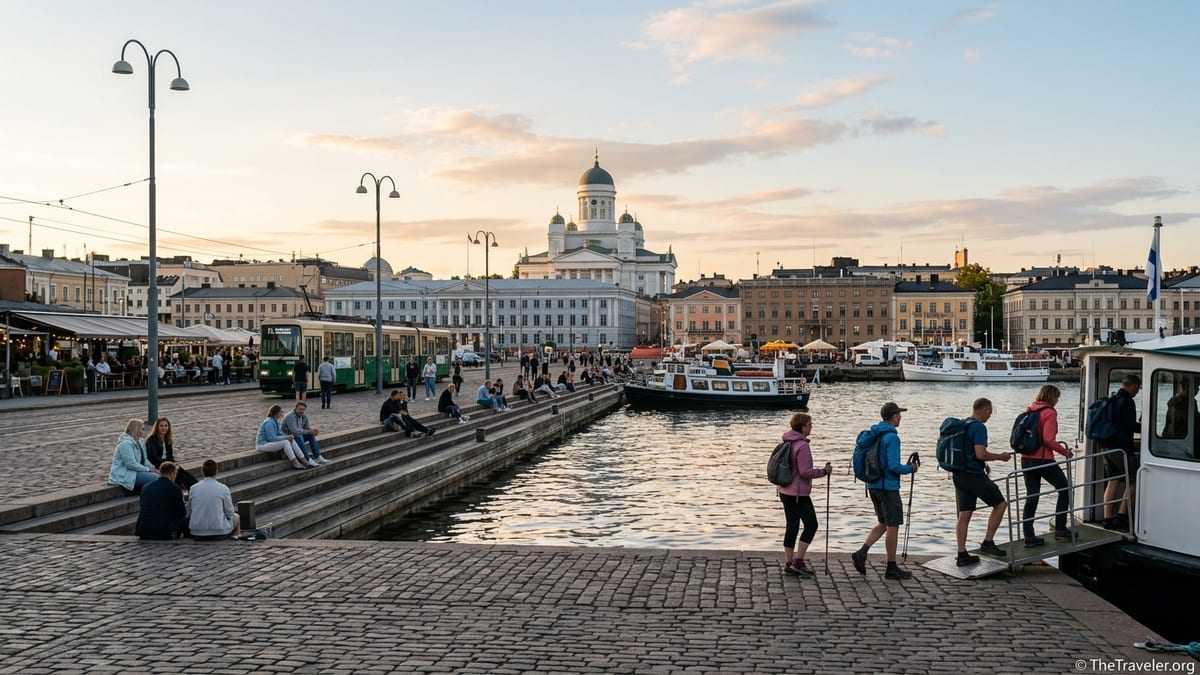
Understanding Finland’s Seasons and What They Actually Feel Like
Before you book anything, decide what “Finland” you want to experience. The same Helsinki street in January and July might as well be in different countries. Official tourism figures and weather data show genuinely distinct seasons, with Lapland winter temperatures often dropping below -20°C while southern cities can reach around +25°C in July. In practical terms this means your packing list, daily rhythm and even opening hours of attractions will change dramatically depending on when you visit.
For Northern Lights, most Finnish and international sources now describe late August to late March as the core aurora season, with the most popular window from roughly September to early April in Lapland. In places like Rovaniemi, Levi or Saariselkä, tour companies typically run nightly aurora hunts throughout this period when skies are clear. Travelers who visited in early January or February often describe heading out around 9 or 10 p.m., dressed in rental thermal overalls, and driving 30 to 60 minutes away from town lights to watch the sky in near-total silence.
If you are more interested in the midnight sun, lakes and long evenings on an outdoor terrace, you will want late spring to mid-summer instead. On the south coast and in the Lakeland region, June and July bring almost continuous twilight, with locals grilling by lakes at 11 p.m. and Helsinki’s seafront saunas staying lively late into the night. In the far north of Lapland, towns like Inari or Kilpisjärvi experience weeks where the sun does not set at all, which many hikers use as an excuse for long, unhurried day hikes.
Autumn is often overlooked yet can be one of the most balanced times for a combined cities and nature trip. From roughly early September into early October, daytime temperatures are cool but comfortable, Lapland’s tundra turns deep red and orange, and the first auroras return as nights darken again. In national parks such as Urho Kekkonen or Koli, hikers talk about walking above mist-covered valleys in crisp air, then returning to a cottage for a sauna without the high-season summer crowds.
Choosing Your Gateways and City Bases
Helsinki is the entry point for most travelers. Helsinki Airport handles the vast majority of Finland’s international air traffic, and its integrated train station makes it simple to roll your suitcase straight onto a commuter train and reach the city center in about 35 minutes. Many first-time visitors are surprised that they can land, clear formalities, and be having coffee at the Old Market Hall near the harbor in under an hour.
For a classic city experience, plan at least two full days in Helsinki. A typical day might start with cinnamon buns and coffee at a neighborhood bakery in Kallio, continue with design shopping around the Design District near Punavuori, then end in a public sauna such as Löyly or Allas Sea Pool, where locals move between the steaming sauna and the chilly Baltic water year-round. In winter, you could spend your indoor time in the Ateneum Art Museum and the Oodi Central Library before heading to a cozy wine bar near Kamppi.
If you want a second city that feels distinctly different, Tampere and Turku are easy additions. Tampere, about 1 hour 45 minutes from Helsinki by train, markets itself as Finland’s “sauna capital” and has converted red-brick industrial buildings into museums, theaters and breweries along the Tammerkoski rapids. Turku, roughly 2 hours by train, is a riverside city where summer evenings are spent on boat bars and restaurant terraces along the Aura River, with day trips available out into the Archipelago Sea by ferry.
Farther north, Rovaniemi functions as the main city gateway to Lapland. Direct flights connect it to Helsinki and several European hubs in winter, but many travelers opt for the overnight train from Helsinki. This night train typically leaves in the evening, with private sleepers and a restaurant car, and deposits you in Rovaniemi the next morning ready to connect to a husky safari, ski resort such as Levi, or even more remote wilderness around Saariselkä and Urho Kekkonen National Park.
Getting Around: Trains, Buses and Practical Distances
Finland is larger than it looks on a map, so underestimate distances at your peril. The national rail operator VR runs long-distance trains from Helsinki to major cities like Tampere, Turku, Kuopio, Oulu and Rovaniemi. Advance fares on common daytime routes can be surprisingly affordable, especially if you are flexible on time. For instance, travelers frequently report finding Helsinki to Tampere tickets for the price of a casual dinner, and even Helsinki to Rovaniemi daytime trains for significantly less than a short-haul flight when booked early.
If you are combining multiple train segments in a week or more, it is worth comparing point-to-point fares with an Interrail or Eurail Pass that includes Finland. VR recognizes these passes on most long-distance and many regional services, although you still pay a modest seat reservation fee for the most popular trains or for certain premium seat types. Travelers on recent Interrail trips through Finland often note that regular advance tickets were cheap enough that a pass only made sense if they were also visiting several other countries.
For nature-heavy itineraries, buses and rental cars come into play. Outside the main rail corridors, long-distance buses connect many smaller towns to regional hubs. For example, from Joensuu you can reach trailheads around Koli National Park, and from Kuusamo you can fan out toward Hossa and Oulanka. In Lapland, a rental car gives the most flexibility to chase clear skies for auroras or to reach remote trailheads, but note that many agencies require at least a year of driving experience and may have higher winter surcharges. Visitors who have driven in Lapland in January commonly mention studded winter tires, slow speeds and occasional stops for reindeer on the road as part of the experience.
Within cities, public transport is straightforward. Helsinki’s integrated ticketing covers trams, buses, the metro, commuter trains and even some ferries within specific zones, purchased easily from ticket machines or mobile apps. On a three-day city stay, many visitors buy a multi-day pass that covers airport trains and unlimited inner-city rides, then switch to single tickets or regional passes when moving on to Tampere, Turku or other cities.
Balancing Cities and Nature: Classic Itinerary Building Blocks
A well-rounded Finland trip usually alternates urban days with forays into the forest or onto the water. A popular one-week summer itinerary, for example, might include three nights in Helsinki, two nights at a lakeside cottage in Lakeland, and two nights in Tampere. In this scenario, you could spend your Helsinki days visiting the Suomenlinna sea fortress, swimming off local beaches like Hietaniemi, and enjoying the restaurant scene in trendy districts such as Kallio. Then you would take a train toward Lahti or Kuopio, transfer to a local bus or arrange a taxi, and arrive at a rented cottage with its own pier, rowing boat and wood-fired sauna.
In winter, a similar-length itinerary might start with two nights in Helsinki, followed by one overnight train to Rovaniemi and four nights in Lapland. The first day in Lapland could be a relaxed introduction: walking over the frozen Ounasjoki River, visiting a local museum or science center, and taking a short snowshoe walk with a guide. The next days could include a husky sled ride, a reindeer farm visit arranged by a local Sámi family, downhill skiing in Levi or Pyhä, and a dedicated aurora tour that drives away from city lights. Many visitors describe a routine of early dinners, layering up, and heading out after 9 p.m. when forecasts suggest the best chance of activity.
Shoulder-season itineraries unlock different combinations. In September, for example, you might base yourself in Joensuu and make day trips into Koli National Park to hike up to Ukko-Koli, a classic viewpoint over Lake Pielinen that inspired Finnish painters and composers. Evenings might be spent in a lakefront sauna or a small-town restaurant serving local fish and forest mushrooms. Alternatively, you could stay in Espoo or central Helsinki and use the local bus and commuter rail network to reach Nuuksio National Park, one of the country’s busiest protected areas, for easy half-day hikes among lakes and spruce forest.
For trips of 10 to 14 days, it becomes realistic to connect several regions. Recent visitor itineraries have combined Helsinki and Tampere with inland stops like Jyväskylä, then continued to lake and forest areas such as Hossa or North Karelia, and finally ended in Koli. Others thread together the coast and archipelago, spending time in Turku before following the Archipelago Trail by ferry, bicycle or car in peak summer when seasonal cafés and guesthouses are all open.
National Parks and Nature Experiences Worth Planning Around
Finland’s national park network is extensive and remarkably accessible. Visitor statistics from Metsähallitus, the body managing state-owned lands, show that parks such as Urho Kekkonen in Lapland, Nuuksio near Helsinki, and Koli in North Karelia regularly attract hundreds of thousands of visits each year. Yet the sheer size of many parks means it is still easy to find quiet trails, especially if you walk more than a few kilometers from the nearest car park.
Nuuksio National Park is perhaps the easiest nature escape to integrate into a city-based itinerary. Located within reach of Helsinki and Espoo by public bus and local train, it features marked trails that range from short family loops to full-day hikes around small lakes. A common day-trip pattern is to ride a commuter train to Espoo, continue by bus to the Haukkalampi or Kattila area, hike for three to four hours with picnic stops, then return to Helsinki for a sauna and dinner. In summer, you might hear woodpeckers and spot people camping at designated lean-tos; in winter, the same trails become quiet snow-covered routes where you can practice walking with microspikes.
Koli National Park rewards those willing to travel farther east. Centered around dramatic ridges above Lake Pielinen, it offers classic Finnish lake-and-hill scenery and a compact network of well-marked trails. Most visitors stay in nearby Joensuu or at a hotel or cottage closer to the park, then hike to viewpoints like Ukko-Koli, Akka-Koli and Paha-Koli for layered views of islands and forests. In winter, parts of the lake freeze, and cross-country ski tracks replace some hiking paths, turning the area into a quiet snow landscape that feels far away from city life.
For a more remote wilderness feel, Urho Kekkonen National Park in eastern Lapland is one of the country’s largest protected areas, with fells, mires and river valleys stretching toward the Russian border. Access points such as Saariselkä and Kiilopää offer a mix of serviced accommodation and direct trail access, making it possible to do anything from a short evening walk to multi-day hut-to-hut treks. Winter visitors often talk about skiing between open wilderness huts, warming up by the fire, and occasionally seeing the aurora from right outside the doorway.
Beyond these flagship parks, there are dozens of smaller but rewarding areas: coastal parks in the Archipelago Sea; forested landscapes in Repovesi, where a well-known suspension bridge has been undergoing safety work; and easy lakeside trails around towns like Kuopio and Jyväskylä. The key is to match your fitness level and season to a specific park rather than simply plotting generic “hiking days” into your itinerary.
Seasonal Experiences: From Saunas to Northern Lights
No matter when you visit, sauna will be a central experience, but it changes flavor with the season. In winter, many visitors’ most vivid memories involve stepping from a wood-fired lakeside sauna into knee-deep snow, or plunging through a hole cut in the ice of a frozen lake while locals chat calmly beside them. Public saunas in Helsinki and other cities often keep ice-swimming areas open from roughly December to March, and provide rental towels and sometimes swimsuits, so first-timers do not need to bring specialized gear.
In summer, sauna often becomes part of a slower cottage rhythm. A typical day at a rented lakeside mökki might involve a swim before breakfast, hiking or paddling during the day, then firing up the sauna for the evening. Families from Helsinki frequently drive two to three hours into the Lakeland region for “midsummer” weekends in June, bringing groceries, charcoal and board games and rarely leaving the property except to visit a nearby village shop. Travelers who have stayed in such cottages often remark that it was the most relaxing portion of their trip, even compared with high-profile activities like husky sledding or aurora chasing.
Northern Lights experiences are highly season- and weather-dependent. Tour companies based in Rovaniemi, Levi, Saariselkä and other Lapland hubs typically check multiple space-weather forecasts and cloud cover maps each afternoon before deciding where to drive their groups that night. A common format involves small minibuses taking guests 30 to 100 kilometers away from town, sometimes over the Norwegian border for clearer skies, with campfires, hot berry juice and tripod rentals included. Many travelers emphasize that booking at least two or three potential aurora nights greatly increases the chances of witnessing a strong display.
Other seasonal experiences include cross-country skiing and snowshoeing in winter, berry and mushroom foraging in late summer and early autumn, and icebreaker cruises or frozen sea walks in coastal regions when conditions allow. In March and early April, Lapland ski resorts such as Levi and Ylläs often combine reliable snow, longer daylight hours and strong sun, making them popular with both Finnish families and international visitors looking for a late-winter trip.
Budgeting, Accommodation and Practical Tips
Finland is not a budget destination in European terms, but careful planning can keep costs under control. Accommodation in Helsinki in peak summer or over Christmas can be one of your biggest expenses, with central hotels often pricing at a premium. Many travelers offset this by staying slightly outside the very center, using the efficient public transport network, or by mixing hotel nights with short-term apartment rentals. In Lapland, glass igloos and high-end resorts command eye-watering prices in the Christmas and New Year period, while more modest cabins and guesthouses in January, March or autumn can be significantly better value.
For food, lunch deals and supermarket picnics can stretch your budget. Many restaurants offer a weekday lunch menu with soup, salad and a hot main dish at a fixed price, which locals rely on. Supermarkets sell ready-made salads, smoked fish, rye bread and pastries that can easily be assembled into a meal before a train ride or hike. Travelers who have recently visited Helsinki often mention alternating between one restaurant dinner per day and lighter self-catered meals to keep spending manageable.
Clothing is the other big practical concern, especially if you are visiting in the darker months. Locals and experienced travelers stress layering over buying specialized fashion items. A typical winter outfit in Lapland might include a moisture-wicking base layer, a warm mid-layer like fleece or wool, a windproof and waterproof outer shell, insulated boots and a good hat and gloves. Many Lapland activity companies provide heavy-duty outerwear for guests, included in the price of husky, snowmobile or aurora tours, which can save visitors from buying expensive gear they may only use once.
Finally, consider sustainability and etiquette. Finland has a strong culture of respecting nature and public space. In national parks, stay on marked trails where requested, use official fire pits and shelters, and pack out all rubbish. In saunas, follow local customs: shower before entering, sit on a towel if provided, and keep conversation relatively quiet so others can relax. Learning a few words of Finnish or Swedish, such as kiitos for thank you, is appreciated even though almost everyone you meet in cities and tourist areas will speak good English.
The Takeaway
Planning a trip to Finland for cities, nature and seasonal experiences is less about checking off famous sights and more about choosing which version of the country you want to meet. Are you picturing snow-dusted streets and auroras, or lakes glowing under a midnight sun? Do you want to spend most of your time in design-forward cafés and museums, or on quiet forest trails and in wood-fired saunas by a lake?
Start by picking your season, then choose one or two city bases such as Helsinki, Tampere or Turku, and finally layer in nature experiences that fit your timeframe: an easy day in Nuuksio, a long weekend in Koli, or a full Lapland adventure anchored around Rovaniemi or Saariselkä. Use the train network to cover big distances, accept that travel days will take time in such a large country, and leave enough flexible space in your plan for weather-dependent activities like Northern Lights chasing.
With realistic expectations, practical layers of clothing and a willingness to slow down, you can craft an itinerary that moves smoothly from tram stops and harbor markets to silent spruce forests and wide-open fells. The reward is a Finland trip that feels coherent and deeply memorable, instead of rushed or piecemeal.
FAQ
Q1. When is the best time to visit Finland for both cities and nature?
The most balanced months are late May to early October, when cities are lively, national park trails are accessible, and you can still catch early or late auroras in the north.
Q2. How many days do I need for a first trip to Finland?
A realistic first visit is 7 to 10 days, which allows 2 to 3 days in Helsinki, a short city or lakeside add-on, and 3 to 4 days in Lapland or another nature-focused region.
Q3. Can I see the Northern Lights on a short Helsinki city break?
It is possible but unlikely. Auroras over Helsinki are rare and require clear, dark skies and strong activity. For a reasonable chance, plan at least 2 or 3 nights in Lapland between roughly September and March.
Q4. Do I need a car to reach Finland’s national parks?
No, but a car adds flexibility. Nuuksio and some other parks are reachable by public transport from cities, while more remote areas like Urho Kekkonen are easier with a rental car or organized transfers.
Q5. Is Finland very expensive compared with other European countries?
Finland is generally pricier than much of Southern or Eastern Europe, especially for accommodation and alcohol, but comparable to other Nordic countries. Using trains, lunch deals and self-catering helps manage costs.
Q6. What should I pack for a winter trip that includes both cities and Lapland?
Pack warm base layers, a mid-layer like fleece or wool, a windproof outer jacket, insulated boots, hat, gloves and a scarf. In Lapland, many tour operators loan heavy outerwear for activities, so you do not need specialized expedition gear.
Q7. Is English widely spoken in Finland?
Yes. In Helsinki, other cities and main tourist regions, most people in tourism, restaurants and shops speak good English, though learning a few Finnish words is appreciated.
Q8. How far in advance should I book trains and accommodation?
For peak periods such as July and Christmas to New Year, booking accommodation several months ahead is wise. Long-distance train tickets are cheapest when bought in advance, but you can often still find seats closer to departure outside the busiest dates.
Q9. Can I combine Finland with neighboring countries on one trip?
Yes. Common combinations include a ferry between Helsinki and Tallinn, or onward flights and trains to Stockholm or Oslo. Just be sure to allow enough days so that Finland itself does not feel rushed.
Q10. Are saunas in Finland mixed or separate, and what about swimwear?
It depends on the venue. Many public saunas have separate men’s and women’s sections where people go nude, while some mixed saunas and hotel spas require swimwear. Check the specific rules in advance and follow local etiquette.