


Across the snowbound plateaus and forested river valleys of northern Norway, Sweden, Finland and the Kola Peninsula, Sámi communities have lived with reindeer, wild landscapes and harsh winters for centuries. For travelers, food is one of the most direct ways to connect with this Indigenous culture: every cut of meat, every smoked fish, every cup of coffee shared in a tent tells a story about survival, migration and identity. Done thoughtfully, a Sámi food experience can be far more than a photo with a reindeer. It can be an introduction to living traditions that continue to shape daily life in Sápmi today.
Get the latest updates straight to your inbox!
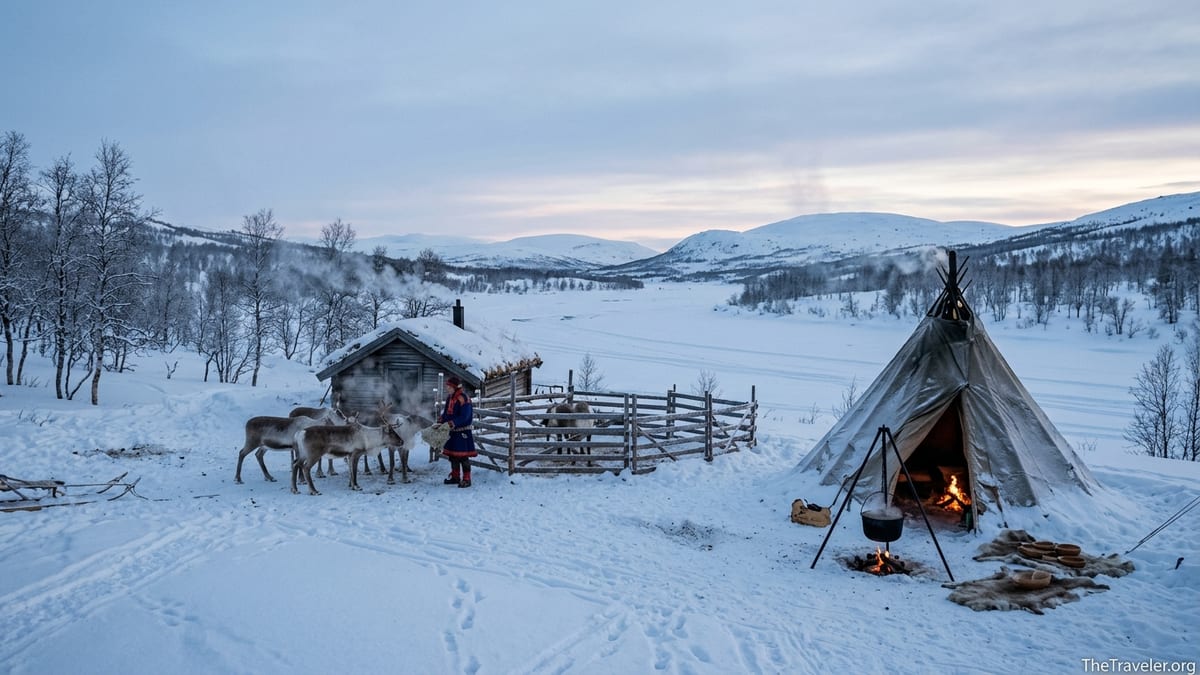
Understanding Sámi Food and Reindeer Culture
Traditional Sámi food developed in a subarctic climate where wasting resources was not an option. Reindeer, fish, berries and wild herbs form the backbone of the cuisine, supplemented by hunted game and, along the coasts, rich marine resources. Many dishes are still based on preserving ingredients through smoking, drying, salting and fermenting so they could sustain families through long, dark winters. When you sit down to a bowl of slow-cooked reindeer stew or a plate of smoked fish, you are tasting techniques refined over generations.
Reindeer are particularly central. In many areas, reindeer herding has been a way of life for centuries, with family-owned herds moving between summer and winter pastures. Meat, fat, marrow, milk, hide and antlers have all been used for food, clothing, tools and handicrafts. Traditional Sámi food is still strongly based on reindeer products, from everyday dishes like bidos, a hearty reindeer and vegetable soup, to dried and smoked meats carried on long migrations. When you encounter reindeer on a menu or in a marketplace, it is not simply a novelty meat but part of a deep cultural relationship.
It is also important to understand that not all Sámi are reindeer herders. Many families have roots in fishing, small-scale farming, handicrafts or wage labor. Modern Sámi cuisine reflects this diversity and often blends old preservation methods with contemporary cooking. You might find reindeer served as thinly sliced sautéed meat with mashed potatoes and lingonberries, or see traditional ingredients like cloudberries and angelica used in fine-dining tasting menus alongside Arctic char or scallops.
Because of this complexity, approaching Sámi food with curiosity and respect matters. Ask your hosts about where the meat comes from, which dishes they grew up with, and how their family uses different parts of the animal. These conversations, even in simple English, often reveal more about Sámi life than any museum panel can.
Where to Taste Sámi Cuisine in Everyday Settings
You do not have to book an expensive tour to begin tasting Sámi flavors. In northern Norway, reindeer meat shows up in supermarkets and casual restaurants as sliced meat for stews or sautéed dishes. Cafeterias and simple roadside diners sometimes serve reindeer-based husmannskost, roughly meaning everyday comfort food, such as creamy stews with potatoes and lingonberry jam. Prices at these informal places are often lower than in tourist-focused restaurants, making them an accessible introduction to local ingredients.
In Tromsø, which many travelers use as a base for Northern Lights trips, traditional reindeer dishes appear on several menus. You might see sautéed reindeer with mashed potatoes and lingonberries, reindeer burgers, or stews similar to bidos served in rustic-style dining rooms. Portions of reindeer mains in mid-range restaurants typically cost the equivalent of 30 to 50 US dollars, reflecting both local wages and the high cost of food in Arctic Norway. If you want something more low-key, look for cafés attached to shopping centers or cooperatives, where daily specials sometimes include basic reindeer stews at more modest prices.
In Sweden, Sámi flavors have also made their way into urban restaurants far from the tundra. In Stockholm’s Old Town, for example, a small vegan restaurant offers northern Swedish and Sámi-inspired dishes made entirely from plants, using local grains, root vegetables and wild herbs to echo traditional flavors without animal products. This kind of modern interpretation shows how Sámi culinary ideas are influencing broader Nordic dining, even for travelers who do not eat meat.
Cruise lines that sail the Norwegian coast and fjords increasingly highlight Sámi dishes on board. Dinner menus may feature reindeer prepared with juniper, or desserts built around cloudberries from northern bogs. These meals are not substitutes for time in Sámi communities, but they can introduce flavors and spark interest before you travel inland to meet local hosts in person.
Experiencing Reindeer Traditions With Local Families
To go beyond restaurant plates, many travelers book small-group visits to reindeer herding families. Around Tromsø, several Sámi-run camps welcome visitors in winter for reindeer feeding, short sled rides and storytelling by the fire. A typical half-day trip might include bus transport from Tromsø, meeting the animals in a snowy corral, helping scatter feed, and then warming up in a wooden turf hut while your Sámi host explains their family’s history and sings traditional joik songs. Simple hot meals, often bidos or a similar reindeer stew served with bread and coffee, are usually included.
These tours are not cheap. Prices for a three to four hour reindeer experience near Tromsø commonly range from about 150 to 220 US dollars per adult, with higher prices for packages that include longer sled rides or Northern Lights viewing. Part of that cost goes toward maintaining herds, staff wages and transport in challenging winter conditions. When evaluating tours, look for companies that are Sámi owned or clearly work in partnership with Sámi families, and that keep group sizes small enough for real conversation.
Further inland, towns like Kautokeino and Karasjok in Norway remain strong centers for reindeer herding and Sámi culture. In Kautokeino, for example, local operators offer day trips out to the herd where you travel by snowmobile or sled into the winter grazing areas, help with simple tasks, and share a meal in a lavvu, the traditional Sámi tent. Instead of staged shows, these visits often feel more like stepping briefly into someone’s workday. The food is straightforward and hearty: thick reindeer soup, coffee boiled over an open fire, perhaps dried meat or flatbread passed around while people talk.
Even in southern cities, you can now find curated reindeer experiences. Near Oslo, a Sámi team from Kautokeino operates seasonal experiences where visitors meet a small herd, learn about migration routes and taste bidos prepared by Sámi cooks. These initiatives bring reindeer culture closer to travelers who may never make it above the Arctic Circle, but they still emphasize that reindeer herding is a profession and a living cultural practice, not a theme park attraction.
Markets, Festivals and Everyday Community Life
If your timing is flexible, visiting during a Sámi festival or market adds another layer to your culinary experience. One of the most famous is the Jokkmokk Winter Market in Swedish Lapland, held every year during the first weekend of February. This market has run for centuries and still draws Sámi families, craftspeople and traders from across the region. Stalls pile with reindeer meat in many forms, from frozen roasts to thinly sliced smoked cuts, as well as cheeses, cured fish and jams made from Arctic berries. Food tents serve hot reindeer stews, grilled sausages and pastries to help visitors cope with temperatures that can sink far below freezing.
Alongside the food, Jokkmokk’s streets fill with people wearing gákti, the traditional Sámi clothing, and with reindeer races, concerts and handicraft demonstrations. For travelers, it is one of the easiest places to see how food fits into a broader web of language, clothing, music and political life. Because accommodation during the market sells out quickly and prices climb, booking lodging months ahead and budgeting for premium winter gear is essential.
Smaller festivals and cultural days take place throughout Sápmi. In northern Norway, Sámi National Day on 6 February is often marked with public events featuring joik singing, speeches and servings of local dishes in schools and community centers. Towns such as Karasjok, which hosts the Sámi Parliament of Norway, and Kautokeino, known for its Easter cultural festival, provide opportunities to combine museum visits with meals at local guesthouses where reindeer, fish and home-baked bread are still everyday fare.
Outside set festival dates, you may encounter Sámi food in more modest ways. A local women’s association might sell reindeer meatballs and coffee at a fundraiser, or a small café may offer a lunch menu featuring reindeer stew alongside typical Scandinavian dishes. These unspectacular moments can be as meaningful as more dramatic experiences, because they show how Sámi food lives within everyday community rhythms rather than only in tourist settings.
Key Dishes and How to Order Respectfully
When you read a menu or step into a Sámi food tent at a festival, a few core dishes appear again and again. Bidos is one of the most famous: a clear or lightly thickened soup of reindeer meat, potatoes and carrots, sometimes flavored with thyme or other herbs. It is simple, filling and ideal on a cold day. Another cornerstone is sautéed reindeer, where very thin slices of meat are quickly fried in fat and served with mashed potatoes and lingonberry preserves. This dish is popular across northern Finland, Sweden and Norway and is often considered an introduction to reindeer for visitors.
You may also see dried and smoked reindeer meat, sometimes sliced and served as a snack or starter. In market stalls, it is often sold in vacuum-packed pieces that travelers can take home, subject to customs regulations. Some food trucks and casual eateries in Sápmi experiment with crossovers like reindeer kebabs, where smoked meat is stuffed into flatbread with salad and sauce. Desserts and side dishes often highlight cloudberries, a golden Arctic berry made into jams, sauces or toppings for pancakes and ice cream, and other northern ingredients like lingonberries and wild herbs.
Ordering respectfully starts with understanding that reindeer herds are limited and subject to environmental pressures. Overgrazing, climate change and land use have made herding more difficult in some regions. When you order reindeer, treat it as a special product rather than something to waste casually. Ask staff whether a dish is based on local reindeer and, if relevant, whether the business has a relationship with Sámi producers or herders. Many hosts are proud to explain their supply chains, even if answers are brief.
It is also worth noting that not every reindeer dish served in northern Scandinavia is Sámi. Non-Sámi Norwegians, Swedes and Finns prepare reindeer as part of their own regional cuisines, and cafés in Oslo or Helsinki may serve reindeer steaks or stews without any direct cultural connection to Sápmi. If your goal is specifically to explore Sámi traditions, choose experiences where Sámi people are visible as owners, guides or cooks, not just as a marketing label on the menu.
Ethical and Sustainable Sámi Food Tourism
As interest in Sámi culture grows, Sámi institutions have published guidelines for responsible tourism that apply directly to food and reindeer experiences. A central idea is that pastures, herders’ cabins and even feeding areas are workplaces. Turning every winter grazing site into a tourist backdrop can disrupt animals and people. Organized visits, especially to herds, should take place with the permission and involvement of the reindeer owners. When you book a tour, favor providers that clearly explain their cooperation with local herders and that limit visitor numbers to manageable groups.
Dietary choices are another ethical dimension. Reindeer meat is inseparable from Sámi food traditions, but many travelers are vegetarian or prefer to reduce meat consumption. Sámi hosts are increasingly offering plant-based or fish-based alternatives that still tell a cultural story, such as vegetable soups flavored with traditional herbs, or dishes built around local roots and berries. Being honest about your diet when booking allows hosts to plan and avoids food waste. At the same time, if you do eat meat, being open to less glamorous cuts, stews and soups rather than only fillets can help use the whole animal more sustainably.
Shopping for souvenirs linked to food also deserves thought. Reindeer antler and hide products, knives, and wooden cups often share space on shelves with mass-produced items bearing Sámi colors or motifs. Where possible, buy directly from named craftspeople or cooperatives that identify Sámi makers, especially when items incorporate parts of reindeer. This supports livelihoods built around herding and handicrafts rather than only large wholesalers. At food stalls, favor producers who can explain where their meat, berries or fish come from and how they were harvested.
Finally, remember that Sámi communities are not museums. Some families welcome visitors into their homes or private lávvus, while others prefer to keep their work and family spaces off limits. Taking photos of food is generally fine, but always ask before photographing people, especially elders and children. Listening, asking questions politely, and accepting that some stories or places are not for tourists will deepen the respect behind your culinary exploration.
Practical Tips for Planning Your Sámi Food Journey
The best time to combine Sámi food with reindeer experiences depends on what you want to see. Winter from December to March in northern Norway, Sweden and Finland is peak season for snow-based activities such as reindeer sledding, Northern Lights tours and visits to winter pastures. Expect short days, often just a few hours of twilight, and temperatures that can easily drop below minus 10 degrees Celsius. Thick insulated boots, windproof outer layers, and gloves you can keep on while handling a hot wooden bowl of soup will make the difference between a memorable meal and a miserable one.
If your focus is on markets and festivals rather than deep snow, early February for the Jokkmokk Winter Market or Easter for cultural festivals in places like Kautokeino are prime times. These events are popular and small towns have limited beds, so reserve hotels or cabins well in advance. Many guesthouses include breakfasts featuring local breads, cheeses and jams, and some offer optional dinners with reindeer or fish-based home cooking. Asking hosts ahead of time about typical dishes can help you plan how many restaurant meals you really need.
Budgeting realistically is essential. In Arctic Norway and Swedish Lapland, a single restaurant main course of reindeer can cost as much as 40 to 60 US dollars, and organized reindeer experiences can take up a significant part of a daily budget. To balance costs, consider mixing one or two high-impact experiences, such as a family-run reindeer visit or a festival food tour, with simpler meals from supermarkets and casual diners. Many travelers picnic on smoked reindeer slices, crispbread and cheese bought from local shops, then save their money for one carefully chosen dinner or tour where they can talk directly with Sámi hosts.
Language is rarely a barrier. English is widely spoken in tourist areas and by many Sámi guides and cooks. Learning a few words in Northern Sámi, such as giitu for thank you, can be a meaningful gesture, but your interest and respect will matter more than perfect pronunciation. Bring cash as well as cards for small market stalls, and be mindful of customs regulations when buying meat or dairy to take across borders. When in doubt, ask sellers what is allowed to export and carry any documentation they provide.
The Takeaway
Experiencing Sámi culture through food and reindeer traditions is ultimately about relationships rather than recipes. Reindeer on a plate carries stories of migration, land rights and family labor. A bowl of bidos or a slice of smoked meat shared in a lavvu links you to generations who survived Arctic winters through skill and cooperation. Markets, festivals and homely guesthouse dinners reveal how these traditions continue to evolve in modern Sápmi, adapting to climate change, tourism and urban life while holding on to core values of respect for land and animals.
As a traveler, your choices shape what kind of Sámi food tourism will thrive in the future. Seeking out Sámi-owned businesses, asking thoughtful questions, paying fair prices and accepting that some experiences are rightly kept private all contribute to more sustainable, respectful travel. Whether you come away with memories of a reindeer stew under the northern lights, a vegan Sámi-inspired tasting menu in a city basement, or simple coffee and dried meat by a roadside fire, the most lasting souvenir is the connection you build with the people who share those meals with you.
FAQ
Q1. Do I have to eat reindeer to experience Sámi food culture?
Not necessarily. While reindeer is central to traditional Sámi cuisine, many hosts now offer fish-based or plant-forward dishes that still use local ingredients, berries and preservation methods rooted in Sámi traditions.
Q2. Where is the easiest place for first-time visitors to try Sámi food?
For many travelers, Tromsø in northern Norway or Jokkmokk in Swedish Lapland are practical starting points, combining accessible transport, restaurants serving reindeer and fish dishes, and organized visits to Sámi-run reindeer experiences or markets.
Q3. How expensive are Sámi reindeer experiences and meals?
Prices vary, but a half-day reindeer visit with meal near Tromsø often costs roughly 150 to 220 US dollars per adult, while restaurant mains featuring reindeer can run around 30 to 60 US dollars, reflecting Arctic living costs.
Q4. How can I tell if a Sámi food experience is ethical and respectful?
Look for tours and restaurants that are Sámi owned or clearly partner with Sámi families, explain their connection to local herders or producers, limit group size, and present reindeer herding as a living livelihood rather than just entertainment.
Q5. Is it acceptable to photograph reindeer and people during visits?
Photographing reindeer is usually fine, but always ask permission before photographing people, especially in private spaces or during work. Some herders prefer not to have their children or elders photographed, and respecting this builds trust.
Q6. What should I wear for a winter Sámi food and reindeer tour?
Plan for very cold conditions: insulated boots, thermal base layers, a windproof outer shell, thick gloves, a warm hat and scarf. Many tour operators provide extra outerwear, but having strong basics makes eating and moving outdoors far more comfortable.
Q7. Can vegetarians and vegans still enjoy Sámi culinary experiences?
Yes. While reindeer is prominent, many hosts can prepare vegetable soups, breads, berry-based dishes and fish-free or animal-free menus if told in advance. Some urban restaurants offer entirely vegan menus inspired by northern and Sámi flavors.
Q8. Are Sámi food markets and festivals suitable for children?
Generally yes. Markets like Jokkmokk’s Winter Market or local cultural days often have family-friendly atmospheres, with warm food tents, handicraft stands and performances. Very low temperatures mean young children need especially good winter clothing.
Q9. How far in advance should I book Sámi food tours or festival accommodation?
For peak times such as February markets or Easter festivals, it is wise to book lodging several months ahead. Popular reindeer visits can also sell out in high winter season, so reserve tours as soon as your travel dates are fixed.
Q10. Can I bring reindeer meat or Sámi food products home?
That depends on your home country’s customs rules. Within the European Union, some products are easier to carry than others, while travelers to North America often face stricter limits. Ask sellers about export suitability and check official regulations before packing food souvenirs.