


Finland often appears on lists of the world’s happiest countries, safest destinations, and most sustainable places to visit. Yet many travelers still wonder if it is really worth the time and money, especially when neighboring Norway, Sweden, and Estonia compete for the same northern Europe itinerary. The answer depends on what you value most in a trip. Finland is not a budget-friendly beach escape, but for travelers seeking nature, calm cities, sauna culture, and something quietly different from mainstream Europe, it can be unforgettable.
Get the latest updates straight to your inbox!
First Impressions: Calm Cities, Clean Streets, Big Distances
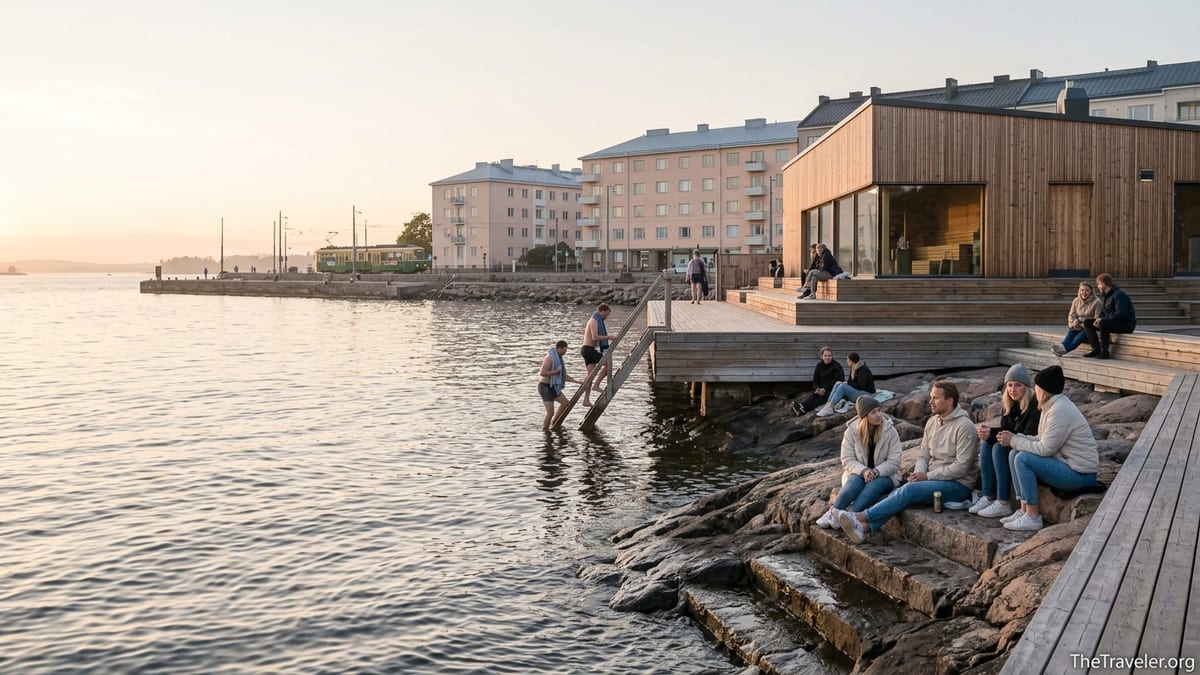
Arriving in Helsinki, most visitors notice how calm everything feels compared with other European capitals. The city center is compact, streets are clean, trams glide past on time, and there is relatively little traffic noise. Even areas around Helsinki Central railway station, which in many cities can feel hectic, tend to feel safe and orderly late into the evening. Outside the capital, secondary cities such as Tampere, Turku, and Oulu have a similar low-key, walkable character, with waterfront promenades and parks never far away.
What may surprise you is how quickly the urban landscape gives way to forest and water. Take a 20-minute local train from central Helsinki and you are already passing stretches of pine forest, rocky coastline, and clusters of summer cottages. This is typical of the whole country. Around three quarters of Finland is forested, and there are hundreds of thousands of lakes. In practice, this means that even if you base yourself in a city hotel, you can often reach a lakeside hiking trail or a quiet swimming spot in under an hour by public transport.
Distances, however, are larger than many people expect. It is easy to underestimate the time needed to get from Helsinki to Lapland. A flight from Helsinki to Rovaniemi takes about 1 hour 20 minutes, but the night train can be 8 to 12 hours depending on the route and season. If you want to combine Helsinki, a lakeside cabin stay, and a Lapland aurora trip, you need to plan several full travel days into a one or two week itinerary.
For many travelers, this mix of calm, clean cities and quick access to nature is exactly why Finland is worth visiting. For others who crave dense neighborhoods, nightlife on every corner, and the buzz of big crowds, the understated atmosphere can feel too quiet.
Sauna Culture: Iconic, Ubiquitous, and More Varied Than You Think
Sauna is the cultural experience most visitors associate with Finland, and with good reason. The country has around 3 million saunas for a population of roughly 5.6 million, and the tradition is so central to daily life that Finnish sauna culture was added to UNESCO’s list of Intangible Cultural Heritage in 2020. You find saunas in apartment buildings, lakeside cottages, corporate offices, ice hockey arenas, and modest swimming halls.
In Helsinki, travelers often start with design-forward public complexes like Löyly, a striking wooden building on the waterfront that combines architect-designed saunas with a restaurant and sea terrace. Here, a two-hour sauna session, including access to multiple steam rooms and the opportunity for a plunge into the Baltic, typically costs roughly what you would pay for a mid-range restaurant meal in the city. At the other end of the spectrum are historic neighborhood saunas such as Kotiharjun Sauna in Kallio, where locals have bathed for generations in wood-fired heat, and admission is usually noticeably cheaper than at upscale design venues.
What may surprise first-time visitors is how everyday and unpretentious most Finnish sauna experiences are. In a municipal swimming hall or small town hotel, you might pay only a modest fee for pool and sauna access, join families and retirees, and find simple tiled interiors rather than luxury spa design. Saunas are usually separated by gender in these settings, and nudity is normal, although some mixed saunas require swimwear. People tend to speak quietly, avoid phones, and treat the space as a mix of relaxation and social time rather than as a party.
If you are very shy about communal bathing, Finland still offers options. Many city apartments and rural cabins include private saunas, and a growing number of hotels market rooms with in-room saunas as a selling point. Renting a small lakeside cottage with its own wood-burning sauna for a couple of nights is one of the most authentically Finnish experiences you can have, and for many visitors it becomes the highlight of their trip.
Nature, Seasons, and the Northern Lights
Finland’s nature is not dramatic in the way of alpine peaks or Norwegian fjords, but it is everywhere and deeply woven into daily life. In summer, locals escape to lakeside cottages to swim, grill on simple decks, and pick blueberries in nearby forests. National parks such as Nuuksio and Sipoonkorpi near Helsinki or Repovesi a few hours further north offer marked trails, cooking shelters, and simple campfire spots where visitors can grill sausages under tall pines. Trails are usually well signposted, and in many parks you can find free public lean-to shelters for day use.
The country’s long seasons can be both a draw and a challenge. From mid-June to late July, much of Finland enjoys very long days, with the sun barely dipping below the horizon in the north. Cities feel temporarily extroverted, with outdoor terraces full, music festivals underway, and locals lingering by the water late into the evening. Travelers enjoy being outside almost around the clock, but those sensitive to light may need eye masks to sleep comfortably.
Winter is a different world. In Helsinki, daylight can shrink to just a few hours in December, and in northern Lapland the sun does not rise at all for several weeks. Temperatures in the south often hover around freezing, while in Lapland they can drop well below that for extended periods. This can be hard on travelers who dislike cold and darkness. On the other hand, it creates the conditions for snow-covered forests, frozen lakes, and winter activities such as cross-country skiing, snowshoeing, and ice swimming after sauna.
For many international visitors, the main reason to head north to Lapland is the aurora borealis. Finland’s tourism board notes that the Northern Lights are visible on roughly every other clear night in Lapland during the main aurora season from autumn to spring. In practical terms, your chances improve significantly if you stay at least three or four nights in a darker area away from city lights, visit between roughly late September and March, and are willing to stay up late and check the sky often. Cloud cover is the main factor that can spoil an otherwise good forecast, so flexibility and patience are essential.
Costs, Comfort, and the Reality of Traveling in a High-Price Country
Finland is one of the most expensive destinations in Europe. Travelers from North America often find restaurant and alcohol prices similar to or higher than those in major US cities, and visitors from southern or eastern Europe can experience strong sticker shock. A casual lunch in central Helsinki, such as a bowl of salmon soup with bread and a drink, can sit in the mid-teen euro range, while a main course and drink in a mid-range restaurant will frequently total two or three times that amount per person. Coffee and pulla (sweet cardamom bun) in a cafe are more reasonable, and many visitors learn to lean on bakery lunches and supermarket snacks to manage their budgets.
Accommodation follows a similar pattern. In high summer and during December peak season in Lapland, standard double rooms in central three- or four-star hotels often cost in the low to mid hundreds of euros per night, especially in popular areas like Rovaniemi, Levi, or Saariselkä. Self-catering cabins and apartments can offer better value, particularly if you are traveling as a couple or family and are willing to cook some of your own meals. Hostel dorms and simple guesthouses still exist, but they fill quickly in peak periods and may not be as cheap as in southern Europe.
Public transport is generally reliable and well organized but not particularly cheap. A single tram or metro ticket in Helsinki costs enough that day tickets or multi-day travel cards often make more sense for active sightseeing. Long-distance trains between major cities are comfortable, usually with onboard Wi-Fi and power sockets, and advance-purchase tickets can be significantly cheaper than buying last minute. Domestic flights to Lapland are convenient but can add a serious cost to your trip budget unless booked early or as part of a package.
On the plus side, you get tangible value for some of these costs. Tap water is safe and good-tasting everywhere, so there is no need to buy bottled water. Public spaces are generally clean, crime rates are low, and you can walk or use a smartphone in most city neighborhoods without feeling unsafe. Many museums, design centers, and city attractions are modern and well presented, and outdoor infrastructure such as hiking trail signage, maintained ski tracks, and free firewood in some national park shelters reflects the country’s investment in public recreation.
Cultural Quirks: Quiet People, Direct Communication, Deep Trust
Beyond scenery and saunas, much of what makes Finland memorable is its social culture, which can feel both refreshing and puzzling to visitors. Finns tend to value personal space and silence far more than many other cultures. On a tram in Helsinki or a long-distance train, you may notice that people speak quietly or not at all, and it is normal for strangers to sit with an empty seat between them if possible. This is not hostility, but a cultural preference for not intruding on others.
When Finns do speak, they are often very direct. A restaurant server might plainly tell you that a dish has run out or that a certain recommendation is not great that day rather than dressing the message in polite euphemisms. Small talk can be brief and functional. For some travelers this honesty feels wonderfully efficient, while others can initially interpret it as abruptness before they adjust.
Another characteristic that many visitors appreciate is the high level of social trust. It is common to see parents leave strollers with sleeping babies on cafe terraces while they sit inside, or to notice that people do not closely guard their bags in libraries and university lobbies. When you buy a ticket online for a regional bus or train, there is often minimal checking; you are simply trusted to have done the right thing. For travelers used to more guarded environments, this can feel like a glimpse of how a high-trust society functions in everyday life.
There are also a few etiquette points that may surprise travelers. For example, if you visit someone’s home, it is normal to remove your shoes at the door. In saunas, you are expected to shower before entering and to sit on a small towel or disposable seat cover. In restaurants and cafes, you will often pay at the counter instead of waiting for a bill to be brought to your table unless you are in a full-service establishment. Tipping is modest and not expected in the same way as in North America, although rounding up or leaving a small amount for good service is appreciated.
Who Will Love Finland, and Who Might Be Underwhelmed
Finland is especially rewarding for travelers who value nature, calm, and everyday authenticity over spectacle. If you dream of staying in a wooden cabin beside a still lake, grilling sausages after a wood-fired sauna, paddling a rental canoe through morning mist, and then reading on the porch under the pale midnight sun, Finland delivers in abundance. If your ideal winter trip involves cross-country ski tracks through quiet forest, simple lodge dinners, and watching the sky for aurora instead of crowded apres-ski bars, Lapland is a strong contender.
Urban travelers drawn to architecture and design also have plenty to enjoy. Helsinki combines neoclassical public buildings with functionalist modernism and bold contemporary wooden structures. Design stores, from heritage glass and ceramics brands to small fashion labels, are scattered around neighborhoods like Punavuori and Kallio. Tampere’s industrial red-brick riverside, with former factories converted into museums, restaurants, and cultural centers, offers another dimension of Finnish urban life.
On the other hand, travelers seeking constant entertainment and nightlife may find Finland subdued. While Helsinki has bars and clubs and student cities like Turku and Tampere can be lively on weekends, Finland does not generally deliver the late-night party energy of cities such as Berlin or Barcelona. Shopping can also feel limited beyond design and outdoor gear, and many smaller towns quiet down significantly outside working hours, especially on Sundays and during holiday periods when locals retreat to cottages.
Weather is another deal-breaker for some. Even in summer, temperatures can be cool and rainy, and sudden changes are common. In winter, dark mornings, icy sidewalks, and the need for serious layers of clothing can wear on visitors not used to northern climates. If you strongly dislike cold, do not enjoy outdoor activities, and prefer densely packed historic old towns with cafe culture year-round, you might find more satisfaction elsewhere in Europe.
The Takeaway
So is Finland worth visiting? For many travelers, the answer is a clear yes, provided you understand what the country does best and plan accordingly. Finland offers an unusually coherent blend of safety, nature, sauna culture, and understated but high-quality urban life. It invites you to slow down, enjoy simple rituals such as a morning dip or an evening sauna, and experience what a high-trust, low-drama society feels like in daily details.
At the same time, Finland asks something of its visitors: tolerance for high prices, respect for local customs, and a willingness to embrace quiet moments, changing weather, and long journeys between regions. If you approach it with that mindset, your trip is likely to leave you with memories not of bucket-list monuments, but of clean lakes, warm wooden benches, and the soft glow of a July night or a March aurora.
In the end, Finland is not trying hard to impress you. That, paradoxically, is exactly what many travelers end up loving most.
FAQ
Q1. Is Finland expensive to visit compared with other European countries?
Finland is generally on the high side for costs. Accommodation, restaurant meals, and alcohol often match or exceed prices in many western European capitals, although simple lunches, bakery snacks, and supermarket food can help keep budgets manageable.
Q2. When is the best time of year to visit Finland?
It depends on your priorities. June to August are ideal for long days, lakes, and city festivals, while late September to March is better for snow and Northern Lights in Lapland. Spring and autumn can be quieter and less expensive, but weather is more changeable.
Q3. Can I see the Northern Lights from Helsinki?
It is possible but relatively rare. Light pollution and southern latitude mean aurora displays in Helsinki are occasional and often faint. For a realistic chance of seeing strong Northern Lights, it is better to travel to Finnish Lapland or at least more northerly rural areas.
Q4. Do I have to be naked in a Finnish sauna?
In many traditional single-sex saunas, nudity is the norm, but some mixed or tourist-oriented saunas require swimsuits. Check the specific rules of each place. If you are uncomfortable with communal nudity, consider booking private sauna time or choosing accommodation with a private sauna.
Q5. Is Finland a good destination for families with children?
Yes. Cities are generally safe, playgrounds and public spaces are well maintained, and many museums and swimming halls are very family-friendly. Lakeside cabins, gentle nature walks, and easy winter activities like sledding and beginner-friendly ski trails can be enjoyable for children.
Q6. How easy is it to get around Finland without a car?
Between major cities, trains and long-distance buses work well, and Helsinki has an efficient tram, metro, and bus network. Reaching very remote cottages or small villages may require a rental car or arranged transfers, but many popular national parks and towns are accessible by public transport.
Q7. Is Finland safe for solo travelers?
Finland consistently ranks high for safety. Violent crime against tourists is rare, and public spaces are generally orderly. As everywhere, normal precautions with belongings and late-night situations apply, but most solo travelers, including women, report feeling very comfortable.
Q8. Do people in Finland speak English?
Yes, English proficiency is high, especially among younger and urban residents. In most hotels, restaurants, transport hubs, and tourist attractions, you can comfortably communicate in English, and many signs and menus are available in both Finnish and English.
Q9. What should I pack for a trip to Finland?
Layered clothing is essential year-round. Even in summer, evenings can be cool and rainy, so bring a light waterproof jacket and comfortable walking shoes. In winter, pack thermal layers, insulated boots with good grip, gloves, a hat, and something to cover your neck and face for windy conditions.
Q10. Is Finland worth visiting if I am not interested in outdoor activities?
It can still be rewarding. Helsinki and other cities offer design, architecture, museums, cafes, and a rich everyday culture, and sauna experiences do not require high fitness levels. However, if you are not drawn to nature at all, you may want to focus your itinerary on urban areas and shorter stays rather than a long nationwide trip.