


More news on this day
Severe thunderstorms sweeping across the Midwest have triggered significant flight disruption at Chicago O’Hare International Airport, where around 450 delays and at least 21 cancellations snarled operations and set off a ripple effect across major hubs in the United States, Canada, Europe, and Mexico.
Get the latest news straight to your inbox!
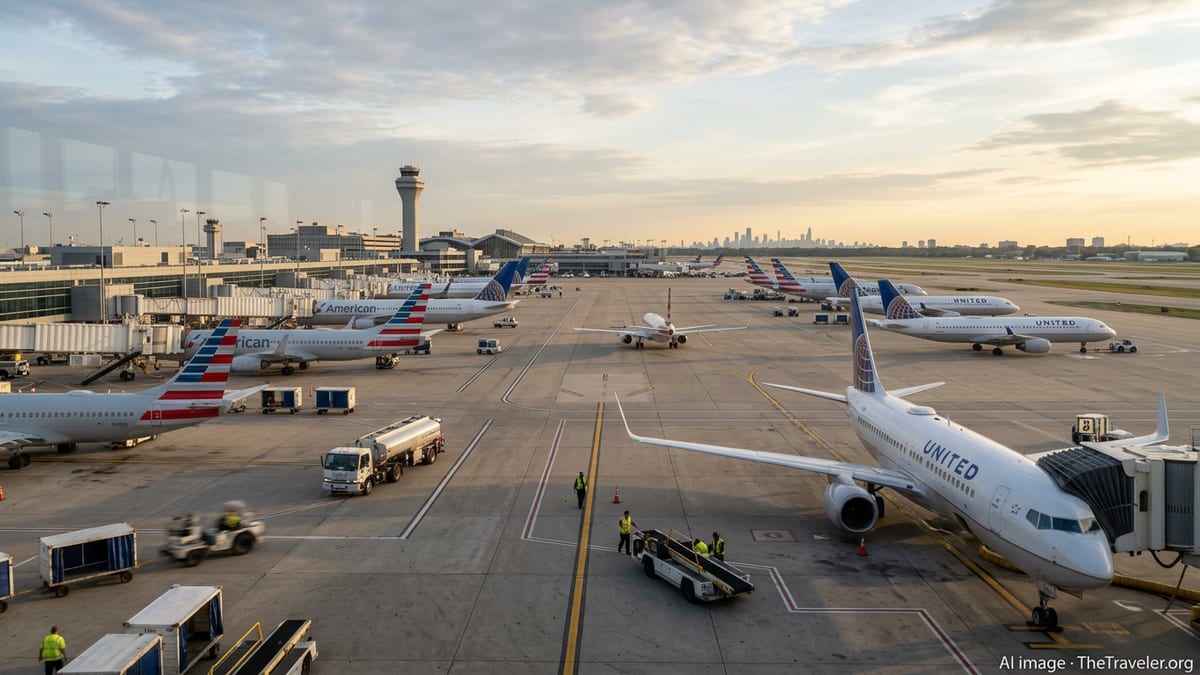
Storm System Stalls Over Chicago At Height Of Summer Travel
Publicly available weather data show a volatile storm line stalling over northern Illinois, bringing intense rain, lightning, and low clouds that severely restricted operations at Chicago O’Hare. Aviation advisories indicated ground delay programs and flow control measures through much of the day as air traffic managers reduced arrival rates and spaced out departures for safety.
The timing coincided with a busy early summer travel period, compounding the impact. With aircraft and crews tightly scheduled, even relatively short weather holds translated into extended waits on the ground and in the air. O’Hare, one of the country’s primary connecting hubs, quickly became a pressure point for the broader North American network.
Early operational tallies pointed to roughly 450 delayed flights and at least 21 outright cancellations at O’Hare alone as thunderstorms moved through the Midwest corridor. Disruption continued into the evening as airlines worked through the backlog and repositioned planes and crews stranded by the weather.
Major U.S. Carriers Bear Brunt Of O’Hare Gridlock
According to flight-tracking dashboards and aviation analytics platforms, American Airlines, United Airlines, Delta Air Lines, and regional carrier SkyWest appeared to be among the hardest hit at O’Hare. These airlines collectively operate a large share of the airport’s daily schedule, so any constraint on arrivals or departures disproportionately affects their networks.
United and American, which both maintain extensive hub operations at O’Hare, saw waves of late-arriving aircraft that cascaded into missed connections and rolling delays. Delta and SkyWest, which feed traffic into and out of the Midwest from secondary markets, also reported elevated disruption as flights bound for Chicago were held or rerouted to avoid the worst of the storms.
Operational data and historical performance reports indicate that extreme weather is a leading driver of delays and cancellations for U.S. carriers, and the latest storms followed that pattern. With severe cells pulsing across multiple states, crews frequently timed out under federal duty rules and aircraft could not be turned around quickly, prolonging the disruption beyond the period of active thunderstorms.
Disruptions Spread To Domestic And Cross-Border Hubs
Because O’Hare functions as a critical connecting point between the coasts, the Midwest, and international destinations, the local gridlock rapidly spread outward. Tracking maps on airline and aviation data portals showed knock-on delays at other key U.S. hubs, including Atlanta, Dallas–Fort Worth, New York area airports, Denver, and Minneapolis–St. Paul as flights to and from Chicago departed late or were rescheduled.
North of the border, Canadian hubs such as Toronto Pearson and Montreal–Trudeau recorded schedule pressures as transborder services linked to Chicago arrived behind schedule. In some cases, late arrivals compressed turnaround times for onward flights, creating additional minor delays through the day and into the evening rotations.
Airline timetables also indicated pressure on cross-border routes into Mexican destinations served via O’Hare connections. Flights to resort and business markets along Mexico’s coasts saw boarding and departure times pushed back as passengers and aircraft originating in the Midwest missed original slots and had to be rebooked on later services.
Ripple Effects Reach Europe As Long-Haul Flights Back Up
The storm-triggered disruption at O’Hare extended across the Atlantic as well. Schedules showed delays on long-haul services between Chicago and major European hubs in Germany, France, and Italy, where late departures and missed inbound connections complicated overnight operations.
Airlines running transatlantic routes from O’Hare often coordinate departure banks to arrive in Europe early in the morning, allowing passengers to connect to regional flights across the continent. When thunderstorms forced aircraft to wait out lightning or diverted them around storm cells, these carefully timed banks were pushed back, reducing connection windows at European hubs.
Published coverage of recent storm-related aviation events highlights how even a modest number of cancellations at a large hub can lead to rolling delays thousands of miles away. Aircraft that arrive late into European airports may miss their maintenance slots or planned return departures, constraining fleet availability and extending the recovery period well past the end of the initial weather event.
Travelers Face Extended Waits, Rebookings, And Network Recovery
For travelers, the operational picture translated into long queues at customer service counters, crowded gate areas, and ongoing schedule changes across airline apps. With more than 450 delayed flights linked to the storms, many passengers faced missed connections, overnight stays, or last-minute rerouting through alternative hubs in the United States and Canada.
Airlines encouraged customers traveling through Chicago and other affected hubs to monitor their flight status frequently and make use of digital rebooking tools where available. In previous severe-weather events, self-service options have helped redistribute passengers more quickly by identifying open seats on later departures or alternative routings that bypass congested airports.
Industry data and recent transportation reports suggest that large network disruptions of this type can take a full day or more to unwind, even after storms clear. Aircraft and crews must be repositioned, maintenance checks rescheduled, and departure banks rebalanced. As the Midwest system moves away, airlines are expected to continue recovery operations, with residual delays possible across affected hubs in North America and Europe into the next operating day.