


Few places on Earth make glaciers feel as immediate and alive as Alaska. Home to tens of thousands of glaciers and some of the largest icefields in North America, the state holds almost all of the glacier ice in the United States. That concentration of ice, combined with relatively good access by road, boat, and air, makes Alaska the country’s premier destination for seeing and experiencing glaciers in a single trip.
Get the latest updates straight to your inbox!
Why Alaska Is So Glacier Rich, and What That Means for Your Trip
Alaska’s unique geography explains why it is so glacier rich compared with the rest of the United States. Moist air from the Gulf of Alaska crashes into long coastal mountain chains, rises, cools, and drops heavy snowfall. That snow compacts into vast icefields that feed valley and tidewater glaciers, many of which still flow almost to sea level. Farther inland, high ranges like the Alaska Range and Wrangell–St. Elias support their own massive ice systems. By contrast, the rest of the country has only scattered mountain glaciers and no comparable coastal icefields, which is why serious glacier travelers look to Alaska first.
For visitors, this abundance means choice, but also complexity. Most travelers end up experiencing glaciers in three main regions: Southeast Alaska around Juneau and the Inside Passage; Southcentral Alaska around Anchorage, Prince William Sound, the Kenai Peninsula, and the Matanuska–Susitna Valley; and the Interior/Denali region in the Alaska Range. Within those regions, visitors typically encounter glaciers in four main ways: roadside viewpoints and easy walks, boat cruises to tidewater or near-tidewater glaciers, flightseeing and glacier landings, and guided hiking or ice-climbing on the ice itself.
Understanding these regions and modes of access is the key to planning a realistic itinerary. Instead of trying to “see it all,” the most rewarding trips choose one or two regions that match your entry point, time, and budget, then layer in a mix of viewpoints and immersive experiences like glacier walks or cruises.
Key Planning Decisions: Region, Access, Time and Budget
The first major decision is where you will be based. Cruise passengers on the Inside Passage usually focus on Southeast Alaska, often with a port call in Juneau and scenic cruising into Tracy Arm, Endicott Arm, Glacier Bay, or similar fjords. Independent travelers more often fly into Anchorage or sometimes Juneau and build a loop that includes road-accessible glaciers and day cruises. Those who want the high peaks and dramatic ice of the Alaska Range gravitate toward Talkeetna and the Denali area for flightseeing and glacier landings.
Next, decide how close you want to get to the ice. Some travelers are thrilled with viewpoints from visitor centers, short nature trails, and boat decks. Others want to feel crampons scraping blue ice or to paddle a kayak near a calving glacier face. Roadside viewpoints such as the Mendenhall Glacier area near Juneau or the Matanuska Glacier north of Anchorage can provide strong visual impact with relatively low effort. Glacier hikes, ice-climbing, or kayaking at the face of a tidewater glacier require more time, money, and often a moderate fitness level.
Time and budget then shape what is realistic. Boat cruises into Kenai Fjords National Park from Seward typically fill a full day and run primarily from roughly May to late September, with peak options in June, July, and August. Major operators in Prince William Sound, including Phillips Cruises and Tours out of Whittier, advertise 2026 glacier day cruises that operate from mid-May to mid-September on set daily schedules, with slightly shorter shoulder seasons in spring and fall. Glacier hikes on Matanuska Glacier are offered daily by guiding companies during much of the year, with unguided access typically limited to summer when the trail is safer and more defined. Building these time blocks into your plan helps avoid trying to do too much in a short window.
Southeast Alaska and the Inside Passage: Mendenhall and Tidewater Giants
For many visitors on cruise itineraries, Southeast Alaska is the easiest place to see glaciers. Juneau, the state capital, is the main gateway town and a popular cruise port. Just outside town lies Mendenhall Glacier, one of the country’s most accessible glaciers. The surrounding recreation area is open year-round, and the US Forest Service visitor center typically operates from late April through the main summer season, with exact opening and closing dates published each year. A short road from downtown leads to parking areas and trailheads where you can walk to viewpoints of the glacier and Nugget Falls with modest effort.
Mendenhall is primarily a viewing and short-hike experience for most travelers. Well-maintained trails and viewpoints allow you to see the glacier, its lake, and surrounding waterfalls without specialized gear. Parks staff and local operators sometimes restrict access to certain informal routes on or near the ice itself for safety, and glacial outburst floods have occasionally forced temporary closures of roads, parking areas, or the visitor center in recent summers. As a result, any plan to hike near Mendenhall’s ice or visit the visitor center should be confirmed close to your date with current local guidance rather than assumed far in advance.
Beyond Juneau, many Inside Passage cruises include a day of scenic glacier cruising. Depending on your ship and itinerary, that might mean drifting among icebergs in Tracy Arm or Endicott Arm near towering tidewater glaciers, or spending hours in Glacier Bay National Park watching glaciers like Margerie or Johns Hopkins. These days are usually included in the cruise fare, though availability of specific arms or bays can vary by weather, ice conditions, and permits. Cruise passengers typically experience these glaciers from viewing decks, balconies, or lounges rather than by landing on the ice, but the scale can be extraordinary and requires no extra logistics once you are on board.
Southcentral Road and Sea: Anchorage, Prince William Sound, Kenai Fjords, and Matanuska
Southcentral Alaska is the most flexible region for independent glacier travelers because it combines road access, day cruises, and flightseeing within a relatively compact radius of Anchorage, the state’s main air gateway. From Anchorage, you can reach Whittier and Seward by road or rail for day cruises, and you can drive northeast along the Glenn Highway to the Matanuska Glacier. Many travelers build a loop that samples all three.
Prince William Sound is one of the densest concentrations of tidewater and hanging glaciers on the planet, and several operators run day cruises from Whittier. Phillips Cruises and Tours, for example, continues to offer its long-running 26 Glacier Cruise and Glacier Quest Cruise in the 2026 season, typically operating between mid-May and mid-September on fixed daily departure times. These cruises use large, comfortable catamarans to visit multiple glacier-filled fjords in a single day while often spotting wildlife like sea otters, seals, and whales. Whittier is reachable from Anchorage in about 1.5 to 2 hours by road, including passage through the timed Anton Anderson Memorial Tunnel, so a glacier cruise here is an easy day trip.
Farther south, Seward is the jumping-off point for Kenai Fjords National Park. Several companies, including long-established operators like Kenai Fjords Tours and Major Marine Tours, advertise glacier and wildlife cruises in the 2026 season that generally run from early May into late September, with peak offerings and the longest routes in midsummer. Typical day cruises last 6 to 8.5 hours and reach tidewater glaciers in Aialik Bay, Holgate Arm, or Northwestern Fjord, combining glacier viewing with marine wildlife. Seward is roughly a 2.5 to 3-hour drive from Anchorage, and day cruises can be paired with an overnight to reduce strain, especially if you are also riding the Alaska Railroad on this route.
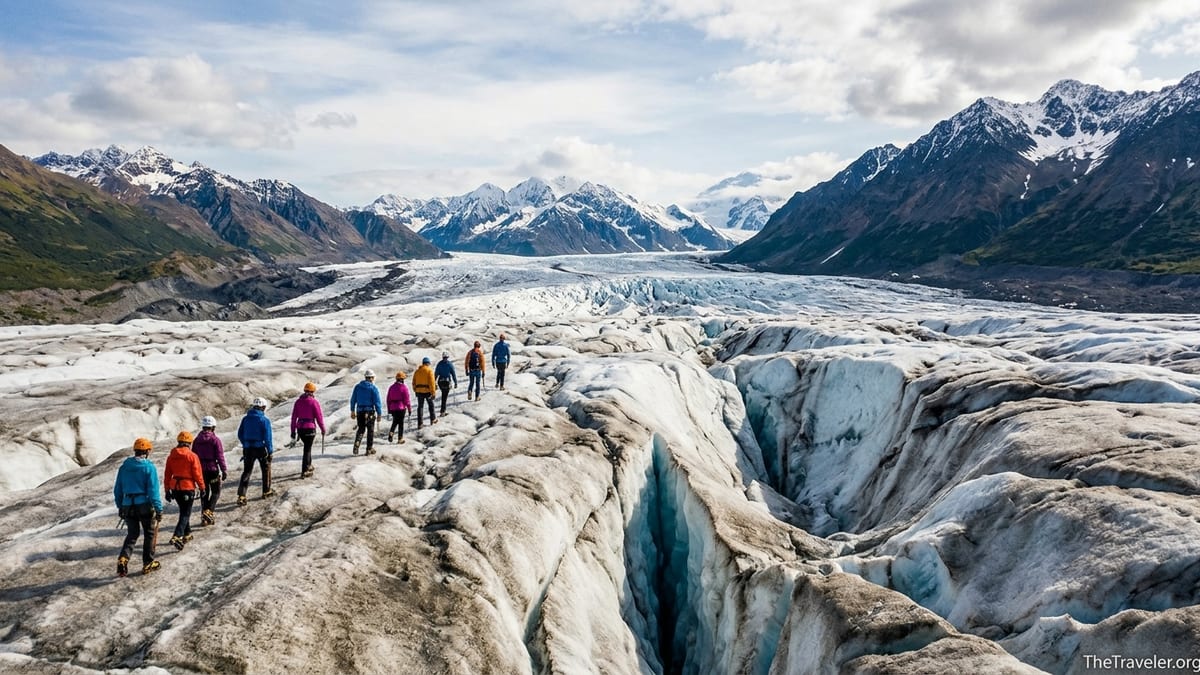
On land, the Matanuska Glacier offers one of Alaska’s best-known roadside glacier experiences. Located along the Glenn Highway northeast of Anchorage, it can be reached by car in roughly 2 to 3 hours. Private operators control primary access to the glacier and run guided walking tours on the ice most days, with schedules published in advance and multiple daily departures noted for 2026. These guided walks equip travelers with basic gear like crampons and helmets and allow you to safely reach blue ice features and crevasses with a trained guide. Unguided trail access is typically limited to summer and subject to change with conditions, so most visitors should plan on a guided tour and confirm hours and prices directly with the operator when planning.
Interior and Denali: Flightseeing and High-Mountain Ice
The Interior and Denali region focuses less on tidewater glaciers and more on immense alpine glaciers spilling off high peaks. Denali, North America’s highest mountain, anchors this landscape, and nearby airfields like Talkeetna and the Denali-area airstrips are hubs for flightseeing. Several long-established air taxi companies based in Talkeetna and around the park continue to advertise flightseeing and glacier landing tours for the summer seasons, typically from late May through early September, with operations sometimes extending earlier or later depending on snow, daylight, and demand.
These flights usually operate in small ski-equipped planes that can land on broad glacier surfaces high in the Alaska Range. A standard itinerary might include circling Denali and nearby peaks, then touching down for 15 to 30 minutes on a broad glacier where passengers can walk a short distance on packed snow or ice under close supervision. Compared with coastal glacier cruises, these tours are shorter in duration but higher in per-person cost, and they are more sensitive to weather. Low clouds or high winds can lead to same-day cancellations or route changes, which is why many travelers build a two-night stay in Talkeetna or the Denali area to allow a backup window.
Interior options for walking on glacier ice without flightseeing are more limited than in Southcentral, but a visit to Denali National Park can still complement glacier experiences elsewhere. Park road viewpoints, ranger programs, and clear days in the Alaska Range give perspective on the sheer scale of high-mountain glaciers, even if you experience them mostly from a distance. Travelers who prioritize standing on glacier ice usually combine Denali-area flightseeing with a Southcentral glacier hike or cruise in the same trip.
Seasonal Considerations: When Glacier Trips Work Best
Most glacier-related tourism in Alaska clusters between late spring and early fall. Major day cruises in Kenai Fjords National Park and Prince William Sound advertise regular departures from around early to mid-May through September, with dense daily schedules in June, July, and August. Early-season departures can offer fewer crowds and more waterfalls, while late-season trips sometimes bring better wildlife viewing and fall colors but slightly cooler, wetter weather. Some shorter cruises and smaller boat tours may run in a narrower peak window or reduce frequency in May and September, so each operator’s schedule should be checked for specific dates.
Road and trail access can also be strongly seasonal. Routes to Mendenhall Glacier near Juneau and to the Matanuska Glacier are maintained year-round in most winters, but snow, ice, and occasional flooding can close parking areas, side roads, or trails temporarily. The Matanuska Glacier State Recreation Site typically opens in spring and closes when winter conditions make access unsafe, and the local guiding companies adjust their offerings as bridges, stream crossings, and crevasse patterns change. In the high mountains around Denali and the Alaska Range, flightseeing and glacier landings are largely a summer phenomenon, with some shoulder-season flights in late spring and early fall depending on snowpack and daylight.
Winter does bring a different style of glacier experience, especially for experienced backcountry travelers or those joining specialized guided trips. Fat biking, skiing, and snowmachine tours can sometimes approach glacier fronts in certain regions, but these are niche products and conditions can vary widely year to year. For most first-time visitors, planning a glacier-focused trip between roughly late May and early September offers the most reliable combination of access, safety, and choice.
Safety, Guides, and Environmental Realities
Glaciers are powerful, dynamic environments, and Alaska’s accessibility can mask serious hazards. Unstable ice, hidden crevasses, falling seracs, and rapidly changing meltwater channels are common features. Even seemingly benign areas near the toe of a glacier can hide thin snow bridges or undercut ice caves that collapse without warning. For this reason, independent travel directly on the ice is strongly discouraged unless you have technical glacier travel skills, proper equipment, and current local knowledge. Most visitors should experience walking on glacier ice only with a qualified guide or on structured tours that provide helmets, traction devices, and safety briefings.
Off the ice, visitors still need to be cautious around shorelines, icebergs, and riverbanks below glaciers. Calving events can generate waves that overturn small boats or sweep people from gravel bars. Sudden outburst floods from glacier-fed lakes have affected areas such as the Mendenhall Glacier recreation area in recent years, leading to temporary trail and road closures. Conditions at specific sites can change within a season, so it is essential to check recent advisories from land managers, such as the National Park Service, US Forest Service, or Alaska State Parks, and to follow on-the-ground instructions from rangers and tour companies.
Environmental change is also reshaping Alaska’s glaciers. Many valley glaciers are retreating, meaning viewpoints and access routes are constantly evolving. Some trails that once reached ice may now end at bare rock or lake shores, while boat routes may adjust as glacier fronts pull back from tidewater. Travelers should set flexible expectations: you are visiting a living landscape, not a static postcard. Respect posted closures, stay on designated trails, and follow Leave No Trace principles to reduce your own impact on fragile vegetation and wildlife that share these cold environments.
Booking Strategies and Avoiding Common Pitfalls
Glacier day cruises and flightseeing tours are among Alaska’s most popular activities, particularly in June, July, and early August. Many operators recommend booking well in advance for peak dates, especially if you have limited flexibility or are traveling with a group. While exact booking patterns vary, a cautious approach is to secure key glacier cruises or flightseeing experiences several months ahead for July travel, somewhat earlier if your dates are tied to a cruise schedule or limited vacation window. This improves your chances of getting preferred departure times and seating categories, but it never guarantees availability.
At the same time, weather dependency means that building some flexibility into your plan is just as important as booking early. For example, if you hope to take a Kenai Fjords National Park cruise from Seward, aim to stay at least one night and, if possible, two, so that you can adjust between a morning and afternoon departure if necessary. For Talkeetna or Denali flightseeing, allow a two-day window so that operators can reschedule if low clouds or wind make glacier landings unsafe. When allocating your budget, remember that high-impact experiences like all-day tidewater glacier cruises or flightseeing with glacier landings cost more per person than short scenic walks, but many travelers report that even a single well-chosen glacier experience can be the visual and emotional highlight of their trip.
Finally, avoid overloading your days. Distances in Alaska are long, and roads are mostly two-lane highways. Combining a three-hour drive with a long cruise or glacier hike in the same day is possible but tiring, especially if you are not used to late summer sunsets that can push bedtimes later. When in doubt, slow down and give yourself recovery time after major glacier days, so you can enjoy the experience instead of racing from one highlight to the next.
Sample Itineraries: Putting Glacier Experiences Together
One classic option is an Inside Passage–focused trip built around a cruise itinerary. In this scenario, your ship handles transportation while you concentrate on choosing glacier-centric shore excursions. In Juneau, you might spend half a day at the Mendenhall Glacier area, walking the Nugget Falls trail and visiting the visitor center if it is open during your call. On other days, your ship might sail into Tracy Arm, Endicott Arm, or Glacier Bay National Park, providing hours of tidewater glacier viewing from the decks. This approach keeps logistics simple and works well if you prefer not to rent a car or manage multiple hotel changes.
A second approach suits independent travelers flying into Anchorage for 7 to 10 days. You could start with a drive or train ride south to Seward, spending two nights so you can take a full-day Kenai Fjords National Park glacier and wildlife cruise and still have time to explore town. Next, head back toward Anchorage and continue to Whittier for a Prince William Sound glacier cruise, either as a day trip from Anchorage or paired with an overnight. Finish by driving the Glenn Highway to a lodge near the Matanuska Glacier, where you join a half-day guided glacier walk. This itinerary samples roadside glacier hiking, two very different styles of tidewater glacier cruising, and scenic highway driving, all within a realistic week.
A third option blends rail, road, and high-mountain experiences. Fly into Anchorage and travel by train or road to Talkeetna, where you spend two nights and prioritize a Denali flightseeing tour with a glacier landing, weather permitting. Then continue by rail or rental car toward the Denali National Park area for a day of park exploration and mountain viewing. To add a coastal glacier, return south to Seward for an overnight and a Kenai Fjords day cruise before flying home. This style of trip balances time on high alpine glaciers with at least one tidewater glacier experience, giving you a sense of Alaska’s vertical range of ice in a single vacation.
Whichever combination you choose, the key to seeing glaciers in Alaska on one trip is focus. Pick the regions that make sense for your entry point, decide how close you want to get to the ice, match your ambitions to your time and budget, and leave enough flexibility for weather and evolving conditions. Do that, and Alaska’s glaciers will feel less like an overwhelming list of options and more like a coherent, unforgettable journey through one of the world’s great ice landscapes.