


Victoria Glacier is the gleaming icefield that completes the classic Lake Louise postcard view. In reality, though, most travelers only glimpse it from the crowded shoreline in front of the Fairmont Chateau before moving on. With a little planning, you can get far better perspectives of Victoria Glacier from the lakeshore, the water itself, and a handful of nearby trails that range from easy strolls to full-day alpine adventures. Here is how to actually see and experience Victoria Glacier, not just check it off in passing.
Get the latest updates straight to your inbox!
Understanding Victoria Glacier and the Lake Louise View
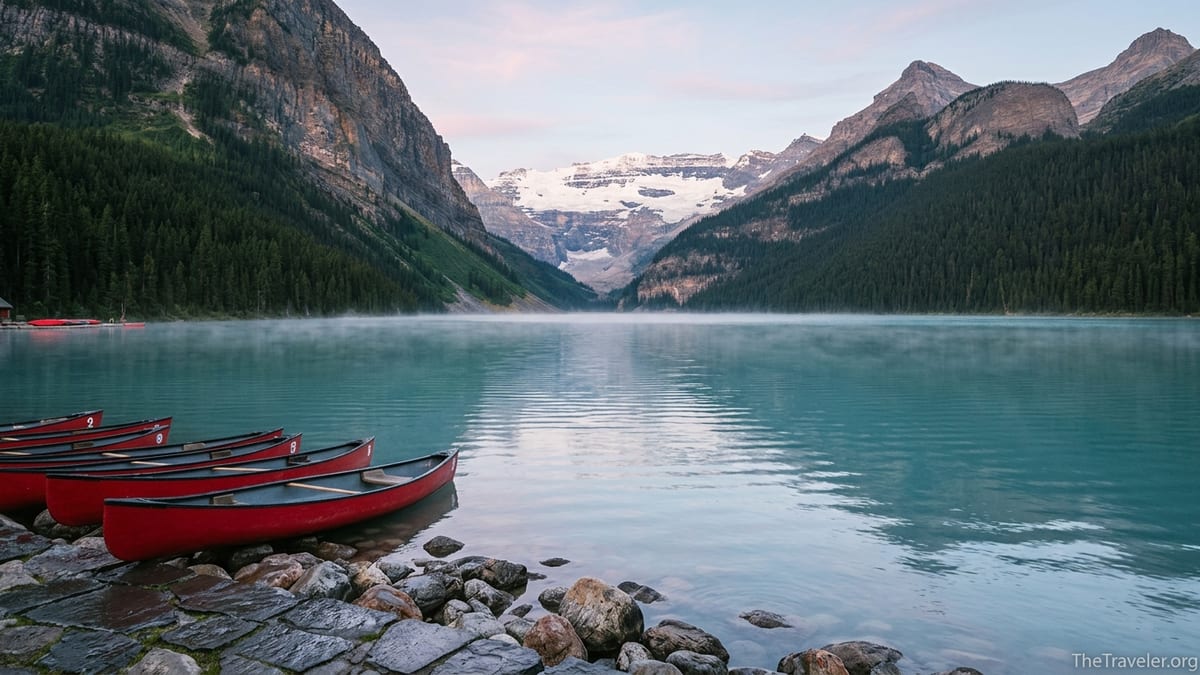
Victoria Glacier hangs between Mount Victoria and Mount Lefroy at the far western end of Lake Louise in Banff National Park. It is the main mass of ice you see framed above the turquoise water in almost every image of the lake. From the hotel promenade it can look surprisingly distant and small, especially on hazy or overcast days, which is why walking or paddling closer makes such a difference.
The glacier itself is not directly accessible as a casual walk from the lake. You will not be able to safely step on the ice without technical skills, equipment and a certified guide. What you can do, and what this guide focuses on, is reaching viewpoints where the seracs, crevasses and the broken icefall of Victoria Glacier dominate the horizon.
Because the glacier faces roughly east, morning light tends to bring out the sharpest detail in the ice. In mid-summer, early starts often mean blue skies, calm water and less wind-driven haze. By afternoon, the glacier can appear flatter and more washed out, especially on smoky days, so timing your visit around light conditions is worth considering if seeing the glacier clearly is a priority.
Season matters as well. The main hiking season to the best viewpoints typically runs from late June into early October, depending on snowpack. In May and early June, the lakeshore is usually accessible but higher trails can still be under snow, and shoulder-season visitors should be ready for muddy sections, lingering ice and partial trail closures higher up.
Lake Louise Lakeshore: The Easiest Glacier Views
If you want an uncomplicated way to see Victoria Glacier, start with the Lake Louise Lakeshore trail. This wide, mostly flat path hugs the northern edge of the lake from the paved promenade in front of the Fairmont to the “back of the lake” where Louise Creek flows in. It is an out-and-back walk of roughly 4 kilometers return, suitable for almost any fitness level.
As you leave the hotel behind, the perspective on the glacier improves with every few hundred meters. In the first section you are still sharing the view with crowds and camera tripods, but about 10 to 15 minutes along the trail the crowd thins and the glacier fills more of the visual frame. Benches and boulders just off the path give you natural stopping points to sit and watch the clouds sliding over Mount Victoria and the ice below.
At the western end of the lake, near the delta where the milky-blue stream enters, the view is at its most dramatic from lakeshore level. The glacial moraine and debris field beneath Victoria Glacier become obvious, and you can typically hear rockfall or distant ice movement on warm afternoons. This is one of the best spots to appreciate the scale of the valley that the glacier carved, while still standing on easy ground in regular walking shoes.
The lakeshore trail is usually one of the first to be cleared and is often accessible from late May, even while more ambitious hikes are still snowbound. That makes it an excellent early-season option for spring travelers who still want a meaningful glacier view, and for families with strollers or visitors who are not up for steep climbs.
On the Water: Canoeing Toward Victoria Glacier
For many visitors, the most memorable way to see Victoria Glacier is from a canoe in the middle of Lake Louise. The boathouse, operated by the Fairmont Chateau, rents classic red canoes during the ice-free season, typically from late May or early June through Canadian Thanksgiving in October, depending on conditions. You paddle straight out from shore, and within 10 to 15 minutes the glacier appears to rise more dramatically above the lake.
Rates change periodically, but recent price lists have been in the range of just over 100 Canadian dollars plus tax per hour for hotel guests, with higher pricing for non-guests. This is undeniably a splurge, especially for families, but divided between two or three people it becomes more accessible, and the vantage point is very different from the shore. Independent visitors sometimes offset the cost by skipping a pricey lunch at the hotel and packing a picnic instead.
From a canoe you can align your viewpoint so the glacier sits exactly at the center of the valley, framed by the walls of Mount Victoria and Mount Lefroy. On a calm morning, reflections of the ice and peaks ripple across water that is a vivid turquoise near the hotel and transitions to more opaque, milky tones near the back of the lake. The sense of distance also changes: what looks like a small patch of white from the hotel suddenly dominates your field of view when you are in the middle of the lake.
Paddlers should factor in weather and safety. Winds often pick up through the afternoon, creating chop that is tiring to paddle against and can make photo-taking awkward. Dress for cool conditions even in July and August; the lake is fed by glacial meltwater and the air over it can feel noticeably colder than in the parking lots. Always follow staff instructions about where you are allowed to paddle and how close you can safely get to the far shore.
Plain of Six Glaciers: Getting Close to the Ice
The Plain of Six Glaciers trail is the classic hike for travelers who want to move beyond the shoreline and get genuinely close to Victoria Glacier and its neighbors. Starting from the lakeshore near the hotel, the route follows the lakeside path before climbing along old moraines and into a broad cirque directly beneath the ice. The main trail to the teahouse and official viewpoint is a moderate half-day outing for reasonably fit hikers accustomed to walking several hours.
Recent trail descriptions put the distance at roughly 13 to 14 kilometers return from the hotel area, with about 400 to 600 meters of elevation gain, depending on where you turn around and which guidebook you consult. Expect about 4 to 6 hours for most visitors with time for photos and a break at the historic Plain of Six Glaciers Teahouse, which usually operates in the summer months with a simple, cash-focused menu of soups, sandwiches and cakes. The teahouse itself does not provide glacier guiding or access onto the ice; its appeal is the rustic atmosphere and the view across the valley to the hanging glaciers.
Beyond the teahouse, a signed extension continues on rougher trail to a high viewpoint. From here, the icefalls of Victoria Glacier and the adjacent glaciers on Mount Lefroy and the Mitre appear almost directly overhead, with crevasses and seracs visible to the naked eye on clear days. You are still a safe distance from the ice, but close enough to appreciate the rumble of small avalanches and the stark contrast between the dirty lower ice and the cleaner, whiter upper snowfields.
This route requires more preparation than a lakeshore stroll. Weather can change quickly at these elevations, and even in July hikers may encounter lingering snow patches, cool winds and sleet. Sturdy footwear, layers including a waterproof shell, at least one to two liters of water per person, snacks and basic emergency supplies are strongly recommended. Because the trail leaves the busy lake area behind, it also feels more remote; travel in pairs or small groups is common advice, and in late summer bear activity in surrounding valleys may result in seasonal restrictions such as group-size requirements on certain linked routes in the wider area.
Overhead Perspectives: Big Beehive and Nearby Lookouts
While the Plain of Six Glaciers brings you into the glacier-carved valley, a different approach is to look down on Victoria Glacier and Lake Louise from above. The Big Beehive, a distinctive dome-shaped hill rising above Lake Agnes, offers one of the best overhead views in the area. Hikers typically begin from the same lakeshore near the hotel, climb through forest to Lake Agnes and its teahouse, then continue up a series of switchbacks to the Big Beehive lookout.
The full outing to Lake Agnes and the Big Beehive is a solid half-day for many visitors, often totaling 10 to 12 kilometers return depending on the exact route. From the rock walls and wooden benches at the Beehive summit, you look straight down onto the turquoise rectangle of Lake Louise, with the Fairmont and parking lots reduced to toy blocks. Beyond the far end of the lake, Victoria Glacier and the surrounding peaks form a wall of rock and ice that feels both majestic and distant. On clear days, this bird’s-eye angle lets you see how the glacier sits in its cirque and how the lake basin was carved.
Compared with the Plain of Six Glaciers, the Big Beehive hike spends more time in the forest and has fewer moments where you feel directly under the glacier. It is, however, an outstanding option for travelers who enjoy varied scenery: forest, a hanging lake, a historic teahouse, and then the panoramic vista over both lake and glacier. Some experienced hikers link the Big Beehive with the Plain of Six Glaciers via connecting trails for a very long day, but that is a demanding itinerary that should only be attempted by fit, well-prepared parties.
Early in the season, snow and ice on the switchbacks above Lake Agnes can linger well into June, and traction devices may be helpful. Later in summer, the route is usually snow-free but still requires sure footing, especially if afternoon thunderstorms wet the rocks. Those sensitive to heights should be aware that the final viewpoint area sits near steep drops, although the main path stays back from the edge.
Planning Your Visit: Access, Crowds and Conditions
All the viewpoints described above start from the Lake Louise lakeshore, which itself requires some logistical planning. In peak season, typically late June through early September, the parking lots near the lake often fill very early in the morning. Many independent travelers now use Parks Canada shuttles from the Lake Louise Park and Ride or arrive on commercial sightseeing buses from Banff or Calgary to avoid the stress of parking. If you are driving, plan to arrive very early in the morning or later in the evening to improve your chances of finding a space.
Weather in the Canadian Rockies is famously changeable. A sunny forecast for Banff village does not guarantee blue skies at Lake Louise, and clouds often cling to the upper valley around Victoria Glacier even on otherwise bright days. Checking local conditions the morning of your visit and watching the sky as you drive up the access road helps set realistic expectations. Even on foggy days, though, breaks in the cloud can reveal dramatic glimpses of the glacier, and partial views from the lakeshore can still be rewarding.
Travelers should also consider wildfire smoke, which has affected views in various recent summers. On smoky days, distant features such as the upper parts of Victoria Glacier can appear washed out or disappear completely. If you have several days in the area, keeping your Lake Louise and glacier-focused hikes flexible allows you to pivot to the clearest day. Many visitors adjust by focusing on closer foreground subjects on hazy days, such as the color of the lake or wildflowers along the shoreline, and saving far-reaching viewpoints for clearer conditions.
Finally, remember that Victoria Glacier is an active, changing natural feature. Retreated ice, exposed rock and “dirty” lower sections streaked with dust and debris are all part of modern glacier landscapes. Older guidebooks and postcards may show more extensive, whiter ice than what you see today. Approaching your visit with an understanding that you are witnessing an evolving landscape, rather than a static postcard, can make the experience more meaningful.
Safety, Etiquette and Respect for a Fragile Landscape
Getting great views of Victoria Glacier does not require taking unnecessary risks. Established trails like the lakeshore, Plain of Six Glaciers and Big Beehive are designed to keep visitors on firm ground and away from the hazards of crevasses, rockfall zones and unstable moraines. You should never attempt to walk onto Victoria Glacier or its adjacent icefields from these trails without a qualified mountain guide and proper equipment. The slopes beneath the glacier, especially beyond official trail endpoints, can be treacherous even when they look benign.
Basic mountain safety principles go a long way. Carry a small daypack with warm layers, a waterproof jacket, water, high-energy snacks and a map or offline navigation app that covers the area. Weather can shift from warm sunshine at the hotel to cold wind and sleet at the Plain of Six Glaciers viewpoint within a few hours. Telling someone your intended route and approximate return time is a simple but important precaution, particularly if you are hiking outside the busiest mid-day period when there are fewer people on the trail.
Etiquette matters just as much as equipment. Popular viewpoints near the lakeshore, the teahouses and the Big Beehive can become crowded at midday in July and August. Step aside when you stop for photos, keep conversations at a reasonable volume and avoid blocking narrow sections of trail. At the back of Lake Louise and along moraines below Victoria Glacier, staying on marked paths protects fragile vegetation and reduces erosion, which in turn keeps trails safer and more pleasant for everyone.
Finally, embrace a “leave no trace” mindset. Pack out all garbage, including food scraps and tissue, and resist the temptation to stack rocks or build cairns for photos along the lakeshore or moraines. These small actions, multiplied by thousands of visitors, can significantly alter the appearance and ecology of a place. Treat Lake Louise and the viewpoints of Victoria Glacier as you would a cherished museum exhibit: look closely, take your time, but leave everything as you found it.
The Takeaway
Seeing Victoria Glacier at Lake Louise can be as simple or as ambitious as you want it to be. An easy stroll along the lakeshore reveals shifting perspectives as the glacier grows larger at each bend. A canoe outing puts you on the water, with the ice and peaks rising almost vertically from the far end of the lake. The Plain of Six Glaciers trail brings you into the heart of the glacial amphitheater, where the sound of distant avalanches and the texture of the ice become part of the experience.
Overhead viewpoints like the Big Beehive add another dimension, letting you trace the shape of the lake and the position of Victoria Glacier in the broader landscape. Combined thoughtfully, these perspectives turn what might have been a quick photo stop into a full day, or even several days, of exploration. The key is matching routes to your fitness, timing your visits around light and weather, and approaching the area with respect.
However you choose to see Victoria Glacier, slowing down pays off. Sit on a bench halfway along the lakeshore, linger over a mug of tea beneath the ice at the Plain of Six Glaciers, or watch the shadows lengthen across the lake from a high lookout. The glacier, the lake and the valley tell a long story of ice and stone; with a bit of planning, you can give yourself time to hear it.
FAQ
Q1. What is the easiest way to see Victoria Glacier from Lake Louise?
The easiest way is to walk the Lake Louise Lakeshore trail from the hotel promenade toward the back of the lake, where the view of Victoria Glacier steadily improves.
Q2. Do I need to hike a difficult trail to get a good view of Victoria Glacier?
No. The lakeshore path is mostly flat and suitable for most visitors. Longer hikes like the Plain of Six Glaciers and Big Beehive provide closer and higher viewpoints but are optional.
Q3. When is the best time of year to see Victoria Glacier clearly?
For hiking and clear views, late June through early October is generally best, when trails are mostly snow-free and daylight is long. Shoulder seasons can still offer good views but may involve snow and ice.
Q4. Is canoeing on Lake Louise worth it to see Victoria Glacier?
Many travelers consider it a highlight. From a canoe, the glacier appears larger and more dramatic, and you can align your view down the valley in a way that is not possible from shore.
Q5. How long does the Plain of Six Glaciers hike take?
Most reasonably fit hikers take about 4 to 6 hours for the round trip from the lakeshore to the teahouse and main viewpoint, including time for breaks and photos.
Q6. Can I walk onto Victoria Glacier from the Plain of Six Glaciers trail?
No. The maintained hiking trail keeps you at a safe distance. Walking onto the glacier without a qualified guide and mountaineering equipment is dangerous and not recommended.
Q7. Which hike gives better views of Victoria Glacier, Plain of Six Glaciers or Big Beehive?
The Plain of Six Glaciers brings you closer to the ice and into the glacial valley, while Big Beehive offers an overhead panorama of Lake Louise with the glacier in the distance. They are complementary rather than directly comparable.
Q8. What should I pack for a day of glacier viewing hikes at Lake Louise?
Pack sturdy footwear, layered clothing including a waterproof jacket, water, snacks, sun protection and a simple first-aid kit. Weather can change quickly, even on short hikes.
Q9. How busy do the trails and viewpoints get in summer?
In July and August, the lakeshore, teahouses and major viewpoints are very popular, especially from mid-morning to mid-afternoon. Early starts or late-afternoon visits help avoid the heaviest crowds.
Q10. Are there guided options for learning more about Victoria Glacier?
Yes. In the wider Lake Louise and Banff area, various operators offer guided hikes and interpretive walks that discuss glaciology, local history and ecology, though not all go directly beneath Victoria Glacier. Visitor centers and hotel activity desks can provide current options.