


Victoria Glacier hangs like a frozen curtain above Lake Louise, its blue crevasses and shattered seracs forming one of the most recognizable backdrops in the Canadian Rockies. You cannot walk out onto Victoria Glacier itself on a standard tourist trip, but you can get remarkably close to it on some of Banff’s most rewarding hikes and guided experiences. If you are planning a Banff or Lake Louise vacation, building a day or two around Victoria Glacier is one of the best ways to balance classic scenery, real mountain adventure and manageable logistics.
Get the latest updates straight to your inbox!
Understanding Victoria Glacier and Where You Actually See It
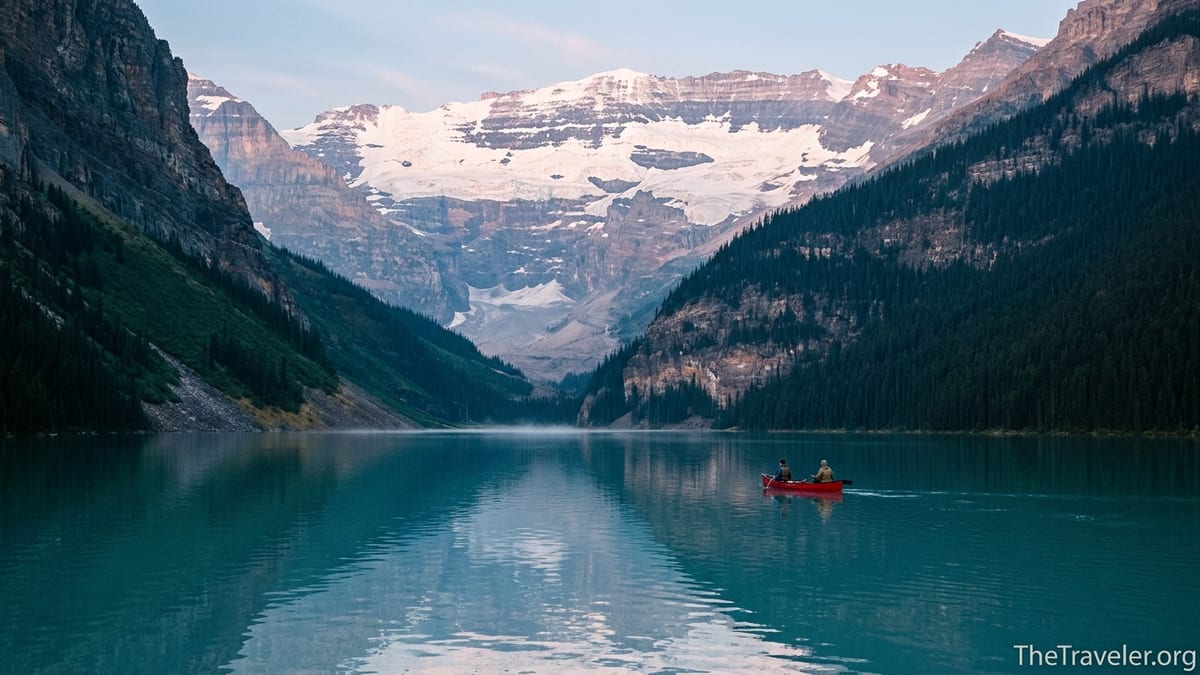
Victoria Glacier is the dramatic icefield draped over the east face of Mount Victoria at the far end of Lake Louise in Banff National Park. When you see photos of a turquoise lake framed by a grand hotel in the foreground and a wall of ice at the far end, you are looking straight at Victoria Glacier and its upper icefields. The glacier feeds Lake Louise, which is why the water carries that distinctive milky turquoise color from suspended rock flour.
Most visitors experience the glacier from the lakeshore in front of Fairmont Chateau Lake Louise. On a clear August morning, you can stand by the lakeside promenade and see avalanche paths on the flanks of Mount Lefroy and the broken ice of Victoria Glacier shimmering in the distance. Late in the day, when tour buses have left, the amphitheater can feel surprisingly quiet, with the muffled roar of meltwater and occasional crack of distant icefall echoing across the water.
It is important to understand that there is no simple, safe “walk-on” glacier tour at Victoria Glacier. Parks Canada explicitly warns hikers not to venture onto the ice or into the steep gully known historically as the Death Trap, the route that once led mountaineers up to Abbot Pass. Today, crevasses, rockfall and serac collapse make that terrain the domain of technical mountaineering teams, not casual visitors. For most travelers, the realistic goal is to hike to superb viewpoints where you can study the glacier up close without stepping on it.
Because Victoria Glacier is so visible from Lake Louise, nearly every hiking, paddling or photography outing here includes it as a central visual feature. Whether you choose to stroll the shoreline, commit to a full-day hike up the Plain of Six Glaciers, or book a professional guide for a more interpretive experience, you are still building your trip around that same dramatic ice-filled cirque at the lake’s far end.
Plain of Six Glaciers: The Iconic Victoria Glacier Hike
The Plain of Six Glaciers Trail is the signature hike for viewing Victoria Glacier and its neighbors, and it is widely described by local guides as one of the must-do walks in the Lake Louise area. From the lakeshore in front of the Chateau, the route follows the flat lakeside path for about 2 kilometers before climbing gradually up the valley. Recent trail descriptions put the round-trip distance in the 13 to 14 kilometer range from the hotel, with about 400 to 600 meters of elevation gain depending on how far you go beyond the tea house. Most reasonably fit hikers take 4 to 5 hours for the out and back, plus extra time for breaks and photos.
As you leave the lakeshore and begin to gain elevation, the trail traverses an old glacial moraine and then enters a wide, rocky basin that feels increasingly wild. Rockfalls rumble occasionally from the surrounding cliffs, pikas squeak from talus slopes, and the creaking ice of Victoria Glacier becomes an audible presence. In early season, typically June, you may still see snow clinging to shaded sections of the trail, and Parks Canada sometimes advises microspikes or caution during the shoulder months.
The historic Plain of Six Glaciers Tea House sits on a rocky knoll at roughly 2,100 meters. Built in the early 20th century as a rest stop for mountaineers, it still operates as a simple cash-only cafe during the summer hiking season, usually from mid-June to early October depending on conditions. Many hikers budget around 20 to 30 Canadian dollars per person for a pot of tea, a slice of cake or a hearty soup, knowing that every ingredient has been packed in by staff via the same trail they are walking. On peak July and August weekends, it is normal to wait in line for a table, so arriving before late morning can make for a quieter experience.
Beyond the tea house, the official maintained trail continues for another 1 to 1.5 kilometers toward the End of the Plain viewpoint. This last stretch, on rougher scree and moraine, is where you get the most dramatic, in-your-face views of Victoria Glacier, its lower icefalls, and the deep gouge of the Death Trap rising toward Abbot Pass. Many independent trail guides rate this extension as moderate but caution that it is exposed to rockfall and can hold snow late into the season. Do not follow faint boot tracks beyond the signed viewpoint; beyond that point, you are entering serious mountaineering terrain where rescues are frequent and conditions change without warning.
Lake Agnes and the Teahouse Loop: A Full Day with Multiple Glacier Views
For strong hikers looking to make the most of a single day at Lake Louise, the popular “teahouse loop” combines Lake Agnes and the Plain of Six Glaciers into one extended outing. The classic version starts at the same lakeshore but branches right toward the Lake Agnes Trail, climbing steadily through forest past Mirror Lake to reach Lake Agnes and its own historic tea house. This first segment is roughly 3.5 kilometers one way with about 400 meters of gain and is often busy with families and casual walkers.
From Lake Agnes, a higher-level connector known as the Highline leads across the slope and eventually drops into the Plain of Six Glaciers valley. Hikers who complete the full loop, visiting both tea houses and pushing to the End of the Plain viewpoint, typically log 18 to 20 kilometers of hiking with 800 to 1,000 meters of cumulative elevation gain. Reports from recent seasons suggest that fit, experienced hikers take 6 to 8 hours for the loop, not counting longer meal stops, while those unaccustomed to mountain terrain may take most of the day.
Beyond the simple satisfaction of linking two of the Rockies’ most famous tea houses, this loop gives varied perspectives on Victoria Glacier and several neighboring icefields. From the Big Beehive viewpoint above Lake Agnes, you look down on the classic turquoise water of Lake Louise with Victoria Glacier framed at the far end. Later in the day, when you arrive at the Plain of Six Glaciers Tea House and continue up the valley, you see the same ice from below, now filling much more of your field of view and revealing bands of blue and grey you could not detect from the hotel deck.
If you are considering the teahouse loop, treat it as a genuine mountain day. Start early, ideally by 8 am, to avoid the heaviest crowds and summer thunderstorms. Carry at least two liters of water per person, plus rain gear, a warm layer and high-energy snacks. While the tea houses are a highlight, they can run out of popular items on busy days, and they do not accept card payments. Having enough cash and backup food is the easiest way to keep the day enjoyable, especially if lines are longer than expected.
Non-Guided vs Guided: How to Add Interpretation and Safety
Most confident hikers tackle the Plain of Six Glaciers and Lake Agnes trails on their own using trail maps or popular hiking apps. The routes are well signed from the Lake Louise lakeshore, and in high summer it is rare to be out of sight of other walkers for long. That said, there are good reasons to consider a guided experience built around Victoria Glacier, especially if you are unfamiliar with mountain environments or traveling with family members who prefer extra reassurance.
Several local guiding outfits based in Banff and Canmore offer day hikes at Lake Louise that focus on glaciology, geology and mountain history. A typical guided day hike to the Plain of Six Glaciers might cost in the neighborhood of 150 to 250 Canadian dollars per person, including transportation from Banff, a professional guide and the use of hiking poles. Smaller, locally owned companies often keep group sizes to eight or fewer guests, which allows guides to adjust the pace and share detailed stories about early Swiss guides, the construction of the tea houses and the retreat of the glaciers that you can see carved into the surrounding valley walls.
The value of a guide becomes especially clear in shoulder seasons such as late May and early October, when snow patches, icy sections and unsettled weather can complicate route-finding. Professional guides monitor Parks Canada advisories closely and know when avalanche risk, bear activity or lingering snow drifts make certain itineraries poor choices. In recent years, Parks Canada has issued early season hazard warnings after a run of rescues near Lake Louise, often involving visitors who underestimated snow-covered summer trails. Having someone along who understands how fast conditions can change can make the difference between a memorable day and a stressful one.
For travelers who want to physically set foot on glacier ice during a Banff and Lake Louise trip, the most realistic option is to book a separate guided glacier walk on the Columbia Icefield farther north on the Icefields Parkway. Companies operating there run half-day trips through crevassed terrain with crampons and safety briefings. It is a different setting than Victoria Glacier but pairs well with a few days in Banff. You can admire Victoria Glacier from its safest, most beautiful viewpoints and then spend a day in Jasper National Park learning how glacial ice feels underfoot in a setting specifically managed for that experience.
Logistics: Getting to Lake Louise and Managing Crowds
Because Lake Louise is one of Canada’s most visited natural landmarks, basic logistics can make or break your Victoria Glacier day. In recent seasons, personal vehicle parking at the lakeshore has routinely filled very early in the morning, often before sunrise on busy summer weekends. Parks Canada now strongly recommends using the official shuttle system that connects a large park-and-ride lot near the Lake Louise Ski Resort with both Lake Louise and Moraine Lake. Tickets are sold in advance for timed departures, with a modest per-person fee that is usually competitive with private tour prices when you factor in fuel and parking.
If you prefer not to drive at all, Roam Transit buses run from the town of Banff to Lake Louise Village and the lakeshore on a regular schedule in high season. Families staying in Banff often find it simpler to leave the car at their hotel, walk to the downtown Roam stop, and ride directly to Lake Louise rather than worry about parking. From the Lake Louise lakeshore bus stop, the Plain of Six Glaciers and Lake Agnes trailheads are only a few minutes’ walk along the waterfront path, so there is no need for separate transfers.
Once at the lake, you will find basic services concentrated near the Chateau: public washrooms, a lakeside cafe, a small gift shop and the boat dock where you can rent canoes in summer. Canoe rental rates have climbed steadily and can easily be over 100 Canadian dollars per hour in peak season for up to three people per boat. While that is a splurge, many visitors feel that paddling out into the middle of Lake Louise, with Victoria Glacier looming directly ahead, is the most memorable way to appreciate the scale of the valley without committing to a full-day hike.
Crowds around the immediate lakeshore can be intense between late morning and mid-afternoon in July and August. If your goal is quieter glacier viewing, plan a dawn or early evening visit. Photographers often arrive before 6 am in midsummer to catch first light on the peaks. Others choose to hike first, have a late lunch at the tea house, and arrive back at the lake after the biggest tour groups have left. Regardless of timing, build in flexibility. Afternoon thunderstorms are common, and smoke from distant wildfires can reduce visibility on some days; having an alternate day or an indoor backup plan in Banff townsite is a practical hedge against weather surprises.
Seasonality, Safety and Responsible Glacier Viewing
The main Victoria Glacier hiking season runs from roughly mid-June through late September in a typical year. Early in that window, snow can linger on shaded sections of the Plain of Six Glaciers and Highline trails, and Parks Canada repeatedly advises visitors not to treat popular summer paths as safe spring routes. In May and early June, cornices, wet avalanches and icy sections can create significant hazards even when lower-elevation trails are dry. Many local hikers wait until Lake Louise itself is largely free of ice and official bulletins note better conditions before committing to higher routes toward the glacier.
Summer brings its own set of considerations. Even though you are near glacial ice, the sun can be strong at these elevations, and many visitors underestimate the effect of reflected light from snow and rock. Sunglasses, sunscreen, a brimmed hat and plenty of water are non-negotiable. Afternoons often deliver fast-moving thunderstorms that sweep up the valley from the west. Guides commonly suggest turning around at the first sound of thunder and avoiding exposed viewpoints if dark clouds are building over Mount Victoria or Lefroy.
Wildlife is another factor. The Lake Louise area sits in prime grizzly and black bear habitat, and seasonal travel restrictions are occasionally imposed on nearby trails to protect feeding bears or sensitive areas. Check notices at the Lake Louise Visitor Centre or trailhead signs before setting out, carry bear spray where recommended, and hike in groups whenever possible. Responsible glacier viewing also means staying on established paths, giving space to wildlife, and packing out all food waste. At the Plain of Six Glaciers Tea House, staff pack supplies in and garbage out by hand; leaving litter along the trail or feeding ground squirrels may seem minor but increases the strain on both people and animals.
Above all, avoid the temptation to push beyond your skills or the signed end of the maintained trail in search of a closer glacier photo. The steep gully leading toward the base of Victoria Glacier is deceptive from a distance and has a long history of accidents. What looks like a short scramble quickly turns into complex, loose terrain exposed to rockfall and icefall. The most rewarding views for the vast majority of visitors are already available from safe vantage points like the End of the Plain viewpoint, the tea house terrace and the shoreline of Lake Louise.
The Takeaway
Adding Victoria Glacier experiences to a Banff itinerary is less about chasing a single viewpoint and more about choosing how you want to feel the place. For some travelers, that might be an early-morning paddle across mirror-still water, the glacier glowing pink in first light. For others, it is the steady rhythm of the Plain of Six Glaciers trail underfoot, the clink of tea cups on a windswept terrace and the satisfying fatigue of a full mountain day.
What unites all of these options is that they are accessible with thoughtful planning. By understanding that you will be viewing, not walking on, Victoria Glacier at Lake Louise, choosing a hike that matches your fitness, and paying attention to seasonal conditions, you can build one or two days around the glacier that feel both adventurous and realistic. Combined with a side trip up the Icefields Parkway or time in Banff townsite, these experiences can anchor an entire Rockies journey.
If you give yourself the time, Victoria Glacier will become more than a backdrop for quick photos. It will be a living, changing presence in your trip: a reminder of deep time, shifting climates and the sheer scale of the mountains you have come to explore.
FAQ
Q1. Can I walk on Victoria Glacier during a regular Banff vacation?
Directly walking on Victoria Glacier from Lake Louise is not offered as a standard tourist activity. The terrain is steep, crevassed and exposed to rock and icefall, so only technical mountaineers with appropriate gear and training venture onto it. Most visitors admire the glacier safely from viewpoints on the Plain of Six Glaciers Trail and the Lake Louise lakeshore.
Q2. What is the best hike for seeing Victoria Glacier up close?
The Plain of Six Glaciers Trail is generally considered the best hike for close views. It starts at Lake Louise, follows the shoreline, climbs through moraine and ends at a high valley with direct sightlines to Victoria Glacier and several neighboring icefields. The extension beyond the tea house to the End of the Plain viewpoint offers the most dramatic perspective for strong hikers.
Q3. How difficult is the Plain of Six Glaciers hike?
Most guidebooks rate the Plain of Six Glaciers as a moderate day hike. Expect roughly 13 to 14 kilometers round trip with several hundred meters of elevation gain and some rocky sections. Regular walkers in good health usually complete it in 4 to 5 hours plus breaks, but beginners or those unaccustomed to altitude may find it more demanding and should pace themselves accordingly.
Q4. When is the best time of year to visit for Victoria Glacier views?
The main hiking season for Victoria Glacier viewpoints runs from mid-June through late September. Earlier in June, trails can still hold snow and may be icy in places. July and August offer the most reliable dry conditions and open tea houses but are also the busiest. In late September, larch trees turn golden and crowds thin, though weather becomes more unpredictable.
Q5. Do I need a guide to hike to the Plain of Six Glaciers?
You do not need a guide if you are a confident hiker, comfortable with a moderate mountain trail and able to navigate well-marked paths. However, guided hikes add safety, interpretation and logistics support, especially in shoulder seasons or if you are unfamiliar with alpine weather, wildlife and route-finding. Families and less experienced hikers often appreciate the structure and insight a local guide provides.
Q6. How do I get to Lake Louise without worrying about parking?
The simplest option in peak season is to use the official Parks Canada shuttle from the Lake Louise park-and-ride lot near the ski resort. You reserve a timed-ticket spot, park once and then ride buses to both Lake Louise and Moraine Lake. Roam Transit also runs buses from Banff to Lake Louise, which many visitors prefer over competing for limited lakeshore parking spots.
Q7. Are the tea houses on the Victoria Glacier hikes open year-round?
No, both the Plain of Six Glaciers Tea House and the Lake Agnes Tea House operate only during the summer and early fall hiking season. Opening and closing dates vary with conditions, but most years they are open from around mid-June to early October. They close in winter and spring when the trails are snow-covered and avalanche risk is higher.
Q8. What should I bring for a day hike to Victoria Glacier viewpoints?
Plan to carry sturdy footwear, layered clothing, a waterproof shell, hat, sunglasses, sunscreen, at least two liters of water and high-energy snacks. Trekking poles are useful on the steeper, rocky sections. If you intend to purchase food or drinks at the tea houses, bring Canadian cash, as they have limited power and do not always accept cards or mobile payments.
Q9. Is it safe to visit Victoria Glacier viewpoints with children?
Many families hike at Lake Louise every summer, and children with some hiking experience often do well on the lower sections of the Plain of Six Glaciers and the Lake Agnes Trail. The key is to match distance and elevation to your child’s ability, start early to avoid heat and storms, and turn around before fatigue sets in. Closer to the glacier, trails become rougher and steeper, so parents should be cautious about how far they go.
Q10. How can I include an actual glacier walk in my Banff trip?
If you want to physically stand on glacier ice, consider booking a dedicated guided glacier walk on the Columbia Icefield along the Icefields Parkway between Lake Louise and Jasper. Several operators offer half-day tours with crampons and safety equipment on a section of the icefield managed specifically for visitors. You can easily combine that day trip with time at Lake Louise, where you enjoy Victoria Glacier from its most impressive viewpoints.