


Buying AXA travel insurance is only half the job. The real protection comes from understanding how your coverage works and setting everything up before you leave, so that if a flight is canceled or you land in a foreign emergency room, you already know exactly what to do. This step by step guide walks you through how to use AXA travel insurance in practice before your trip, with real world examples drawn from typical vacation, business and family journeys.
Get the latest updates straight to your inbox!
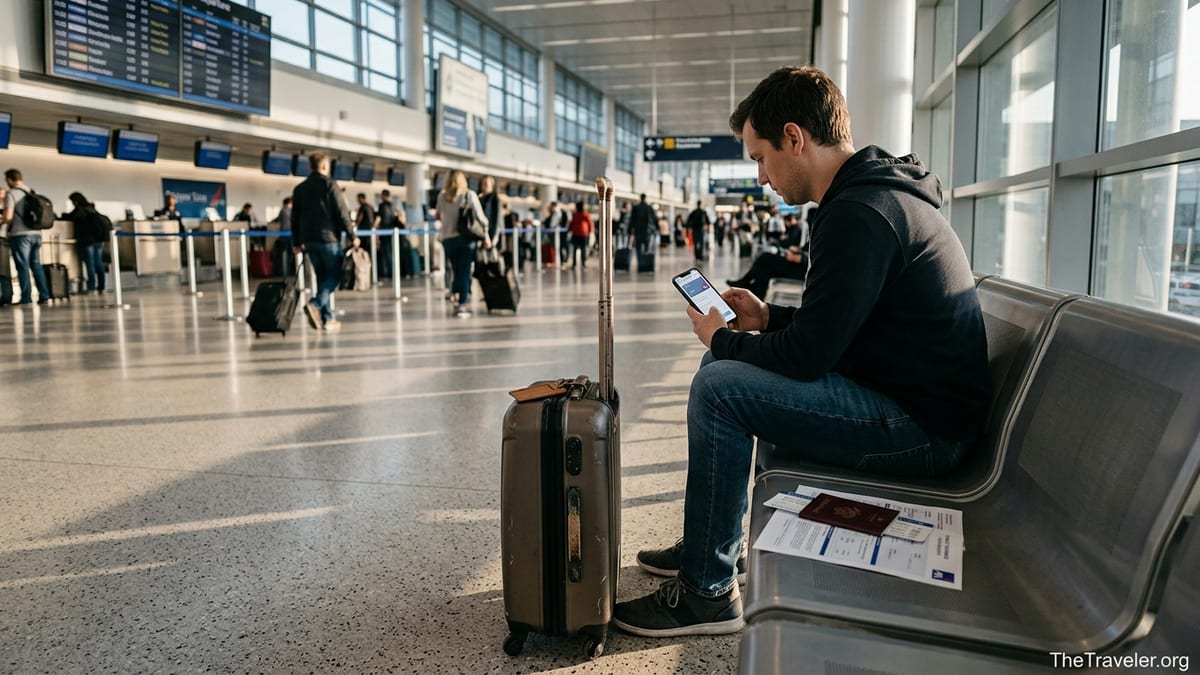
Step 1: Understand What AXA Travel Insurance Actually Covers
Before you can use AXA travel insurance effectively, you need a working picture of what it usually covers in real life. AXA’s comprehensive plans typically combine several protections in one package: trip cancellation and interruption, emergency medical expenses, emergency medical evacuation, baggage loss or delay, and travel delay benefits. For example, a mid range comprehensive plan sold to U.S. travelers may reimburse up to the full insured trip cost if you cancel for a covered reason, offer tens of thousands of dollars in emergency medical coverage, and several hundred dollars for baggage delay or lost baggage. Exact limits vary by plan and country, so you must check your individual certificate of insurance.
Think of these benefits in practical terms. If you are a New York family booking a 4,000 dollar Caribbean cruise and you buy an AXA plan that covers 100 percent of your prepaid trip cost, a serious illness in the family before departure could trigger cancellation coverage. If the same family is already on the ship and one parent suffers appendicitis in port, the emergency medical and evacuation sections can help pay hospital bills and coordinate a medical flight if needed. Baggage coverage comes into play if the cruise line misroutes your suitcases and you need to buy clothing and toiletries to get through the first days.
AXA also emphasizes 24/7 assistance. This is not just a call center in theory: it is the number you would dial if you break a leg skiing in the Alps, lose your passport on a weekend in Barcelona, or need help finding an English speaking doctor in rural Thailand. Getting familiar with what the assistance team can and cannot do before you go will make you calmer if anything goes wrong.
Finally, remember that AXA operates under different brands and wordings in various countries. AXA Assistance USA plans differ from AXA Switzerland or AXA France travel products, even though they share the AXA name. Always rely on the policy wording for your country of residence, not what a friend abroad says their AXA policy covers.
Step 2: Choose the Right AXA Plan and Timing Before You Book Everything
The way you buy AXA travel insurance affects how you can use it later. In many markets, travelers choose between several tiers. In the United States, for instance, AXA Assistance USA commonly sells three tiers of single trip plans aimed at tourists and cruisers. Lower tier plans tend to have more modest medical and baggage limits, while higher tier versions add larger medical caps and stronger trip interruption or evacuation benefits. In parts of Europe, you may instead see “single trip” versus “annual multi trip” products, or modular policies where you add or remove cancellation, baggage and assistance modules.
Use your trip profile to pick a plan. A 3 night domestic city break where your largest non refundable expense is a 400 dollar hotel booking may justify a basic plan focused on cancellation and some baggage coverage. A 14 day tour of Japan with 1,800 dollar flights and 3,000 dollars in prepaid rail passes and hotels calls for higher medical coverage and strong trip interruption limits, because a mid trip illness could force you to rebook long haul flights and skip several nights of hotel stays. Winter sports in the Swiss Alps or a diving holiday in the Red Sea might require that you confirm your AXA product includes those activities or an optional sports module.
Timing also matters. AXA itself advises that travelers buy coverage as soon as possible after their first trip payment, often recommending roughly three weeks before departure or immediately after the first deposit. Purchasing early can expand eligibility for certain benefits, such as broader trip cancellation coverage for unforeseen events. If you wait until a storm is already threatening your resort or a family member has fallen ill, insurers may treat that as a known event and exclude it. In some European AXA products you can still buy a single trip policy up to the day before departure, but late purchases usually cannot cover issues that have already occurred.
One practical example: imagine you reserve a 3,500 dollar safari in Kenya in January for travel in August. If you buy an AXA policy within a few days of paying your deposit, and your physician later discovers a serious heart condition in May that makes long haul travel unsafe, you are in a much stronger position to file a cancellation claim than if you tried to purchase insurance after the diagnosis.
Step 3: Complete the Purchase Carefully and Save Every Document
Once you have chosen a plan, the next step is purchasing it in a way that supports future claims. Many travelers now buy directly through AXA’s travel insurance portals, where you enter your destination, trip dates, age, and total prepaid nonrefundable trip cost. Others purchase at checkout when booking a flight, cruise, or tour where AXA is the underlying insurer. In either case, slow down and enter details accurately. Your trip cost should reflect prepaid, nonrefundable amounts for flights, cruises, tours, and hotels, not rough guesses. Underinsuring can cap your refund; overinsuring can cause questions if you ever need to claim.
When you complete the purchase, AXA typically emails a confirmation packet within minutes. It usually includes a schedule of benefits, policy wording booklet, and confirmation of insurance showing your policy number, names of insured travelers, trip dates, and coverage limits. In some countries, AXA also provides a digital insurance card formatted for smartphone wallets. Do not leave these in your inbox and forget them. Download the PDF documents, save them to cloud storage that you can access from your phone, and print a hard copy to keep with your passport.
Consider a couple flying from Chicago to Rome who purchase an AXA plan online. A week after booking they accidentally delete the confirmation email. Months later, they arrive in Italy and their suitcase never appears on the carousel. The baggage claim agent asks for proof of travel insurance, and they also want to call AXA for assistance. If the travelers had already stored their policy in a cloud folder or mobile wallet, they could pull up the policy number instantly. If they never saved anything, they may lose time trying to recover documents through customer service in the middle of a stressful situation.
Finally, check the effective dates in your paperwork. On many AXA policies, trip cancellation coverage starts at 12:01 a.m. the day after the insurer or administrator receives your premium, while other benefits such as medical and baggage coverage begin only when you start your trip. Knowing these dates lets you understand what is covered if something happens in the weeks leading up to departure.
Step 4: Read the Key Sections of Your Policy Before You Travel
You do not have to memorize every page of AXA’s policy booklet, but you should invest 30 minutes to read the sections that matter most before your trip. Focus on definitions, general exclusions, trip cancellation, trip interruption, emergency medical expenses, medical evacuation, baggage, and travel delay. Highlight or note any conditions that require you to act a certain way, such as contacting AXA’s assistance team before you are admitted for non emergency hospital treatment when possible, or obtaining a written medical opinion declaring you unfit to travel if you want to cancel for health reasons.
A real world example illustrates why this matters. Suppose you are booked on a 10 day tour of Peru with a nonrefundable cost of 2,800 dollars, insured with AXA. Three days before departure, you develop severe back pain. Your doctor advises against long haul travel and documents this in your medical record. If you have read your policy, you will know that medical cancellation usually requires a doctor’s note confirming you are medically unfit to travel, plus proof of your prepaid travel costs and cancellation invoices from airlines or tour operators. Having this list in your head, you would immediately ask your doctor for written confirmation and request formal cancellation invoices from your tour company instead of just an informal email.
Similarly, many AXA policies will not cover trip cancellation because you are simply worried about events such as potential disease outbreaks or political unrest if there is no explicit government travel ban affecting your plans. Understanding that “fear of travel” is often excluded helps you make realistic decisions. If you are nervous about a storm that may or may not hit your Caribbean resort, you will know that changing plans voluntarily is likely at your own expense unless and until specific covered events occur.
Pay particular attention to pre existing medical condition clauses. Some AXA products restrict or exclude coverage for conditions that existed or were treated within a look back period before you bought the policy, unless certain conditions are met. For instance, if you had a heart attack two months before purchase and then suffer complications on your trip, coverage could be limited. Reading this section carefully and, if needed, discussing it with your doctor before travel can prevent unpleasant surprises later.
Step 5: Organize Contacts, Apps, and Proofs Before You Leave
Using AXA travel insurance smoothly in an emergency depends on having key information at your fingertips. Before departure, program AXA’s 24/7 assistance number and your policy number into your phone contacts. If your local AXA branch offers a companion app or portal, such as a mobile platform where you can see your policy, get telehealth access, and file claims, download it and log in while you still have reliable internet at home. Confirm you can open your policy PDF on your phone even in airplane mode.
Next, assemble the paperwork you will need if you ever have to file a claim. For most AXA products, successful claims rely on documentation of both the event and the financial loss. For trip cancellation, that may include booking confirmations, proof of payment such as credit card statements, and cancellation invoices from airlines, cruise lines, or tour companies. For baggage claims, you will often need property irregularity reports from the airline, receipts for essential items you bought while your luggage was delayed, and receipts for higher value items that were lost. For medical claims, you should keep hospital bills, doctor’s reports, prescriptions, and proof of any payments you made.
Imagine a traveler from Boston flying to Tokyo with an AXA policy. Their checked bag is delayed for 48 hours, and they spend about 180 dollars on clothing and toiletries in Shinjuku. Because they prepared in advance, they already know that baggage delay coverage usually requires proof that the airline misplaced the bag and receipts for replacement items within the benefit window. They ask the airline desk for a written baggage report and keep every clothing receipt in a plastic folder with their policy printout. When they get home and submit a claim, they can upload clear documentation rather than scrambling to reconstruct purchases from memory.
If you are traveling with family or a group, share copies of the policy and contact details with at least one other adult. In a serious emergency such as a car accident abroad, you may be unconscious or unable to speak for yourself, and having another person who can immediately contact AXA and provide policy details can accelerate assistance and medical coordination.
Step 6: Run Through “What If” Scenarios for Cancellations and Emergencies
Before departure, mentally rehearse a few common “what if” situations and how you would use AXA coverage in each case. This helps you act quickly and correctly under stress. Start with trip cancellation. What if a close family member back home becomes seriously ill a week before departure? What if your airline cancels your flight because of a covered event like severe weather or mechanical failure? What if your employer unexpectedly requires you to stay for an essential meeting and you need to cancel or delay your vacation? Check your AXA policy for how each situation is treated, and note which ones are valid covered reasons and which are not.
Then consider medical emergencies. If you wake up with severe abdominal pain in Lisbon and end up in a private clinic, your first action after stabilizing the situation should be to contact AXA’s assistance team, using the number on your digital insurance card or policy papers. The team can verify coverage directly with the hospital, help arrange direct billing where possible, and, if necessary, coordinate a transfer to a more appropriate facility. Some AXA policies even provide telehealth access so you can speak to a doctor by phone or video to decide whether your symptoms warrant a hospital visit or can be treated with over the counter medication.
Also think about non medical disruptions. For example, a couple from Dallas with 5,000 dollars in prepaid hotels and tours in Italy arrives in London on a connection only to find their onward flight canceled due to a covered mechanical breakdown. They are rebooked on a flight the next day, forcing them to miss one prepaid night at a hotel in Rome and pay for unexpected food and possibly a night in a London hotel. A well prepared traveler would keep all boarding passes, airline notices of cancellation, and receipts for meals and lodging. When they return home, they can submit a travel delay or misconnection claim with AXA and have a realistic chance of partial reimbursement up to the policy limits.
Finally, be clear on what your AXA policy will not do. Travel insurance is not a general cancellation tool when you simply change your mind or find a cheaper trip. It does not usually cover losses tied to known events or foreseeable issues existing before purchase, such as storms that already have been named or strikes announced weeks in advance. Running through these boundaries beforehand helps you make better booking decisions, like buying refundable hotel rates when you know your plans might change for reasons not covered by insurance.
Step 7: Know How to File an AXA Claim Once You Get Back
Even though the actual filing typically happens after your trip, the groundwork starts before you leave. Different AXA entities provide online claim portals, email addresses, or postal options for submitting claims. For instance, some AXA travel insurance platforms in North America offer a digital claims center where you create an account, select your claim type, and upload documents. In parts of Europe, you might email scanned documents directly to a claims address listed in your papers. Before departure, identify where your policy directs you to file and note any deadlines, such as needing to report a loss within a certain number of days.
Returning to a concrete example, imagine you suffer food poisoning on a family trip to Thailand and spend two nights in a private hospital. You pay 1,200 dollars out of pocket with a credit card, collect itemized bills in English, and secure a medical report describing your diagnosis and treatment. When you get home, you log into the AXA claims portal, select “emergency medical expenses,” and upload the hospital documentation, your boarding passes, and copies of your flight itinerary. Because you read your policy beforehand, you also provide information about your regular health insurer, since AXA may require coordination with other insurance before final reimbursement.
For trip cancellation or interruption claims, expect to provide even more paperwork. If you had to cancel a 3,000 dollar beach resort stay in Mexico because of a sudden covered illness, you might need a doctor’s note confirming you could not travel, your original booking confirmation from the resort, a formal cancellation invoice showing nonrefundable charges, and proof of payment. It is not unusual for AXA or any travel insurer to request clarification or additional documents. Having everything organized in advance shortens this back and forth.
The key to using AXA insurance successfully at the claim stage is patience and precision. Claims staff need clear links between the event, the policy wording, and the financial loss. If you have taken the time before travel to understand coverage, store documents, and plan how you will respond to common scenarios, the entire process becomes significantly smoother.
The Takeaway
AXA travel insurance can be a valuable safety net, but only if you treat it as a tool you actively prepare to use rather than a line item you tick at checkout and ignore. The most successful policyholders are those who pick a plan that matches their trip, buy it early enough to unlock strong cancellation rights, read the critical clauses before they go, and organize every document and contact detail they might need in an emergency.
From a delayed suitcase in Tokyo to a medical emergency in Lisbon or a last minute cancellation of a safari in Kenya, the real work of using AXA travel insurance begins before departure. If you know what is covered, what is excluded, and how to gather proof, you can travel with greater confidence that if something does go wrong, you will have a clear, practical roadmap for getting help and seeking reimbursement.
FAQ
Q1. When should I buy AXA travel insurance for the best protection?
For most travelers, the best time is as soon as you make your first prepaid, nonrefundable trip payment, such as a flight or tour deposit. Buying early can expand eligibility for trip cancellation benefits, while waiting until just before departure may limit coverage for events that have already begun to unfold.
Q2. Does AXA cover trip cancellation if I am simply afraid to travel?
In general, standard AXA travel insurance plans do not cover cancellations based solely on fear or general worries about conditions at your destination. You usually need a specific covered reason, such as a serious illness, certain natural disasters, or other clearly defined events spelled out in your policy wording.
Q3. How do I contact AXA in an emergency while abroad?
Before departure, save AXA’s 24/7 assistance number and your policy number in your phone and keep a printed copy with your passport. In an emergency, contact the assistance team as soon as practical so they can help coordinate medical care, guarantee payments where possible, or advise you on next steps under your coverage.
Q4. What documents will I need to support a trip cancellation claim?
Expect to provide proof of the reason for cancellation, such as a doctor’s note or official notice, along with financial evidence including booking confirmations, proof of payment, and cancellation invoices from airlines, hotels, or tour operators showing nonrefundable amounts.
Q5. How does AXA handle pre existing medical conditions?
Many AXA policies limit or exclude coverage for medical conditions that existed or were treated during a specified period before you bought the policy, unless certain eligibility conditions are met. You should read the pre existing condition section of your policy carefully and consider discussing it with your doctor before traveling.
Q6. Are lost and delayed bags always covered by AXA?
AXA plans typically include some coverage for lost, stolen, or delayed baggage, but the limits, waiting periods, and exclusions vary. In practice, you usually need an airline baggage report, receipts for replacement items, and, for permanent loss, proof of ownership or purchase for higher value belongings.
Q7. Do I need to pay medical bills upfront when using AXA abroad?
It depends on the situation and local providers. In many cases you may pay costs upfront and then seek reimbursement from AXA, but for serious emergencies, contacting the assistance team early can allow them to work directly with hospitals to arrange payment or guarantees where possible under your policy.
Q8. Can I change or cancel my AXA policy before my trip?
Some AXA products allow a limited period after purchase during which you can cancel for a refund if you have not started your trip or made a claim, while others may have stricter rules. You should check your confirmation documents or contact AXA directly to understand the options for your specific policy.
Q9. How long do I have to file a claim with AXA after my trip?
Time limits for filing claims differ by country and product. Your policy booklet will specify how soon you must report an incident and submit documentation. As a practical rule, you should start the claim process as soon as you return home and have gathered your documents.
Q10. Does AXA travel insurance cover adventure sports or risky activities?
Certain adventure or high risk activities may be excluded or only covered under specific AXA products or optional modules. Before booking activities such as skiing, scuba diving, or trekking at high altitude, you should review your policy’s sports and activities section to confirm whether coverage applies or whether you need to upgrade your plan.