


Grünerløkka is the part of Oslo where locals come to linger over coffee, browse small design shops and stroll along the Akerselva river. Once an industrial working class district, it is now the city’s most easygoing creative neighbourhood, with serious specialty coffee, a thriving vintage scene and some of Oslo’s most atmospheric streets. If you are looking for the best cafés, shops and local attractions in Grünerløkka, this guide will help you plan a relaxed but rewarding day in the area.
Get the latest updates straight to your inbox!
Getting to Know Grünerløkka’s Laid Back Vibe
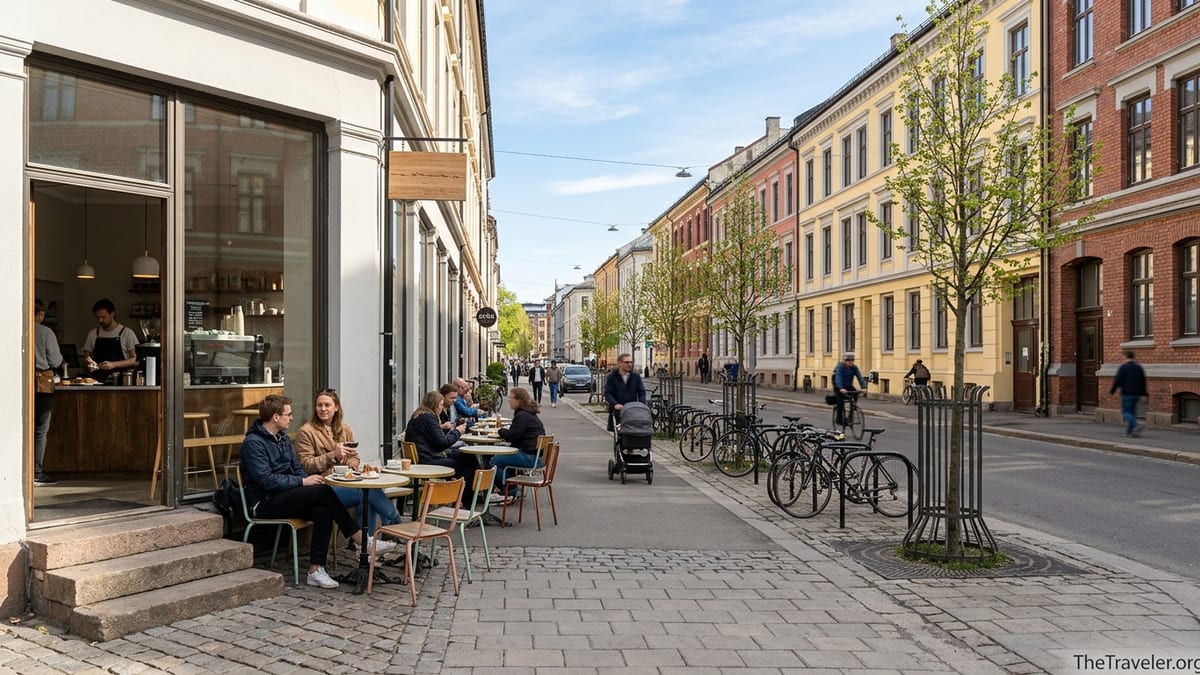
Grünerløkka sits just northeast of central Oslo, bordered on its western side by the Akerselva river. The area was once filled with factories and workers’ housing, and you still see brick industrial buildings along the riverbanks. In the last few decades those buildings have steadily turned into cafés, galleries, design studios and cultural venues, so the neighbourhood now combines old brick facades with a young, creative crowd. You can walk here from central Oslo in around 15 to 20 minutes, or take a short tram ride if you prefer.
The main north south spines are Thorvald Meyers gate and Markveien, two parallel streets lined with cafes, bars and independent boutiques. Between them you find small side streets, hidden courtyards and back gardens where micro roasteries, bakeries and bars tuck themselves away. It is a place made for wandering without too much of a plan. On a sunny weekend late morning, expect prams, dogs, students with laptops and groups of friends all mixing together on the pavements and cafe terraces.
Prices in Oslo are high by most international standards and Grünerløkka is no exception. A hand brewed filter coffee in a specialty shop might be in the range that feels steep if you are used to southern Europe, and a light lunch in a café will usually add up once you include a drink. Budget a bit more than you would for comparable experiences in other European capitals, and treat coffee and snacks here as part of the destination experience rather than a quick refuel.
Grünerløkka rewards slow travel. Instead of trying to tick off sights, build your day around a few anchor points such as a flagship coffee bar, a food hall lunch and a river walk, then allow time to drift into small shops or sit people watching in one of the squares. This is how locals use the area, and it is where the neighbourhood feels most authentic.
Iconic Specialty Cafés You Should Not Miss
For many visitors, coffee is the main reason to come to Grünerløkka. Oslo is known for its light roasted, terroir focused “Nordic” style of coffee, and some of the names that helped define that style are based here. Near the southern end of the neighbourhood, close to the river, you will find Tim Wendelboe, a small but internationally known café and micro roastery opened by a former World Barista Champion. The space is minimal, with a gleaming espresso machine, bags of beans lined up on shelves and usually a short but focused menu of espresso based drinks and one or two filter options.
Tim Wendelboe tends to be busy, especially on weekends and in the late morning coffee rush, but turnover is quick. Many people treat it as a tasting room rather than a place to linger for hours. Expect precise, delicate coffees with bright acidity rather than dark roasts. If you enjoy brewing at home, picking up a bag of beans here is a practical souvenir and gives you a sense of how Norwegian coffee roasters think about flavor. Staff are usually happy to talk about origins, processing and brewing recipes if you ask.
A little further north in Grünerløkka sits Supreme Roastworks, another highly regarded specialty coffee bar and roastery. The atmosphere here is a bit more relaxed and residential, with locals chatting at the bar and regulars dropping in on their way to work. You can usually choose between different single origin pour overs and a house espresso, often roasted to bring out fruit and floral notes without losing sweetness. It is the kind of place where you might end up discussing grinders or hand brewers with the barista and walk away with a new technique to try at home.
Scattered across the neighbourhood you will also find small cafés attached to other businesses. Places that combine a clothing store and espresso bar, or a record shop with a few tables and a pastry counter, are common in Grünerløkka. These hybrid spots are ideal if you are traveling with someone who wants to browse while you are more interested in coffee, or if you simply enjoy people watching in a slightly less coffee obsessed environment than the pure specialty bars.
Bakery Cafés and Brunch Spots
Alongside pure coffee bars, Grünerløkka has a strong culture of bakery cafés where sourdough loaves, laminated pastries and simple brunch plates share space with high quality coffee. This is where you go if you want to sit for an hour with a book, enjoy a cinnamon bun or cardamom roll and watch locals come and go. Many bakeries in the area lean into Scandinavian traditions, so you will often see buns, simple cakes and open faced sandwiches on display rather than heavy cooked breakfasts.
Small bakeries often rotate their offerings throughout the day. In the morning you might find croissants, buns and simple sandwiches, while by mid afternoon the focus shifts to cakes and cookies. Norwegians tend to eat dinner early compared with some countries, so these mid afternoon visits to a bakery café for coffee and something sweet are part of a wider culture of taking breaks with friends or family, especially on weekends.
Brunch focused cafés in Grünerløkka typically serve dishes such as poached eggs on sourdough, avocado toast with smoked salmon, and simple grain bowls built around barley or rye. When the weather is mild, many of these places open large windows or have small outdoor seating areas that fill quickly. It is not unusual to wait a little for a table on Saturdays and Sundays from late morning into early afternoon, especially in late spring and summer when Oslo residents spend as much time as possible outside.
If you are traveling on a tighter budget, an easy strategy is to have your main meal of the day in one of these bakery cafés or brunch spots, where a generous plate and coffee can keep you going for hours. Then you can opt for a lighter, picnic style dinner later using items picked up from a supermarket or food hall, which keeps overall daily costs more manageable without feeling like you are missing out.
Independent Shops, Vintage Finds and Markets
Beyond coffee, one of Grünerløkka’s pleasures is browsing its small independent shops. Along Markveien and the surrounding streets you will find design boutiques, small bookshops and concept stores that focus on Norwegian and Nordic brands. Common items include wool sweaters, minimal ceramics, simple jewelry and deliberately understated homeware. Because rents in the area are relatively high, many of these shops curate items carefully and lean toward quality over quantity.
Vintage and second hand shopping is a major draw as well. On weekends, Birkelunden park at the northern end of Grünerløkka often hosts an outdoor flea and vintage market during the warmer months. Stalls sell everything from mid century furniture and retro lamps to vinyl records, vintage clothing and costume jewelry. Prices can vary widely. You might find a bargain on a 1970s Norwegian wool jumper at one stall, while another charges close to boutique prices for carefully selected designer pieces. Even if you are not planning to buy, walking the market gives you a feel for Oslo fashion and design tastes.
During the week, several permanent second hand shops scattered through the neighbourhood offer similar finds without the weekend crowds. These range from carefully styled vintage fashion boutiques to more chaotic charity shops where you dig through racks and shelves. The quieter atmosphere on weekdays makes it easier to try things on and chat with staff about Norwegian brands you might not recognise. Many shops in Oslo emphasise sustainability and reuse, so second hand shopping in Grünerløkka fits into this broader local mindset.
If you happen to visit during a local design or art weekend, you may also find pop up markets in courtyards or inside cultural venues, featuring young illustrators, ceramicists and small food producers. Information about these events often spreads by word of mouth and local posters rather than major advertising campaigns, so it is worth keeping your eyes open as you walk or asking in a café whether anything is happening that weekend.
Riverside Walks, Street Art and Outdoor Hangouts
The Akerselva river defines the western edge of Grünerløkka and offers one of Oslo’s most enjoyable urban walks. Starting near the city centre, paths follow the river north through a sequence of small parks, waterfalls and former factory buildings. As you reach the stretch alongside Grünerløkka, the river feels surprisingly green, with footbridges, weirs and birds on the water. Benches and grassy areas encourage people to sit with takeaway coffee or simple snacks, especially in late afternoon when the light softens.
Street art and murals appear on many walls near the river and around the cultural venue cluster close to the water. Under bridges and along back alleys you will find large pieces created as part of organised festivals alongside smaller tags. The area changes regularly as new works appear and old ones are painted over. This gives casual walking a sense of discovery, since even if you visited a year ago, you are likely to notice new artworks scattered through the neighbourhood.
Squares such as Olaf Ryes plass and Birkelunden serve as open air living rooms for locals. On mild days, people sprawl on the grass with coffee cups and takeaway food, children play around the fountains and swings, and street musicians sometimes perform near the edges. In winter these spaces are quieter, but a dusting of snow and warm light from surrounding apartments give them a different charm. If you want to feel how locals actually live in Oslo, spending time in these parks is as revealing as any museum visit.
Oslo’s long summer evenings are especially atmospheric along the river and in these parks. In June and early July, it may stay light until very late, so you can walk by the water after dinner or sit on a bench in a T shirt at a time when many other European cities are already dark. Pack layers, as temperatures can drop quickly even after a warm day, but try to experience at least one of these drawn out evenings in Grünerløkka if your trip dates allow.
Food Halls, Casual Dining and Nightlife
When you get hungry beyond coffee and pastries, the Vulkan area at the southern end of Grünerløkka is a reliable anchor. Here, a former industrial site has been turned into a mixed cultural and dining district. The best known attraction is Mathallen, an indoor food hall that gathers dozens of food stalls and specialty producers under one roof. Inside you will find Norwegian and international options ranging from seafood counters to bakeries, tapas style bars and stalls focusing on local cheese and cured meats.
Mathallen is popular with both residents and visitors, so the atmosphere can be lively at lunchtime and on Saturday afternoons. It works well whether you want a full sit down meal or just a snack. For example, you might order a small plate of local cured meats and cheese at one counter, pick up a bowl of soup or a hot dish at another, then finish with a pastry and coffee from yet another stall. This grazing style is ideal if you are curious about Norwegian ingredients but traveling with people who have different tastes or dietary needs.
Outside the food hall, the Vulkan area hosts several sit down restaurants, bars and a riverside terrace. In the evenings, especially Thursdays to Saturdays, the area becomes one of Oslo’s livelier going out districts without feeling overwhelming. Expect a mix of students, young professionals and creative industry workers, many of whom live within walking distance. Dress codes are generally casual, and in summer the focus is as much on outdoor seating along the river as on the interiors.
Elsewhere in Grünerløkka, you will find small bistros, pizza places and Asian inspired casual restaurants tucked among the shops and apartments. Norwegians often book tables for weekend evenings, particularly for larger groups, so consider making a reservation if there is a place you know you want to try. Earlier in the week you can usually walk in, especially if you are willing to sit at the bar or outside. For a budget friendly evening, it is common to share a pizza or a couple of small plates and focus more of your spending on a standout coffee earlier in the day.
Planning Your Perfect Grünerløkka Day
A simple way to structure a day in Grünerløkka is to start at the southern edge near the river and work your way north. You might begin mid morning with a carefully brewed coffee at a top specialty café, arriving shortly after opening time to avoid the busiest period. From there, walk a short distance to the Akerselva and follow the river path, crossing back and forth on small bridges and stopping whenever a stretch of street art or an old factory building catches your interest.
By lunchtime, aim yourself toward the Vulkan area and Mathallen. Inside the food hall, pick a stall that appeals to you visually, or choose a few small plates from different places. If the weather is good, you can eat at one of the indoor communal tables and then take your dessert outside to sit by the water. Because you are already at the edge of Grünerløkka, this is an easy starting point for an afternoon exploring Thorvald Meyers gate and Markveien.
Spend the afternoon drifting through shops and parks, pausing whenever you see an interesting storefront. If it is a Sunday in the warmer seasons, check whether Birkelunden park is hosting its market and leave extra time to wander between stalls. Use this part of the day for unstructured exploration: sit with a second coffee on a bench at Olaf Ryes plass, browse a design boutique you would not find at home, or simply watch locals going about their daily routines.
As evening approaches, decide whether you want a relaxed dinner in one of the small local restaurants or prefer to return to the Vulkan area where choices are concentrated. In summer, consider picking up picnic style food earlier and eating outside in a park or by the river while the light lingers. In colder months, cafés and bars become cosy refuges with candles and warm lighting, so your day might end with a final hot drink and a slow walk back toward the city centre through the quiet streets.
The Takeaway
Grünerløkka is less about headline attractions and more about an overall feeling. Its specialty cafés, independent shops and riverside paths add up to a neighbourhood that feels lived in and local, yet still very welcoming to visitors. You come here not for a single famous landmark, but to experience Oslo at a human scale.
By focusing your visit on a few key anchors, such as a world class coffee bar, a food hall lunch and a slow walk along the Akerselva, you can get a strong sense of the neighbourhood in a single day. At the same time, Grünerløkka rewards repeat visits: markets change with the seasons, street art evolves and new cafés or boutiques quietly appear on side streets.
If your time in Oslo is limited, carving out at least half a day in Grünerløkka is worthwhile. If you have longer, consider returning at different times of day to see how the area shifts from morning coffee rituals to evening bar culture. Either way, the combination of river, coffee and creative energy makes this part of the city one of the most memorable places to spend time.
FAQ
Q1. How do I get to Grünerløkka from central Oslo?
From the main downtown area, you can either walk to Grünerløkka in about 15 to 20 minutes or take a tram heading east and get off near Thorvald Meyers gate or Markveien. The route is straightforward, and many visitors enjoy walking one way and using public transport for the return.
Q2. What time of day is best for visiting the cafés?
Specialty cafés in Grünerløkka typically open in the morning and become busiest from late morning to early afternoon, especially on weekends. If you prefer a quieter experience and more time to chat with baristas, aim for shortly after opening or later in the afternoon.
Q3. Are the cafés and shops open on Sundays?
Many cafés open on Sundays, and parks and river paths are popular with locals that day. However, some smaller shops and boutiques may close or keep shorter hours, while outdoor markets often take place on Sundays during the warmer months, particularly in Birkelunden park.
Q4. Is Grünerløkka expensive compared with other parts of Oslo?
Prices are broadly similar to other central neighbourhoods in Oslo. Specialty coffee and boutique shopping are not cheap, but you can manage costs by combining café visits with more casual meals such as bakery lunches, supermarket snacks or shared dishes in food halls.
Q5. Is the area safe to walk around at night?
Grünerløkka is generally considered a safe, residential neighbourhood, and people regularly walk along the main streets and river paths in the evening. As in any city, it is sensible to stay on well lit routes, keep an eye on your belongings and avoid very secluded areas late at night.
Q6. Can I pay with cash in cafés and shops?
Most businesses in Grünerløkka, like the rest of Oslo, are very card oriented, and some operate entirely cash free. International credit and debit cards are widely accepted, so you do not need to carry large amounts of Norwegian cash for everyday purchases.
Q7. What should I wear for a day exploring Grünerløkka?
Comfortable walking shoes are important, as you will likely spend several hours on your feet. Dress in layers, as Oslo weather can change quickly, and bring a light waterproof jacket outside of high summer. Locals generally dress casually, so there is no need for formal clothing.
Q8. Are there good options for vegetarians and vegans?
Yes, many cafés and eateries in Grünerløkka offer vegetarian and often vegan options, including salads, grain bowls, plant based pastries and dairy free milks for coffee. Food halls and casual restaurants usually label dishes clearly, making it easier to choose according to your needs.
Q9. Is Grünerløkka suitable for families with children?
Grünerløkka works well for families. Parks like Olaf Ryes plass and Birkelunden have open space for children to run around, and many cafés are used to families with prams. River paths provide gentle walks, though you should keep a close eye on younger children near the water.
Q10. How much time should I plan to spend in Grünerløkka?
You can get a good first impression in half a day by combining a café visit, a walk along the river and some time in the parks. To fully enjoy browsing shops, lingering over meals and exploring markets at an unhurried pace, a full day in the neighbourhood is ideal.